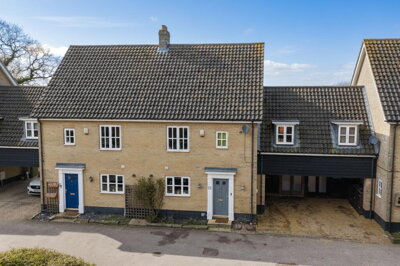
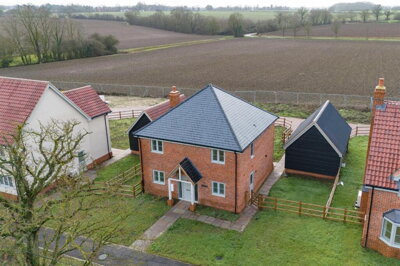
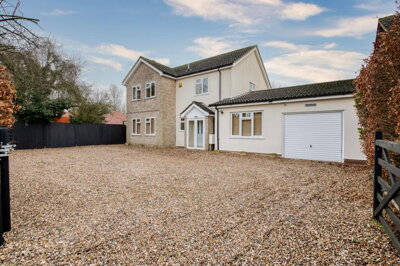
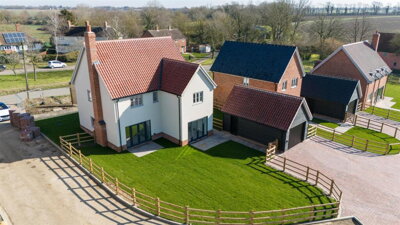
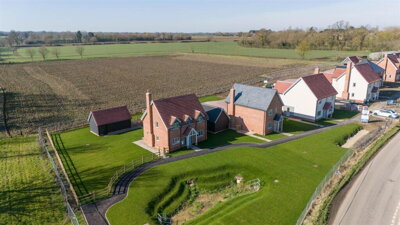
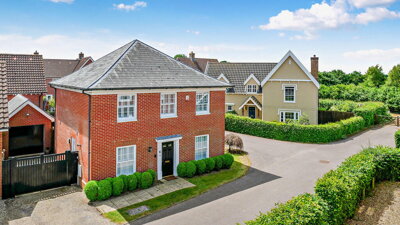
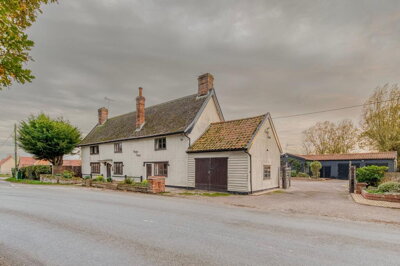
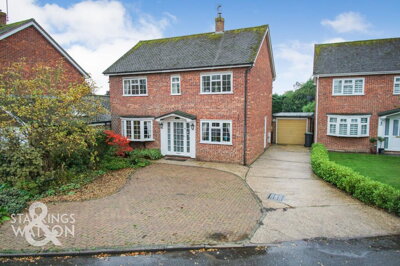
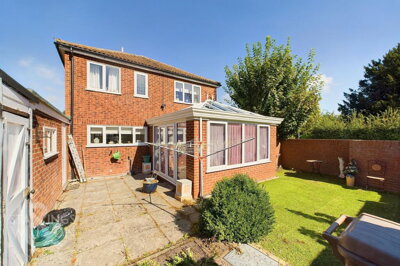
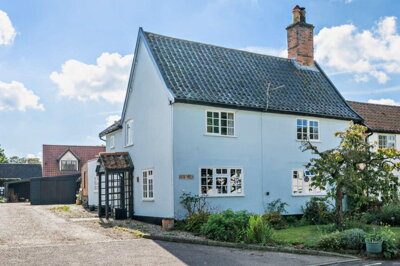
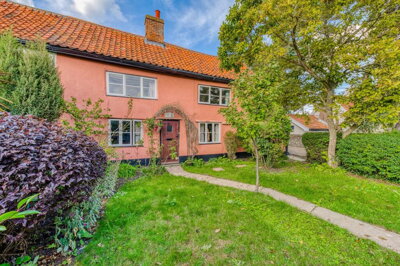
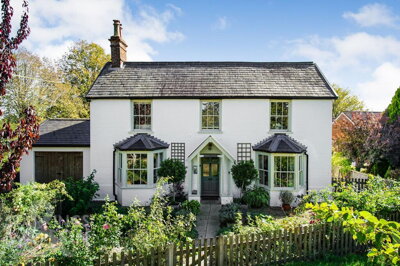
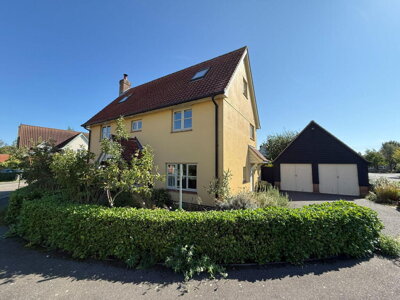
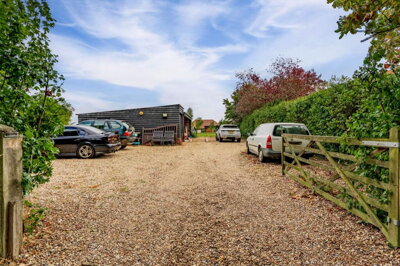
Browse 14 homes for sale in Horham, Mid Suffolk from local estate agents.
The larger property sector typically features multiple bathrooms, substantial reception space, and private gardens or off-street parking. Four bedroom houses in Horham span detached, semi-detached, and occasionally terraced configurations, with styles ranging from period properties to modern executive homes.
£495k
5
0
53
Source: home.co.uk
Showing 5 results for 4 Bedroom Houses for sale in Horham, Mid Suffolk. The median asking price is £495,000.
Source: home.co.uk
Detached
5 listings
Avg £490,000
Source: home.co.uk
Source: home.co.uk
Horham sits within the broader IP21 postcode area, where property values reflect the sustained demand for rural Suffolk homes that has characterised the market over recent years. Rightmove data shows an average property price of £480,840 for Horham over the last year, while Zoopla reports an average sold price of £756,500 and OnTheMarket indicates £388,000. These variations reflect differences in property types sold during each measurement period, with the Rightmove figure based on 84 recorded sales demonstrating active market movement for a village of this scale. Detached properties command premium prices averaging £632,067, while semi-detached homes typically sell for around £254,000, establishing a clear price hierarchy that buyers should factor into their search criteria.
The market has experienced notable fluctuations in recent years. While current sold prices sit approximately 31% below the 2021 peak of £696,750, the year-on-year comparison reveals a robust recovery with prices rising 29% compared to the previous twelve months. OnTheMarket reports a more modest 1.4% rise over the last year, indicating a stabilising market as buyer confidence returns following the adjustment period. These contrasting data points suggest a market finding its level after the pandemic-era price surge, creating opportunities for buyers who missed the previous peak while maintaining the long-term upward trajectory that has characterised rural Suffolk property values.
New build activity in the Horham area remains limited, with no specific active developments verifiable at this time. The existing housing stock predominantly comprises traditional brick and tile construction, with many properties dating from the Georgian, Victorian, and mid-twentieth century periods. These period properties offer authentic character features including original fireplaces, exposed beams, and period joinery that appeal strongly to buyers seeking homes with genuine heritage and architectural interest. Properties in Horham frequently feature traditional Suffolk building styles, including distinctive red brick or rendered elevations under clay tile or slate roofs.

Horham embodies classic Suffolk village character, with traditional properties lining country lanes, a village church providing a focal point for community life, and surrounding farmland creating an atmosphere of rural tranquility. The Mid Suffolk district is renowned for its beautiful undulating countryside, ancient woodlands, and extensive network of public footpaths and bridleways that make the area particularly attractive to walkers, cyclists, and outdoor enthusiasts. The village sits within easy reach of several National Trust properties and nature reserves, providing residents with ample opportunities to explore the natural beauty that Suffolk has to offer throughout the year. Nearby Eye offers essential services including convenience shopping, a pharmacy, and medical facilities, while Bury St Edmunds and Norwich provide access to a broader range of retail, cultural, and recreational amenities.
Local amenities in the immediate vicinity are typical of a small rural village, with essential services available in nearby settlements and the market town of Eye providing a broader range of facilities within a short drive. The surrounding area supports several popular gastropubs and farm shops where residents can enjoy locally sourced produce and a strong sense of community spirit. Village halls throughout Mid Suffolk host regular activities, craft fairs, and seasonal celebrations that bring neighbours together throughout the year. Arts and cultural events are well supported throughout the district, with community initiatives fostering creative engagement alongside traditional village activities.
The demographic profile of villages like Horham typically combines long-term residents with families seeking to escape larger towns and cities for a better quality of life. New residents frequently cite the pace of life, access to countryside, and strong community bonds as key factors in their decision to relocate to this part of Suffolk. The sense of community here remains strong, with local events, church activities, and village associations providing numerous opportunities for newcomers to integrate and establish lasting social connections. For families considering a move to the area, the combination of rural charm, good schools in the surrounding villages, and the practical benefits of living within reach of larger towns creates a compelling proposition that continues to attract buyers from across the region.
Education provision in the Horham area serves families at both primary and secondary levels, with several well-regarded schools within reasonable travelling distance. Primary education is typically provided through local village schools, many of which are rated favourably by Ofsted and serve small cohorts that allow for individual attention and a strong sense of community. Schools in nearby villages including Eye, Stradbroke, and Worlingworth serve the local population, with these settings frequently featuring in positive parent reviews and community discussions about educational quality. Parents should research specific catchment areas and admission arrangements, as these can vary and may influence which schools are available depending on exact location within the village.
Secondary education options include both state and independent schools operating in the wider Mid Suffolk area, with many families travelling to nearby towns such as Diss, Bury St Edmunds, and Ipswich for specialist subjects and broader curriculum choices. Several secondary schools in the region have established reputations for academic achievement and extracurricular provision, making them popular choices for families who are willing to factor travel time into their daily routines. Transport arrangements for secondary school students vary by school and location, with some families using dedicated school bus services while others arrange private transport. Sixth form and further education opportunities are available at colleges in the surrounding market towns, with good road connections making these accessible to students from Horham and surrounding villages.
Early years and nursery provision in the area typically includes both private and maintained settings, often operating from village halls or dedicated nursery facilities in nearby settlements. Parents planning a move to Horham with young children should register interest with settings as early as possible, as rural nurseries often have limited places and waiting lists can extend over several months. Childminders operate throughout the local area, providing flexible childcare options for families with varying requirements. Schools serving the village frequently feature in parent reviews and local community discussions, making it worthwhile for prospective buyers to engage with current residents and gather firsthand insights into educational provision before committing to a purchase.
Transport connectivity from Horham relies primarily on road networks, with the village situated in a rural location that requires car travel for most everyday purposes. The A140 runs through the nearby area, providing access to Norwich to the north and Ipswich to the south, while the A14 trunk road connects the region to Cambridge and the wider motorway network beyond. The A140 corridor passes through the Eye area and connects to the A143 heading toward Bury St Edmunds, providing essential links for residents needing to reach larger employment centres. These road connections make Horham reasonably accessible for commuters who work in larger towns or cities but wish to enjoy the benefits of rural living, though journey times will naturally be longer than those from more urban locations.
Public transport options are limited in common with many small Suffolk villages, with bus services providing the main form of public transport connectivity. Local bus routes connect Horham to nearby market towns and villages, though frequencies are typically reduced compared to urban areas, making a car practically essential for most residents. The nearest railway stations are located in Diss and Elmswell, offering connections to London Liverpool Street and Norwich, with journey times to the capital typically taking around 90 minutes to two hours depending on the service. These stations provide options for commuters who can work from home on some days or who travel to work on a hybrid basis, though daily commuting to London from this location would require careful consideration of schedules and costs.
For those who travel further afield for work, Norwich International Airport offers domestic and limited international flights, while Stansted Airport provides a broader range of destinations and is accessible via the A14 and M11 motorway network. Cyclists will find that rural Suffolk roads can be quieter than major routes, though the rolling terrain and distance to larger towns mean cycling is more practical for leisure than daily commuting. Walkers benefit from an extensive network of public footpaths and bridleways that radiate from the village across farmland and through nearby woodlands, providing excellent opportunities for countryside exploration without the need for transport.
Spend time exploring Horham at different times of day and week to get a genuine feel for village life and the local community rhythm. Visit local amenities, speak to residents, and understand the practical implications of rural living including transport options and service availability. Review local property prices using our platform and compare with similar villages to ensure your budget aligns with market expectations. Drive the routes to nearby towns and schools to understand daily commute implications.
Contact a mortgage broker to discuss your financial position and obtain an agreement in principle before beginning property viewings. This document demonstrates your seriousness to sellers and agents, and helps you understand exactly what you can afford to spend. First-time buyers should ensure they understand all costs involved including deposits, stamp duty land tax, and ongoing mortgage commitments. For properties with land or non-standard construction, some lenders have specific requirements that your broker can advise on.
Use our platform to browse all available properties in Horham and contact estate agents to arrange viewings of homes that match your requirements. View multiple properties to compare different styles, conditions, and price points before making any decisions. Ask agents about the history of properties, any recent works undertaken, and details of the local market including time on market and any price reductions. Take notes and photographs to help distinguish between properties after viewings.
Once you find a property you wish to purchase, submit your offer through the selling agent along with proof of your mortgage arrangement in principle. Be prepared to negotiate on price and terms based on the property condition, market context, and any issues identified during viewing. Your offer should be realistic given current market conditions and recent comparable sales in the Horham area. For period properties, factor in potential maintenance costs when deciding your final offer amount.
Commission a RICS Level 2 HomeBuyer Report or Level 3 Building Survey before proceeding with your purchase. Given the age of many properties in Horham, a thorough survey is essential to identify any structural issues, maintenance requirements, or potential problems with period features. Survey findings can sometimes be used to renegotiate the purchase price if significant issues are identified. Properties in rural Suffolk often have specific construction characteristics that require an experienced surveyor to assess properly.
Work with a conveyancing solicitor to handle the legal transfer of ownership, conduct local searches, and ensure all documentation is in order. Exchange contracts once all checks are satisfactory, with completion typically arranged for a date that suits both parties. On completion day, you will receive the keys to your new Horham home and can begin your life in this charming Suffolk village.
Properties in Horham span a range of construction periods and styles, from traditional Suffolk pink-washed cottages to twentieth-century family homes and converted agricultural buildings. When viewing properties, pay close attention to the construction materials and maintenance history, as traditional Suffolk buildings often feature oak-framed structures, clay tile roofs, and render finishes that require specific maintenance approaches. Ask vendors about any recent works, planned maintenance, and the age of key systems such as heating, electrical wiring, and plumbing. Many period properties in the village will have undergone various degrees of modernisation over the years, and understanding this history helps assess future maintenance requirements.
Rural properties can face particular challenges that buyers should investigate carefully. Septic tank arrangements and private drainage systems are common in villages like Horham, and understanding the maintenance obligations and costs associated with these systems is essential. Some properties may have shared drainage arrangements with neighbouring properties, which requires agreement on maintenance responsibilities and cost-sharing. Check the condition of outbuildings and boundaries, as these can reveal information about ground conditions and relationships with neighbouring properties. Energy efficiency varies considerably across older properties, with some period homes requiring significant investment to bring up to modern standards.
Flood risk should be researched using official flood maps and local knowledge, particularly for properties located near watercourses or in lower-lying areas. Conservation area status may apply to parts of the village, which can restrict permitted development rights and affect plans for alterations or extensions. Listed building status on some properties will require planning permission for changes that would otherwise be permitted, and buyers should factor any such constraints into their decision-making process. Always verify these details through local authority searches during the conveyancing process, and discuss any planned works with the local planning authority before committing to a purchase if extension or renovation is intended.
According to Rightmove, the average property price in Horham over the last year was £480,840, based on 84 recorded sales in the village. Zoopla reports a higher average sold price of £756,500, while OnTheMarket indicates £388,000, with the variation reflecting differences in property types sold during each measurement period. Detached homes average £632,067 while semi-detached properties sell for around £254,000. Prices have risen 29% year-on-year according to Rightmove data, though they remain approximately 31% below the 2021 peak of £696,750, suggesting good value at current levels for buyers entering the market.
Properties in Horham fall under Mid Suffolk District Council administration, with council tax bands assigned based on property values at the time of construction. Most traditional village properties in the area fall within the middle bands, though specific bands vary property by property depending on their assessed value. Prospective buyers should check the council tax band for any specific property through the valuation office agency website or request this information during the conveyancing process, as bands affect ongoing annual costs for household budgeting.
The Horham area is served by several primary schools located in surrounding villages, many of which have good Ofsted ratings and serve small, nurturing cohorts that allow for individual attention. Primary schools in nearby Eye, Stradbroke, and Worlingworth serve the local population, with these settings frequently featuring in positive parent reviews and community discussions. Secondary education options include schools in nearby Eye, Diss, and Bury St Edmunds, with transport arrangements available for families within catchment areas. Parents should verify current school performance data, catchment boundaries, and admission policies directly with schools or through the local education authority.
Horham has limited public transport provision typical of a small rural Suffolk village, with bus services connecting the village to nearby towns and villages at reduced frequencies compared to urban areas. Car ownership is effectively essential for most residents for daily activities including shopping, school runs, and accessing medical appointments. The nearest railway stations at Diss and Elmswell provide connections to London Liverpool Street and Norwich, with journey times of around 90 minutes to two hours to the capital. Norwich Airport is accessible via road for domestic and limited international travel, while Stansted Airport offers broader destinations via the A14 and M11.
The Horham property market has demonstrated resilience and growth potential, with prices rising 29% year-on-year and the broader Suffolk rural market continuing to attract buyers seeking village lifestyles. Rental demand in the wider Mid Suffolk area remains steady, supported by professionals working in nearby towns who prefer rural surroundings to urban living. Capital growth prospects are influenced by broader economic conditions and local development, but the enduring appeal of traditional Suffolk villages suggests properties here will retain their desirability. Any investment decision should consider individual circumstances, ownership objectives, and local market conditions with appropriate professional advice from financial and property advisors.
For standard purchases from April 2025, stamp duty land tax is charged at 0% on the first £250,000 of property value, 5% between £250,001 and £925,000, 10% between £925,001 and £1.5 million, and 12% on any amount above £1.5 million. First-time buyers benefit from relief on the first £425,000, with 5% charged between £425,001 and £625,000. Given the average Horham property price of around £480,840, a first-time buyer purchasing at this level would pay no stamp duty, while additional purchases would attract approximately £11,542 in stamp duty.
Properties in Horham often feature private drainage systems, off-road parking arrangements, and different maintenance obligations compared to urban homes, with septic tanks requiring regular emptying and potential upgrade costs. Understanding private water supplies where applicable, the condition of rural access roads, and any shared arrangements with neighbouring properties is important before purchasing. Many properties have gardens that require ongoing maintenance, and buyers should factor this into their time and budget planning. Energy efficiency of older properties varies considerably, and heating costs can be higher than modern equivalents, making a thorough survey particularly valuable for period homes in the village.
From 4.5%
Expert mortgage advice for Horham properties, including specialist support for rural homes and period properties
From £499
Conveyancing solicitors experienced in Mid Suffolk property transactions
From £350
Professional RICS Level 2 HomeBuyer Report for your Horham property
From £80
Energy Performance Certificate for your Horham property
Understanding the full costs of purchasing a property in Horham extends well beyond the advertised asking price, and budgeting accurately helps ensure a smooth transaction. Stamp duty land tax represents one of the largest additional expenses, with current thresholds from April 2025 setting the zero-rate band at £250,000 for standard purchases. For a typical Horham property averaging £480,840, a non-first-time buyer would expect to pay approximately £11,542 in stamp duty, calculated at 5% on the portion between £250,001 and £480,840. First-time buyers benefit significantly, with relief applying to the first £425,000, meaning most purchases at average price levels attract no stamp duty whatsoever.
Legal costs for conveyancing typically start from around £499 for straightforward purchases, though costs increase for leasehold properties, complex titles, or transactions involving period properties with unusual features. Additional solicitor fees include local search fees, land registry fees, and bankruptcy checks that together add several hundred pounds to the total cost. Electronic money transfer fees and land registry registration fees are also charged, with total legal costs typically ranging from £1,000 to £2,500 depending on transaction complexity. For properties in conservation areas or listed buildings, additional searches and specialist advice may be required, adding to overall legal costs.
Survey costs represent a valuable investment in protecting your purchase, with a RICS Level 2 HomeBuyer Report starting from around £350 for standard properties and Level 3 Building Surveys from approximately £600. Given the age and character of many properties in Horham, a thorough survey is particularly advisable to identify any structural concerns, maintenance requirements, or defects in period features. Mortgage arrangement fees vary between lenders, with some offering fee-free products while others charge up to £2,000 that can often be added to the mortgage balance. Removal costs, redecoration budgets, and connection charges for utilities should also be factored into your overall moving budget to ensure a stress-free transition to your new Horham home.

Properties for Sale In London

Properties for Sale In Plymouth

Properties for Sale In Liverpool

Properties for Sale In Glasgow

Properties for Sale In Sheffield

Properties for Sale In Edinburgh

Properties for Sale In Coventry

Properties for Sale In Bradford

Properties for Sale In Manchester

Properties for Sale In Birmingham

Properties for Sale In Bristol

Properties for Sale In Oxford

Properties for Sale In Leicester

Properties for Sale In Newcastle

Properties for Sale In Leeds

Properties for Sale In Southampton

Properties for Sale In Cardiff

Properties for Sale In Nottingham

Properties for Sale In Norwich

Properties for Sale In Brighton

Properties for Sale In Derby

Properties for Sale In Portsmouth

Properties for Sale In Northampton

Properties for Sale In Milton Keynes

Properties for Sale In Bournemouth

Properties for Sale In Bolton

Properties for Sale In Swansea

Properties for Sale In Swindon

Properties for Sale In Peterborough

Properties for Sale In Wolverhampton

Enter your details to see if this property is within your budget.
Loans, cards, car finance
Estimated property budget
Borrowing + deposit
You could borrow between
Typical borrowing
Monthly repayment
Est. at 4.5%
Loan-to-value
This is an estimate only. Your actual budget may vary depending on interest rates, credit history, and personal circumstances. For an accurate affordability assessment, speak to one of our free mortgage advisors.
This calculator provides estimates for illustrative purposes only and does not constitute financial advice. Your home may be repossessed if you do not keep up repayments on your mortgage. Estimates based on 4.5% interest rate, repayment mortgage. Actual rates depend on your circumstances.
Homemove is a trading name of HM Haus Group Ltd (Company No. 13873779, registered in England & Wales). Homemove Mortgages Ltd (Company No. 15947693) is an Appointed Representative of TMG Direct Limited, trading as TMG Mortgage Network, which is authorised and regulated by the Financial Conduct Authority (FRN 786245). Homemove Mortgages Ltd is entered on the FCA Register as an Appointed Representative (FRN 1022429). You can check registrations at NewRegister or by calling 0800 111 6768.

We use cookies to show you personalised content and improve your experience of our website. Find out more in our Privacy policy and Cookie policy.