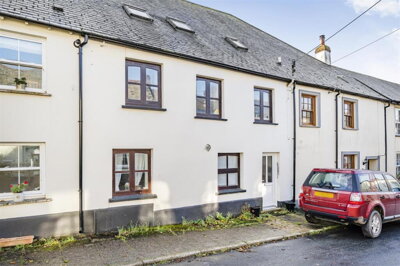
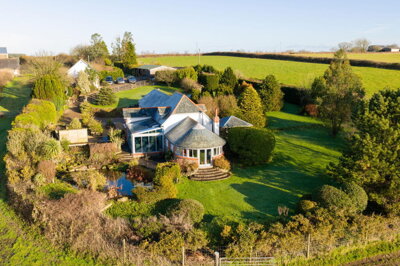
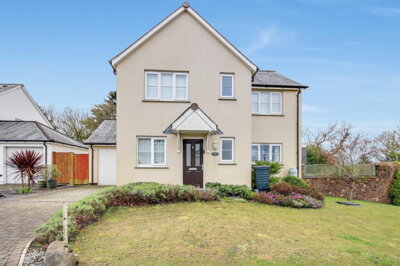
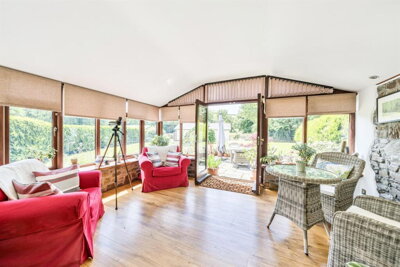
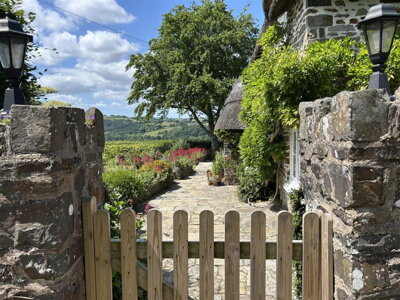
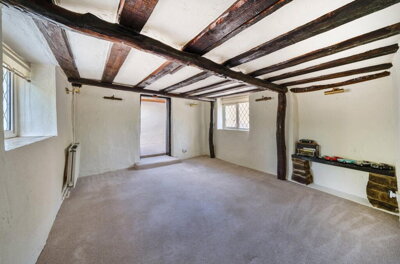
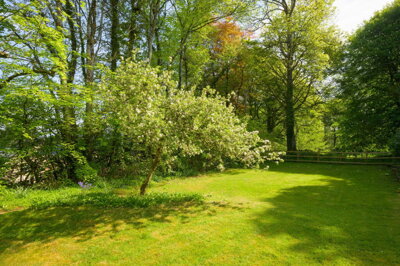
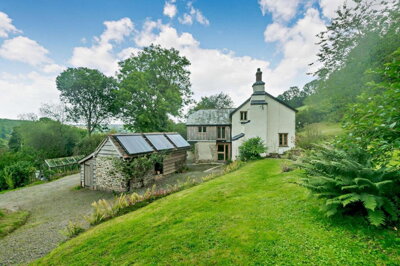
Browse 8 homes for sale in High Bickington from local estate agents.
The larger property sector typically features multiple bathrooms, substantial reception space, and private gardens or off-street parking. Four bedroom houses in High Bickington span detached, semi-detached, and occasionally terraced configurations, with styles ranging from period properties to modern executive homes.
The High Bickington property market presents a compelling opportunity for buyers seeking rural Devon living at relatively accessible price points. Our current listings feature properties across all main categories, from character cottages to modern family homes. The average property price stands at £301,714, with semi-detached homes averaging around £234,000 and detached properties commanding approximately £392,000. These figures position High Bickington favourably against the broader Devon average of £321,000, offering good value within North Devon's property landscape. Zoopla records an average sold price of £326,181 for the most recent twelve-month period, with sales activity showing continued interest in the area despite broader national market uncertainties.
Recent market trends indicate a correction phase, with house prices in High Bickington falling 13% from the previous year and 30% down from the 2023 peak of £428,400. This cooling period creates opportunities for buyers who may have been priced out during the peak market. In the wider Devon county, average prices declined by approximately £5,400 (2%) over the same twelve-month period, making High Bickington's correction slightly more pronounced but still representing strong long-term value. For context, Devon county saw 15,500 property sales with a 15.6% drop in transaction volumes, indicating a broader market adjustment rather than any local weakness specific to the village.
Looking ahead, planned development at two sites will bring new homes to the village. A proposal for approximately 40 dwellings on land south of Little Bickington Lane includes a 30% affordable housing provision, offering shared equity and social housing options. This development would extend to Quarries Lane to the south and the B3217/North Road to the east, with the community centre and playing fields forming the western boundary. A separate scheme at Cross Park proposes 35 new homes, with 11 designated as affordable units. These developments will expand buyer choice while maintaining the village's character through design requirements limiting buildings to no more than two storeys. The mix includes two, three, and four-bedroom semi-detached properties alongside four-bedroom detached homes.

High Bickington embodies the essence of rural Devon village life, with a population of just over 1,000 residents enjoying an atmosphere that has remained largely unchanged for generations. The older part of the village sits within a designated Conservation Area, protecting the character of its narrow streets, cobbled pavements, and numerous thatched properties. Walking through the village centre, you will encounter historic cottages built from local cob and stone, many dating back to the sixteenth or seventeenth century, alongside Grade II Listed buildings including The Old George Inn and Wiermarsh Farmhouse. Other notable listed structures include Bale's Ash with its adjoining outbuildings and garden walls, alongside several historic barns at farms such as Old South Heale and Southwood Farmhouse.
Despite its small scale, High Bickington provides essential everyday amenities for residents. The village supports a primary school, St Mary's C of E church, a Methodist Chapel, two public houses offering community gathering spaces (The Old George and the Golden Lion), a doctor's surgery, post office, and a community shop. Libbaton Golf Course lies within a mile of the village centre, providing recreational opportunities for residents. The agricultural heritage remains central to the parish economy, with farming continuing as the main industry and shaping the surrounding countryside that residents call home. Local commentators note that property prices in High Bickington have increasingly moved beyond the means of most local people unless they have existing capital, reflecting the broader Devon affordability challenge where house prices are inflated by demand from buyers relocating from more expensive areas.
The local community spirit is evident in the village's amenities and events. Property prices in High Bickington reflect its desirability, though local commentators note affordability challenges for those without existing capital. The influx of buyers from more expensive areas, particularly London and the South East, has influenced property values across Devon. However, this demand also supports local services and maintains the village's vitality as a place to put down roots in a genuine community setting. Broadband provision has been flagged as a concern, with existing systems reportedly at or near capacity, though improvements are being rolled out across rural areas to support remote working arrangements. The population has steadily risen since the 1950s, indicating sustained appeal for those seeking an alternative to urban living.

Families considering a move to High Bickington will find educational provision centred on the village's primary school. High Bickington Primary School serves the local community, providing education for children from Reception through to Year 6. As a small rural school, it offers intimate class sizes and strong community connections, with children benefiting from close relationships between teachers, pupils, and families. The school forms a central part of village life, with many community events and activities tied to its calendar. For specific information about current Ofsted ratings and school performance data, parents should consult the Ofsted website directly for the most up-to-date inspection results.
Secondary education options require travel to nearby towns, with families typically considering schools in the surrounding Torridge area. The nearest secondary schools are located in towns accessible by car, making personal transport a practical necessity for secondary-age children. Parents should research specific school catchments and admission arrangements, as criteria can vary significantly between institutions. Transport arrangements for secondary school pupils are managed through Devon County Council's school transport policy, which typically provides assistance for pupils living beyond certain distances from their allocated school.
Further and higher education opportunities are available in Exeter and Barnstaple, the major towns in Devon, accessible via the road network. Exeter offers the University of Exeter along with further education colleges, while Barnstaple provides North Devon College and other vocational training options. Sixth form provision and further education colleges in these towns offer a wide range of academic and vocational courses. The village's position between these centres provides reasonable access for older students pursuing further qualifications while maintaining the benefits of village living during their studies.
Transport connections from High Bickington reflect its status as a rural village, with private vehicle travel forming the primary means of access to wider services and employment centres. The village sits within reasonable driving distance of several North Devon towns, with Barnstaple, the area's largest town, accessible via the A377 road approximately 20 miles away. Exeter, offering mainline rail services to London Paddington and beyond, is approximately 30 miles distant via the A361 and M5 motorway corridor, making it feasible for occasional commuting though requiring a significant journey time of around 50 minutes to an hour under normal traffic conditions.
Public transport options centre on bus services connecting High Bickington to surrounding villages and towns. These services provide essential links for those without private vehicles, though frequencies are typical of rural provision with limited evening and weekend services. The nearest railway stations are located at Portsmouth Arms or Umberleigh on the Tarka Line, offering regional connections to Exeter and Barnstaple but requiring advance planning to use effectively. For daily commuting to major employment centres, the reality of High Bickington's rural position means that most residents work locally or have adapted their work patterns to accommodate distance, including increased remote working where broadband connectivity allows.
Local road infrastructure includes the B3217/North Road passing through the village, connecting to the wider North Devon road network. Parking within the village centre is limited, reflecting its historic layout, though newer developments have addressed parking provision. Cycling can be enjoyed on quieter country lanes, though the hilly terrain presents challenges for less experienced riders. The surrounding North Devon countryside offers scenic routes for recreational cycling, particularly on dry summer days when minor roads are in good condition. Broadband connectivity has been flagged as a concern in the village, with existing systems reportedly at or near capacity, though improvements are being rolled out across rural areas to support remote working arrangements.
Browse current listings in High Bickington and understand recent sale prices, which average £301,714 for the village according to Rightmove data. Zoopla records an average sold price of £326,181 for the most recent twelve-month period. Consider whether a period property requiring renovation or a newer build suits your circumstances and budget, and familiarise yourself with the Conservation Area restrictions that affect properties in the older village centre.
Before arranging viewings, obtain a mortgage agreement in principle from a lender. This demonstrates your buying capacity to estate agents and sellers, strengthening your position in negotiations. Given High Bickington's average property price of around £301,714, most buyers will require mortgage finance, and having your financial position confirmed early streamlines the purchasing process considerably.
Visit properties that match your requirements, taking time to explore both the inside condition and the surrounding neighbourhood. Consider visiting at different times of day to gauge the community atmosphere and noise levels. For older properties in High Bickington, viewings are particularly important given the prevalence of cob construction and thatched roofs, which require different assessment criteria than modern properties.
Before completing your purchase, arrange a RICS Level 2 Survey (HomeBuyer Report) to assess the property's condition. Given High Bickington's many older properties built from cob and stone with traditional construction methods, this survey is particularly valuable for identifying defects common in historic buildings. The national average cost for a RICS Level 2 survey is around £455, typically ranging between £416 and £639, with costs increasing for higher-value properties above £500,000.
Choose a conveyancing solicitor to handle the legal aspects of your purchase. They will conduct searches including local authority, drainage, and environmental checks specific to Torridge District Council, handle contracts, and manage the transfer of funds through to completion. For properties in High Bickington's Conservation Area or those that are Listed Buildings, additional consent requirements will need to be verified.
Once all searches are satisfactory and contracts are signed, you will exchange deposits and agree a completion date. On completion day, the property legally becomes yours and you can collect your keys. Given the rural location of High Bickington, coordinate key collection and removal arrangements in advance, as local removal firms may need to be booked well ahead during peak moving periods.
Properties in High Bickington require careful consideration of their age and construction, given the village's significant heritage. Many homes are built from cob, a traditional Devon building material made from earth, straw, and natural ingredients, often rendered over stone rubble. These properties typically feature thatched or Welsh-slate roofs and may have original features that require ongoing maintenance. Before purchasing an older property, understanding the maintenance history and any previous structural works is essential for budgeting purposes. Newer developments such as Little Bickington Farm use standard modern construction but typically incorporate photovoltaic panels in line with contemporary building recommendations.
The village's Conservation Area status brings additional responsibilities for homeowners. Properties within the designated area require Listed Building Consent for certain alterations, even seemingly minor changes to windows, doors, or roofing materials. There are numerous Grade II Listed Buildings throughout High Bickington, including The Old George Inn, Wiermarsh Farmhouse, Bale's Ash, and several historic barns and cottages. If you are considering a listed property, factor in the additional consent process and potential restrictions on renovations when planning your purchase. For older properties in poor condition or those where significant alterations are planned, a RICS Level 3 Building Survey may be more appropriate than a standard Level 2 survey.
Flood risk in High Bickington is classified as low, with the village located in Flood Zone 1 according to Torridge District Council's Strategic Flood Risk Assessment. No known drainage problems exist in the area, though increased development can affect surface water run-off patterns. For geological considerations, North Devon's underlying geology includes Devonian slates, sandstones, and some clay-containing mudstones, which means potential shrink-swell subsidence should be considered, particularly for older properties with potentially shallow foundations. The British Geological Survey warns that shrink-swell subsidence issues are increasing nationally due to climate change, with projections suggesting 10% of properties could be affected by 2070.
Common defects to look for in High Bickington properties include dampness (rising, penetrating, and condensation-related), roof issues such as missing tiles or deteriorated mortar on thatched roofs, timber defects including rot and woodworm, and potentially outdated electrical systems or plumbing with lead pipework. Structural movement or cracking may occur in older cob-built properties, and previous alterations such as extensions or loft conversions may not comply with current Building Regulations. A thorough RICS Level 2 Survey will identify any existing issues that require attention or negotiation before completing your purchase.
The average house price in High Bickington is currently £301,714 according to Rightmove data. Semi-detached properties average around £234,000 while detached homes command approximately £392,000. Recent market trends show prices have corrected by 13% from the previous year, offering opportunities for buyers who may have found the 2023 peak of £428,400 beyond reach. Zoopla records an average sold price of £326,181 for the most recent twelve-month period, providing additional context for the village's current market position. Property prices in the village remain influenced by demand from buyers relocating from more expensive areas, though the current market presents a more accessible entry point than the peak period.
Council tax bands in High Bickington fall under Torridge District Council's jurisdiction. Specific bands vary by property depending on its valuation and construction date. As a general guide, smaller period cottages may fall into Bands A or B, while larger detached properties and newer homes could be in Bands D through F. The village's mix of historic cob cottages and modern developments means a wide range of bands are represented across the community. Prospective buyers should check the specific property's council tax band on the Valuation Office Agency website before completing a purchase, as this forms part of the ongoing cost of ownership.
High Bickington Primary School serves the village's youngest residents from Reception through Year 6, providing intimate class sizes and strong community connections that smaller cohorts allow. As a small rural school, it benefits from close relationships between teachers, pupils, and families, though parents should consult the Ofsted website for current performance data as inspection results vary between institutions. Secondary school options require travel to nearby towns, with several accessible within reasonable driving distance via the B3217 and A377 roads. Transport arrangements for secondary school pupils are managed through Devon County Council's school transport policy, which provides assistance for pupils living beyond certain distances from their allocated school.
Public transport connections in High Bickington reflect its rural village status, with bus services providing the main public option and limited evening and weekend frequencies typical of rural provision. The nearest railway stations at Portsmouth Arms and Umberleigh offer Tarka Line services connecting to Exeter and Barnstaple but require advance planning to use effectively for regular commuting. For practical purposes, private vehicle ownership is essential for most daily activities, with Barnstaple approximately 20 miles away and Exeter around 30 miles distant via the A361 and M5 corridor. Residents working from home should note that broadband connectivity has been flagged as a concern, with existing systems reportedly at or near capacity.
High Bickington offers potential for buyers seeking long-term value in rural Devon, particularly given the recent 13% price correction from previous peaks. The village benefits from ongoing development proposals including the 40-dwelling scheme at Little Bickington Lane and the 35-home Cross Park development, which may sustain local demand for housing. However, buyers should consider the limited public transport, school travel requirements, and potential broadband challenges when assessing investment potential. Properties in the Conservation Area or with Listed Building status may appeal to specific buyer segments seeking character properties, though these come with renovation restrictions and consent requirements.
For standard purchases in the 2024-25 tax year, stamp duty thresholds are 0% on the first £250,000, 5% on £250,001 to £925,000, 10% on £925,001 to £1.5 million, and 12% above £1.5 million. First-time buyers benefit from enhanced relief on the first £425,000 at 0%, with 5% charged between £425,001 and £625,000. Given High Bickington's average price of £301,714, most purchases would attract no stamp duty for qualifying first-time buyers. For other buyers purchasing at around the average price point, only the amount exceeding £250,000 would incur the 5% charge, resulting in approximately £2,586 in stamp duty on a £301,714 purchase.
Given the village's many historic properties built from cob, stone, and traditional methods, common defects include dampness affecting walls and foundations, roof issues on thatched or slate coverings, timber problems such as rot and woodworm especially in older properties, and outdated electrical systems or lead plumbing that do not meet modern standards. Structural movement or cracking may occur in cob-built properties with shallow foundations, particularly given North Devon's geology including clay-containing mudstones that can cause shrink-swell subsidence issues. A RICS Level 2 Survey is strongly recommended before purchasing any property in High Bickington to identify issues requiring attention or negotiation with the seller, with survey costs typically ranging from £416 to £639 depending on property value.
From 4.5%
Compare mortgage rates from leading lenders for your High Bickington property purchase
From £499
Expert property solicitors handling your High Bickington purchase
From £350
Essential survey for High Bickington's older properties
From £60
Energy performance certificate for your new property
Purchasing a property in High Bickington involves several costs beyond the purchase price that buyers should budget for carefully. The most significant additional cost is Stamp Duty Land Tax, which applies to all freehold and leasehold purchases above certain thresholds. For the 2024-25 tax year, standard rates charge nothing on the first £250,000 of the purchase price, 5% between £250,001 and £925,000, 10% on the portion from £925,001 to £1.5 million, and 12% on any amount above £1.5 million. At High Bickington's average price of £301,714, a standard buyer would pay 5% on £51,714, equating to approximately £2,586 in stamp duty.
First-time buyers enjoy enhanced relief that significantly reduces costs on more affordable properties. The first-time buyer threshold covers the first £425,000 at 0%, with 5% charged between £425,001 and £625,000. This means that many properties in High Bickington, where the average price is £301,714, would attract no stamp duty for qualifying first-time buyers. The property must be your first home and you must not have previously owned property anywhere in the world to qualify. Given the village's appeal to families and those seeking rural Devon living, many first-time buyers find properties well within the relief threshold.
Beyond stamp duty, other buying costs include solicitor fees for conveyancing, typically ranging from £500 to £1,500 depending on complexity and whether the property is freehold or leasehold. A RICS Level 2 Survey costs between £416 and £639 depending on property value and size, while an Energy Performance Certificate ranges from £60 to £120. Mortgage arrangement fees typically range from zero to £2,000 depending on the lender and product chosen, though many lenders now offer fee-free mortgages as an incentive. For a property at the village average price of £301,714, total additional costs typically range from £1,500 to £3,500 depending on circumstances, whether stamp duty is applicable, and choices made throughout the process. Removal costs vary based on distance and volume of belongings, and should be booked well ahead during peak moving periods as rural areas may have limited availability from local firms.
Properties for Sale In London

Properties for Sale In Plymouth

Properties for Sale In Liverpool

Properties for Sale In Glasgow

Properties for Sale In Sheffield

Properties for Sale In Edinburgh

Properties for Sale In Coventry

Properties for Sale In Bradford

Properties for Sale In Manchester

Properties for Sale In Birmingham

Properties for Sale In Bristol

Properties for Sale In Oxford

Properties for Sale In Leicester

Properties for Sale In Newcastle

Properties for Sale In Leeds

Properties for Sale In Southampton

Properties for Sale In Cardiff

Properties for Sale In Nottingham

Properties for Sale In Norwich

Properties for Sale In Brighton

Properties for Sale In Derby

Properties for Sale In Portsmouth

Properties for Sale In Northampton

Properties for Sale In Milton Keynes

Properties for Sale In Bournemouth

Properties for Sale In Bolton

Properties for Sale In Swansea

Properties for Sale In Swindon

Properties for Sale In Peterborough

Properties for Sale In Wolverhampton

Enter your details to see if this property is within your budget.
Loans, cards, car finance
Estimated property budget
Borrowing + deposit
You could borrow between
Typical borrowing
Monthly repayment
Est. at 4.5%
Loan-to-value
This is an estimate only. Your actual budget may vary depending on interest rates, credit history, and personal circumstances. For an accurate affordability assessment, speak to one of our free mortgage advisors.
This calculator provides estimates for illustrative purposes only and does not constitute financial advice. Your home may be repossessed if you do not keep up repayments on your mortgage. Estimates based on 4.5% interest rate, repayment mortgage. Actual rates depend on your circumstances.
Homemove is a trading name of HM Haus Group Ltd (Company No. 13873779, registered in England & Wales). Homemove Mortgages Ltd (Company No. 15947693) is an Appointed Representative of TMG Direct Limited, trading as TMG Mortgage Network, which is authorised and regulated by the Financial Conduct Authority (FRN 786245). Homemove Mortgages Ltd is entered on the FCA Register as an Appointed Representative (FRN 1022429). You can check registrations at NewRegister or by calling 0800 111 6768.

We use cookies to show you personalised content and improve your experience of our website. Find out more in our Privacy policy and Cookie policy.