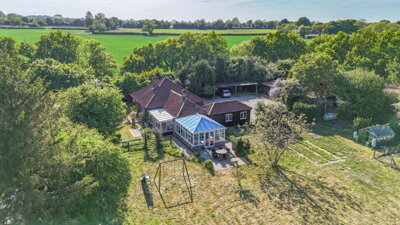
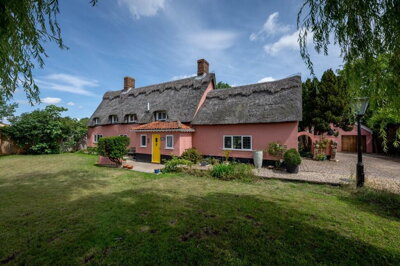
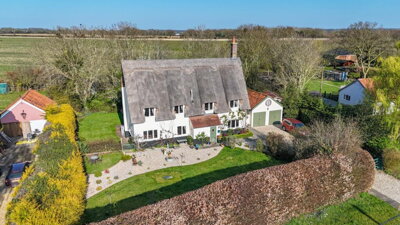
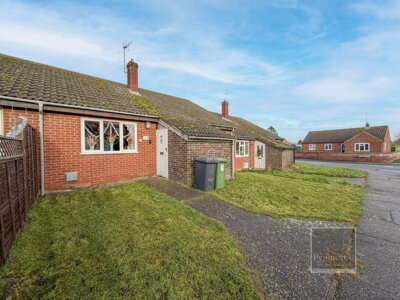
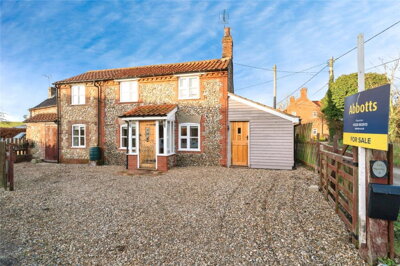
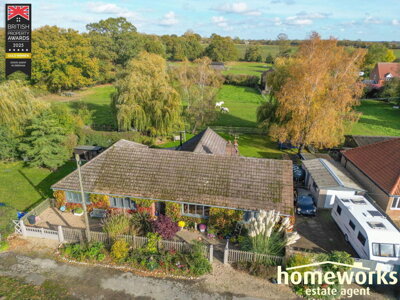
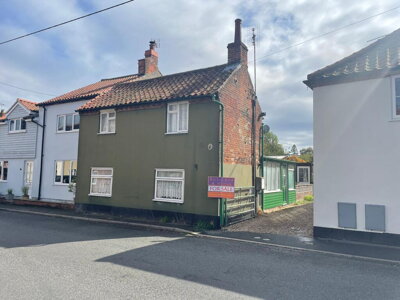
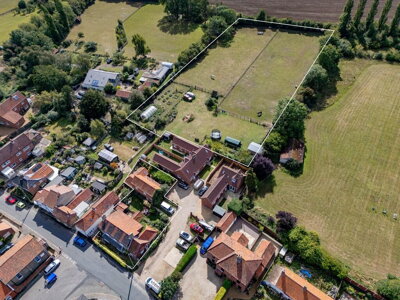
Browse 13 homes for sale in Gateley, Breckland from local estate agents.
£0k
0
0
0
Source: home.co.uk
2,532 (2021 Census)
Population
£277,000
Average Sold Price
£327,140
Properties for Sale Average
64% of housing stock
Detached Homes
+1.2%
Annual Price Change
The Doddington property market offers notable variety across different property types. Detached homes dominate the local housing stock, comprising 64% of all properties, with an average sold price of £381,881 over the past year. Semi-detached properties average £243,571, while terraced homes in the village have sold for around £182,300 on average. This breakdown reflects Doddington's character as a village of predominantly larger family homes, with very few flats available in the village itself. The broader Fenland area has seen impressive growth, with average house prices increasing by 7.0% from December 2024 to December 2025, and semi-detached properties rising by 8.6% in that same period.
New build activity has been steadily increasing in Doddington, with several developments at various planning stages. The May Meadows development offers eco-luxury detached homes, with five and seven-bedroom properties ranging from £600,000 to £700,000. Planning applications include proposals for land south of Wimblington Road for up to 37 homes submitted by the Diocese of Ely, and the Land North of 3 Wimblington Road which received permission for 9 dwellings in April 2025. Additional smaller developments on Primrose Hill and High Street indicate continued growth in the village's housing stock. However, some applications have faced resistance, with the Hermitage Gardens development refused in August 2025 due to concerns about urbanisation and impact on the rural character.
Understanding the local market context helps buyers appreciate Doddington's position within the wider Fenland economy. The Fenland area has a higher proportion of "high employment, low productivity" businesses compared to other parts of Cambridgeshire, which affects wage levels and housing affordability dynamics. Despite this, Doddington's island location within the Fens provides a premium positioning that has maintained property values and attracted buyers seeking the village lifestyle while remaining within commuting distance of larger employment centres. The projection that the village will grow to around 2,800 residents by 2041 suggests continued demand for housing in the area.
With 54+ properties sold in the Doddington and Wimblington area over the past year, the village offers genuine choice for prospective buyers. Whether you are looking for a period cottage with original features along Church Lane or a modern family home on one of the newer developments, our search tool connects you with properties listed by local estate agents. The average time to sell in the Fenland area remains competitive, and well-priced properties in Doddington attract interest from buyers across Cambridgeshire and beyond.

Life in Doddington centres on its tight-knit community and rich heritage. The village sits within a designated Conservation Area, first established in 1993 and reviewed in 2011, encompassing the historic heart where notable buildings like the Parish Church of St Mary (Grade II*), Doddington Hall, and the distinctive Clock Tower stand. The village's gault clay brick architecture reflects centuries of local building traditions, creating an atmospheric streetscape along Church Lane, Ingles Lane, and Newgate Street that appeals to those who appreciate historic environments. The Conservation Area Appraisal documents buildings dating back to 1778 and earlier, testament to the village's long history.
Demographically, Doddington's population of 2,532 skews towards older age groups, with a median age of 49 recorded in the 2021 Census. The village has experienced significant growth since 1971, when the population was roughly half its current level. Projections suggest growth to around 2,800 residents by 2041, though planners note a notable gap in the 21-40 age group representing young families. This demographic pattern has implications for the local housing market, as demand may be weighted towards downsizers and families seeking more space rather than entry-level accommodation.
Local healthcare facilities, including Doddington Hospital offering outpatient clinics and diagnostics, and the Askham Village Community care facility set in seven acres, provide essential services that support residents across all life stages. The NHS-run hospital is a significant local employer and service provider, while Askham offers rehabilitation and care services. The village also benefits from a pharmacy, local shop, and several pubs and eateries that contribute to community life. The absence of a significant gap in the 21-40 age group indicates that Doddington successfully retains some young families, though local advocacy focuses on ensuring new housing developments include family-sized properties to sustain this trend.
Beyond property searches, Doddington offers a lifestyle that balances rural tranquility with practical amenities. The village hosts regular community events, with the historic parish church and Doddington Hall serving as focal points for social activity. Walking routes across the surrounding fenland provide opportunities to explore the distinctive landscape that makes this part of Cambridgeshire unique. For families, the sense of community and access to good schools in nearby towns makes Doddington an attractive proposition.

Families considering a move to Doddington will find educational provision within reach of the village. The local primary school serves younger children, while secondary education options are available in nearby market towns including March and Chatteris. Cambridgeshire's education system includes both grammar schools in certain areas and comprehensive schools, with catchment areas determining placement for state school admissions. Parents should verify current school performance data and admission policies directly with Cambridgeshire County Council, as these can change and may affect which schools children can access from Doddington.
For families seeking private education, several independent schools operate in Cambridgeshire, with some accessible via transport routes from the village. Further education opportunities exist at colleges in Chatteris, March, and Cambridge city, providing pathways for older students. Given the village's projected population growth and aging demographic, the local community has expressed interest in ensuring housing development includes family-sized properties to help retain younger residents and sustain school rolls. The gap in the 21-40 age group highlights a challenge that both the parish council and district planners are working to address through housing policy.
Our inspectors often note, when conducting surveys on properties near schools in Doddington, that proximity to good educational provision can influence property values and buyer interest. Families frequently ask about school catchment areas during the viewing process, and understanding which schools serve the village helps buyers make informed decisions. Cambridgeshire County Council publishes admission information annually, and we recommend parents check current arrangements before committing to a purchase in the area.
Doddington benefits from its position within Cambridgeshire, offering connectivity to larger towns and cities while maintaining its rural character. The village lies within reasonable distance of March and Chatteris, which provide rail connections and additional amenities. The A141 passes through the region, linking Doddington to Huntingdon and providing access to the A14 for journeys toward Cambridge and beyond. Cambridgeshire's bus services connect smaller villages to market towns, though car ownership remains important for daily commuting. The nearest rail stations at March and Manea offer connections to Cambridge and Peterborough, though services are less frequent than urban routes.
For professionals working in Cambridge, the city lies approximately 30-40 minutes away by car, making Doddington a viable option for those seeking more affordable housing while maintaining urban employment. The Cambridgeshire Guided Busway and improved rail services at March and Manea offer additional public transport options for commuters. However, the flat fenland terrain, while making cycling feasible for shorter journeys, can be exposed during adverse weather conditions common to the Fens. Winter months may see reduced visibility on country roads and occasional flooding affecting route choices.
The economic profile of Fenland, characterised by manufacturing, construction, and agricultural sectors, influences commuting patterns in the area. Many Doddington residents work locally or commute to larger centres, and the village's position relative to employment hubs affects its appeal to different buyer segments. For those working in healthcare, Doddington Hospital itself provides local employment, while the Askham Village Community offers care sector positions. Understanding your commuting requirements and how they align with local transport options should form part of your property search criteria.
Understanding the construction of properties in Doddington helps buyers appreciate the character of the local housing stock. The majority of surviving period dwellings in the village are constructed from locally sourced gault clay bricks, reflecting centuries of building tradition in the Cambridgeshire Fens. This distinctive brick, fired from local clay deposits, gives Doddington's older properties their characteristic warm yellow colour and creates the atmospheric streetscape that defines the Conservation Area. Some older properties incorporate stone elements, though brick predominates throughout the historic core of the village.
Our surveyors frequently identify issues arising from the traditional construction methods used in Doddington's period properties. The underlying Ampthill Clay geology, which extends across much of the Fens, presents particular challenges for property owners. This Jurassic mudstone bedrock is susceptible to shrink-swell behaviour, meaning foundations can move during extended dry periods or heavy rainfall. Properties with shallow traditional foundations, common in buildings constructed before modern building regulations, may show signs of movement over time. Our inspectors always recommend careful assessment of foundation conditions when surveying older properties in the village.
The surface geology of Doddington's elevated "island" within the Fens consists primarily of March Gravels, which generally provide more stable foundation conditions than the clay soils beneath. However, the transition between gravel and clay zones can create variable ground conditions within individual plots. Modern developments, particularly those built from the 1980s onwards on Wimblington Road and other newer areas, typically incorporate deeper foundations and modern construction techniques that account for local ground conditions. We advise buyers to review survey reports carefully, especially for properties built before 1980, where foundation depths may be insufficient for current standards.
Our inspectors regularly encounter several defect types when surveying properties in Doddington, reflecting the age of much of the housing stock and local environmental conditions. Damp and moisture problems feature prominently, arising from the age of properties, traditional construction methods, and the naturally moist environment of the surrounding fenland. Rising damp, penetrating damp, and condensation issues are all commonly identified, particularly in properties where original damp-proof courses have failed or where ventilation has been reduced through modern renovation work.
Roof defects represent another frequent finding in Doddington surveys. Older properties often feature original clay tile or slate roofs that have deteriorated over decades of exposure to fenland weather. Our team has noted instances where original clay tiles have been replaced with heavier concrete alternatives, which can cause structural problems through increased load on roof timbers. Replacement of original roof coverings should always be specified in property documentation, and evidence of previous structural repairs to roof trusses or purlins warrants careful investigation during the survey process.
The underlying Ampthill Clay geology creates specific concerns for structural integrity that our inspectors take seriously. During periods of drought, clay soils shrink and can cause foundation movement leading to subsidence. Conversely, extended wet periods cause clay to swell, potentially producing heave damage. Signs of structural movement, including cracking to walls, sticking doors or windows, and distorted floor levels, should always be investigated by a qualified surveyor before purchase. We particularly recommend RICS Level 3 Building Surveys for older properties, as these provide more detailed structural assessment than the Level 2 option.
Before viewing properties, obtain a mortgage agreement in principle from a lender. This strengthens your position when making offers and helps you understand your true budget within Doddington's price range, where detached homes average £381,881 and semi-detached properties around £243,571. Given the variety in property types, from period cottages to modern family homes, having your financing confirmed demonstrates serious intent to sellers and their agents.
Study recent sold prices in Doddington, including the 1.2% annual price rise and the broader 7.0% growth across Fenland. Consider property types, from detached family homes to period cottages within the Conservation Area, and factor in potential flood risk assessments and survey requirements for older properties. The village has 886 property sales recorded over the last decade, providing good comparable data for market research.
Schedule viewings of properties matching your criteria, paying attention to construction materials (predominantly gault clay brick), property age, and any signs of damp or structural concerns. Properties near waterways or low-lying areas may require specific flood risk evaluations. Take time to visit the village at different times of day and speak to residents about their experience of living in Doddington.
Commission a RICS Level 2 Survey before completing your purchase. Given Doddington's Ampthill Clay geology with shrink-swell potential and the prevalence of period properties, a thorough survey can identify issues such as damp, roof defects, or foundation concerns. Budget between £400-800 for this essential step, though larger or older properties may cost more. For listed buildings or properties with significant structural concerns, consider upgrading to a Level 3 Building Survey.
Choose a conveyancing solicitor to handle the legal aspects of your purchase. They will conduct searches, check planning permissions, and manage the transfer of ownership. Factor in searches related to flood risk and drainage given Doddington's fenland location. The local authority search, drainage search, and environmental search are essential components that your solicitor will organise on your behalf.
Once all searches are satisfactory and finance is confirmed, your solicitor will exchange contracts and set a completion date. On completion day, the remaining funds are transferred, and you receive the keys to your new Doddington home. We recommend conducting a final inspection before completion to ensure no damage has occurred since your last visit and that any agreed repairs have been completed satisfactorily.
Purchasing property in Doddington requires awareness of several area-specific considerations. The village's underlying geology, primarily Ampthill Clay with surface March Gravels, creates potential for shrink-swell ground movement during extended dry periods or heavy rainfall. Older properties with shallow foundations are particularly vulnerable to structural movement, so surveys should carefully assess foundation conditions and look for signs of cracking or subsidence. We have seen properties where ground movement has caused significant structural damage requiring underpinning or other foundation works.
Flood risk represents another important consideration for Doddington buyers. While the village itself sits on elevated ground relative to surrounding fenland, some areas face a 5% probability of surface water flooding in a 1 in 100-year event. The wider Fenland district has 67% of its area in Flood Zone 3, and Doddington has experienced notable flooding events in recent years including two consecutive years of serious flooding not seen for 40 years. Buyers should review drainage systems, sewage infrastructure capacity, and consider Flood Risk Assessments available through planning documents. Anglian Water has expressed concerns about the used water network's capacity, which is worth noting when assessing property condition.
For properties within the Conservation Area or those listed, additional planning controls apply. Listed Building Consent is required for alterations to grade-listed properties, and any works affecting the character of Conservation Area buildings may be restricted. The presence of Doddington Windmill, Weavers Cottage, and other heritage assets reflects strict local planning policies. Buyers should verify permitted development rights and discuss any planned works with Fenland District Council planning department before committing to a purchase. For listed properties, engaging a surveyor with conservation expertise is advisable.
As of January 2026, the average sold price in Doddington stands at approximately £277,000, with properties for sale averaging around £327,140. Detached homes average £381,881, semi-detached properties £243,571, and terraced homes £182,300. The village has seen a 1.2% increase in sold prices over the past year, and the broader Fenland area has experienced 7.0% growth from December 2024 to December 2025. With 54 properties sold in the last year in the Doddington and Wimblington area, transaction volumes indicate a healthy local market with good liquidity for buyers and sellers alike.
Council tax bands in Doddington are set by Fenland District Council. Bands range from A through H, with most family homes falling in bands C through E. Exact bands depend on property value and type, with detached family homes typically in higher bands due to their size and value. Given Doddington's average property values around £277,000 to £381,000 for detached homes, most buyers will find their properties fall within bands C, D, or E. Buyers should check specific properties with Fenland District Council or on the government council tax lookup service to confirm the applicable band and associated annual charges.
Doddington has local primary school provision for younger children. Secondary education options are located in nearby towns including March and Chatteris, with catchment areas determined by Cambridgeshire County Council admissions policies. Parents should verify current school admissions criteria, as catchment boundaries can change and may affect which schools children can access from specific addresses in the village. Ofsted ratings for nearby primary and secondary schools should be checked before purchase, as school performance can influence property values and family appeal in the area.
Doddington is a rural village where car ownership remains important for daily commuting. Local bus services connect the village to nearby market towns including March and Chatteris, which offer rail stations with services to Cambridge and Peterborough. The A141 provides road access to Huntingdon and the A14 corridor for journeys toward Cambridge and beyond. Cambridge city is approximately 30-40 minutes by car under normal traffic conditions. Public transport options are more limited than in urban areas, so prospective buyers should consider their commuting requirements carefully and test their route to work before committing to a purchase.
Doddington offers potential for property investment, supported by steady price growth of 1.2% annually and the wider Fenland market showing 7.0% increases. The village population is projected to grow from 2,532 to around 2,800 by 2041, creating ongoing demand for housing. New developments including May Meadows eco-homes at £600,000-£700,000 and planning applications for additional housing indicate continued investment in the area. However, buyers should consider factors including localised flood risk, the aging demographic profile, and the predominantly detached housing stock when evaluating investment potential. Rental demand in the village is likely to be driven by families seeking more affordable accommodation than nearby Cambridge.
Stamp Duty Land Tax rates for standard purchases start at 0% on the first £250,000 of property value, then 5% on £250,001 to £925,000, 10% on £925,001 to £1.5 million, and 12% above £1.5 million. First-time buyers benefit from relief on the first £425,000 (0% rate) and 5% on £425,001 to £625,000. Given Doddington's average prices around £277,000 to £327,000 for properties for sale, many buyers may qualify for first-time buyer relief or face minimal stamp duty charges. Properties priced above £625,000 would incur standard rates on the amount exceeding the first-time buyer threshold.
Doddington sits on elevated ground within the Fens but faces localised flood risks that buyers should understand. Some areas have a 5% chance of surface water flooding in a 1 in 100-year event and 24% in extreme 1 in 1000-year events. The village has experienced serious flooding for two consecutive years recently, something not seen for 40 years. The underlying Ampthill Clay geology can also cause ground movement during dry or wet periods. Buyers should commission flood risk searches, review drainage systems, and consider obtaining environmental searches as part of their conveyancing process. Planning applications for new developments have been rejected partly due to drainage concerns, highlighting the importance of this issue in the area.
When arranging a survey on a period property in Doddington, pay particular attention to the condition of the gault clay brickwork, which may show signs of weathering or mortar deterioration after decades of exposure to fenland conditions. Check for any signs of damp penetration, particularly at ground floor level where original damp-proof courses may have failed. The condition of the roof, including any signs of tile slip or structural movement, should be assessed carefully. Given the Ampthill Clay geology, look for cracking to walls that might indicate foundation movement. Our inspectors recommend upgrading to a RICS Level 3 Survey for listed buildings or properties over 100 years old.
Understanding the full cost of buying property in Doddington extends beyond the purchase price itself. Stamp Duty Land Tax applies to all purchases above £250,000 at standard rates, though many Doddington buyers purchasing at the village average price of around £277,000 may qualify for first-time buyer relief. Under current 2024-25 thresholds, first-time buyers pay 0% on the first £425,000 and 5% on amounts between £425,001 and £625,000, making Doddington's property market particularly accessible for those entering the housing market for the first time. Properties priced above £625,000 would incur standard stamp duty rates on the balance.
Additional buying costs include survey fees, typically ranging from £400 to £800 for a RICS Level 2 Survey depending on property size and complexity. Given the prevalence of period properties in Doddington and the underlying Ampthill Clay geology, a thorough survey is money well spent to identify potential structural concerns. Larger properties, those over 100 years old, or non-standard construction may incur higher survey costs. Conveyancing fees generally start from £499 for standard purchases, with additional search costs for local authority, drainage, and environmental searches. Environmental searches are particularly important in Doddington given the flood risk considerations and local geology.
Mortgage arrangement fees vary by lender but typically range from £0 to £2,000. Some lenders offer fee-free mortgages but compensate with slightly higher interest rates, so comparing the total cost over the mortgage term is advisable. Buyers should budget for removals, potential renovations, and the immediate costs of setting up a new home when calculating their total moving budget. For properties requiring modernisation, particularly some of the older period cottages in the Conservation Area, renovation costs can be substantial and should be factored into your overall purchase budget before making an offer.
From 4.5%
Finding the right mortgage for your Doddington purchase
From £499
Legal services for your property purchase
From £350
Professional survey before you buy
From £550
Detailed structural survey for older properties
From £60
Energy performance certificate
Properties for Sale In London

Properties for Sale In Plymouth

Properties for Sale In Liverpool

Properties for Sale In Glasgow

Properties for Sale In Sheffield

Properties for Sale In Edinburgh

Properties for Sale In Coventry

Properties for Sale In Bradford

Properties for Sale In Manchester

Properties for Sale In Birmingham

Properties for Sale In Bristol

Properties for Sale In Oxford

Properties for Sale In Leicester

Properties for Sale In Newcastle

Properties for Sale In Leeds

Properties for Sale In Southampton

Properties for Sale In Cardiff

Properties for Sale In Nottingham

Properties for Sale In Norwich

Properties for Sale In Brighton

Properties for Sale In Derby

Properties for Sale In Portsmouth

Properties for Sale In Northampton

Properties for Sale In Milton Keynes

Properties for Sale In Bournemouth

Properties for Sale In Bolton

Properties for Sale In Swansea

Properties for Sale In Swindon

Properties for Sale In Peterborough

Properties for Sale In Wolverhampton

Enter your details to see if this property is within your budget.
Loans, cards, car finance
Estimated property budget
Borrowing + deposit
You could borrow between
Typical borrowing
Monthly repayment
Est. at 4.5%
Loan-to-value
This is an estimate only. Your actual budget may vary depending on interest rates, credit history, and personal circumstances. For an accurate affordability assessment, speak to one of our free mortgage advisors.
This calculator provides estimates for illustrative purposes only and does not constitute financial advice. Your home may be repossessed if you do not keep up repayments on your mortgage. Estimates based on 4.5% interest rate, repayment mortgage. Actual rates depend on your circumstances.
Homemove is a trading name of HM Haus Group Ltd (Company No. 13873779, registered in England & Wales). Homemove Mortgages Ltd (Company No. 15947693) is an Appointed Representative of TMG Direct Limited, trading as TMG Mortgage Network, which is authorised and regulated by the Financial Conduct Authority (FRN 786245). Homemove Mortgages Ltd is entered on the FCA Register as an Appointed Representative (FRN 1022429). You can check registrations at NewRegister or by calling 0800 111 6768.

We use cookies to show you personalised content and improve your experience of our website. Find out more in our Privacy policy and Cookie policy.