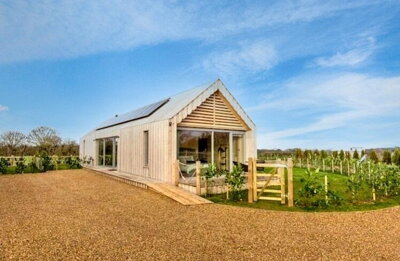
Browse 1 home for sale in Fring, King's Lynn and West Norfolk from local estate agents.
The 2 bed house market features detached, semi-detached, and terraced properties with two separate bedrooms plus living spaces. Properties in Fring range from Victorian and Edwardian period homes to modern new builds, with pricing varying across different neighbourhoods.
£0k
0
0
0
Source: home.co.uk
Showing 0 results for 2 Bedroom Houses for sale in Fring, King's Lynn and West Norfolk.
The Fring property market reflects its status as a small, heritage-rich village with predominantly older housing stock and no significant new build development in the immediate area. Detached properties in and around Fring typically range from £330,000 to £380,000, with semi-detached homes falling between £220,000 and £260,000, and terraced properties offering more accessible entry points from around £170,000 to £200,000. Flats remain relatively rare in this village setting, though where available they tend to start from £110,000. The market here moves deliberately, with transaction volumes reflecting Fring's intimate scale as a village community where properties change hands infrequently.
Properties in Fring are characterised by their traditional Norfolk construction using flint, carstone, and pantiles, with many homes predating the twentieth century and some dating back several centuries. The village's Conservation Area designation and three listed buildings, including the striking 14th-century All Saints' Church and the early 19th-century Neo-Classical White House, set expectations for properties of special architectural interest. The K6 Telephone Kiosk on the village road adds another layer of protected heritage, demonstrating the village's commitment to preserving its historic fabric. Buyers should note that properties within the Conservation Area may carry additional obligations regarding alterations and maintenance, and any works affecting listed structures require formal consent from the local planning authority.
The Fring Estate itself operates holiday cottages, providing a local connection to the village's landed heritage and contributing to the local economy through tourism. This adds an element of investment appeal for buyers considering holiday let potential, particularly given Norfolk's strong visitor economy and the village's position between Sandringham and the coast. The broader King's Lynn and West Norfolk district has experienced modest price fluctuations in recent months, consistent with regional trends across East Anglia, though the scarcity of properties in Fring itself tends to support values when stock becomes available.
Fring embodies the quintessential Norfolk village experience, occupying a tranquil position within rolling chalk upland country near the source of the River Heacham. The village has retained its working character and historic fabric, with important unlisted buildings and estate cottages forming the backbone of its built environment alongside the formally recognised heritage assets. Unlike many villages that have experienced post-war expansion, Fring has no significant modern development to speak of, preserving an authentic atmosphere that appeals strongly to buyers seeking period properties and traditional architecture. The presence of the River Heacham and associated water features adds natural charm to the landscape, though the chalk geology generally provides stable ground conditions for property foundations.
The local economy draws from agriculture, tourism, and services supporting both the rural community and the nearby larger settlements of King's Lynn and Hunstanton. The Fring Estate holiday cottage operation provides local employment and brings visitors to the village who support the local economy. Community life in Fring centres on traditional village attributes, with proximity to Sandringham Estate adding a touch of royal neighbourhood appeal that attracts buyers interested in the prestige of living near the royal family's Norfolk home. Residents benefit from the village's position offering easy access to the Norfolk coast, the Norfolk Broads, and the market town facilities of King's Lynn, all while enjoying the peace and privacy that only a small rural parish can provide.
The chalk geology of the surrounding area provides excellent foundation conditions for traditional buildings, though properties near water features warrant careful attention to drainage. Rolling chalk upland creates the beautiful countryside that defines the village setting, with public footpaths offering pleasant walks across the local landscape. The nearest substantial village with everyday amenities is typically Sedgeford, while larger facilities in Docking and the market town of King's Lynn are within easy driving distance for those accustomed to travelling for shopping and services.

Families considering a move to Fring will find educational provision primarily located in the surrounding larger villages and towns, with primary schools serving the immediate community and secondary options within reasonable daily commuting distance. The small-scale nature of Fring itself means that village-based schooling is limited, but this is typical of Norfolk's rural settlement pattern where children travel to neighbouring communities for their primary education. Parents should research specific catchment areas and admission arrangements for schools in nearby settlements such as Sedgeford, Docking, and the greater King's Lynn area, as these determine which schools children from Fring typically attend.
Primary schools in the surrounding area include those serving the villages between Fring and King's Lynn, with many families travelling to nearby market towns for primary provision. Church of England primary schools are well represented in the local area, reflecting Norfolk's strong ecclesiastical heritage and the role of parish churches in village life. Secondary education in the region is concentrated in King's Lynn, where several secondary schools and colleges serve the West Norfolk area including King Edward VII Academy and St. Mary's Catholic Academy.
For families prioritising academic excellence, researching individual school performance data and Ofsted ratings for schools across the catchment will be essential during property searches. The proximity to Sandringham also places some highly-regarded independent educational options within reasonable driving distance for those pursuing alternative educational paths. Sixth form and further education provision is concentrated in King's Lynn's colleges, which most students from Fring would access for post-16 studies. The grammar school system in Norfolk provides additional options for academically able students, with Queen Elizabeth Hospital School in King's Lynn consistently performing well in regional rankings.
Transport connections from Fring reflect its rural village character, with the primary routes serving local and regional travel rather than direct national connections. The village sits approximately 11 miles from King's Lynn, which provides the nearest mainline railway station with services connecting to Cambridge, London Liverpool Street, and Birmingham. For Fring residents, car travel remains the dominant mode of transport, with the A148 and A149 providing access to King's Lynn and the broader Norfolk road network. The journey to King's Lynn by car typically takes around 25 minutes, making day trips and weekly commuting practical for those working in the town.
Bus services operate in the region connecting Fring with surrounding villages and market towns, though frequencies are limited compared to urban areas, making private vehicle ownership effectively essential for most residents. The coast road A149 provides access to Hunstanton and the north Norfolk coastal villages, popular for both daily needs and tourism during summer months. Cyclists and walkers benefit from Norfolk's network of quiet country lanes and designated routes, with the village position offering pleasant routes across rolling chalk countryside. The nearest major airport is Norwich Airport, approximately 40 miles away, providing domestic flights and some European connections.
For those working in Norwich, the A1065 and A47 routes provide access, though journey times of around an hour reflect the distance involved. Many Fring residents find employment in King's Lynn, benefiting from the shorter commute while enjoying village life. The village position between the coast and inland Norfolk also makes it well-placed for accessing the wider region, with Cambridge approximately 60 miles to the south and Peterborough beyond. Regular train services from King's Lynn connect to London in around two hours, making occasional business travel to the capital feasible for those working remotely or in hybrid roles.
Before viewing properties, spend time in Fring at different times of day and week to understand the village rhythm, noise levels from any nearby farms, road traffic patterns, and community atmosphere. Visit local amenities, speak with existing residents if possible, and build a picture of daily life in this part of Norfolk. Walk the village streets to appreciate the Conservation Area character, the condition of buildings, and the general maintenance standards of the community.
Speak with a mortgage broker or lender to obtain an Agreement in Principle before starting viewings. This strengthens your position when making offers on Fring properties, particularly given the traditional and sometimes complex nature of period village homes. Specialist rural mortgage brokers may have experience with Conservation Area properties and listed buildings, which can streamline the lending process for older properties with unusual features or heritage status.
Arrange viewings of properties that match your criteria, paying attention to construction materials typical of Norfolk historic homes. Look for signs of damp, roof condition, timber condition, and the maintenance history of older flint and carstone properties. Check whether original features have been preserved, whether modern improvements have been carried out sympathetically, and whether the property would require significant investment to bring up to modern standards.
Given the high proportion of pre-1919 properties in Fring, a professional survey provides essential assessment of the property's condition. A RICS Level 2 Survey flags defects common to traditional construction including damp issues, timber defects, and roof problems that affect older Norfolk properties. For listed buildings or particularly historic properties, a more detailed RICS Level 3 Survey may be appropriate to fully assess the building's condition and any repair obligations.
Choose a solicitor with experience handling rural Norfolk property transactions, particularly those involving Conservation Areas or listed buildings. They will handle local authority searches, advise on planning restrictions, and guide you through the legal process. Special attention should be paid to any planning conditions attached to the property and whether previous owners required consent for any works undertaken.
Once surveys are satisfactory and legal searches are returned, your solicitor will arrange exchange of contracts and set a completion date. On completion day, the remaining funds are transferred and you receive the keys to your new Fring home. Allow time for the transfer of utilities and services, and ensure you have building insurance in place from the contract completion date.
Properties in Fring present both opportunities and considerations that buyers should evaluate carefully before committing to a purchase. The village's historic buildings constructed from flint, chalk, and carstone require ongoing maintenance and understanding of traditional building techniques. Prospective buyers should investigate whether properties have had recent damp proofing work, roof repairs, or rewiring, as these are common concerns in older Norfolk homes. The chalk geology of the area generally provides stable foundations, but properties near the River Heacham and low-lying areas warrant careful assessment for potential drainage and moisture issues.
Common defects in Fring's traditional properties include rising damp where original damp proof courses have failed or were never installed, penetrating damp through degraded flint pointing, and timber decay affecting roof structures and floor joists. Pantile roofs on older properties often require repointing and may have slipped or broken tiles, while lead flashing around chimneys and valleys can deteriorate over decades. The solid wall construction typical of flint and carstone buildings means that modern cavity wall insulation is not present, and properties may feel cold in winter with higher heating costs than newer construction.
Properties within the Fring Conservation Area face planning restrictions designed to preserve the village's character, and any plans for extensions or significant alterations require consent from the local planning authority. Listed buildings carry additional obligations, and buyers should understand that Historic England guidelines govern what works can be undertaken on protected structures. Energy efficiency presents a consideration across the village, as older solid-walled properties typically lack modern insulation standards and may have single-glazed windows. While this contributes to the authentic period character, it affects ongoing running costs and resale potential.
When viewing properties, pay attention to the condition of external flint work, checking for areas where pointing has crumbled or where stone dressings have been replaced with inappropriate modern materials. Internally, look for signs of damp on ground floor walls and ceilings, check that doors and windows open properly, and assess whether the property has been updated while retaining its period character. Service charges and maintenance arrangements for any shared elements or communal areas should be clearly established, as these vary significantly between properties. Any properties operated as holiday lets by the Fring Estate or private owners may have specific planning conditions affecting their use.
Specific average house price data for Fring village alone is not published separately due to the small number of annual transactions, but properties within the village typically sit within the broader PE31 postcode district ranges. Detached properties generally command between £330,000 and £380,000, semi-detached homes range from £220,000 to £260,000, and terraced properties start from around £170,000. Properties with Conservation Area status or listed building status may achieve premiums reflecting their heritage value. The village's position near Sandringham Estate and relative proximity to King's Lynn supports values across the local market, with the scarcity of available properties often creating competitive situations when stock comes to market.
Properties in Fring fall under King's Lynn and West Norfolk Borough Council, which sets council tax rates across eight bands from A through H. Exact banding depends on the property's assessed value, with most period cottages and smaller homes in Fring likely falling into bands A through D, and larger detached properties and estate homes potentially in higher bands. Prospective buyers can verify specific banding through the Valuation Office Agency website using the property address. The historic nature of many properties means that bands may not reflect current market values, as the valuation date for council tax bands predates significant house price increases in the area.
Primary education for Fring children is typically accessed through schools in surrounding villages, with parents advised to research specific catchment areas and admission policies. Church of England Primary School in nearby Sedgeford often serves the local area, though admission rules change annually and parents should verify current arrangements. Secondary education is available in King's Lynn, including the highly-regarded King Edward VII Academy and the grammar schools for those meeting academic entry requirements. For families considering private education, several independent schools in the region offer alternatives to the state system, with reasonable driving distances from the village.
Public transport options from Fring are limited, reflecting its status as a small rural village with no railway station within the settlement itself. The nearest mainline railway services are in King's Lynn, with connections to Cambridge and London Liverpool Street taking approximately two hours to the capital. Bus services operate in the region but with frequencies that make private vehicle ownership effectively essential for most residents. The village position offers pleasant country lanes for cycling and walking, but daily commuting to work generally requires a car. For those working in Norwich, journey times of around an hour by car reflect the 40-mile distance via the A1065 and A47.
Fring offers several characteristics that appeal to property investors, including its Conservation Area status protecting local values, the proximity to Sandringham Estate, and the general scarcity of available properties in this intimate village setting. The tourism economy supported by Norfolk's coastal attractions brings potential for holiday let income through properties such as those operated by the Fring Estate holiday cottage operation. However, the small village scale means limited rental demand locally, with most investment buyers purchasing for personal use or longer-term capital growth rather than generating regular rental income. Properties requiring renovation may offer value-add opportunities given the strong local character and difficulty obtaining planning consent for new build in the Conservation Area.
When viewing traditional Norfolk properties in Fring, pay particular attention to the condition of flint and carstone external walls, checking for crumbling mortar, bulging sections, or inappropriate modern repairs. Inspect roof conditions by looking for slipped or missing pantiles, damaged leadwork around chimneys, and any sagging in rooflines that might indicate structural issues. Internal signs of damp including tide marks on walls, peeling paint, and musty odours warrant investigation, as do any signs of timber decay in floorboards, stairs, and window frames. Ask about the age and condition of services including plumbing, electrics, and heating, as these often require updating in properties of this age.
Stamp Duty Land Tax applies to all property purchases in England, with current thresholds set at 0% on the first £250,000 of purchase price, 5% on the portion between £250,001 and £925,000, 10% on the portion between £925,001 and £1,500,000, and 12% on any amount above £1,500,000. First-time buyers benefit from relief on the first £425,000, with 5% applied between £425,001 and £625,000. Most properties in Fring fall below the £425,000 threshold, meaning first-time buyers would pay no stamp duty on typical village properties, while standard buyers would only pay duty on amounts exceeding £250,000. For a typical £280,000 property, a standard buyer would pay £1,500 in stamp duty.
From £350
Professional survey ideal for traditional Norfolk properties including flint cottages and estate homes
From £500
Detailed survey recommended for listed buildings and historic properties in Fring's Conservation Area
From 4.5%
Specialist rural mortgages available for Conservation Area and period properties
From £499
Expert solicitors handling rural Norfolk property transactions including Conservation Area properties
Understanding the full costs of purchasing property in Fring requires accounting for Stamp Duty Land Tax alongside solicitor fees, survey costs, and moving expenses. For a typical property priced at £280,000, a standard buyer would pay £1,500 in stamp duty, calculated as 5% on the £30,000 above the £250,000 threshold. First-time buyers purchasing properties up to £425,000 would pay no stamp duty on the first £425,000, making Fring's typical property price range attractive for those starting on the property ladder. Properties priced above £625,000 do not qualify for first-time buyer relief on any portion of the purchase price.
Solicitor and conveyancing costs for Fring transactions typically start from around £499 for basic legal work, though complex purchases involving Conservation Areas or listed buildings require additional work that may increase fees. Searches specific to Conservation Area properties, listed building enquiries, and environmental searches for properties near water features such as the River Heacham all add to the legal costs. Survey costs should be budgeted at £350 or more for a RICS Level 2 Survey, with larger or more complex properties commanding higher prices. Listed buildings and other historic properties may require the more detailed RICS Level 3 Survey at additional cost.
Removal costs, mortgage arrangement fees, and potential renovation expenses for period properties should all feature in your buying budget. The village's older property stock may require ongoing investment in maintenance and improvement works, so factoring in a contingency fund beyond the purchase price is prudent for buyers acquiring traditional Norfolk homes. Energy performance certificates are required for all sales, with older flint and carstone properties typically scoring lower than modern homes due to solid wall construction lacking cavity insulation. This affects both running costs and mortgage affordability assessments, as lenders consider energy efficiency when reviewing applications for older properties.
We bring together listings from across Fring to help you discover properties that match your vision of country living in beautiful North Norfolk. Our platform connects you with local estate agents and private listings, providing comprehensive coverage of the village property market. Whether you are searching for a traditional flint cottage, an estate home, or a property with holiday let potential, we can help you find your perfect home in this charming Norfolk village between Sandringham and the coast.

Properties for Sale In London

Properties for Sale In Plymouth

Properties for Sale In Liverpool

Properties for Sale In Glasgow

Properties for Sale In Sheffield

Properties for Sale In Edinburgh

Properties for Sale In Coventry

Properties for Sale In Bradford

Properties for Sale In Manchester

Properties for Sale In Birmingham

Properties for Sale In Bristol

Properties for Sale In Oxford

Properties for Sale In Leicester

Properties for Sale In Newcastle

Properties for Sale In Leeds

Properties for Sale In Southampton

Properties for Sale In Cardiff

Properties for Sale In Nottingham

Properties for Sale In Norwich

Properties for Sale In Brighton

Properties for Sale In Derby

Properties for Sale In Portsmouth

Properties for Sale In Northampton

Properties for Sale In Milton Keynes

Properties for Sale In Bournemouth

Properties for Sale In Bolton

Properties for Sale In Swansea

Properties for Sale In Swindon

Properties for Sale In Peterborough

Properties for Sale In Wolverhampton

Enter your details to see if this property is within your budget.
Loans, cards, car finance
Estimated property budget
Borrowing + deposit
You could borrow between
Typical borrowing
Monthly repayment
Est. at 4.5%
Loan-to-value
This is an estimate only. Your actual budget may vary depending on interest rates, credit history, and personal circumstances. For an accurate affordability assessment, speak to one of our free mortgage advisors.
This calculator provides estimates for illustrative purposes only and does not constitute financial advice. Your home may be repossessed if you do not keep up repayments on your mortgage. Estimates based on 4.5% interest rate, repayment mortgage. Actual rates depend on your circumstances.
Homemove is a trading name of HM Haus Group Ltd (Company No. 13873779, registered in England & Wales). Homemove Mortgages Ltd (Company No. 15947693) is an Appointed Representative of TMG Direct Limited, trading as TMG Mortgage Network, which is authorised and regulated by the Financial Conduct Authority (FRN 786245). Homemove Mortgages Ltd is entered on the FCA Register as an Appointed Representative (FRN 1022429). You can check registrations at NewRegister or by calling 0800 111 6768.

We use cookies to show you personalised content and improve your experience of our website. Find out more in our Privacy policy and Cookie policy.