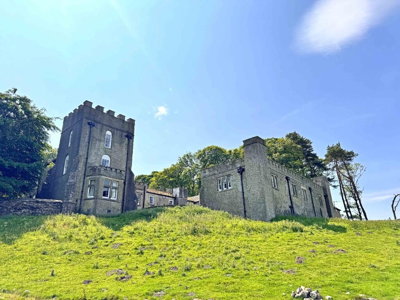
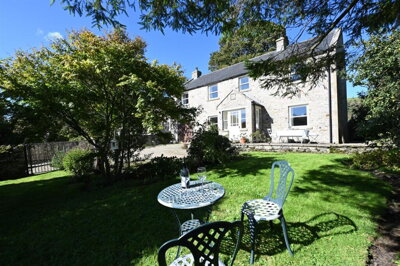
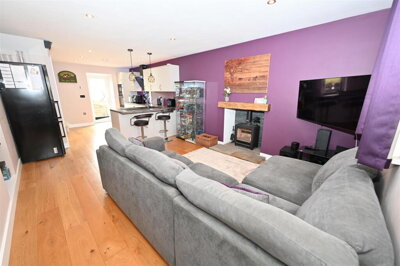
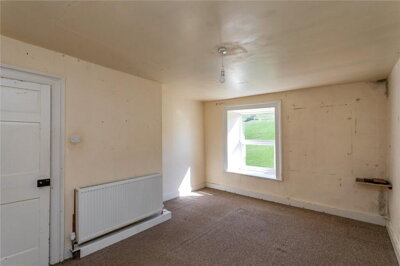
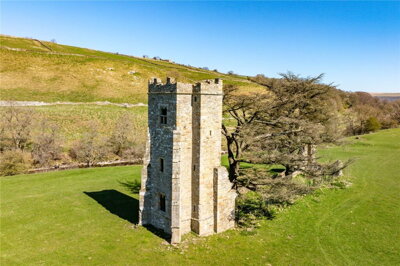
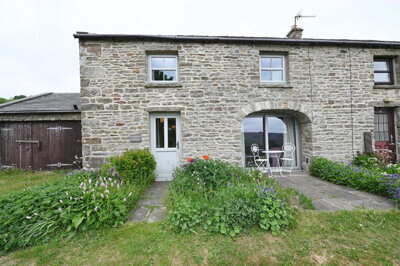
Browse 6 homes for sale in Ellerton Abbey from local estate agents.
The property market in Ellerton Abbey is exceptionally limited by virtue of the village's tiny scale, with only two recorded sales in the past twelve months according to Land Registry data. The most recent transaction completed in July 2025, when Hags Gill Farm on Hags Gill Farm Road sold for £1,600,000, establishing the upper benchmark for the local market. A second sale in February 2025 saw Swale Farm on Swale Farm Road change hands for £440,000, demonstrating the range of property values within this small community. These two transactions represent virtually the entire market activity for the parish, making Ellerton Abbey one of the least active property markets in North Yorkshire.
Due to the extremely low volume of transactions, reliable percentage price trends cannot be calculated with statistical confidence, and median price data should be treated with appropriate caution given the sample size. Previous sales of Swale Farm offer some historical context: the property sold for £540,000 in November 2022 and £640,000 in April 2021, suggesting that certain properties may experience significant value fluctuations depending on their condition, outbuildings, and land holdings. The declining trajectory of Swale Farm's sale prices across these transactions illustrates how individual property characteristics can significantly influence outcomes in this niche market, where comparable sales data is extremely sparse.
Specific breakdowns by property type (detached, semi-detached, terraced, or flat) are not available due to insufficient transaction data. One known property in the area, East Scarr Cottage, represents the semi-detached housing type in Ellerton Abbey, though no recent sold price is recorded for this property. The overwhelming majority of the limited housing stock consists of traditional detached farmhouses and rural properties, with a significant proportion dating from the Georgian or earlier periods. There are no active new-build developments within the Ellerton Abbey postcode area (DL11 6AN), as the Yorkshire Dales National Park's strict planning policies generally limit new residential construction to preserve the landscape's traditional character.

Life in Ellerton Abbey offers an authentic experience of rural North Yorkshire that has remained largely unchanged for generations. The civil parish spans farmland and moorland, with properties scattered across the landscape rather than concentrated in a traditional village centre. This exceptionally low-density settlement pattern means that residents enjoy unparalleled privacy and proximity to open countryside, with immediate access to walking routes across the Yorkshire Dales that attract visitors from across the United Kingdom and beyond. The River Swale, which flows along the southern boundary of the parish, shapes the landscape and provides scenic walking opportunities, though its proximity also means that prospective buyers should be aware of potential river flood risk when considering properties near the watercourse.
The local economy revolves around agriculture, tourism, and heritage activities, with Ellerton Abbey House now home to Ellerton Abbey Antiques and Mrs Pumphrey's Tearoom, providing focal points for both visitors and residents. These establishments draw visitors to the village and contribute to the local economy, though residents should understand that the range of everyday services available within the parish itself is extremely limited. The nearby moorland forms part of an army training area associated with Wathgill Camp, which contributes to the local economy through military-related activity and employment while occasionally affecting access to certain public rights of way when training exercises are in progress.
The village's position within the Yorkshire Dales National Park brings both benefits and obligations. Residents enjoy living within one of England's finest protected landscapes, with strict planning controls ensuring that new development respects the traditional character of the area. The four Grade II listed buildings within the parish, including Ellerton Abbey House, Swale Farmhouse, and the scheduled ancient monument of Ellerton Priory, represent a heritage asset that attracts heritage-conscious buyers who appreciate living among significant historic architecture. Properties within the national park benefit from the enhanced protections that preserve the landscape's beauty and character, but buyers should recognise that any plans for alterations, extensions, or significant maintenance works will require consideration of national park planning policies.
Families considering a move to Ellerton Abbey should be aware that the village itself has no school facilities, consistent with its tiny population of approximately 20 residents. The nearest primary schools are located in surrounding villages and towns, with parents typically needing to factor in school transport arrangements or daily commutes to access education facilities. The rural nature of the area means that primary school options may require travel of several miles, particularly for younger children who would otherwise walk to school in a larger settlement. Parents should research the specific locations and capacities of nearby primary schools, including facilities in villages such as Kirkby Fleetham or Mickleton, before committing to a purchase.
Secondary education in the area is accessed through schools in nearby towns such as Richmond, where the Richmond School and Sixth Form College provides comprehensive secondary education for students from across the wider catchment area. Richmond School has historically performed well in national assessments, though catchment boundaries can be competitive in desirable rural areas, and places may be allocated based on proximity to the school. Parents should research specific school catchment areas and admission policies well in advance of any purchase, as rural school admissions can be competitive and subject to transport considerations. For families prioritising access to highly rated schools, the limited local options may be a significant factor in the buying decision.
The nearest further education colleges and sixth form facilities are located in larger towns including Darlington and Richmond, which offer broader curriculum choices and specialist subjects for students progressing beyond GCSE level. Darlington College provides vocational and academic courses, while Richmond Sixth Form College offers A-level programmes for students continuing their education locally. Given the distances involved, students from Ellerton Abbey accessing further education may require boarding arrangements or daily travel, and families should factor these considerations into their overall relocation planning. Some families choose to relocate to larger towns once children reach secondary school age, while others plan for the practical arrangements required to support education from the village.
Transport connections from Ellerton Abbey reflect its rural character and small scale, with residents relying primarily on private vehicles for the majority of journeys. The nearest railway stations are located in larger towns across North Yorkshire and County Durham, with Darlington railway station offering East Coast Main Line services to London, Edinburgh, and Newcastle as one of the most accessible major rail hubs. Darlington station is approximately 25 miles from Ellerton Abbey by road, making it the most practical option for longer rail journeys despite the drive required to reach it. The village's position within the Yorkshire Dales National Park means that even short journeys to local amenities typically involve travelling along country roads that wind through the landscape.
The A1(M) motorway is accessible via the A66, which runs through nearby Richmond and provides connections to the strategic road network for those commuting to cities including Leeds, Newcastle, and Teesside. However, journey times from Ellerton Abbey to major employment centres are substantial, typically exceeding one hour each way for destinations like Leeds or Newcastle. The A66 itself is a single-carriageway road in sections through the Yorkshire Dales, which can add time to journeys during busy periods or when roadworks are in progress. This makes the village most suitable for those who work from home, are retired, or have employment that does not require daily commuting to urban centres.
Local bus services are limited in frequency and route coverage, as is typical for sparsely populated rural areas where public transport provision is shaped by low passenger numbers. The 31A and 31B bus services operated by provide connections to Richmond and surrounding villages, but service frequency is typically limited to a few journeys per week rather than daily options. Residents without private vehicles may find the village challenging to access for regular shopping, medical appointments, or social activities, and those considering a move without a car should carefully research the actual availability of local services. Cycling can be a viable option for shorter journeys in good weather, though the hilly terrain and country roads require appropriate fitness and confidence, and the narrow lanes common in the national park demand careful cycling practices.
Given the exceptionally limited number of properties available in Ellerton Abbey, start by understanding what has sold recently and what similar properties might be worth. The recent sales of Hags Gill Farm at £1,600,000 and Swale Farm at £440,000 provide reference points, though each property's unique combination of land, buildings, and condition will affect value. With so few comparable transactions, professional valuations become particularly important in this market, and buyers should budget accordingly for detailed assessments.
Before viewing properties, obtain a mortgage agreement in principle from a lender to confirm your borrowing capacity. With properties ranging from £440,000 to over £1,600,000, you will need to establish whether you require a standard residential mortgage, a larger loan, or alternative financing arrangements for valuable rural properties. Some lenders have specialist teams for country properties with land, outbuildings, or non-standard construction, and their expertise can be valuable when arranging finance for unique rural homes.
Given the scarcity of available homes, viewings may be infrequent and competitive. Work with local estate agents who understand the Yorkshire Dales market and can alert you to upcoming properties before they are publicly listed. Be prepared to travel at short notice when suitable properties become available, and consider registering with multiple agents who operate in the national park area, as properties may be marketed exclusively through individual firms rather than across all available platforms.
Before purchasing any property in a rural area, particularly one containing listed buildings or located near the River Swale flood plain, commission a RICS Level 2 or Level 3 survey to assess the property's condition, identify any structural concerns, and flag issues related to traditional construction methods or flood resilience. The traditional stone construction and stone slate roofing typical of Ellerton Abbey properties requires specialist assessment experience, and surveyors familiar with historic Yorkshire Dales buildings will be best placed to identify defects common to these construction types.
Select a solicitor with experience in rural property transactions and Yorkshire Dales National Park considerations. They will handle searches, title verification, and the special considerations that come with purchasing heritage properties or homes in national park areas. Searches specific to rural properties in the national park may include assessments of agricultural rights of way, access arrangements across farmland, and planning history checks that are particularly detailed for listed buildings and properties with heritage designations.
Once all surveys, searches, and legal work are satisfactory, proceed to exchange contracts and set a completion date. Given the rural nature of Ellerton Abbey, ensure that you have arranged buildings insurance to commence from exchange and that you understand any access arrangements for the property. Rural properties may have unusual access arrangements, including rights of way across neighbouring land, and these should be clearly understood before completion. Consider arranging utility connections or transfers well in advance, as some rural properties may require specialist suppliers or longer lead times for service establishment.
Properties in Ellerton Abbey require careful inspection due to their age, construction methods, and the special designations that affect the area. The village's historic buildings, many constructed from roughcast rubble with sandstone dressings and stone slate roofing circa 1830 or earlier, demand attention to traditional building techniques that differ significantly from modern construction. The underlying geology of the area, with its fluvio-glacial gravel over Carboniferous Limestone, has historically influenced foundation design and drainage characteristics, and buyers should understand how these conditions may affect moisture movement through walls and foundations in older properties.
Buyers should specifically look for signs of stone deterioration, roof slate damage, timber condition in floors and roof structures, and the presence of any previous alterations that may not have received appropriate planning consent within the national park. The Carboniferous Limestone geology that underlies much of the parish can contribute to particular maintenance issues in traditional buildings, including freeze-thaw damage to porous stonework during harsh Yorkshire winters. Checking the condition of chimney stacks, parapet walls, and other elevated features is particularly important in older rural properties, where maintenance may have been deferred during periods of vacancy.
Flood risk is a material consideration for properties near the River Swale, which flows along the southern boundary of the parish. While the river contributes significantly to the landscape's beauty and biodiversity, its proximity means that any property within the flood plain should be assessed carefully. Surface water drainage in this rural area may also present challenges, and buyers should investigate the history of any flooding incidents and the adequacy of drainage systems serving the property. The Environment Agency flood risk maps should be consulted for any specific property, and properties with significant flood risk may require specialist insurance arrangements.
The presence of four Grade II listed buildings and one Scheduled Ancient Monument within the parish means that many properties may be subject to listed building consent requirements for alterations, extensions, or even significant maintenance works. Prospective buyers should establish whether their intended property is listed, understand the implications for future works, and factor any restrictions into their renovation budgets and plans. The Yorkshire Dales National Park planning authority will be involved in any significant works, adding both time and cost to projects. Listed building consent applications require detailed specifications and may require heritage expertise in materials and techniques, which can increase the cost of even routine maintenance works compared to equivalent properties outside conservation areas.
The average sold price in Ellerton Abbey over the past 12 months is £1,600,000, based on limited transaction data from Land Registry. However, this figure is heavily influenced by the sale of Hags Gill Farm and may not be representative of all properties. The second recorded sale, Swale Farm, achieved £440,000 in February 2025, demonstrating the significant price range within this tiny market. Previous Swale Farm sales of £540,000 (November 2022) and £640,000 (April 2021) illustrate how individual property characteristics can cause substantial value variations between transactions in this sparse market.
Properties in Ellerton Abbey fall under the council tax jurisdiction of North Yorkshire Council, which collects the tax on behalf of the national park authority and local services. Rural properties with high values, particularly larger detached houses and historic country houses, typically fall into higher council tax bands, with larger period properties often in bands F through H. Specific bandings depend on the property's valuation and characteristics as assessed by the Valuation Office Agency, and buyers should check the VOA database for individual properties before purchase. National park properties may also contribute to additional levy arrangements for conservation and planning services.
There are no schools within Ellerton Abbey itself due to the village's tiny population of approximately 20 residents. The nearest primary schools are located in surrounding villages, with the nearest primary education facilities typically found in villages such as Kirkby Fleetham or through schools in the wider Richmondshire district. Secondary education is available at Richmond School and Sixth Form College in nearby Richmond, which serves a wide rural catchment area. Families should research specific school catchment areas, transport arrangements, and admission policies, as rural schooling often requires longer journeys and more planning than urban equivalents.
Public transport connections from Ellerton Abbey are very limited, reflecting the village's rural location and small scale within the Yorkshire Dales National Park. There is no railway station in the village, with the nearest major rail connections at Darlington, approximately 25 miles away, which provides East Coast Main Line services to London, Edinburgh, and Newcastle. Local bus services operate infrequently, with the limited services running primarily on school days rather than daily. Prospective buyers without private vehicles should carefully assess the practical implications for accessing employment, shopping, healthcare, and social activities before committing to a purchase.
Ellerton Abbey's position within the Yorkshire Dales National Park, combined with its extremely limited housing stock and strong heritage credentials, creates a unique investment proposition. Properties that are well-maintained and appropriately extended may hold their value well, particularly given the rarity of available homes in this exceptional location. The national park designation effectively restricts new housing supply, which supports values in the existing stock. However, the limited market data, high entry prices for quality properties, and restrictions on development within the national park mean that investors should have realistic expectations about liquidity and should factor in the costs of maintaining historic buildings to appropriate standards.
Stamp duty land tax (SDLT) for standard residential purchases in England applies at 0% on the first £250,000, 5% on £250,001 to £925,000, 10% on £925,001 to £1,500,000, and 12% above £1,500,000. First-time buyer relief raises the nil-rate threshold to £425,000 with 5% applying up to £625,000. Given Ellerton Abbey's property prices frequently exceed £400,000, most purchases will attract SDLT. A £440,000 property would incur £9,500 in SDLT for a non-first-time buyer, while a £1,600,000 purchase would attract £116,250 in stamp duty, representing a substantial additional cost that buyers should factor into their budgets from the outset.
From 4.5%
Specialist rural mortgage advice for Ellerton Abbey properties
From £499
Solicitors experienced in Yorkshire Dales National Park transactions
From £350
Detailed inspection of your Ellerton Abbey property
From £80
Energy performance certificate for your property
Purchasing a property in Ellerton Abbey involves stamp duty land tax (SDLT) that varies significantly based on the purchase price and your buyer status. For standard residential purchases completed after September 2022, the SDLT thresholds in England apply as follows: 0% on the first £250,000 of the purchase price, 5% on the portion between £250,001 and £925,000, 10% on the portion between £925,001 and £1,500,000, and 12% on any amount exceeding £1,500,000. Given that recent sales in Ellerton Abbey have ranged from £440,000 to £1,600,000, most buyers will need to budget for SDLT in the tens of thousands of pounds, with higher-value properties attracting substantial duty bills.
First-time buyers benefit from increased thresholds under current legislation, paying 0% SDLT on the first £425,000 and 5% on the portion up to £625,000, with no relief available above that threshold. This means a first-time buyer purchasing a £440,000 property in Ellerton Abbey would pay £750 in SDLT, compared to £9,500 for a non-first-time buyer. However, the higher price points typical of this rural village, combined with the age and character of available properties, mean that many purchases may involve properties priced beyond the first-time buyer relief thresholds. Those purchasing historic country houses or properties with substantial land will typically fall outside first-time buyer relief entirely.
Beyond SDLT, buyers should budget for survey costs, which are particularly important for historic rural properties where traditional construction methods require specialist assessment. RICS Level 2 surveys start from around £350, while Level 3 structural surveys for more complex properties begin from approximately £600. Conveyancing fees for rural property transactions with their additional complexities, including heritage searches and national park planning checks, typically range from £800 to £2,500. Mortgage arrangement fees vary by lender and loan amount, search costs include drainage and environmental searches specific to the Yorkshire Dales area, and buildings insurance must be in place from exchange of contracts. Buyers should also factor in moving costs, potential renovation expenses for traditional buildings, and the ongoing costs of maintaining historic properties to appropriate standards, which may include specialist tradespeople for stonework, thatching, or traditional roofing repairs.
Properties for Sale In London

Properties for Sale In Plymouth

Properties for Sale In Liverpool

Properties for Sale In Glasgow

Properties for Sale In Sheffield

Properties for Sale In Edinburgh

Properties for Sale In Coventry

Properties for Sale In Bradford

Properties for Sale In Manchester

Properties for Sale In Birmingham

Properties for Sale In Bristol

Properties for Sale In Oxford

Properties for Sale In Leicester

Properties for Sale In Newcastle

Properties for Sale In Leeds

Properties for Sale In Southampton

Properties for Sale In Cardiff

Properties for Sale In Nottingham

Properties for Sale In Norwich

Properties for Sale In Brighton

Properties for Sale In Derby

Properties for Sale In Portsmouth

Properties for Sale In Northampton

Properties for Sale In Milton Keynes

Properties for Sale In Bournemouth

Properties for Sale In Bolton

Properties for Sale In Swansea

Properties for Sale In Swindon

Properties for Sale In Peterborough

Properties for Sale In Wolverhampton

Enter your details to see if this property is within your budget.
Loans, cards, car finance
Estimated property budget
Borrowing + deposit
You could borrow between
Typical borrowing
Monthly repayment
Est. at 4.5%
Loan-to-value
This is an estimate only. Your actual budget may vary depending on interest rates, credit history, and personal circumstances. For an accurate affordability assessment, speak to one of our free mortgage advisors.
This calculator provides estimates for illustrative purposes only and does not constitute financial advice. Your home may be repossessed if you do not keep up repayments on your mortgage. Estimates based on 4.5% interest rate, repayment mortgage. Actual rates depend on your circumstances.
Homemove is a trading name of HM Haus Group Ltd (Company No. 13873779, registered in England & Wales). Homemove Mortgages Ltd (Company No. 15947693) is an Appointed Representative of TMG Direct Limited, trading as TMG Mortgage Network, which is authorised and regulated by the Financial Conduct Authority (FRN 786245). Homemove Mortgages Ltd is entered on the FCA Register as an Appointed Representative (FRN 1022429). You can check registrations at NewRegister or by calling 0800 111 6768.

We use cookies to show you personalised content and improve your experience of our website. Find out more in our Privacy policy and Cookie policy.