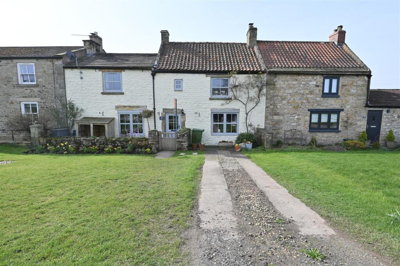
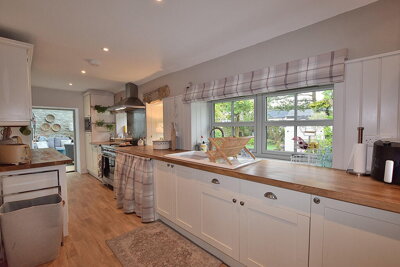
Browse 2 homes for sale in East Layton from local estate agents.
The 2 bed house market features detached, semi-detached, and terraced properties with two separate bedrooms plus living spaces. Properties in East Layton range from Victorian and Edwardian period homes to modern new builds, with pricing varying across different neighbourhoods.
The East Layton property market has demonstrated steady resilience, with average prices increasing by approximately 3% over the past 12 months. This modest but consistent growth reflects the sustained demand for homes in North Yorkshire's rural villages, where properties continue to attract buyers from urban centres seeking a better quality of life. The current market offers a diverse range of property types to suit various budgets and preferences, from traditional stone cottages to substantial family homes.
Detached properties represent the premium end of the market, with an average price of around £385,000. These homes typically offer generous living spaces and larger gardens, making them ideal for families or those working from home. Semi-detached properties, which make up 40% of the housing stock according to census data, average approximately £250,000 and provide excellent value for buyers seeking a balance between space and affordability. Terraced properties start from around £195,000, while flats in the village average approximately £160,000, offering more accessible entry points to this desirable area.
The local housing stock reflects the village's heritage, with approximately 75% of properties built before 1980. Around 25% of homes pre-date 1919, featuring the traditional red brick and local sandstone construction typical of North Yorkshire vernacular architecture, complete with slate or clay tile roofs. A further 35% of properties were constructed between 1945 and 1980, providing a mix of post-war semis and more contemporary designs. New build activity within the immediate East Layton postcode area remains limited, though neighbouring areas may offer newer developments for buyers specifically seeking modern construction.
Property transactions in East Layton move at a pace that reflects its village character. While the market may not see the rapid turnover of urban areas, the approximately 45 annual sales indicate reasonable liquidity for a settlement of this size. Buyers should be prepared to act decisively on properties that meet their requirements, as desirable homes in the Conservation Area or those offering character features tend to attract multiple interested parties.

Life in East Layton revolves around the rhythms of Yorkshire countryside, where the pace of living allows residents to appreciate the natural beauty surrounding them. The village's Conservation Area, centred on its historic core, preserves the character that makes this settlement so distinctive. Traditional architecture featuring local sandstone and red brick, complemented by slate and clay tile roofs, creates an aesthetically cohesive environment that has changed little over generations. The village church and surrounding farmhouses and cottages stand as enduring features of the area's agricultural heritage.
The local economy benefits from a combination of agriculture, small businesses, and the proximity to larger towns that provide additional employment opportunities. Many residents commute to nearby market towns for work in retail, education, and light industry, while others have embraced remote working arrangements that allow them to enjoy rural living without compromising career prospects. The village's population of approximately 1,800 includes a healthy mix of families, couples, and retirees, all contributing to a vibrant community spirit that manifests through local events and gatherings.
Local amenities in the village cater to everyday needs, while the surrounding area offers an abundance of recreational opportunities. The North Yorkshire countryside provides excellent walking and cycling routes, with public footpaths traversing farmland and woodland. The area's geology, characterised by sandstone and shale with areas of glacial till and alluvium, creates varied terrain that adds interest to outdoor pursuits. For cultural activities and broader shopping choices, residents have access to nearby towns that offer additional facilities while still benefiting from the peace and quiet of village life.
Community life in East Layton benefits from several annual events that bring residents together throughout the year. The village hall serves as a focal point for social gatherings, while local pubs provide informal settings for community interaction. For families, the presence of a village church and associated community groups adds to the sense of belonging that defines life in this North Yorkshire settlement.

Families considering a move to East Layton will find educational provision available both within the village and the surrounding area. Primary education is typically provided through local primary schools serving the village and neighbouring communities, with the nearest schools accepting pupils from East Layton. These establishments provide a solid foundation for younger children, with class sizes often smaller than those found in urban areas, allowing for more individual attention and a supportive learning environment.
Primary schools in the North Yorkshire area generally serve catchments that include East Layton and surrounding villages. Parents should verify which specific school their property falls within the catchment for, as admission policies can be competitive in popular rural areas. Many families find that the shorter journey times to local primary schools, compared to urban alternatives, are a significant advantage of village living.
Secondary education options in the region include comprehensive schools in nearby market towns, with many offering a wide range of GCSE and A-Level subjects. Schools in North Yorkshire generally maintain good standards, with regular assessments and Ofsted inspections providing transparency about educational outcomes. For families with specific educational preferences, the wider area offers various options including grammar schools in certain locations, though admission is subject to catchment areas and selection criteria.
Further and higher education opportunities are readily accessible through daily travel to colleges and universities in larger towns and cities within reasonable distance. Many East Layton residents choose to study locally while living at home, taking advantage of the cost savings this arrangement offers. The proximity to larger educational centres also means that older students can commute without difficulty, maintaining their connections to the village community while pursuing their academic ambitions.
Transport connections from East Layton balance rural tranquility with practical accessibility to larger centres. The village sits within the North Yorkshire landscape, with the A1(M) providing north-south motorway access within reasonable distance for those who travel by car. This connectivity makes day-to-day commuting feasible for workers in nearby towns, while also enabling longer journeys to cities such as Leeds and Newcastle for business or leisure purposes.
Public transport options include bus services connecting East Layton with neighbouring villages and market towns, providing essential links for those without private vehicles. These services typically operate at frequencies suited to rural areas, and residents often find that a combination of bus travel and occasional taxi use meets most transport needs adequately. For railway travel, mainline stations in larger towns offer connections to regional and national rail networks, with journey times to major cities making day trips or regular commuting practical possibilities.
Cycling infrastructure in the area continues to develop, with quieter country lanes offering pleasant routes for confident cyclists. The undulating Yorkshire landscape presents some challenge, but also rewards with scenic views across farmland and moorland. For commuters to offices in larger towns, park-and-ride schemes at major destinations can provide a practical solution, combining the benefits of rural living with urban work opportunities. Local parking within the village remains generally adequate for residents' needs, though availability can vary during peak visitor seasons.
For those who travel regularly for work, the proximity of East Layton to the A1(M) corridor is particularly valuable. The motorway provides straightforward access to employment hubs in North Yorkshire and beyond, making same-day commuting feasible for those working in cities such as Leeds, York, or Newcastle. Journey times vary depending on destination and traffic conditions, but many residents find that the benefits of village living more than compensate for the time spent travelling.
Begin by exploring current property listings in East Layton through Homemove. Our platform aggregates properties from local estate agents, allowing you to understand what is available within your budget. With average prices around £275,000 and a range of property types from terraced homes to detached family houses, identifying the right properties for your circumstances is straightforward.
Once you have identified suitable properties, contact the listing agents to arrange viewings. We recommend viewing several properties to compare the condition, character, and value each offers. Properties in the village's Conservation Area may have specific considerations regarding modifications, and older properties dating from before 1919 may require more detailed inspection due to their traditional construction methods.
Before making an offer, secure a mortgage agreement in principle from a lender. This demonstrates to sellers that you are a serious buyer with financing in place. Survey costs in East Layton typically range from £450 to £700 depending on property size and complexity, and arranging your mortgage alongside these costs helps you understand your complete budget.
Given that approximately 75% of East Layton properties were built before 1980, we strongly recommend commissioning a survey before proceeding. Surveys identify common issues in the local housing stock, including dampness, timber defects, and roof condition concerns. For listed buildings or properties within the Conservation Area, consider a more comprehensive survey that accounts for their special characteristics.
Once your offer is accepted, instruct a conveyancing solicitor to handle the legal aspects of your purchase. Your solicitor will conduct searches, review contracts, and coordinate with the seller's representatives through to completion. Factor in local search fees specific to North Yorkshire as part of your overall purchasing costs.
The final steps involve exchanging contracts and completing your purchase. On completion day, you will receive the keys to your new East Layton home. Our conveyancing partners can guide you through this process smoothly, ensuring all legal requirements are satisfied for your move into this charming North Yorkshire village.
Property buyers in East Layton should pay particular attention to construction materials and their implications for maintenance. The predominant use of red brick and local sandstone reflects traditional building practices, but older properties may exhibit different characteristics than modern constructions. Solid wall construction in pre-1919 properties requires different insulation and maintenance approaches compared to cavity-walled homes built from 1919 onwards. Understanding these distinctions helps buyers budget accurately for any improvements or repairs needed.
The local geology presents specific considerations for prospective buyers. The area is characterised by sandstone and shale with superficial deposits including glacial till and alluvium. Areas with clay-rich superficial deposits carry a low to moderate shrink-swell risk, which can affect foundations during prolonged dry spells or periods of heavy rainfall. Properties with mature trees or those located near watercourses may require more detailed structural surveys to assess foundation stability. Surface water flooding represents a moderate risk in certain low-lying areas, and buyers should review flood risk information carefully when considering specific properties.
Common defects found in East Layton's older properties warrant careful attention during the buying process. Rising damp due to failed damp proof courses affects many period properties built before modern construction standards. Penetrating damp through solid walls or defective pointing commonly affects traditional sandstone and brick constructions. Timber defects including rot and woodworm may be present in properties where original woodwork has not been adequately maintained. Roof condition concerns, including deterioration of original slate or tile roofs, slipped slates, worn tiles, and issues with lead flashing, frequently appear in properties over 50 years old. Additionally, many pre-1980 properties may have outdated electrics requiring upgrading for safety and modern standards.
Properties within the designated Conservation Area require careful consideration regarding permitted development rights and planning restrictions. Grade II listed buildings, which include several local farmhouses, cottages, and the village church, are subject to additional regulations governing external alterations and improvements. These restrictions help preserve the village's character but may limit future modification options. Prospective buyers should obtain Listed Building consent information from the local planning authority before committing to a purchase.
The average house price in East Layton currently stands at approximately £275,000, based on recent sales data. Property prices vary significantly by type, with detached properties averaging £385,000, semi-detached homes around £250,000, terraced properties at approximately £195,000, and flats starting from £160,000. The market has shown steady growth, with prices increasing by approximately 3% over the past 12 months, reflecting continued demand for homes in this North Yorkshire village. Given this average price point, most buyers purchasing at or near the typical market value will find their transactions fall within the lower Stamp Duty thresholds.
Properties in East Layton fall under North Yorkshire council tax banding. Most residential properties in the area typically fall within bands A through D, which are among the lower council tax bands in England. Band A covers properties valued up to £40,000, while band D covers those valued between £88,000 and £120,000 at the time of valuation. Prospective buyers should verify the specific band for any property through the Land Registry or local authority records, as band allocations affect ongoing monthly costs significantly. The actual monthly charge varies based on the band and the North Yorkshire council tax requirement set annually.
East Layton is served by local primary schools in the village and surrounding area, with secondary education available at schools in nearby market towns. North Yorkshire schools generally perform well in Ofsted inspections, and parents should review current inspection reports for specific schools to assess their current performance. Primary schools serving East Layton typically have smaller class sizes than urban alternatives, which many parents find beneficial for their children's early education. The wider area provides access to various educational pathways including grammar schools where applicable, with further and higher education options accessible through daily travel to colleges and universities in larger centres such as Leeds, York, and Newcastle.
Public transport from East Layton operates through local bus services connecting the village with neighbouring communities and market towns. While frequencies reflect the typical patterns of rural areas rather than urban centres, these services provide essential connectivity for residents without private vehicles. The bus routes serving East Layton typically connect to larger villages and towns where additional onward connections become available. Mainline railway stations in nearby towns offer connections to regional and national rail networks, enabling access to cities including Leeds, York, and Newcastle. The A1(M) motorway provides efficient north-south road travel for those with cars, with journey times to Leeds taking approximately 45 minutes to an hour depending on traffic conditions.
East Layton offers several factors that may appeal to property investors. The village benefits from its semi-rural character and proximity to larger towns, maintaining consistent demand from buyers seeking countryside living. Approximately 45 property sales occur annually, indicating reasonable market liquidity for a village of this size. The presence of a Conservation Area and listed buildings, while imposing some restrictions, also preserves property values by maintaining the village's attractive character. First-time buyers and families continue to show interest in the area, supporting rental demand in the local market. The limited new build supply in the immediate area means demand for existing properties remains steady, though investors should carefully consider yield potential against the higher average purchase prices for detached and semi-detached properties in the village.
Stamp duty rates in East Layton follow standard UK thresholds as set by the Government. For primary residences, buyers pay nothing on the first £250,000 of the purchase price, 5% on the portion between £250,001 and £925,000, 10% up to £1.5 million, and 12% on amounts exceeding £1.5 million. First-time buyers benefit from relief on the first £425,000, paying 5% on the amount between £425,001 and £625,000 with no relief above that threshold. Given the average East Layton price of £275,000, most standard purchases would incur no stamp duty for first-time buyers. Standard buyers purchasing at the village average would pay £1,250 on the £25,000 portion exceeding the threshold.
Understanding the full costs of purchasing property in East Layton requires consideration of several factors beyond the purchase price itself. The most significant additional cost for many buyers is Stamp Duty Land Tax, which applies to transactions above the relevant threshold. For a typical East Layton property priced around the village average of £275,000, standard buyers would incur stamp duty of £1,250 on the amount above £250,000. First-time buyers purchasing properties at this price point would typically pay no stamp duty due to the higher threshold and relief available.
Survey costs represent another important consideration, particularly given the age of much of the local housing stock. RICS Level 2 Surveys in East Layton typically range from £450 to £700, depending on the property's size and construction complexity. Properties over 50 years old, which comprise approximately 75% of the local housing stock, benefit significantly from these surveys, which identify issues such as dampness, timber defects, and roof condition concerns. For listed buildings or properties within the Conservation Area, specialist surveys providing additional assessment of historical construction may incur higher costs. The investment in a thorough survey can save buyers significant expense by identifying problems before completion.
Conveyancing fees, local authority searches, and disbursements typically total between £800 and £1,500 depending on the property and solicitor chosen. Local searches for North Yorkshire may include drainage and water searches, environmental searches, and planning history checks specific to the East Layton area. These searches reveal information about matters including flood risk, contamination history, and any planning proposals that might affect the property. Mortgage arrangement fees vary by lender but commonly range from free to around £1,500, often added to the loan amount. Factor in removal costs, potential redecoration, and furnishing expenses when budgeting for your complete move to East Layton.
From £450
A detailed survey identifying defects common in East Layton's older properties, including damp, timber issues, and roof condition
From £600
A comprehensive building survey for larger or older properties, including those in the Conservation Area
From £85
Energy performance certificate required for all property sales
From 3.5%
Compare mortgage rates from leading lenders for your East Layton purchase
From £499
Expert legal services for your property purchase
Properties for Sale In London

Properties for Sale In Plymouth

Properties for Sale In Liverpool

Properties for Sale In Glasgow

Properties for Sale In Sheffield

Properties for Sale In Edinburgh

Properties for Sale In Coventry

Properties for Sale In Bradford

Properties for Sale In Manchester

Properties for Sale In Birmingham

Properties for Sale In Bristol

Properties for Sale In Oxford

Properties for Sale In Leicester

Properties for Sale In Newcastle

Properties for Sale In Leeds

Properties for Sale In Southampton

Properties for Sale In Cardiff

Properties for Sale In Nottingham

Properties for Sale In Norwich

Properties for Sale In Brighton

Properties for Sale In Derby

Properties for Sale In Portsmouth

Properties for Sale In Northampton

Properties for Sale In Milton Keynes

Properties for Sale In Bournemouth

Properties for Sale In Bolton

Properties for Sale In Swansea

Properties for Sale In Swindon

Properties for Sale In Peterborough

Properties for Sale In Wolverhampton

Enter your details to see if this property is within your budget.
Loans, cards, car finance
Estimated property budget
Borrowing + deposit
You could borrow between
Typical borrowing
Monthly repayment
Est. at 4.5%
Loan-to-value
This is an estimate only. Your actual budget may vary depending on interest rates, credit history, and personal circumstances. For an accurate affordability assessment, speak to one of our free mortgage advisors.
This calculator provides estimates for illustrative purposes only and does not constitute financial advice. Your home may be repossessed if you do not keep up repayments on your mortgage. Estimates based on 4.5% interest rate, repayment mortgage. Actual rates depend on your circumstances.
Homemove is a trading name of HM Haus Group Ltd (Company No. 13873779, registered in England & Wales). Homemove Mortgages Ltd (Company No. 15947693) is an Appointed Representative of TMG Direct Limited, trading as TMG Mortgage Network, which is authorised and regulated by the Financial Conduct Authority (FRN 786245). Homemove Mortgages Ltd is entered on the FCA Register as an Appointed Representative (FRN 1022429). You can check registrations at NewRegister or by calling 0800 111 6768.

We use cookies to show you personalised content and improve your experience of our website. Find out more in our Privacy policy and Cookie policy.