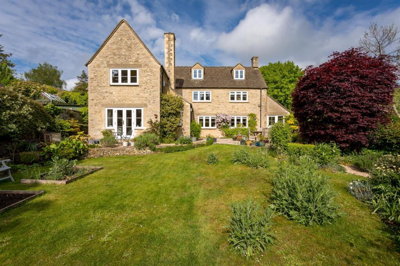
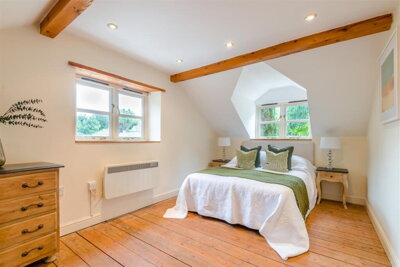
Browse 2 homes for sale in Duntisbourne Rouse from local estate agents.
The larger property sector typically features multiple bathrooms, substantial reception space, and private gardens or off-street parking. Four bedroom houses in Duntisbourne Rouse span detached, semi-detached, and occasionally terraced configurations, with styles ranging from period properties to modern executive homes.
The Duntisbourne Rouse property market centres on traditional period homes constructed from the characteristic Cotswold limestone. Our data shows that sale values in the GL7 7JH postcode average £673,956, with prices ranging from approximately £330,048 for leasehold flats to around £829,023 for substantial five-bedroom freehold houses with gardens. The dominant housing type consists of period properties built between 1800 and 1911, reflecting the village's long history and the enduring appeal of its architectural heritage. Recent transactions include Christis Barn sold for £800,000 in April 2022 and Ford Cottage achieving £600,000 in September 2021.
Property transactions in this Cotswold village tend to be infrequent but significant, with each sale representing a unique piece of local property history. The Old Rectory on Cirencester Road sold for £2,460,000 in July 2017, demonstrating the premium achievable for substantial period residences with historical importance. Nearby Duntisbourne Abbotts shows an average property price of £1,100,000 over the past year, while a recent sale in Duntisbourne Leer (GL7 7AS) achieved £900,000 in January 2025. The GL7 7JH sales market has increased by 30.8% over the past decade, indicating sustained demand for village properties in this highly desirable location.
New build activity in Duntisbourne Rouse remains virtually non-existent due to the village's rural character and protected AONB status. Planning restrictions associated with the Conservation Area and listed building designations severely limit new development opportunities, preserving the village's essential character. This scarcity of new housing supply contributes to the robustness of existing property values and ensures that homes here remain genuine rarities in the marketplace. The housing stock consists almost entirely of detached and semi-detached period properties, with no terraced housing or flats in the GL7 7JH postcode. For properties with gardens, The Coach House on Cirencester Road sold for £625,000 in July 2021, while Woodside Cottage in GL7 7AP achieved £685,000 in November 2020.
Buyers seeking modern specifications may need to consider properties in nearby Cirencester or Cheltenham instead, though they will sacrifice the authentic village atmosphere that Duntisbourne Rouse offers. The combination of limited supply, strong demand from buyers seeking rural Cotswold living, and the protective AONB designation creates a market environment where properties rarely appear for sale and command premium prices when they do.

Duntisbourne Rouse embodies the quintessential Cotswold village experience, characterised by honey-coloured stone cottages, winding country lanes, and an atmosphere of timeless tranquility. The village sits within the Cotswolds AONB, surrounded by farmland, meadows, and ancient woodlands that have remained largely unchanged for centuries. The population is small, fostering a close-knit community atmosphere where neighbours know one another and local events bring residents together throughout the year. This intimate scale creates a genuine sense of place that larger towns simply cannot replicate.
The architectural character of Duntisbourne Rouse reflects centuries of continuous habitation, with buildings constructed using locally quarried oolitic limestone that gives the village its distinctive warm golden appearance. Stone slate roofs, traditional timber windows, and mellow stone walls create a harmonious streetscape that has been preserved through strict planning controls. The village falls within a Conservation Area, meaning that any alterations to properties must respect the historic fabric and appearance that makes this location so special. Listed buildings dot the village, ranging from modest cottages to substantial farmhouses and the notable Old Rectory.
Daily life in Duntisbourne Rouse revolves around appreciating the natural environment and the rhythms of rural England. Local footpaths and bridleways provide endless walking and cycling opportunities through some of England's most beautiful countryside. The nearby market town of Cirencester, just a short drive away, provides essential services including supermarkets, independent shops, restaurants, and healthcare facilities. The broader Cotswolds economy supports employment in tourism, agriculture, and the professional services that serve this prosperous region.
The village serves as an ideal base for exploring the wider Cotswolds, with easy access to attractions including the Cotswold Water Park, Blenheim Palace, and the historic towns of Broadway and Stow-on-the-Wold. For those working remotely or with flexible commuting arrangements, the village offers an exceptional quality of life that justifies the premium property values. The presence of reliable broadband in the area has made rural working increasingly practical for professionals who previously would have needed to live closer to major employment centres.

Families considering a move to Duntisbourne Rouse will find educational options available within reasonable driving distance, with Cirencester offering several well-regarded primary and secondary schools. The village's small population means that local primary education is typically accessed through schools in surrounding villages or in nearby towns, with school transport arrangements often available for families. Primary schools in the surrounding area have built solid reputations for nurturing young learners in small class environments that mirror the village's intimate character. Parents should research specific catchment areas and admission arrangements, as these can significantly influence school placement.
Secondary education options include the Royal Agricultural University campus near Cirencester and comprehensive schools in larger nearby towns that serve the wider Cotswold area. The Royal Agricultural University itself offers higher education programmes and contributes significantly to the educational character of the surrounding region. Many families choose to settle in this area specifically because of the balance between rural living and access to quality educational institutions. For those seeking private education, a number of independent schools operate within the broader Gloucestershire region, including establishments with excellent academic records and traditional values.
Further and higher education opportunities expand considerably when considering the proximity of universities in Cheltenham, Gloucester, and Oxford. Students can access a broad range of undergraduate and postgraduate programmes without relocating to distant cities, maintaining family connections while pursuing academic ambitions. The presence of the Royal Agricultural University in nearby Cirencester provides unique opportunities for those interested in land-based studies, rural business management, and environmental sciences. Families should factor school transport arrangements and journey times into their decision-making process when purchasing property in Duntisbourne Rouse.
The surrounding villages host several primary schools that serve the local community, with many operating small class sizes that provide individual attention for pupils. Parents frequently cite the quality of education available in the Cirencester area as a key factor in their decision to relocate to villages like Duntisbourne Rouse. The combination of strong state schools and accessible independent options ensures that families have genuine choices when selecting educational provision for their children.
Transport connections from Duntisbourne Rouse centre on road travel, with the village connected to the wider road network via country lanes linking to A417 and A429 trunk routes. The A417 provides access to Gloucester and Cheltenham to the north, while the A429 connects through Cirencester towards Swindon and the M4 motorway to the east. Journey times by car to Cirencester typically take around 15-20 minutes, making regular access to the nearest market town practical for daily needs. The scenic nature of these routes makes even routine journeys pleasant, passing through rolling Cotswold countryside.
Rail connections from the broader area offer access to major cities, with train services available from Cheltenham Spa, Gloucester, and Kemble (near Cirencester). The Kemble station on the Swindon to Gloucester line provides connections to London Paddington via Swindon, typically offering journey times of around an hour to the capital. Commuters to London frequently choose to drive to Kemble station, benefiting from free parking and regular train services. Those working in Cheltenham or Gloucester may find commuting by car entirely practical given the reasonable road journey times.
Bus services connect Duntisbourne Rouse with surrounding villages and Cirencester, providing essential public transport options for those without private vehicles. These services are typically less frequent than urban bus networks, so residents generally plan journeys in advance rather than relying on spontaneous travel. Cycling can be an enjoyable way to explore the local area, though the hilly Cotswold terrain makes longer journeys more challenging than in flatter regions. Many residents embrace the rural character of these transport arrangements, appreciating that the trade-off for living in such beautiful countryside involves accepting more limited public transport options.
For commuters working in London, the drive to Kemble station takes approximately 30 minutes, after which the train reaches London Paddington in around 60-70 minutes. This makes Duntisbourne Rouse practical for those with London-based employment who can work from home several days per week. The A417 provides a direct route to Gloucester, where employment opportunities include the large NHS Trust, the university, and various professional services sectors.
Explore property listings in Duntisbourne Rouse and surrounding Cotswold villages. Understand the range of period properties available, from traditional stone cottages to substantial period farmhouses. Given the limited stock and potential competition, being well-informed about local prices and property types helps set realistic expectations. Register with local estate agents who handle village properties, as many sales occur off-market through established relationships.
Schedule viewings of properties that match your requirements, taking time to assess the condition of period features and identify any maintenance concerns. Properties in this area may have been subject to varying standards of upkeep, so attending multiple viewings helps calibrate your expectations. Bring a notebook to record observations about each property you visit. Take photographs with permission, as comparing properties becomes challenging when viewing several homes over weeks or months.
Approach lenders to secure a mortgage agreement in principle before making any offer. This demonstrates your purchasing capability to sellers and their agents, strengthening your position in a competitive market. Given the higher property values in this Cotswold village, ensure your borrowing capacity aligns with the local price range. Specialist lenders familiar with period properties and listed buildings may offer better terms for older construction types.
For period properties typical of Duntisbourne Rouse, arrange a comprehensive survey to assess the condition of the building and identify any defects. Older stone properties may have specific issues relating to damp, roof condition, or outdated services that require attention. The survey cost represents a worthwhile investment given the significant sums involved in purchasing property here. Properties with Listed Building status may benefit from the more detailed RICS Level 3 Building Survey.
Appoint a solicitor experienced in Cotswold property transactions, particularly if the property is listed or within a Conservation Area. Additional searches and planning considerations may apply in these circumstances. Your solicitor will handle title checks, local authority searches, and the complex paperwork involved in completing your purchase. Specialist knowledge of historic property law proves valuable when navigating the additional regulations affecting period homes.
Once all searches are satisfactory and finances are confirmed, proceed to exchange contracts and set a completion date that suits your moving arrangements. The rural nature of Duntisbourne Rouse means coordinating removals carefully, particularly for larger properties with substantial contents. Ensure buildings insurance is in place from the point of exchange, as you become legally responsible for the property at that stage.
Purchasing a property in Duntisbourne Rouse requires careful attention to the specific characteristics of Cotswold period homes, which often differ significantly from modern constructions. The underlying limestone geology generally presents a lower shrink-swell risk compared to clay-heavy areas, reducing the likelihood of subsidence from ground movement. However, localised clay deposits can still cause issues, so a thorough survey remains essential for any property purchase. The presence of traditional lime mortar rather than modern cement is actually beneficial for older stone properties, allowing the walls to breathe and reducing damp penetration when maintained correctly.
Conservation Area and Listed Building considerations significantly impact what buyers can and cannot do with their property after purchase. Grade II listed buildings require planning permission for most alterations, and any works must preserve the historic character using appropriate materials and techniques. The property's Listing status should be verified through the local planning authority before committing to purchase. These restrictions, while potentially limiting, also protect your investment by ensuring the village retains its distinctive character. Buyers should budget for the additional costs of specialist contractors who understand traditional building methods.
Stone slate roofs require specialist knowledge to assess and maintain, with slipped or broken slates representing common issues in older properties. Leadwork around chimneys and valleys can deteriorate over time, requiring periodic attention to prevent water ingress. Electrical and plumbing systems in period properties frequently fall below current standards, necessitating upgrading works that buyers should budget for alongside the purchase price. Timber defects including woodworm and rot can affect structural elements, particularly in properties where damp has been allowed to penetrate. The Cotswold stone construction typically involves random rubble or coursed rubble patterns that require understanding of traditional building techniques.
Flood risk in Duntisbourne Rouse relates primarily to surface water rather than river flooding, given the village's elevated inland position within the Cotswolds. Localised drainage issues can affect properties in lower-lying areas, particularly those near the village's small watercourses. A comprehensive flood risk assessment should form part of the legal searches, checking both the standard environment agency data and any local records of surface water flooding. Properties near trees may require assessment for root damage to foundations or drains, which can cause structural movement even in the generally stable limestone geology.
Properties in the GL7 7JH postcode area that covers Duntisbourne Rouse have an average sale value of £673,956. Sale prices in this postcode range from approximately £330,048 for leasehold flats up to £829,023 for substantial five-bedroom freehold houses with gardens. Individual notable sales have achieved significantly higher prices, with The Old Rectory on Cirencester Road selling for £2,460,000 in July 2017. The local market has experienced a 30.8% increase over the past decade, indicating sustained demand for village properties in this highly desirable Cotswold location. Recent transactions in the village include Christis Barn at £800,000 in April 2022 and Ford Cottage achieving £600,000 in September 2021.
Properties in Duntisbourne Rouse fall under Cotswold District Council jurisdiction. Most period properties in the village will likely fall into Bands D through H due to their substantial size and historical value. Specific band assignments depend on the property's assessed value, and buyers should verify the exact band through the Valuation Office Agency before purchase. Council tax payments fund local services including refuse collection, road maintenance, and local authority services. The higher bands reflect both the size of traditional Cotswold farmhouses and the premium values that village properties command.
As a small village, Duntisbourne Rouse does not have its own school, with primary education accessed through schools in surrounding villages and the Cirencester area. The surrounding Cotswold schools maintain good reputations for educational quality, and the proximity to Cirencester provides access to secondary education options including both comprehensive and grammar schools. The Royal Agricultural University in Cirencester offers higher education programmes in land-based subjects and rural business studies. Families should research specific catchment areas and admission policies, as these can be competitive given the popularity of the area with relocating families.
Public transport options from Duntisbourne Rouse are limited, reflecting its rural village character. Bus services connect the village to Cirencester and surrounding areas, though frequencies are lower than in urban locations. The nearest railway stations are at Kemble (approximately 30 minutes by car) and Cheltenham Spa, providing connections to London Paddington and other major cities. Most residents rely on private cars for daily transport, with the village being well-connected to the A417 and A429 road networks. The drive to Kemble station offers free parking, making it practical for commuters working in London who can reach the capital in approximately 90 minutes.
Property in Duntisbourne Rouse has historically demonstrated strong capital appreciation, with the local market increasing by 30.8% over the past decade. The combination of limited housing supply, AONB protection, and enduring demand for Cotswold village properties supports long-term value. Properties within Conservation Areas and those with Listed Building status benefit from additional protections that preserve character. Rental yields may be modest compared to urban areas, but the primary attraction lies in capital growth and the lifestyle benefits of rural living. The village's proximity to strong employment centres in Cheltenham, Gloucester, and Swindon enhances its appeal to commuting buyers.
Stamp Duty Land Tax applies to all property purchases in England. For standard purchases, there is no SDLT on the first £250,000, with 5% charged between £250,001 and £925,000. Given that most Duntisbourne Rouse properties exceed £500,000, buyers should budget for SDLT of at least £15,000-£20,000 on typical purchases. For a property priced around £673,956, SDLT would amount to approximately £21,148. First-time buyers receive relief on the first £425,000 for properties up to £625,000, but this relief phases out completely above that threshold. Always verify your SDLT position with a financial adviser based on your specific circumstances.
Period properties in Duntisbourne Rouse require attention to damp (rising, penetrating, and condensation), stone slate roof condition, and the quality of traditional lime mortar pointing. Outdated electrical and plumbing systems frequently require upgrading to meet current standards. Timber defects including woodworm and rot can affect structural elements. Properties may be affected by surface water flooding given the local topography, so flood risk assessments should be included in your legal searches. Listed Buildings require specialist consideration for any planned works, as works affecting historic fabric require appropriate consents and specialist contractors.
From £350
Identify defects in period properties with a comprehensive condition report
From £500
Detailed structural survey for complex or historic properties
From £60
Energy performance certificate for your property
From £499
Expert legal services for your property purchase
Purchasing property in Duntisbourne Rouse involves various costs beyond the purchase price itself, and understanding these expenses helps buyers budget effectively. Stamp Duty Land Tax represents the most significant additional cost, with standard rates applying 5% on the portion of purchase price between £250,001 and £925,000. For a typical property priced around £673,956, this would result in SDLT of approximately £21,148. These costs apply to all buyers except those qualifying for first-time buyer relief, which provides zero SDLT on the first £425,000 and 5% on the next £200,000 for properties up to £625,000.
Survey costs are particularly important given the age and character of properties in Duntisbourne Rouse. A RICS Level 2 Survey typically costs from £350 for standard properties, rising for larger or more complex period homes. Given that most village properties were built before 1911, a comprehensive survey helps identify defects specific to traditional Cotswold stone construction. Specialist surveys may be required for Listed Buildings, where the unique construction methods and historical significance demand expert assessment. These survey costs represent a worthwhile investment that can reveal issues requiring negotiation or future budgeting.
Conveyancing fees for a Duntisbourne Rouse property purchase typically start from around £499, rising depending on the complexity of the transaction and property value. Additional legal costs include local authority searches (typically £200-£300), land registry fees, and disbursements. Properties in Conservation Areas or with Listed Building status may require additional searches and specialist conveyancing knowledge. Removal costs vary based on the volume of belongings and distance travelled, with larger period properties often requiring more substantial moving budgets. Building insurance must be arranged from the point of contract exchange, adding an ongoing annual cost to your property ownership.
Properties for Sale In London

Properties for Sale In Plymouth

Properties for Sale In Liverpool

Properties for Sale In Glasgow

Properties for Sale In Sheffield

Properties for Sale In Edinburgh

Properties for Sale In Coventry

Properties for Sale In Bradford

Properties for Sale In Manchester

Properties for Sale In Birmingham

Properties for Sale In Bristol

Properties for Sale In Oxford

Properties for Sale In Leicester

Properties for Sale In Newcastle

Properties for Sale In Leeds

Properties for Sale In Southampton

Properties for Sale In Cardiff

Properties for Sale In Nottingham

Properties for Sale In Norwich

Properties for Sale In Brighton

Properties for Sale In Derby

Properties for Sale In Portsmouth

Properties for Sale In Northampton

Properties for Sale In Milton Keynes

Properties for Sale In Bournemouth

Properties for Sale In Bolton

Properties for Sale In Swansea

Properties for Sale In Swindon

Properties for Sale In Peterborough

Properties for Sale In Wolverhampton

Enter your details to see if this property is within your budget.
Loans, cards, car finance
Estimated property budget
Borrowing + deposit
You could borrow between
Typical borrowing
Monthly repayment
Est. at 4.5%
Loan-to-value
This is an estimate only. Your actual budget may vary depending on interest rates, credit history, and personal circumstances. For an accurate affordability assessment, speak to one of our free mortgage advisors.
This calculator provides estimates for illustrative purposes only and does not constitute financial advice. Your home may be repossessed if you do not keep up repayments on your mortgage. Estimates based on 4.5% interest rate, repayment mortgage. Actual rates depend on your circumstances.
Homemove is a trading name of HM Haus Group Ltd (Company No. 13873779, registered in England & Wales). Homemove Mortgages Ltd (Company No. 15947693) is an Appointed Representative of TMG Direct Limited, trading as TMG Mortgage Network, which is authorised and regulated by the Financial Conduct Authority (FRN 786245). Homemove Mortgages Ltd is entered on the FCA Register as an Appointed Representative (FRN 1022429). You can check registrations at NewRegister or by calling 0800 111 6768.

We use cookies to show you personalised content and improve your experience of our website. Find out more in our Privacy policy and Cookie policy.