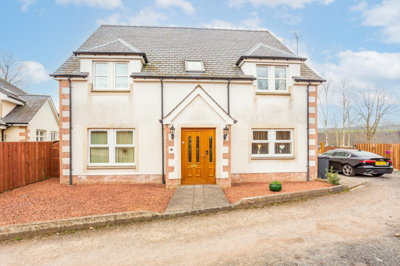
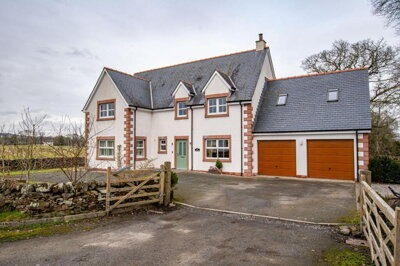
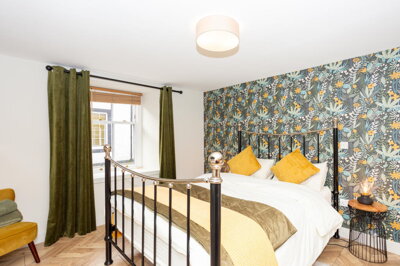
Browse 3 homes for sale in DG3 from local estate agents.
The larger property sector typically features multiple bathrooms, substantial reception space, and private gardens or off-street parking. Four bedroom houses in DG3 span detached, semi-detached, and occasionally terraced configurations, with styles ranging from period properties to modern executive homes.
£273k
2
1
100
Source: home.co.uk
Showing 2 results for 4 Bedroom Houses for sale in DG3. 1 new listing added this week. The median asking price is £272,500.
Source: home.co.uk
Detached
1 listings
Avg £345,000
Semi-Detached
1 listings
Avg £200,000
Source: home.co.uk
Source: home.co.uk
The DG3 property market has demonstrated steady growth over the past year, with overall prices increasing by 1.4% according to the latest data. Detached properties command the highest prices in the area, averaging £231,000, reflecting the strong demand for family homes with generous gardens and rural views. Semi-detached homes, averaging £150,000, represent excellent value for first-time buyers seeking their first step onto the property ladder in a peaceful setting. The terraced property sector, averaging £120,000, has shown the strongest growth at 2.6% over the last 12 months, indicating increasing buyer interest in these more affordable homes.
Property types in DG3 reflect the area's diverse character, with detached homes comprising approximately 35% of the housing stock, semi-detached properties at 30%, terraced homes at 25%, and flats making up the remaining 10%. This mix provides options across all budgets, from affordable starter homes to spacious family properties with countryside views. The age distribution of properties shows that 30% were built before 1919, featuring traditional red sandstone construction, while 30% date from the post-war period 1945-1980, and the remaining 40% comprises more modern construction from 1980 onwards.
For buyers seeking modern accommodation, the DG3 area benefits from several active new-build developments. Story Homes offers 3, 4, and 5-bedroom detached and semi-detached homes at The Meadows near Penpont (DG3 4DG), priced from approximately £200,000 to £350,000. Barratt Homes presents Lochside Grange near Closeburn (DG3 4AA) with 2, 3, and 4-bedroom options ranging from £160,000 to £280,000. Persimmon Homes rounds out the new-build selection at Kirkton Gardens near Sanquhar (DG3 5DQ), offering 2, 3, and 4-bedroom homes from £150,000 to £260,000. These developments provide opportunities for buyers who prefer the certainty of a new property with modern construction standards and energy efficiency ratings.

The DG3 postcode area encompasses a beautiful stretch of Dumfries and Galloway countryside centred around the market town of Thornhill and the Royal Burgh of Sanquhar. The character of the housing stock reflects the area's heritage, with approximately 30% of properties built before 1919, many featuring the distinctive local red sandstone that has been quarried from the area for centuries. Walking through conservation areas in both Thornhill and Sanquhar, visitors encounter handsome Georgian and Victorian buildings that speak to the prosperity these market towns once enjoyed as centres of trade and commerce. The remaining housing stock splits fairly evenly between mid-century developments from 1945-1980 and more recent construction, providing options across all budgets and preferences.
Thornhill itself maintains a planned village layout with a significant conservation area protecting its historic character. The town centre features traditional sandstone buildings housing local shops, cafes, and services, while residential streets extend outwards to more modern developments. Sanquhar, designated a Royal Burgh, offers a different character with its High Street conservation area featuring historic buildings that reflect its importance as a former market town. Both towns provide essential local services including GP surgeries, pharmacies, and convenience stores, reducing the need for frequent trips to larger centres.
The local economy of DG3 relies on a mix of agriculture, forestry, tourism, and public sector employment. Drumlanrig Castle, a magnificent Category A listed building set in expansive grounds, stands as one of the region's premier visitor attractions and provides employment for many local residents. Agriculture remains significant, with farms in the surrounding area producing livestock and crops, while the forestry sector has grown in importance in recent decades. Local services, healthcare facilities, and education establishments provide stable employment, and the proximity to Dumfries (approximately 20 miles away) allows residents to commute for work in a larger town while enjoying the lower cost of living that DG3 offers.
Education provision in the DG3 area serves families well, with primary schools in Thornhill, Sanquhar, and surrounding villages providing local education for younger children. Thornhill Primary School serves as the main primary education centre for the Thornhill area, while Sanquhar Primary School serves the eastern part of the postcode. These schools typically feed into Douglas Academy or other nearby secondary schools, where pupils can pursue National 5 and Higher qualifications in a supportive environment. The relatively small class sizes common in rural schools often mean that children receive more individual attention and support from teachers.
The catchment area system operated by Dumfries and Galloway Council means that school placement depends on your property's location within the DG3 postcode. Parents considering relocation to DG3 should research current catchment areas and any placing requests they may wish to submit, as these can affect which school their children attend. The council education authority manages school admissions, and families are encouraged to contact the local education department for the most up-to-date information on admissions policies, school performance data, and any planned changes to school provision in the area. Education Scotland inspection reports provide valuable information on school quality and can be found on the Education Scotland website.
For families seeking faith-based education or specialist provision, options may be available in Dumfries, though this would involve a longer daily commute of approximately 30-40 minutes each way. Some families choose to relocate to DG3 for the primary years and then consider a move closer to secondary options in larger towns if their preferred school is not within the catchment area. The small scale of rural schools often means stronger community ties and more involvement from parents in school activities, which many families find appealing when weighing up education options.
Transport connections in DG3 reflect the rural nature of the area, with road travel forming the backbone of local transportation. The A76 trunk road runs through the heart of the postcode, connecting Thornhill and Sanquhar and providing access to Dumfries to the south and the M74 motorway for travel to Glasgow and Edinburgh to the north. Journey times to Dumfries typically take around 30-40 minutes by car, while Glasgow can be reached in approximately 90 minutes under normal traffic conditions. The scenic drive through the Nith valley makes commuting by car relatively pleasant compared to urban routes, though residents should be prepared for some winding country roads when travelling between villages.
Public transport options are more limited in this rural area, with bus services providing the primary alternative to car travel. Local bus services connect the main towns and villages within DG3, though frequencies may be lower than in urban areas, making a car virtually essential for many residents. The X77 service provides a connection between Dumfries and the DG3 towns, though journey times are longer than by car and services may not run on Sundays or public holidays. The nearest railway stations are located in Dumfries, providing connections to the wider rail network for longer journeys to Edinburgh, Glasgow, and beyond.
For residents working in larger towns, the relatively straightforward road access to Dumfries and the M74 motorway makes DG3 viable for commuters who prefer to live in the countryside while working in a larger town or city. However, prospective residents should realistically assess their commuting requirements before purchasing, as the lack of public transport alternatives means that two cars per household is common in rural areas. Cycling is popular for shorter local journeys, with the scenic Nith valley providing attractive routes for recreational and commuter cycling alike.
Start by exploring current listings in the DG3 area to understand what is available at your budget. Our platform shows all properties from local estate agents, including new builds at The Meadows, Lochside Grange, and Kirkton Gardens. Consider working with a local estate agent who knows the Thornhill and Sanquhar markets intimately and can provide insight into property values and negotiation strategies specific to this rural postcode.
Obtain a mortgage agreement in principle before viewing properties. DG3 properties range from flats around £70,000 to detached homes over £230,000, so understanding your borrowing limit will focus your search. Contact local mortgage brokers or use our comparison service to find competitive rates. With average prices at £177,500, many properties in DG3 fall within the first-time buyer SDLT relief threshold, potentially saving buyers thousands of pounds.
Visit properties that match your requirements, paying attention to construction materials, potential flood risk areas near rivers, and the condition of older sandstone properties. Consider the timing of your move and factor in local factors such as school catchment areas and commuting requirements. Our team recommends viewing properties at different times of day to assess noise levels, lighting, and the neighbourhood atmosphere.
With approximately 75% of DG3 properties built before 1976, a thorough survey is essential. Local survey costs range from £400-£700 depending on property size. A Level 2 Survey will identify common issues such as damp in older sandstone buildings, roof condition on slate-roofed properties, and any signs of structural movement or mining subsidence. For listed buildings or properties in conservation areas, our team may recommend a more detailed Level 3 Building Survey.
Once your offer is accepted, instruct a solicitor experienced in rural property transactions. They will handle searches including flood risk assessments, mining reports for the Sanquhar area, and checks on any conservation area restrictions. The conveyancing process typically takes 8-12 weeks in Scotland, though transactions involving new-build properties or complex titles may take longer.
Your solicitor will manage the final stages, including land registration and any conditions of sale. On completion day, you will receive your keys and can move into your new DG3 home. Our team recommends arranging buildings insurance from the date of legal commitment and notifying utility providers well in advance of your moving date.
Properties in DG3 present some unique considerations that buyers should investigate carefully before purchasing. The local geology means that some areas, particularly those with clay-rich superficial deposits, may experience some ground movement through shrink-swell processes. This is more likely in low-lying areas near rivers and floodplains where glacial till and alluvium have accumulated over centuries. Properties built on or near the Scar Water, Shinnel Water, or River Nith floodplains should be researched thoroughly for flood risk, and potential buyers should request flood risk searches as part of their conveyancing enquiries. The Scottish Environment Protection Agency (SEPA) provides online flood maps that can help identify properties in known flood risk areas.
The Sanquhar area carries a historical legacy of coal mining, and properties in this locality may be affected by old mine workings. While most mines have been closed for many years, subsidence from historical workings can still occur, and a Coal Authority Mining Report should be obtained for any property in or near Sanquhar. This is a standard check that your solicitor can arrange, and the modest cost provides valuable reassurance about the stability of the ground beneath the property. The Carboniferous and Devonian sedimentary rocks underlying parts of DG3 can also contain natural fissures and variations that affect foundation conditions.
Building materials throughout DG3 reflect the local geology and traditions, with red sandstone being particularly characteristic of older properties in Thornhill and Sanquhar. These traditional buildings often have solid walls without cavity insulation, which can lead to different heating costs and condensation issues compared to modern cavity-walled construction. Pre-1919 properties, which comprise 30% of the housing stock, may also have outdated electrical systems and plumbing that will require updating. When budgeting for a purchase, factor in the cost of bringing older properties up to modern standards, which can be substantial but rewarding when completed. Our inspectors frequently note that solid wall sandstone properties require different maintenance approaches than modern buildings, with repointing and rendering requiring specialist tradespeople familiar with traditional construction.
For properties in the numerous conservation areas throughout DG3, particularly in Thornhill and Sanquhar High Street, buyers should be aware that planning restrictions may apply to external alterations, which can affect renovation plans. Listed buildings carry additional obligations requiring consent for most alterations and specifying traditional materials and methods for any repairs. Our team recommends obtaining a pre-purchase survey for any character property, as the cost of bringing traditional buildings up to modern standards can significantly impact the overall purchase budget. A thorough understanding of what lies beneath the surface in DG3 helps ensure your purchase remains a sound investment.
The average property price in DG3 as of February 2026 is £177,500. Detached properties average £231,000, semi-detached homes average £150,000, terraced properties average £120,000, and flats average £70,000. Prices have increased by 1.4% over the past 12 months, with terraced properties showing the strongest growth at 2.6%. The DG3 area offers excellent value compared to many other parts of Scotland, particularly for buyers seeking larger properties with gardens and countryside views. The relatively affordable entry point combined with steady price growth makes DG3 attractive for both first-time buyers and families seeking more space than urban areas can provide.
Council tax in DG3 is set by Dumfries and Galloway Council. Properties are assigned bands A through H based on their assessed value. Band A properties (typically valued up to £27,000) pay the lowest rates, while Band H properties (valued over £212,000) pay the highest. Most family homes in DG3 fall into Bands A through D, making this an affordable area for council tax. Exact bands depend on the specific property valuation, and you can check the Scottish Assessors Portal for individual property bands before making an offer. The lower council tax bands available for DG3 properties contribute to the overall affordability of living in this rural area compared to larger Scottish towns and cities.
Primary education in DG3 is served by schools including Thornhill Primary School and Sanquhar Primary School, both providing education for children in their respective towns and surrounding areas. These schools typically feed into secondary education at nearby academies in Dumfries and Galloway. The small class sizes in rural schools often provide excellent individual attention for pupils. Parents should check current Education Scotland inspection reports and catchment area maps before purchasing, as these can influence school placement decisions. The close-knit nature of rural schools often means stronger relationships between teachers, pupils, and parents, which many families relocating from larger towns find refreshing.
DG3 is a rural postcode with limited public transport options, making car ownership effectively essential for most residents. Bus services connect the main towns and villages, though frequencies are lower than in urban areas and may not run evenings or Sundays. The A76 road provides the main route through the area, connecting to Dumfries (30-40 minutes) and the M74 motorway for travel to Glasgow (approximately 90 minutes). The nearest railway stations are in Dumfries, providing connections to the wider rail network for longer journeys. Residents should factor in these transport realities when considering a move to DG3, as the scenic rural location comes with the trade-off of reduced public transport access compared to urban areas.
DG3 offers potential for property investment, particularly given the steady 1.4% annual price growth and the relatively affordable entry point compared to Scottish cities. Rental demand exists from local workers, small families, and those seeking countryside living. New-build developments such as Lochside Grange and Kirkton Gardens may appeal to different buyer segments. However, investors should note that the rural location and limited employment base may constrain rental demand compared to urban areas. Properties with character, good gardens, or proximity to attractions like Drumlanrig Castle may hold particular appeal for tenants seeking the rural lifestyle that DG3 provides. Our team can advise on property investment in DG3 based on current market conditions and rental demand in the area.
Stamp Duty Land Tax (SDLT) in Scotland operates under different thresholds to England. For properties purchased after April 2015, there is no SDLT on the first £145,000 of residential property. The rates then apply on a tiered basis up to £250,000 (2%), £325,000 (5%), £750,000 (10%), and above £750,000 (12%). First-time buyers in Scotland benefit from relief on the first £175,000, meaning many first-time purchases in DG3 attract no SDLT at all given the area's average price of £177,500. A home mover not qualifying for first-time buyer relief on a typical £177,500 property would pay approximately £650 in SDLT. Your solicitor will calculate the exact SDLT due on your purchase.
DG3 has significant flood risk areas, particularly along the River Nith and its tributaries including the Scar Water and Shinnel Water. Properties adjacent to these rivers and their floodplains may be at risk of river flooding during periods of heavy rainfall. Surface water flooding can also occur in low-lying areas where drainage is overwhelmed during heavy rainfall events. DG3 is an inland postcode with no coastal flood risk. Potential buyers should obtain a flood risk search as part of their conveyancing, and properties in known flood areas should be viewed with particular care. Insurance costs may be higher for properties with significant flood history, and our team recommends requesting copies of any previous flood damage claims before proceeding with a purchase offer.
When purchasing a property in DG3, understanding the full cost of buying beyond the purchase price is essential for budgeting effectively. Stamp Duty Land Tax in Scotland applies from £145,000 at a rate of 2% on the portion between £145,000 and £250,000, then 5% up to £325,000, 10% up to £750,000, and 12% above that. For a typical DG3 property at the average price of £177,500, a first-time buyer would pay no SDLT due to the first-time buyer relief threshold of £175,000. A home mover not qualifying for first-time buyer relief would pay approximately £650 in SDLT on this purchase.
Additional buying costs include solicitor fees, which typically range from £500 to £1,500 depending on the complexity of the transaction and the property type. Your solicitor will conduct essential searches including local authority searches, water and drainage searches, environmental searches (which may reveal flood risk or mining issues), and potentially a Coal Authority Mining Report for properties near Sanquhar. Survey costs for a RICS Level 2 Survey in DG3 typically range from £400 to £700, with the higher end applying to larger detached properties or those requiring more complex assessments. Land registration fees, mortgage arrangement fees, and moving costs complete the picture of additional expenses to budget for when purchasing in DG3.
Budget planning should also account for the potential costs of renovating or updating older properties, which comprise 75% of the DG3 housing stock. Pre-1919 sandstone properties may require re-wiring, replumbing, and the installation of modern damp-proofing systems, while properties in conservation areas may face restrictions on alterations that can affect renovation budgets. Factor in the cost of potential repairs identified during survey, which might includerepointing sandstone walls, replacing slate roofs, or addressing damp issues in solid-walled construction. Our team recommends budgeting an additional 10-15% of the purchase price for renovation costs when buying an older DG3 property, though the exact amount will depend on the property's condition and your renovation plans.

Properties for Sale In London

Properties for Sale In Plymouth

Properties for Sale In Liverpool

Properties for Sale In Glasgow

Properties for Sale In Sheffield

Properties for Sale In Edinburgh

Properties for Sale In Coventry

Properties for Sale In Bradford

Properties for Sale In Manchester

Properties for Sale In Birmingham

Properties for Sale In Bristol

Properties for Sale In Oxford

Properties for Sale In Leicester

Properties for Sale In Newcastle

Properties for Sale In Leeds

Properties for Sale In Southampton

Properties for Sale In Cardiff

Properties for Sale In Nottingham

Properties for Sale In Norwich

Properties for Sale In Brighton

Properties for Sale In Derby

Properties for Sale In Portsmouth

Properties for Sale In Northampton

Properties for Sale In Milton Keynes

Properties for Sale In Bournemouth

Properties for Sale In Bolton

Properties for Sale In Swansea

Properties for Sale In Swindon

Properties for Sale In Peterborough

Properties for Sale In Wolverhampton

Enter your details to see if this property is within your budget.
Loans, cards, car finance
Estimated property budget
Borrowing + deposit
You could borrow between
Typical borrowing
Monthly repayment
Est. at 4.5%
Loan-to-value
This is an estimate only. Your actual budget may vary depending on interest rates, credit history, and personal circumstances. For an accurate affordability assessment, speak to one of our free mortgage advisors.
This calculator provides estimates for illustrative purposes only and does not constitute financial advice. Your home may be repossessed if you do not keep up repayments on your mortgage. Estimates based on 4.5% interest rate, repayment mortgage. Actual rates depend on your circumstances.
Homemove is a trading name of HM Haus Group Ltd (Company No. 13873779, registered in England & Wales). Homemove Mortgages Ltd (Company No. 15947693) is an Appointed Representative of TMG Direct Limited, trading as TMG Mortgage Network, which is authorised and regulated by the Financial Conduct Authority (FRN 786245). Homemove Mortgages Ltd is entered on the FCA Register as an Appointed Representative (FRN 1022429). You can check registrations at NewRegister or by calling 0800 111 6768.

We use cookies to show you personalised content and improve your experience of our website. Find out more in our Privacy policy and Cookie policy.