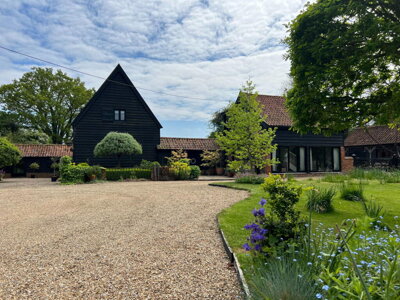
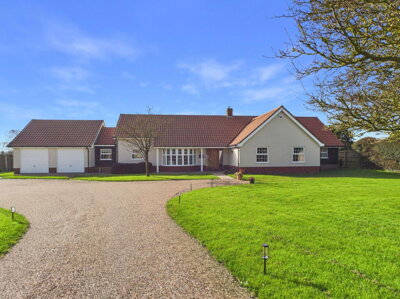
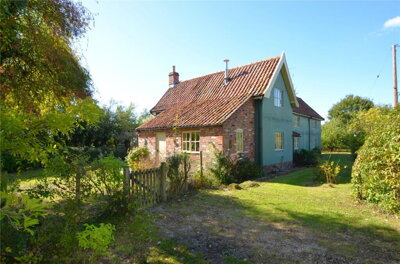
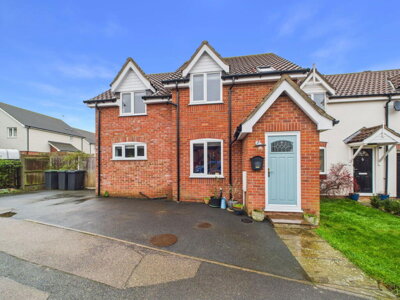
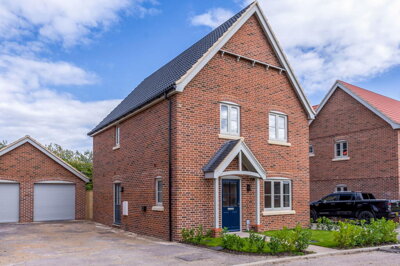
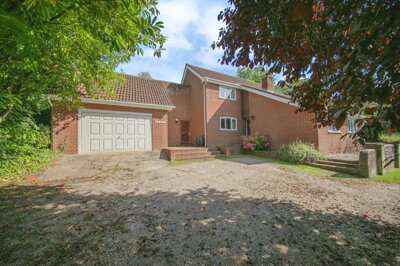
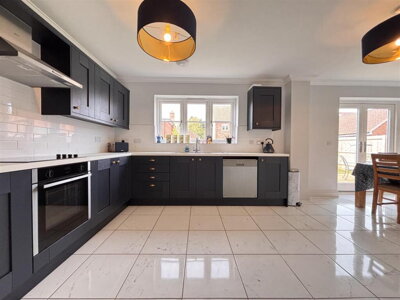
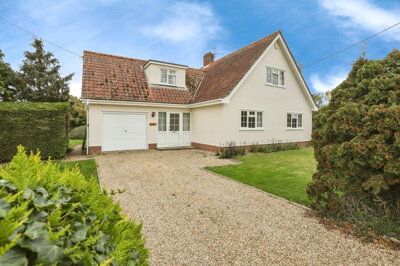
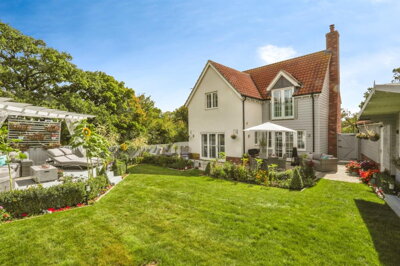
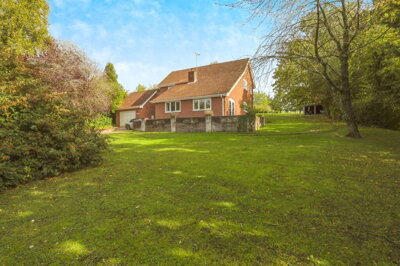
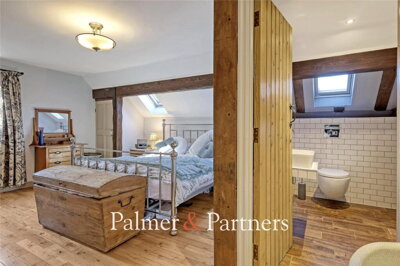
Browse 11 homes for sale in Dennington, East Suffolk from local estate agents.
The larger property sector typically features multiple bathrooms, substantial reception space, and private gardens or off-street parking. Four bedroom houses in Dennington span detached, semi-detached, and occasionally terraced configurations, with styles ranging from period properties to modern executive homes.
£0k
0
0
0
Source: home.co.uk
Showing 0 results for 4 Bedroom Houses for sale in Dennington, East Suffolk.
The Dennington property market reflects the character of the village itself: traditional, sought-after, and relatively exclusive. Our current listings feature properties ranging from period cottages to substantial detached family homes. The average property price in Dennington stands at £495,300 as of February 2026, with detached properties commanding an average of £571,333. Semi-detached homes in the village have sold for around £320,000, demonstrating the premium attached to larger, more private accommodation in this rural setting. Over the past twelve months, property values in Dennington have increased by 1.14%, indicating steady demand despite the limited number of sales. We have recorded 6 property sales in Dennington over the past year, a figure that illustrates both the village's appeal and the constrained supply that characterises this corner of Suffolk.
Dennington lacks active new-build developments within its postcode area, meaning that buyers seeking modern homes may need to look at neighbouring villages or consider that any newly constructed properties would be rare exceptions rather than the norm. We find that this scarcity of new supply tends to support property values over time, as demand from buyers seeking traditional English village life continues to exceed the availability of homes. The majority of properties in Dennington are detached or semi-detached houses, with very few flats or terraced properties reflecting the rural character of the settlement. We recommend that buyers set realistic expectations about availability, particularly if seeking properties within a specific price range or with particular features.
The historic housing stock in Dennington includes many properties predating the twentieth century, which is reflected in the prevalence of listed buildings throughout the village. We regularly see properties featuring original timber beams, inglenook fireplaces, and sash windows alongside the potential maintenance requirements that come with older construction. Properties from the inter-war and post-war periods add further variety to the housing mix, offering alternatives for those who prefer more modern conveniences while still enjoying village life. We advise that buyers factor in the ongoing maintenance costs associated with period properties, particularly when calculating the total cost of ownership beyond the purchase price.

Life in Dennington revolves around community, countryside, and a sense of historical continuity that is increasingly rare in modern Britain. With a population of 309 residents according to the 2021 Census, the village maintains an intimate atmosphere where local events and village gatherings play a central role in daily life. We find that new residents quickly become integrated into community life, whether through the local church, village hall activities, or simply through the informal connections that form in a settlement of this size. The Church of St Mary stands as the spiritual and architectural heart of the community, a Grade I listed building whose spire has graced the Suffolk skyline for centuries. Dennington Hall and numerous other historic houses throughout the village reinforce the sense of heritage that defines this settlement and contribute to its distinctive character.
The local economy in Dennington is predominantly agricultural, with farming operations shaping both the landscape and the character of employment in the surrounding area. We observe that many residents commute to larger towns including Framlingham, Saxmundham, and Ipswich for work, benefiting from the village's position within the Suffolk countryside while maintaining access to broader employment opportunities. Small local businesses, artisan producers, and tourism related to the area's natural beauty and historic attractions contribute to the local economy, though buyers should recognise that Dennington itself offers limited employment options within its immediate boundaries. For those working remotely or with flexible arrangements, the village offers an enviable quality of life, provided that daily commuting is not a requirement.
The geography of Dennington places it near the River Alde, a waterway that winds through the Suffolk countryside and occasionally influences the local environment. We note that areas immediately adjacent to the river and its tributaries may have a higher risk of fluvial flooding, so buyers should investigate the specific flood risk for any property they are considering. The village sits on geology characterised by boulder clay and London Clay deposits, which create the rich agricultural soils that define the surrounding farmland but also present considerations for property owners regarding foundation conditions and potential shrink-swell behaviour. The Dennington Conservation Area designation protects the special architectural and historic character of the village centre, ensuring that future development respects the scale, materials, and traditional appearance that make this village so appealing to buyers seeking authentic rural England.

Families considering a move to Dennington will find that educational provision in the immediate village is limited by its small scale, but the surrounding area offers reasonable access to schools for children of all ages. We find that Dennington itself does not host a primary school within its boundaries, meaning that younger children typically attend establishments in neighbouring villages or the nearby market town of Framlingham. Parents should research specific catchment areas and admission policies for their preferred schools, as rural school provision can vary significantly depending on location and capacity. Transport arrangements for school-aged children in rural Suffolk often involve bus services connecting villages to larger settlements, so factoring in these logistics is an important part of the decision-making process for families with children.
Primary schools in the surrounding area include establishments in villages such as Kettleburgh and the wider Saxmundham catchment, with many families opting for the schools available in Framlingham, approximately 6 miles from Dennington. We recommend visiting potential schools and speaking directly with admissions offices to understand the current situation regarding class sizes, waiting lists, and catchment boundaries, which can change year by year. The 2021 Census data indicates that Dennington has relatively few families with young children compared to national averages, which may reflect the limited local school provision as well as the nature of the housing stock in the village.
Secondary education options for Dennington residents include schools in Framlingham, Saxmundham, and other market towns within reasonable commuting distance. We see that Hartismere School in Eye serves the wider area and has received positive recognition for its educational provision. For families prioritising academic excellence, the selective entrance process for grammar schools in Suffolk may be relevant, with schools in Ipswich and other larger towns offering places to students who pass the entrance examination. Parents should note that accessing grammar school places typically requires preparation for entrance tests and may involve travel to examination centres and secondary school locations.
Sixth form and further education provision is concentrated in larger towns such as Ipswich, Bury St Edmunds, and Norwich, requiring older students to travel from Dennington for advanced studies. We advise families with teenagers to consider the implications of this travel for their educational plans, particularly if specific A-level courses or vocational qualifications are required. Several independent schools in Suffolk provide alternative educational pathways for families seeking private education, with establishments in Bury St Edmunds and the surrounding area offering both primary and secondary provision. Given the village's rural location, families should carefully consider their options for all stages of education before committing to a property purchase in Dennington.
Transport connections from Dennington reflect its status as a small rural village rather than a major population centre, meaning that residents rely primarily on private vehicles for daily travel. We find that the village sits approximately 6 miles from Saxmundham, which provides access to the East Suffolk line railway connecting passengers to Ipswich, Lowestoft, and Norwich with journey times of around 90 minutes to the regional capital of Norwich. The Saxmundham station also offers connections to London Liverpool Street via Ipswich, with total journey times to the capital typically taking between two and two-and-a-half hours depending on connections and time of day. For commuters working in London or other major cities, this level of accessibility is workable but requires careful planning and acceptance of relatively long daily journeys.
Bus services in rural Dennington are limited, with infrequent routes connecting the village to nearby market towns and service centres. We advise that residents without private vehicles may find certain daily activities challenging without planning ahead regarding service timetables. The nearest major road connections include the A12 trunk road running north-south through Suffolk, providing access to Ipswich to the south and the Norfolk border towns to the north. The A14 trunk road offers additional strategic connections to Cambridge and the midlands via Felixstowe port, making Dennington reasonably well-connected for those who drive. Journey times to Ipswich typically take around 40 minutes, while Norwich is approximately 90 minutes away by car.
For commuters working in larger towns or cities, Dennington's location offers a workable compromise between rural tranquility and access to employment centres, provided that driving is acceptable as a primary mode of transport. We note that cyclists may appreciate the quiet country lanes that characterise the area, though hilly terrain and limited cycling infrastructure mean that cycling as a regular commute option is practical only for shorter distances. Parking provision within the village is likely adequate given the low population density, though buyers should verify specific arrangements if secure parking is a priority. Overall, Dennington suits those who value rural living and have the flexibility to travel by car for work and daily necessities.
Explore property listings, understand local prices, and visit Dennington at different times of day to get a genuine feel for village life. We recommend speaking with existing residents and local business owners to understand the community dynamics before committing to a purchase. Given that Dennington has only around 6 property sales per year, the market moves slowly, and patience is often required to find the right property at the right price.
Contact lenders or mortgage brokers to obtain an agreement in principle before making offers. We find that given Dennington's average property price of £495,300, ensuring your borrowing capacity aligns with local property values is essential. Having your finance in order demonstrates to sellers that you are a serious buyer, which can be particularly advantageous in a small village market where sellers may have personal connections to the community.
Work with local estate agents familiar with the village to arrange viewings of suitable properties. We have observed that be prepared to act quickly if a suitable property becomes available is crucial, as the limited market in small villages moves fast when the right property comes to market. Viewing multiple properties over several weeks or months can help you build a clear picture of what represents fair value in the local context.
For older properties in Dennington, a RICS Level 2 Survey (HomeBuyer Report) is essential to identify potential issues with damp, timber defects, roofing, and foundation concerns related to the local clay geology. We recommend budgeting between £400 and £900 for a survey depending on property size, with older or more complex properties potentially requiring a RICS Level 3 Building Survey for more detailed analysis.
Choose a solicitor experienced in rural property transactions to handle the legal aspects of your purchase, including searches related to flood risk, conservation area restrictions, and listed building considerations. We have seen that searches in East Suffolk can take several weeks, so instructing your solicitor promptly helps keep the transaction moving. Budget for solicitor fees typically ranging from £500 to £1,500 depending on complexity.
Finalise your purchase with your solicitor, arrange buildings insurance from the point of completion, and collect your keys. We advise registering ownership with the Land Registry following completion and keeping all documentation relating to your purchase in a safe place for future reference.
Properties in Dennington require careful inspection due to the age and character of the local housing stock. We frequently find that the prevalence of listed buildings and the Dennington Conservation Area designation means many homes are protected by specific planning controls affecting what alterations and extensions are permitted. Prospective buyers should obtain Listed Building Consent records from East Suffolk Council and understand any conditions attached to planning permissions that may affect future renovation plans. Failing to account for these restrictions could significantly impact your plans for any property requiring modernisation or extension.
The local geology presents particular considerations for property buyers unfamiliar with clay soil areas. We note that properties with large trees nearby or those constructed with shallow foundations may show signs of movement related to shrink-swell behaviour, where the clay expands when wet and contracts during dry periods. This can manifest as cracking in walls, sticking doors or windows, and uneven floors. A thorough RICS Level 2 Survey will help identify any existing structural concerns, but buyers should also consider commissioning a specialist foundation assessment if the property shows any signs of subsidence or cracking. Insurance arrangements may also be affected by flood risk considerations, particularly for properties near the River Alde and its tributaries.
Building materials in traditional Dennington properties often include Suffolk red brick, timber framing, flint, and rendered sections, with clay tile or slate roofs. We have seen that these materials require specific maintenance knowledge and may incur higher costs than modern equivalents when repairs are needed. Lime mortar, commonly used in older construction, should be maintained with compatible materials rather than modern cement-based mortars, which can trap moisture and accelerate deterioration. Buyers should budget for potential maintenance requirements when calculating the total cost of purchasing an older property in the village.
Common defects we identify in Dennington properties include rising damp in properties with inadequate damp-proof courses, wet and dry rot in timber-framed buildings, deterioration of roofing materials and leadwork, and outdated electrical wiring and plumbing systems that may not meet current standards. We find that many period properties also have poor thermal insulation, leading to higher heating costs that should factor into your ongoing running costs. A RICS Level 2 Survey will flag these issues and provide guidance on remediation priorities and costs, helping you make an informed decision before committing to purchase.
Dennington contains a significant concentration of listed buildings, reflecting its historical importance within the Suffolk landscape. The Church of St Mary is Grade I listed, while Dennington Hall and numerous cottages and farm buildings throughout the village hold Grade II or Grade II* listing status. We understand that listed building status brings specific responsibilities and restrictions that buyers must be prepared to accept. Any alterations, extensions, or even routine repairs may require Listed Building Consent from East Suffolk Council, and works carried out without consent can result in criminal prosecution.
For Grade I and Grade II* listed properties, a standard RICS Level 2 Survey may not provide sufficient detail to assess the condition of complex historic construction. We recommend that buyers consider a RICS Level 3 Building Survey (formerly known as a Full Structural Survey) for listed buildings, as this provides a more thorough examination of the property's construction, materials, and condition. The additional cost is typically justified by the level of detail provided, which is particularly valuable for properties where defects may be hidden within traditional construction methods.
When purchasing a listed property in Dennington, we advise that you factor in the additional costs and timescales associated with specialist surveys and consent applications. Specialist contractors familiar with traditional building techniques and materials may be required for any works, and their availability can be limited. Budget contingency for listed properties should be higher than for modern homes, typically at least 15% of the purchase price, to account for the potential complexity of any required works. We also recommend engaging with the planning department of East Suffolk Council early in the process to understand any existing permissions, conditions, or enforcement matters affecting the property.
The average property price in Dennington stands at £495,300 as of February 2026, according to Rightmove data. Detached properties average £571,333, while semi-detached homes have sold for around £320,000. Property prices in the village have increased by 1.14% over the past twelve months, indicating steady demand despite the limited number of transactions. We have recorded 6 property sales in Dennington over the past year, and the small size of the local market means that individual sales can have a significant impact on average prices, so buyers should examine comparable properties carefully when assessing value.
Properties in Dennington fall under East Suffolk Council administration, and council tax bands follow the standard national banding system from A to H, with specific bands determined by property value as assessed in 1991. As a guide, period cottages and smaller properties often fall into bands A to C, while larger detached houses and historic homes may occupy bands D to F. We advise checking the specific band for any property you are considering, as this affects ongoing annual costs alongside other local charges, and bands can be queried with East Suffolk Council if you believe they are incorrect.
Dennington itself does not have a primary school within its boundaries, with children typically attending schools in neighbouring villages such as Kettleburgh or the market town of Framlingham, approximately 6 miles away. We recommend researching specific catchment areas, visiting potential schools, and understanding admission policies, as rural school provision requires careful planning given the distances involved. Secondary education options include schools in Saxmundham and the wider Suffolk area, with several grammar schools in larger towns accessible to village residents, though accessing these typically requires passing the selective entrance examination.
Public transport connections from Dennington are limited, reflecting its status as a small rural village. The nearest railway station is in Saxmundham, approximately 6 miles away, offering connections to Ipswich, Norwich, and London Liverpool Street, with total journey times to London typically taking two to two-and-a-half hours. We find that bus services connecting Dennington to nearby towns are infrequent, making private vehicle ownership essential for most residents. The A12 trunk road provides road connectivity to larger centres, though journey times to major employment areas will be longer than from urban locations, and daily commuting by car should be factored into your decision to purchase.
Dennington offers potential for property investment, though the small size of the local market and limited new-build supply constrain immediate rental opportunities. The village's historic character, conservation area protection, and listed buildings help maintain property values over time, while demand from buyers seeking rural lifestyle opportunities remains consistent. We observe that rental demand in such a small village is likely limited, so investors should consider long-term capital appreciation rather than immediate rental income. Properties requiring renovation may offer value-add opportunities for those with appropriate budgets and patience, particularly given the premium attached to period properties in this area.
Stamp Duty Land Tax (SDLT) applies to all property purchases in England, including Dennington. For standard residential purchases, no SDLT is payable on properties up to £250,000, with 5% charged on the portion between £250,001 and £925,000. First-time buyers benefit from relief on properties up to £425,000, paying 5% only on the amount between £425,001 and £625,000, with no relief above £625,000. Given Dennington's average price of £495,300, a standard buyer would expect to pay approximately £12,265 in SDLT, while a first-time buyer with full relief eligibility would pay nothing on a property at this price point.
Properties in Dennington may exhibit issues related to their age and the local geology. Common concerns include damp in older properties with inadequate damp-proof courses, timber defects such as rot and woodworm in timber-framed buildings, roofing deterioration on period properties, and potential foundation movement related to shrink-swell clay soils. We have seen that the presence of large trees near properties can exacerbate foundation issues in clay ground conditions, particularly where foundations are shallow or where drainage patterns have changed over time. A comprehensive RICS Level 2 Survey is strongly recommended before purchase to identify any structural or environmental concerns specific to the property in question, and for listed buildings, a RICS Level 3 Building Survey may be more appropriate.
Dennington is located inland, which reduces coastal flood risk significantly compared to properties closer to the Suffolk coast. However, the village is situated near the River Alde, and areas immediately adjacent to the river and its tributaries may have a higher risk of fluvial (river) flooding during periods of heavy rainfall. We advise checking the specific flood risk for any property you are considering, particularly those with gardens or land extending towards watercourses. Surface water flooding can also occur in areas with poor drainage during heavy rainfall events, which is worth investigating when viewing properties in lower-lying parts of the village. Your solicitor should include appropriate drainage and flood risk searches as part of the conveyancing process.
Competitive mortgage rates available for Dennington property purchases
From 3.5%
Expert property solicitors for your Dennington purchase
From £499
Essential survey for Dennington period properties
From £400
Energy performance certificate for your new home
From £80
Purchasing a property in Dennington involves several costs beyond the purchase price itself, with stamp duty representing one of the most significant expenses for most buyers. At the current SDLT rates applying from 2024-25, a buyer purchasing a property at the village average price of £495,300 would pay £12,265 in stamp duty. This calculation applies the standard rate of 5% on the portion of price between £250,001 and £495,300, after the nil-rate threshold of £250,000. First-time buyers may benefit from relief that reduces or eliminates this cost entirely, depending on their purchase price and whether they have previously owned property elsewhere.
Additional buying costs include solicitor fees for conveyancing, which typically range from £500 to £1,500 depending on the complexity of the transaction and whether the property is freehold or leasehold. We find that searches and surveys add further costs, with local authority searches from East Suffolk Council, drainage and water searches, and environmental searches potentially adding several hundred pounds to the total. A RICS Level 2 Survey for a property in Dennington would cost between £400 and £900 depending on property size and complexity, while an Energy Performance Certificate is mandatory and typically costs between £80 and £120.
Moving costs, furniture, and any immediate renovation or decoration requirements should also be factored into your overall budget when purchasing in Dennington. Buildings insurance must be in place from the point of completion, and life and contents insurance should also be considered. Given the age of many properties in the village, setting aside a contingency fund equivalent to at least 10% of the purchase price for unexpected repairs and maintenance is prudent, rising to 15% for listed buildings where specialist contractors may be required. We recommend that mortgage arrangement fees, valuation fees, and broker fees are also accounted for depending on your chosen lender and mortgage product, so obtaining a comprehensive picture of total costs before committing to purchase is essential.
Properties for Sale In London

Properties for Sale In Plymouth

Properties for Sale In Liverpool

Properties for Sale In Glasgow

Properties for Sale In Sheffield

Properties for Sale In Edinburgh

Properties for Sale In Coventry

Properties for Sale In Bradford

Properties for Sale In Manchester

Properties for Sale In Birmingham

Properties for Sale In Bristol

Properties for Sale In Oxford

Properties for Sale In Leicester

Properties for Sale In Newcastle

Properties for Sale In Leeds

Properties for Sale In Southampton

Properties for Sale In Cardiff

Properties for Sale In Nottingham

Properties for Sale In Norwich

Properties for Sale In Brighton

Properties for Sale In Derby

Properties for Sale In Portsmouth

Properties for Sale In Northampton

Properties for Sale In Milton Keynes

Properties for Sale In Bournemouth

Properties for Sale In Bolton

Properties for Sale In Swansea

Properties for Sale In Swindon

Properties for Sale In Peterborough

Properties for Sale In Wolverhampton

Enter your details to see if this property is within your budget.
Loans, cards, car finance
Estimated property budget
Borrowing + deposit
You could borrow between
Typical borrowing
Monthly repayment
Est. at 4.5%
Loan-to-value
This is an estimate only. Your actual budget may vary depending on interest rates, credit history, and personal circumstances. For an accurate affordability assessment, speak to one of our free mortgage advisors.
This calculator provides estimates for illustrative purposes only and does not constitute financial advice. Your home may be repossessed if you do not keep up repayments on your mortgage. Estimates based on 4.5% interest rate, repayment mortgage. Actual rates depend on your circumstances.
Homemove is a trading name of HM Haus Group Ltd (Company No. 13873779, registered in England & Wales). Homemove Mortgages Ltd (Company No. 15947693) is an Appointed Representative of TMG Direct Limited, trading as TMG Mortgage Network, which is authorised and regulated by the Financial Conduct Authority (FRN 786245). Homemove Mortgages Ltd is entered on the FCA Register as an Appointed Representative (FRN 1022429). You can check registrations at NewRegister or by calling 0800 111 6768.

We use cookies to show you personalised content and improve your experience of our website. Find out more in our Privacy policy and Cookie policy.