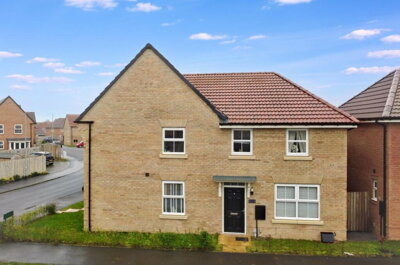
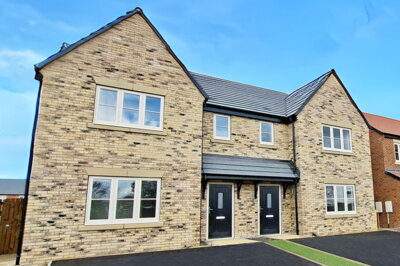
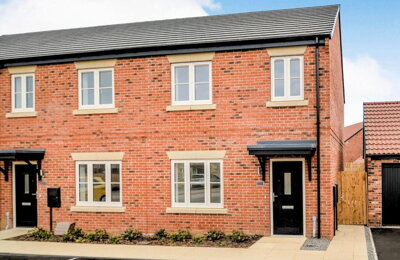
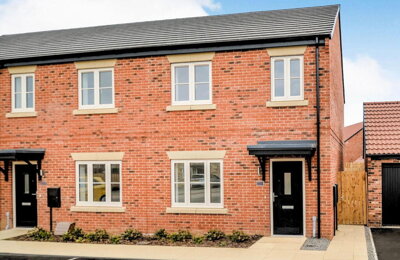
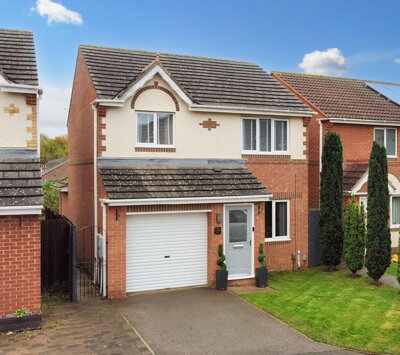
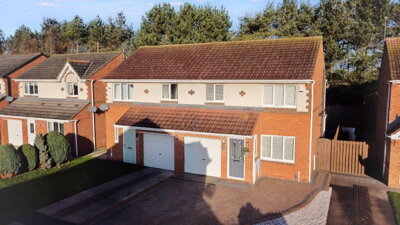
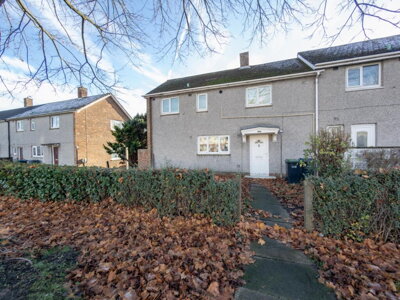
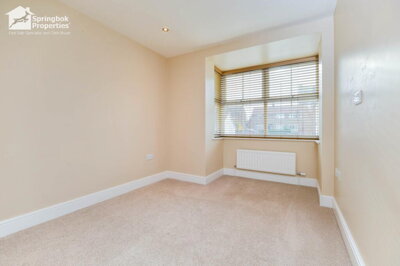
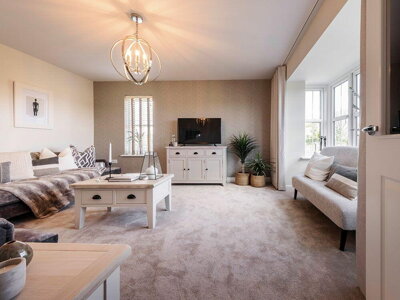
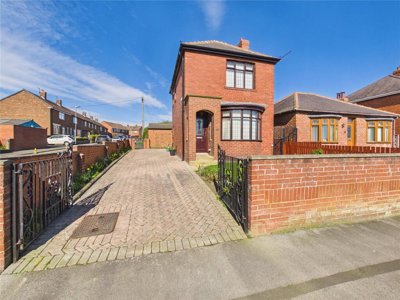
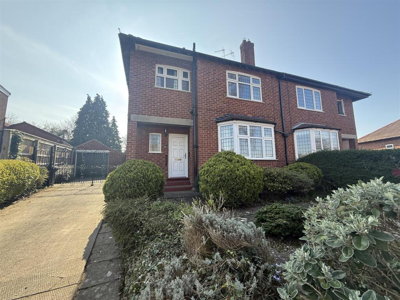
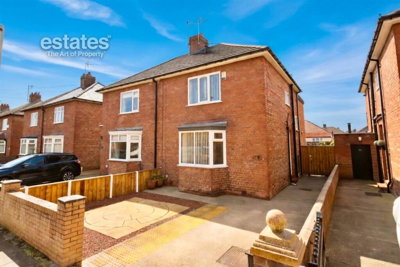
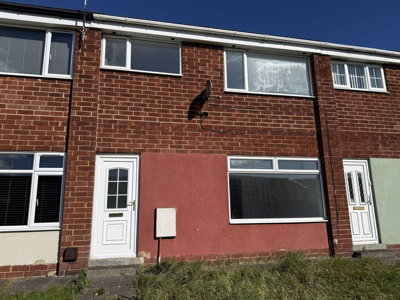
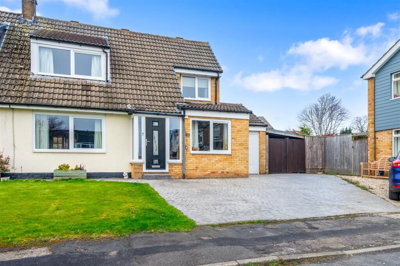
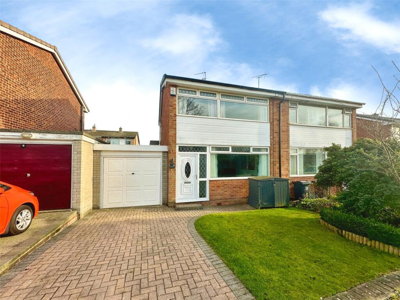
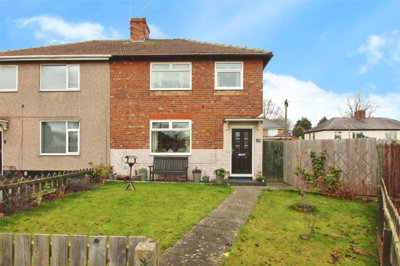
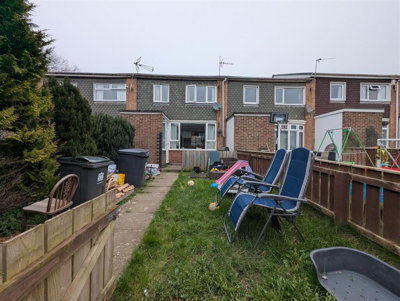
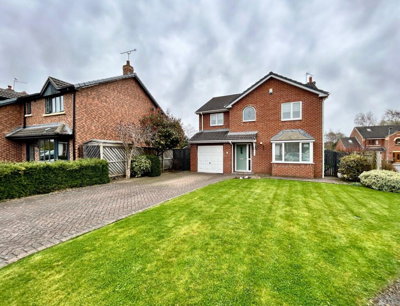
Browse 590 homes for sale in Darlington, Tees Valley from local estate agents.
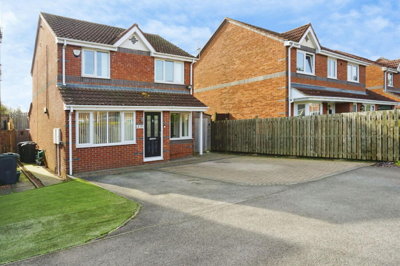
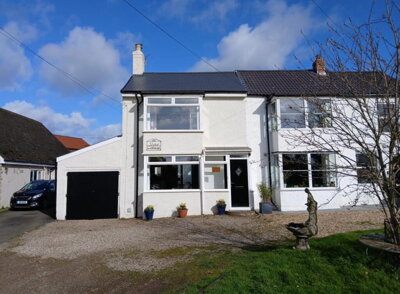
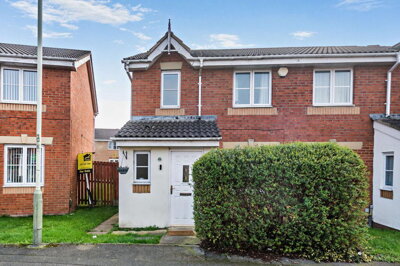
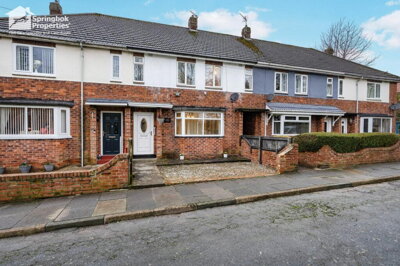
Three bedroom properties represent a significant portion of the Darlington housing market, offering space for families with multiple reception rooms and gardens in many cases. Browse detached, semi-detached, and terraced options ranging from period character homes to contemporary developments.
£185k
208
27
85
Source: home.co.uk
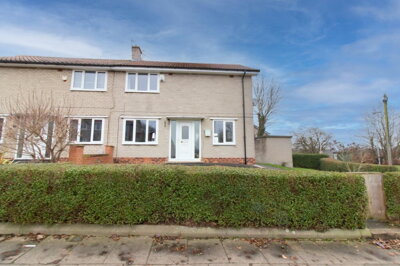
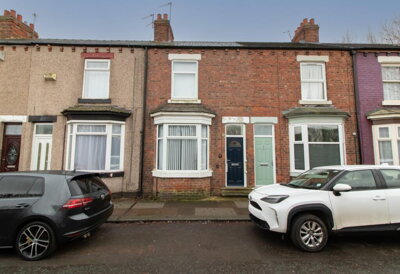
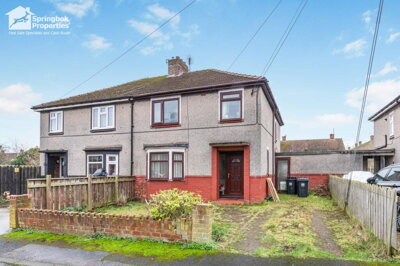
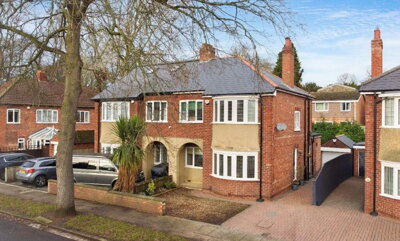
Showing 208 results for 3 Bedroom Houses for sale in Darlington, Tees Valley. 27 new listings added this week. The median asking price is £185,000.
Source: home.co.uk
Semi-Detached
118 listings
Avg £198,364
Terraced
53 listings
Avg £135,918
Detached
37 listings
Avg £245,983
Source: home.co.uk
Source: home.co.uk
The Darlington property market offers excellent diversity for buyers at various price points, with property prices having shown a modest decrease of 1.62% over the past 12 months. This cooling trend has created opportunities for first-time buyers and investors alike, with terraced properties averaging £120,494 and semi-detached homes at £163,858, making them particularly attractive for those looking to get onto the property ladder or expand their portfolio. The market saw 1,675 property sales completed over the last year, indicating healthy transaction volumes that reflect the town's desirability as a residential destination. First-time buyers will find that Darlington's property prices remain significantly lower than the national average, while families seeking more space can explore detached properties averaging £284,854.
New build developments continue to shape the Darlington landscape, with several significant projects currently underway or in the planning stages. Coniscliffe Grange, developed by Bellway, offers 3, 4, and 5-bedroom homes ranging from approximately £249,995 to £429,995, situated off Coniscliffe Road in the DL3 8AL postcode area. Avant Homes is delivering the Mowden Park development on Staindrop Road, featuring 3 and 4-bedroom properties priced from around £259,995 to £369,995. West Park Garden Village represents one of the town's largest ongoing developments, with major housebuilders including Taylor Wimpey and Persimmon Homes delivering phases of family homes across the DL2 postcode area. Looking further ahead, Skerningham Garden Village represents an ambitious future development north of the town, being led by Homes England and Darlington Borough Council in partnership.
Price trends across different property types show varying market conditions. Detached properties saw the smallest decrease at 0.23%, suggesting continued demand for larger family homes, while semi-detached properties decreased by 2.37% and terraced properties by 2.12%. Flats experienced the largest decrease at 3.20%, though this may present opportunities for investors looking at the rental market. These variations mean buyers can strategize their purchase based on property type, potentially securing better value in certain segments while paying a premium in others where demand remains stronger.

Darlington's housing stock reflects its evolution from a major railway and engineering centre into a thriving modern town with something to offer every type of buyer. According to the ONS Census 2021 data, terraced properties dominate the housing landscape at 37.5% of all homes, followed closely by semi-detached houses at 34.6%, while detached properties account for 17.6% and flats, maisonettes, or apartments make up the remaining 9.9%. This mix creates diverse neighbourhoods ranging from charming Victorian terraces with original features near the town centre to more modern semi-detached and detached housing estates built during post-war expansion. The combination of housing types ensures that whether you are a young professional seeking a starter home, a growing family needing more bedrooms, or a retiree looking to downsize, Darlington has suitable options available.
The town centre and surrounding areas feature a fascinating blend of architectural periods, with significant pre-1919 housing particularly concentrated in the older parts of town. Victorian and Edwardian terraced properties often feature the red brick construction typical of the region, with 9-inch or 13-inch thick solid brick walls, original sash windows, and characteristic bay windows in many street-facing properties. Inter-war semi-detached housing from the 1919-1945 period introduced cavity wall construction and tiled roofs, while post-war developments brought concrete tiled roofs and more standardised building methods.
The population of approximately 107,700 across 47,400 households creates a community feel that is substantial enough to support excellent amenities while remaining small enough to avoid the anonymity of larger cities. The presence of major government departments, including Treasury North and the Department for Education, provides stable employment that underpins the local economy and housing market. This public sector presence means that unlike some towns reliant on a single industry, Darlington benefits from diversified employment that provides resilience through economic cycles.
Education provision in Darlington caters to children of all ages and academic abilities, with a range of primary and secondary schools available across the town and surrounding areas. Parents researching the area will find numerous primary schools serving different neighbourhoods, with many schools achieving good or outstanding Ofsted ratings in recent inspections. Secondary education options include both comprehensive schools and the town's grammar school system, which admits students based on academic selection through the 11-plus examination.
Schools in areas such as Harrowgate, Cockerton, and the Coniscliffe Road catchment area are particularly popular with families, and understanding catchment boundaries is essential when purchasing property in specific school zones. The presence of the grammar school system provides an additional pathway for academically able students, and many families specifically target postcodes within the catchment areas of these sought-after schools. Properties in these desirable catchment areas can command a premium, making it worth verifying school zones before committing to a purchase.
For those pursuing further and higher education, Darlington College provides a wide range of vocational and academic courses, while the town benefits from strong transport links to universities in Durham, Newcastle, and Teesside. The college offers courses from entry level through to higher national diplomas, serving both school leavers and adult learners seeking to reskill or advance their careers. Parents should note that school performance and catchment areas can change over time, making it advisable to check current Ofsted reports and local authority admissions policies when making property decisions. The quality of local education is a significant factor in property values, with homes in good school catchment areas often maintaining their value better and attracting greater buyer interest when it comes time to sell.
Darlington boasts exceptional transport connectivity that makes it particularly attractive to commuters and businesses alike, with the town sitting directly on the East Coast Main Line that links London, Edinburgh, and numerous destinations in between. Darlington railway station provides regular services to major cities, with journey times of approximately 2 hours 40 minutes to London King's Cross and around 1 hour to Newcastle Central. The station has undergone significant modernisation in recent years, improving facilities and accessibility for passengers. These excellent rail connections explain why Darlington has become increasingly popular with commuters who work in major cities but seek more affordable housing than can be found in or around London or other expensive regions.
For those who drive, the A1(M) motorway passes just west of the town, providing straightforward access to Newcastle to the north and Leeds and Sheffield to the south. The A66 trunk road runs through the town, connecting to the A1(M) and providing routes towards Middlesbrough and the coast. Local bus services operated by Arriva and other providers connect Darlington's neighbourhoods with the town centre and surrounding villages, while Stagecoach services extend to nearby towns including Bishop Auckland, Barnard Castle, and Stockton-on-Tees.
The town has invested in improving cycling infrastructure in recent years, with dedicated cycle paths connecting residential areas to the town centre and employment zones. Parking provision in the town centre is adequate, with several car parks serving shoppers and workers, though parking restrictions apply in residential areas close to the town centre. For air travel, Newcastle International Airport is approximately 45 minutes away by car, while Durham Tees Valley Airport offers domestic and some European flights within 20 minutes of the town. These comprehensive transport options make Darlington well-connected for both daily commuting and occasional travel needs.
Before you start viewing properties, obtain a mortgage agreement in principle from a lender or broker. This document confirms how much you can borrow and strengthens your position when making offers on properties. In Darlington's competitive market, sellers are more likely to accept offers from buyers who have their financing already arranged.
Explore different areas of Darlington to find the neighbourhood that best suits your needs. Consider proximity to schools, transport links, local amenities, and the character of housing stock in each area. The difference between living near a good school catchment or having easy motorway access can significantly impact your daily life. DL3 postcodes around Coniscliffe Road offer access to popular schools, while DL2 provides good motorway access for commuters.
Use Homemove to browse all available properties in Darlington, setting up instant alerts for new listings that match your criteria. Schedule viewings to assess properties in person, paying attention to the condition of the building, the surrounding neighbourhood, and any signs of common issues such as damp or structural movement. Many properties in Darlington are over 50 years old, so viewing in daylight and during wet weather can reveal issues not apparent otherwise.
Once your offer is accepted, book a RICS Level 2 Survey to assess the property condition thoroughly. Given that over half of Darlington's housing stock is over 50 years old, a professional survey is essential to identify any defects before you commit to the purchase. Surveyors in Darlington typically charge between £400 and £700 for a standard 3-bedroom property, with larger homes commanding higher fees. The survey will identify issues common to the local housing stock, from damp in Victorian terraces to potential movement in properties built on clay soils.
Appoint a solicitor to handle the legal aspects of your purchase, including property searches, contract review, and registration with the Land Registry. Your solicitor will liaise with the seller's representatives, conduct essential searches including mining and flooding reports, and guide you through the transaction to completion. For properties in flood risk areas near the River Skerne or Cockerton, your solicitor should ensure appropriate flood risk assessments are obtained.
After satisfactory survey results and completed searches, your solicitor will arrange for you to sign contracts and pay the deposit. On completion day, the remaining funds are transferred, and you receive the keys to your new Darlington home. Congratulations on your purchase!
Property buyers in Darlington should be aware of several area-specific factors that can affect their purchase, from geological considerations to planning restrictions that are unique to this part of the Tees Valley. The local geology presents a moderate to high shrink-swell risk in areas underlain by glacial till boulder clay, which means properties with nearby trees or poor drainage may show signs of movement over time. This is particularly relevant for properties in areas with mature trees close to the building, where seasonal changes in soil moisture can cause ground movement affecting foundations. Understanding the underlying geology can help you assess the long-term structural risks of any property you are considering.
Flood risk is a consideration in certain areas of Darlington, particularly properties near the River Skerne which flows through the town centre and areas around Cockerton and Haughton-le-Skerne. Properties adjacent to the River Tees, which forms part of Darlington's southern boundary, also carry some flood risk. Surface water flooding can affect various parts of the town during periods of heavy rainfall. Prospective buyers should review the Environment Agency's flood risk maps and consider whether flood resilience measures have been implemented in any property they are considering. Your solicitor will conduct flooding searches as part of the conveyancing process, but visiting the property during or after heavy rain can reveal issues that searches might not fully capture.
Properties built before the 1980s often have outdated electrical systems that may require updating to meet current standards, and older homes may contain asbestos in various forms including artex ceilings, pipe lagging, or garage roofing materials. Victorian and Edwardian properties often have solid brick walls without cavity insulation, single-glazed windows, and original plumbing that may need gradual upgrading. These homes frequently have character features such as fireplaces, high ceilings, and original woodwork that many buyers find attractive, but they also require ongoing maintenance to keep them in good condition. Buildings in the various Conservation Areas, including the Town Centre, Bank Top, High Row, West Cemetery, and Cockerton Conservation Areas, may be subject to additional planning restrictions that limit permitted development rights.
Newer properties, particularly those on the West Park development and other modern estates, will typically offer better insulation and more modern fittings but may have higher service charges and less character. The age and construction of your potential property should guide your expectations for maintenance and renovation costs. Whether you are considering a Victorian terrace requiring updates to electrical and plumbing systems or a modern new build with everything already installed, understanding what you are buying into will help you budget appropriately and avoid unexpected costs after purchase.
Understanding Darlington's underlying geology helps explain the characteristics of local properties and the potential issues buyers may encounter. The town sits primarily on superficial deposits of glacial till, also known as boulder clay, which overlies bedrock of the Permian Magnesian Limestone and younger Triassic Sherwood Sandstone Group. The glacial till deposits, with their significant clay content, create conditions where shrink-swell behaviour can occur during periods of extreme wet and dry weather. This means properties with large trees nearby or those with poor drainage may experience ground movement that manifests as cracking in walls or doors and windows that stick. Professional surveyors in Darlington are experienced at identifying signs of this type of movement and can advise on whether remedial action is needed.
The predominant building materials in Darlington reflect both the local geology and the town's industrial heritage. Red brick is extremely common throughout the town, particularly in older terraced and semi-detached properties, with various shades of red and brown brick prevalent across different neighbourhoods. Victorian and Edwardian properties built before 1919 typically feature solid brick walls, often 9-inch or 13-inch thick, with slate or clay tile roofs, timber floor joists, and original sash windows. These solid wall constructions have no cavity for insulation, meaning older properties may have higher heating costs unless insulation measures have been added subsequently. Inter-war properties from 1919-1945 introduced cavity wall construction with a brick outer leaf and block inner leaf, representing a significant improvement in thermal performance.
Post-war properties from 1945-1980 feature standard cavity wall construction with concrete tiled roofs and concrete ground floors, while modern properties from the 1980s onwards incorporate improved insulation standards and uPVC windows. Some older and more historic buildings in the town centre and surrounding villages feature local stone construction, reflecting different periods of building activity. Darlington's Conservation Areas, including the Town Centre, Bank Top, High Row, West Cemetery, and Cockerton Conservation Areas, contain significant concentrations of Listed Buildings that reflect the town's rich industrial and railway heritage. Properties in these areas may require specialist surveys and consent for certain alterations, adding complexity to renovation projects that buyers should factor into their plans.
The average house price in Darlington is currently £171,061, according to the most recent data from February 2026. This figure places Darlington well below the national average, making it an affordable option for buyers in the North East. Property prices vary significantly by type, with detached properties averaging £284,854, semi-detached homes at £163,858, terraced properties at £120,494, and flats at £86,881. Over the past 12 months, prices have decreased by 1.62%, creating opportunities for buyers who may have been priced out of the market during previous years. This modest price decrease has been relatively uniform across property types, though flats saw the largest drop at 3.20%.
Properties in Darlington are banded by Darlington Borough Council, and council tax bands range from A through to H, with the majority of terraced and semi-detached properties falling into bands A to C. The specific band depends on the property's assessed value as of April 1991, with band A properties being the lowest value and attracting the smallest council tax charges. Prospective buyers can check the current council tax banding for any specific property through the Valuation Office Agency website or by requesting this information during the conveyancing process. Given the proportion of terraced properties in Darlington's housing stock at 37.5%, many buyers will find themselves in lower council tax bands, keeping ongoing costs manageable.
Darlington College offers further education opportunities with courses ranging from entry level to higher national diplomas, serving school leavers and adult learners alike. The town's transport links make universities in Durham, Newcastle, and Teesside accessible for higher education, with direct train services to Durham taking approximately 20 minutes and Newcastle accessible in around an hour. Families should always verify current catchment boundaries and Ofsted ratings, as these can change over time and significantly impact both daily life and long-term property values.
The A1(M) motorway provides excellent road connections to the north and south, with Newcastle approximately 40 minutes away and Leeds around 90 minutes. For air travel, Newcastle International Airport is approximately 45 minutes away by car, while Durham Tees Valley Airport offers domestic and some European flights within 20 minutes of the town. These comprehensive transport options make Darlington particularly attractive to commuters who work in major cities but seek more affordable housing than can be found closer to those employment centres.
However, as with any investment, prospective landlords should carefully research rental yields in specific postcodes, void periods between tenants, and potential changes in the local market before committing to a purchase. Flats may offer different returns compared to houses, and areas near the town centre may appeal to different tenant demographics than family-friendly neighbourhoods near good schools. Property investors should also factor in the age of the housing stock in their target area, as Victorian terraces may require more maintenance than modern new builds, affecting net yields over time.
Given Darlington's average property price of £171,061, many buyers, especially first-time purchasers, will pay minimal or no stamp duty on average-priced properties. A first-time buyer purchasing at the average price would pay zero stamp duty under the current relief thresholds, which cover purchases up to £425,000. Even a standard buyer without first-time buyer status would pay 0% on the first £250,000, meaning the average-priced property would still attract no SDLT. This favourable position means that buyers moving to Darlington from more expensive areas of the country will find their overall purchasing costs significantly reduced compared to what they would pay in London, the South East, or other high-value property markets.
Given the local geology with areas of glacial till boulder clay, your solicitor should also arrange a mining search to investigate any historical mining activity in the region that might affect ground stability. While Darlington itself is not a major coal mining area, the wider Tees Valley region has mining history that searches should cover. Flood risk searches will identify whether the property is in a flood zone, which is especially important for areas near the River Skerne or in parts of Cockerton and Haughton-le-Skerne that have been identified as higher risk. These searches typically cost between £250-400 and are essential for understanding what you are buying.
Secure your funding with competitive mortgage rates
From 4.5% APR
Professional legal services for your property purchase
From £499
Thorough condition survey by qualified surveyors
From £400
Energy performance certificate for your property
From £85
Understanding the full costs of buying property in Darlington is essential for budgeting effectively, and stamp duty land tax represents one of the most significant expenses beyond the property price itself. For properties purchased at Darlington's current average price of £171,061, a first-time buyer would pay zero stamp duty under the current relief thresholds, which allow exemption on purchases up to £425,000 for those meeting the eligibility criteria. A standard buyer without first-time buyer status would pay 0% on the first £250,000 and 5% on the remaining £0 of the purchase price, meaning a total SDLT bill of £0 on an average-priced property. This favourable position means that many buyers moving to Darlington from more expensive areas of the country will find their overall purchasing costs significantly reduced compared to what they would pay in London, the South East, or other high-value property markets.
Beyond stamp duty, buyers should budget for solicitor conveyancing fees, which typically range from £500 to £1,500 depending on the complexity of the transaction and whether the property is freehold or leasehold. Property searches, including local authority, drainage, and environmental searches, are usually included in conveyancing quotes but can add £250-£400 if charged separately. A RICS Level 2 Survey costs between £400 and £700 for a standard 3-bedroom property in Darlington, with larger or more complex properties commanding higher fees. Surveyors in the area understand the local housing stock and will be familiar with common defects in Victorian terraces, inter-war semis, and modern developments alike.
Mortgage arrangement fees vary by lender but can range from £0 to £2,000, and buyers should also factor in valuation fees, survey costs, and the cost of buildings insurance from completion day onwards. These additional costs typically add up to approximately £3,000 to £5,000 on a typical Darlington property purchase, though buyers using Homemove's partner services may benefit from competitive fixed-rate packages that bundle these services together. Given that many properties in Darlington are over 50 years old, investing in a thorough survey is particularly valuable, as it can reveal issues that might cost thousands of pounds to address if purchased without knowledge of them. Budgeting carefully for these costs ensures you are not caught out by expenses you had not anticipated when you receive the keys to your new home.
Properties for Sale In London

Properties for Sale In Plymouth

Properties for Sale In Liverpool

Properties for Sale In Glasgow

Properties for Sale In Sheffield

Properties for Sale In Edinburgh

Properties for Sale In Coventry

Properties for Sale In Bradford

Properties for Sale In Manchester

Properties for Sale In Birmingham

Properties for Sale In Bristol

Properties for Sale In Oxford

Properties for Sale In Leicester

Properties for Sale In Newcastle

Properties for Sale In Leeds

Properties for Sale In Southampton

Properties for Sale In Cardiff

Properties for Sale In Nottingham

Properties for Sale In Norwich

Properties for Sale In Brighton

Properties for Sale In Derby

Properties for Sale In Portsmouth

Properties for Sale In Northampton

Properties for Sale In Milton Keynes

Properties for Sale In Bournemouth

Properties for Sale In Bolton

Properties for Sale In Swansea

Properties for Sale In Swindon

Properties for Sale In Peterborough

Properties for Sale In Wolverhampton

Enter your details to see if this property is within your budget.
Loans, cards, car finance
Estimated property budget
Borrowing + deposit
You could borrow between
Typical borrowing
Monthly repayment
Est. at 4.5%
Loan-to-value
This is an estimate only. Your actual budget may vary depending on interest rates, credit history, and personal circumstances. For an accurate affordability assessment, speak to one of our free mortgage advisors.
This calculator provides estimates for illustrative purposes only and does not constitute financial advice. Your home may be repossessed if you do not keep up repayments on your mortgage. Estimates based on 4.5% interest rate, repayment mortgage. Actual rates depend on your circumstances.
Homemove is a trading name of HM Haus Group Ltd (Company No. 13873779, registered in England & Wales). Homemove Mortgages Ltd (Company No. 15947693) is an Appointed Representative of TMG Direct Limited, trading as TMG Mortgage Network, which is authorised and regulated by the Financial Conduct Authority (FRN 786245). Homemove Mortgages Ltd is entered on the FCA Register as an Appointed Representative (FRN 1022429). You can check registrations at NewRegister or by calling 0800 111 6768.

We use cookies to show you personalised content and improve your experience of our website. Find out more in our Privacy policy and Cookie policy.