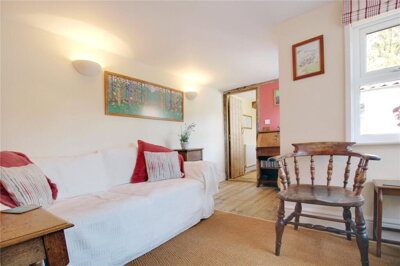
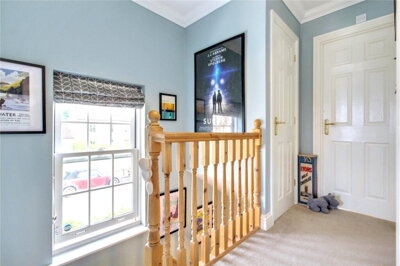
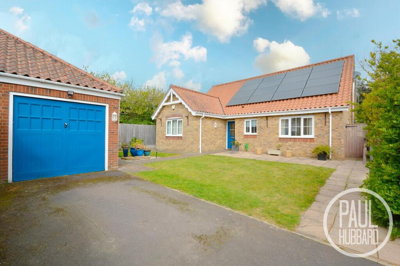
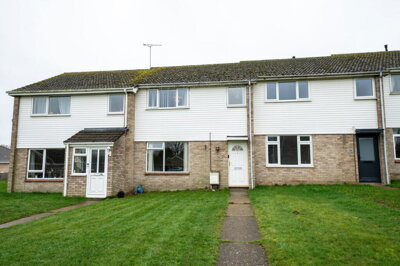
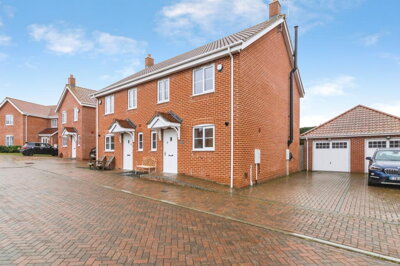
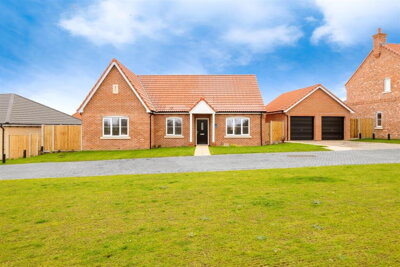
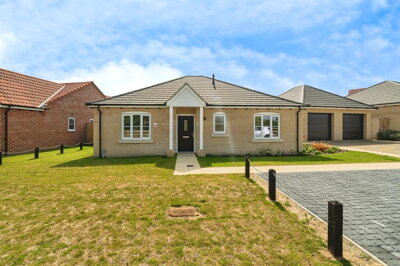
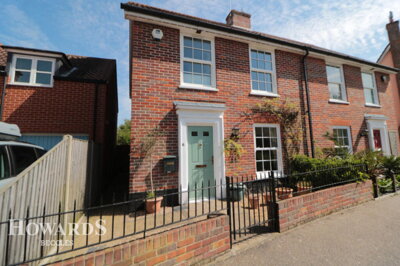
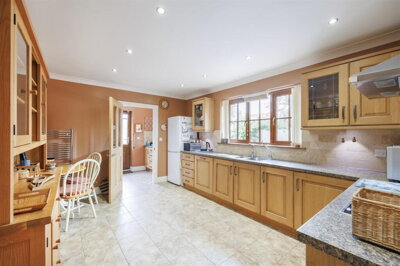
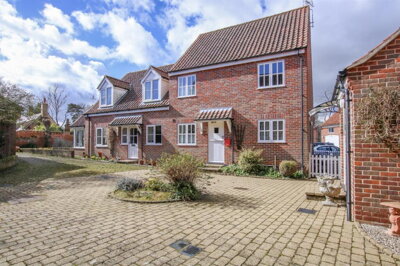
Browse 11 homes for sale in Covehithe, East Suffolk from local estate agents.
Three bedroom properties represent a significant portion of the Covehithe housing market, offering space for families with multiple reception rooms and gardens in many cases. Browse detached, semi-detached, and terraced options ranging from period character homes to contemporary developments.
£0k
0
0
0
Source: home.co.uk
Showing 0 results for 3 Bedroom Houses for sale in Covehithe, East Suffolk.
The property market in Covehithe operates on a uniquely limited scale. Our data shows that this hamlet, recorded in the Domesday Survey of 1086 with approximately 15 homes, has maintained a similarly intimate scale through to the 2011 census, with comparable household numbers today. Unlike larger settlements where hundreds of properties change hands annually, Covehithe sees only a handful of sales over many years, making it a market defined more by scarcity than by volume. This scarcity reflects both the hamlet's tiny population and the significant environmental challenges facing properties on this eroding coastline. Prospective buyers should understand that patience is essential when searching for homes for sale in Covehithe, as opportunities arise infrequently and properties may be held by the same families for generations.
Property types available in Covehithe reflect its rural coastal character and historical development. Traditional farmhouses, cottages, and converted agricultural buildings form the core of the housing stock, many constructed using local materials including flint, brick, and timber with thatched or tiled roofs. The Grade II listed Anchor House, Warren House, and Whitehouse Farmhouse represent the kind of period properties that occasionally become available in this area. The construction methods draw directly from the local geology, with flint harvested from the cliffs and clay from the Norwich Crag Formation providing traditional building materials. New build activity is virtually non-existent in Covehithe, given the village's small scale and the documented coastal erosion risks that make large-scale development inappropriate in this sensitive location.
The historic St Andrew's Church provides the clearest evidence of traditional construction methods in Covehithe. Originally built of flint and ashlar, this 15th-century structure demonstrates the durability of local materials when properly maintained. When examining properties here, our inspectors pay particular attention to flint work, mortar condition, and the integrity of traditional junctions where different materials meet. The presence of thatched roofing on several properties requires specialist assessment, as these roofs demand specific maintenance knowledge and can be vulnerable to weather exposure in this coastal setting.

Living in Covehithe offers an experience of rural England that has largely disappeared elsewhere. The hamlet sits on the Suffolk coast between Southwold and Lowestoft, surrounded by the sweeping heathland and coastline of the AONB. The nearby Benacre Broad, Covehithe Broad, and Easton Broad are reedbeds and lagoons that form part of a unique wetland ecosystem. These broads, together with the surrounding fens, support an extraordinary diversity of birdlife and plant species, making Covehithe a haven for naturalists, photographers, and anyone who finds peace in wild landscapes. The area is particularly noted for its bird populations, with marsh harriers, bitterns, and various species of wildfowl regularly observed in the wetland areas.
The demographic character of Covehithe reflects its position as a small, established community rather than a commuter settlement. Residents are typically drawn to the area for its tranquility, its natural environment, and the strong sense of place that comes from living in a community with roots stretching back over a millennium. The village has no major shops or services of its own, and residents travel to nearby towns such as Beccles, Southwold, or Great Yarmouth for everyday necessities. This rural isolation, while requiring a car for most errands, contributes significantly to the peaceful character that defines daily life here. Community connections remain strong despite the small population, with residents knowing one another and maintaining the traditions of this ancient settlement.
The economic history of Covehithe reveals much about its current character. During the medieval period, the settlement was a prosperous small town with a quay serving sea trade, but progressive coastal erosion through the 17th century caused significant decline as buildings and land were lost to the sea. This historical context explains why so little development occurred in later centuries and why the hamlet retains its intimate scale today. The story of St Andrew's Church, which stands partially ruined after the nave collapsed due to cliff erosion, serves as a constant reminder of the powerful geological forces that continue to shape this coastline.

Families considering a move to Covehithe will need to factor in travel distances to local schools, as the hamlet has no school of its own. The hamlet falls within the East Suffolk local authority area, and children typically attend primary schools in nearby villages such as Wrentham, Blyburgate, or Reydon, where village primary schools serve the surrounding communities. These smaller rural schools offer intimate class sizes and strong community connections, though families may need to arrange transport or use school bus services that operate from the hamlet. Wrentham Primary School, for example, serves several surrounding villages and provides education for children from reception through to Year 6, with class sizes typically remaining below 25 pupils per year group.
Secondary education is available at schools in nearby market towns, with options including Sir John Leman High School in Beccles, which is a larger secondary school serving a wide catchment area across East Suffolk. This school offers a comprehensive curriculum and has developed strong links with further education providers in the region. For families prioritising selective education, the grammar school system in Suffolk may offer opportunities in towns such as Lowestoft or Ipswich, though these require passing the eleven-plus examination and involve longer daily journeys of 30 minutes or more each way. The East Suffolk area has developed school transport arrangements that help families in rural locations access secondary education.
Sixth form and further education provision is concentrated in the larger towns of the region, including Lowestoft, Great Yarmouth, and Norwich, all of which are accessible by car from Covehithe. Lowestoft Sixth Form College and East Norfolk Sixth Form provide A-level courses, while further education is available at East Coast College in Great Yarmouth and Norfolk College in King's Lynn. Families should factor these travel requirements into their decision when buying homes in Covehithe, particularly if children are approaching secondary school age. The rural location means that school runs will typically add significant time to daily routines, with journeys of 20-40 minutes each way being common for secondary school attendance.
Transport connections from Covehithe reflect its status as a small rural hamlet rather than a commuter hub. The nearest railway stations are at Brampton and Beccles on the East Suffolk Line, which provides connections to Ipswich and onward to London Liverpool Street, with journey times to the capital typically around two to two and a half hours. Halesworth station offers another option, approximately 20 minutes by car from Covehithe, while the Greater Anglia services from Lowestoft provide additional flexibility for longer journeys. Rail travel from these stations connects to the wider national network through Norwich and Ipswich, with direct services to Cambridge and London available from Norwich.
Road access from Covehithe is via country lanes that connect to the A12 trunk road, which runs through the Suffolk countryside linking Lowestoft, Beccles, and the wider region. The journey to Norwich takes approximately 45 minutes to an hour by car, while Ipswich is around an hour's drive away. The A146 provides an alternative route to Norwich via Beccles, passing through attractive Suffolk countryside. Bus services in this rural area are limited, with Monday to Friday weekday services providing connections to nearby towns but reduced or no services on weekends and public holidays. The 501 bus service operated by First Norfolk and Suffolk connects Covehithe with Lowestoft and Beccles on selected days.
For most residents, car ownership is essential for daily life in Covehithe, though the peaceful country lanes are popular with cyclists who enjoy the flat Suffolk landscape and the scenic coastal routes. The National Cycle Route 1 passes through nearby areas, offering connections to the broader Suffolk coastline and the Broads National Park. Walking is another popular activity, with the Suffolk Coast Path providing spectacular routes along the cliff tops and through the heathland of the AONB. The combination of limited public transport and the rural character of the area means that prospective buyers should factor car ownership into their budget when considering properties in Covehithe.
Given the limited number of homes for sale in Covehithe and the unique environmental factors affecting the area, thorough research is essential before making any commitment. Understanding the coastal erosion risks, insurance implications, and the heritage considerations that affect many properties here will help you make an informed decision. Our team can provide guidance on the current market conditions and the specific factors that affect property ownership in this coastal location.
Before viewing properties in Covehithe, securing a mortgage agreement in principle from a lender demonstrates your seriousness as a buyer and helps you understand your budget. Given the unique nature of properties here, some lenders may have specific requirements or concerns about properties on eroding coastlines, so discussing your plans with a mortgage adviser early in the process is advisable. Specialist brokers familiar with rural and coastal properties can identify lenders who understand the specific circumstances of properties in locations like Covehithe.
Viewings in Covehithe offer the chance to experience this remarkable landscape firsthand. Take time to explore the coastline, understand the exposure to weather, and assess access routes to nearby towns. A daytime viewing and a second visit in different conditions will give you a fuller picture of what daily life would be like. We recommend visiting at different times of day and, if possible, in different weather conditions to assess how the property and surrounding area perform throughout the year.
Before completing your purchase, a RICS Level 2 survey is essential given the age of many properties in Covehithe and the environmental factors affecting the area. The survey will identify any structural concerns, assess the condition of the building fabric, and highlight issues related to damp, roofing, or timber that are common in older coastal properties. For period properties, consider whether a more detailed RICS Level 3 survey would be appropriate to fully understand the construction and condition of traditional buildings in this location.
A solicitor with experience of rural and coastal properties can guide you through the legal aspects of your purchase, including any title issues, rights of way, or planning conditions that may affect the property. Given the unique circumstances of Covehithe, specialist legal advice is particularly valuable. Your solicitor should understand the implications of the AONB designation, listed building considerations, and the specific challenges of coastal property ownership.
Once your survey, searches, and legal checks are complete and all parties are satisfied, you can proceed to exchange contracts and set a completion date. The entire process from offer acceptance to completion typically takes between 8 and 12 weeks, though the rarity of Covehithe properties means the process may vary depending on vendor circumstances. Given the small number of property transactions in the hamlet, patience is often required as vendors may have specific requirements or timelines for their sale.
Buying a property in Covehithe requires careful attention to factors that may not be concerns in more conventional locations. The most significant of these is coastal erosion, which affects this stretch of Suffolk coastline at one of the highest rates in the United Kingdom, with cliffs retreating at approximately 4.5 metres per year. Before purchasing, you should establish the exact position of the property relative to the cliff edge, understand any existing coastal protection measures, and consider the long-term viability of the location. Research from the University of East Anglia and local geological surveys provides detailed mapping of erosion rates along this coastline. The Grade I listed St Andrew's Church, now partially ruined, serves as a poignant reminder of what coastal erosion can claim.
Flood risk and insurance considerations require thorough investigation when purchasing in Covehithe. The area's position on low-lying coastal land, including nearby broads and fens that are vulnerable to saline intrusions, means that standard property insurance may be difficult to obtain or more expensive than in other areas. Climate Central research predicts that large parts of Suffolk's coastline, including areas around Covehithe, could be permanently flooded by 2050 due to rising sea levels, making insurance availability and cost a practical concern for any buyer. Properties here should be assessed for their elevation, drainage, and proximity to areas identified as at risk. The combination of erosion and sea level rise means that insurance premiums may increase significantly over the coming years.
The geology of the Covehithe area includes significant deposits of clay, specifically the Norwich Crag Formation and Lowestoft Formation, which create a risk of shrink-swell subsidence. Clay soils expand and contract with moisture content changes, particularly during hot, dry summers, and this movement can cause structural damage to buildings, especially when large trees are present nearby. Our surveyors pay particular attention to trees within falling distance of buildings, as clay shrinkage during dry periods can lead to foundation movement. The Westleton Beds and Wroxham Crag Formation that overlie the clay deposits also affect drainage patterns and ground stability. A thorough structural survey by a qualified professional is essential for any property purchase here.
Many properties in Covehithe fall within or near listed buildings or the AONB, meaning that any alterations or improvements may require consent from East Suffolk Council and adherence to strict heritage guidelines. Listed building consent is required for any external or structural changes to Grade I or Grade II listed properties, and the AONB designation imposes additional planning considerations. Exterior timber on older properties in this coastal environment is at particular risk of weathering, leading to issues like wet rot, dry rot, and woodworm that require specialist assessment. Properties built before 1999 may contain asbestos in insulation, artex coatings, or other building materials, and a specialist asbestos survey may be recommended for older properties.
Specific average house price data for Covehithe is not readily available from major property portals due to the hamlet's tiny size and the infrequency of property sales. Our property search shows that properties in this coastal hamlet are priced according to their character, condition, and position relative to the coastline, with period properties and those with sea views commanding premiums. The limited comparable sales data means that each property is essentially priced on its own merits rather than against recent market transactions. We recommend discussing specific properties with local estate agents who can provide context based on recent transactions in the surrounding area, including Southwold, Wrentham, and other villages in the NR34 postcode area.
Properties in Covehithe fall within the East Suffolk Council local authority area. Council tax bands are assigned based on property valuation and can range from Band A for lower-value properties through to Band H for the most expensive homes. You can check the specific band for any property through the East Suffolk Council website or by requesting this information during the conveyancing process. Given the age and character of many properties here, council tax bands tend to reflect the historical nature of the housing stock. Band A and B properties typically include smaller cottages and converted agricultural buildings, while larger farmhouses and period properties may fall into higher bands.
The nearest primary schools to Covehithe include village schools in Wrentham, Blyburgate, and Reydon, serving the surrounding rural communities with class sizes typically below 25 pupils. Secondary education options include Sir John Leman High School in Beccles and other schools in the wider East Suffolk area. For families seeking selective education, grammar schools in Lowestoft and the Ipswich area offer options for children who pass the eleven-plus examination, though these involve longer journeys of 30 minutes or more each way from Covehithe. School transport arrangements are available through East Suffolk Council for eligible families living in this rural area.
Public transport connections from Covehithe are limited, reflecting its status as a small rural hamlet. The nearest railway stations are at Brampton and Beccles on the East Anglia East Suffolk Line, providing connections to Ipswich and London Liverpool Street with journey times of around two to two and a half hours to the capital. Bus services operate on weekdays but with reduced frequencies and limited weekend services. For daily commuting and accessing services, car ownership is effectively essential for residents of Covehithe. The nearest bus stop is located on the A12 near Wrentham, and services to Lowestoft and Beccles operate on selected days throughout the week.
Property investment in Covehithe requires careful consideration of the unique circumstances affecting this coastline. The hamlet's location within the Suffolk Coast & Heaths AONB and its remarkable natural environment create enduring appeal, and the scarcity of available properties means that opportunities are rare. However, significant factors including coastal erosion at 4.5 metres per year, flood risk from rising sea levels, and the village's long-term future require serious assessment. Properties that are well-insulated, structurally sound, and positioned away from the immediate cliff edge may prove more resilient investments than those in more exposed positions. The ongoing loss of coastline means that properties further inland may hold their value better than those immediately adjacent to the eroding cliffs.
Stamp duty land tax rates for 2024-25 are 0% on the first £250,000 of a property's purchase price, 5% on the portion from £250,001 to £925,000, 10% on the portion from £925,001 to £1.5 million, and 12% on any amount above £1.5 million. First-time buyers benefit from relief on the first £425,000, with 5% applying between £425,001 and £625,000. Given the limited value of most Covehithe properties, most buyers would only be liable for stamp duty on amounts exceeding £250,000, though you should calculate your specific liability based on the purchase price and your buyer status. Your solicitor will calculate the exact amount due and include this in their completion statement.
When viewing properties in Covehithe, our surveyors recommend paying particular attention to the property's position relative to the cliff edge, the condition of exterior timbers and flint work, and any signs of damp or structural movement. Given the local geology, look for evidence of subsidence, particularly near trees, and check that drainage systems are functioning properly. The age of many properties means that electrics and plumbing may require updating, and you should ask about recent improvements to these systems. A RICS Level 2 survey is strongly recommended for any property purchase in this area, and for listed buildings, a more detailed RICS Level 3 survey may be appropriate to fully assess the building's condition and any heritage considerations.
Understanding the full costs of buying a property in Covehithe is essential for budgeting effectively. Beyond the purchase price, buyers should account for stamp duty land tax, which applies to the portion of the purchase price above £250,000 at 5%, rising to 10% and 12% for more expensive properties. First-time buyers purchasing properties up to £625,000 can claim relief, which raises the zero-rate threshold to £425,000 before the 5% rate applies. Most Covehithe properties, given their modest scale and rural character, are likely to fall within the lower stamp duty brackets, meaning that stamp duty costs will be relatively modest compared to properties in more expensive areas.
Additional buying costs include solicitor or conveyancing fees, which typically range from £500 to £1,500 depending on the complexity of the transaction and whether the property is freehold or leasehold. A RICS Level 2 survey will cost between £350 and £600 depending on the property size and value, with the national average around £455, though surveyors travelling to the Covehithe area may factor in travel costs. An Energy Performance Certificate typically costs between £60 and £120. Given the age and character of many Covehithe properties, you may wish to commission additional specialist surveys, particularly for period buildings or those with unique construction features. Timber surveys, damp assessments, and electrical inspections may be recommended depending on the property's condition and age.
Mortgage arrangement fees, valuation fees, and broker charges should also be factored into your budget when calculating the total cost of purchasing your Covehithe home. Mortgage arrangement fees typically range from £0 to £2,000 depending on the lender, while broker fees if using a mortgage adviser may be around £300 to £500. For properties in this coastal location, factor in potential costs for specialist insurance, which may be higher than standard premiums due to the flood and erosion risks. Survey costs in the Covehithe area may be slightly higher than average due to the travel requirements for surveyors, though our network of qualified RICS surveyors covers the Suffolk coast and can provide competitive quotes for properties in this area.
From 4.5%
Specialist mortgage advice for coastal and rural properties
From £499
Solicitors experienced in rural and coastal property transactions
From £350
Detailed condition survey for homes in Covehithe
From £60
Energy performance certificate for your property
Properties for Sale In London

Properties for Sale In Plymouth

Properties for Sale In Liverpool

Properties for Sale In Glasgow

Properties for Sale In Sheffield

Properties for Sale In Edinburgh

Properties for Sale In Coventry

Properties for Sale In Bradford

Properties for Sale In Manchester

Properties for Sale In Birmingham

Properties for Sale In Bristol

Properties for Sale In Oxford

Properties for Sale In Leicester

Properties for Sale In Newcastle

Properties for Sale In Leeds

Properties for Sale In Southampton

Properties for Sale In Cardiff

Properties for Sale In Nottingham

Properties for Sale In Norwich

Properties for Sale In Brighton

Properties for Sale In Derby

Properties for Sale In Portsmouth

Properties for Sale In Northampton

Properties for Sale In Milton Keynes

Properties for Sale In Bournemouth

Properties for Sale In Bolton

Properties for Sale In Swansea

Properties for Sale In Swindon

Properties for Sale In Peterborough

Properties for Sale In Wolverhampton

Enter your details to see if this property is within your budget.
Loans, cards, car finance
Estimated property budget
Borrowing + deposit
You could borrow between
Typical borrowing
Monthly repayment
Est. at 4.5%
Loan-to-value
This is an estimate only. Your actual budget may vary depending on interest rates, credit history, and personal circumstances. For an accurate affordability assessment, speak to one of our free mortgage advisors.
This calculator provides estimates for illustrative purposes only and does not constitute financial advice. Your home may be repossessed if you do not keep up repayments on your mortgage. Estimates based on 4.5% interest rate, repayment mortgage. Actual rates depend on your circumstances.
Homemove is a trading name of HM Haus Group Ltd (Company No. 13873779, registered in England & Wales). Homemove Mortgages Ltd (Company No. 15947693) is an Appointed Representative of TMG Direct Limited, trading as TMG Mortgage Network, which is authorised and regulated by the Financial Conduct Authority (FRN 786245). Homemove Mortgages Ltd is entered on the FCA Register as an Appointed Representative (FRN 1022429). You can check registrations at NewRegister or by calling 0800 111 6768.

We use cookies to show you personalised content and improve your experience of our website. Find out more in our Privacy policy and Cookie policy.