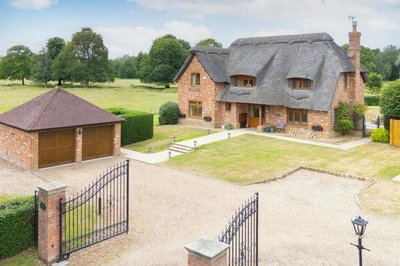
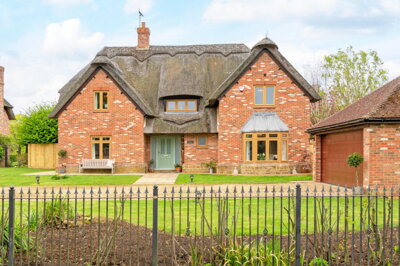
Browse 2 homes for sale in Clay Coton from local estate agents.
The larger property sector typically features multiple bathrooms, substantial reception space, and private gardens or off-street parking. Four bedroom houses in Clay Coton span detached, semi-detached, and occasionally terraced configurations, with styles ranging from period properties to modern executive homes.
£355,000
Average Property Price
+2.9%
12-Month Price Change
5
Properties Sold (12 months)
£475,000
Detached Average
£280,000
Semi-Detached Average
£220,000
Terraced Average
The Clay Coton property market presents a focused selection of homes reflecting the village's intimate scale, with five property sales completing in the past twelve months. This modest transaction volume means the market moves deliberately, giving serious buyers time to evaluate options without the pressure of rapid turnover seen in busier towns. Properties in Clay Coton tend to stay on the market longer than urban equivalents, allowing thorough consideration before committing to a purchase.
Detached properties command the highest prices at approximately £475,000, offering generous space and often occupying larger plots that capture the rural setting. These homes typically date from the interwar period or later, with gardens that often extend to a quarter acre or more. The premium commanded by detached homes reflects both the land they occupy and the privacy they offer - a significant factor for families who have chosen village life specifically for space and seclusion.
Semi-detached homes in the village typically sell for around £280,000, providing an accessible option for families seeking the village lifestyle at a more modest price point. These properties often represent excellent value, frequently sharing the same ironstone construction as their detached neighbours but at a more accessible price. Terraced properties average £220,000, while flats in the village are rarer and typically start from £150,000. This market segmentation reveals a healthy range of options across different buyer budgets and requirements.
The absence of active new-build developments within the Clay Coton postcode area means that buyers interested in newer construction may need to broaden their search to nearby towns, though this scarcity contributes to the character and charm of the existing housing stock. Properties here tend to feature traditional Northamptonshire ironstone and local brick construction, reflecting centuries of building heritage that newer developments simply cannot replicate.

Clay Coton embodies the classic English village experience, characterised by its historic core featuring period properties built from the distinctive ironstone that defines Northamptonshire architecture. The village maintains an intimate community atmosphere where local services and facilities serve the needs of residents while preserving the agricultural heritage that has shaped the area for generations. The Church of St Peter stands as the village's most prominent landmark, its tower visible across the surrounding farmland and serving as a constant reminder of the community's long history.
As a rural settlement, Clay Coton's economy has traditionally been tied to farming and local services, though many contemporary residents commute to larger towns for employment. The village pub, where one still exists, serves as an important social hub for residents, and village events throughout the year bring the community together. Unlike some larger villages that have seen rapid expansion and loss of character, Clay Coton has retained much of its original scale and charm, with new development limited and carefully considered.
The surrounding West Northamptonshire countryside offers extensive walking routes, bridleways, and open farmland that define daily life for residents. The nearby village of Yelvertoft offers additional local amenities including a primary school and shop, while the wider Daventry district provides access to healthcare, supermarkets, and other services. For those seeking a truly rural lifestyle without complete isolation, Clay Coton strikes an effective balance between peaceful countryside living and practical accessibility.

Understanding the construction methods used in Clay Coton properties helps buyers appreciate both the character and potential maintenance considerations of their potential new home. The predominant building material throughout the village is Northamptonshire ironstone, a locally quarried limestone that ranges from pale cream to warm honey in colour. This ironstone was extensively used from the medieval period through to the early twentieth century, giving the village its distinctive and harmonious appearance.
Traditional properties in Clay Coton typically feature solid masonry walls constructed from ironstone or local brick, often two bricks thick. These solid walls have different characteristics to modern cavity construction, generally offering good thermal mass but potentially less insulation than contemporary standards demand. Many older properties will have had some degree of modernisation to their insulation, though this varies significantly between individual homes.
Timber construction features prominently in older properties, with traditional cut timber visible in roof structures and floor joists. Original sash windows with box frames are common in period properties, though many will have been replaced with double-glazed alternatives over the years. When inspecting properties, we check the condition of these timber elements carefully, as rot or woodworm can significantly affect structural integrity and repair costs.
More recent properties in the village, dating from the post-war period onwards, typically use cavity wall construction with brick or rendered blockwork. These properties generally require less maintenance than their Victorian and Edwardian predecessors, though they may lack some of the character that defines the village's older housing stock. Understanding which construction era a property belongs to helps set realistic expectations for both maintenance requirements and potential improvement opportunities.
Families considering a move to Clay Coton will find educational options available within reasonable travelling distance, with primary schools serving the immediate village community and secondary education options in nearby towns. The Daventry district, which encompasses Clay Coton, maintains a network of primary schools providing education for younger children, with Ofsted ratings offering guidance on school quality across the area. Parents should research specific catchment areas and admissions criteria when planning a move.
For primary-aged children, schools in the surrounding villages provide education within a short drive of Clay Coton. These smaller rural schools often offer excellent pupil-to-teacher ratios and strong community connections, though they may have limited facilities compared to larger town schools. The Yelvertoft Primary School serves the immediate surrounding area and represents the closest option for many Clay Coton families.
Secondary education provision includes schools in Rugby, Daventry, and Northampton, with several institutions attracting students from the wider rural catchment. Lawrence Sheriff School in Rugby offers grammar school education for eligible students, while other secondary schools in the area provide comprehensive education across all abilities. For families prioritising academic excellence, the grammar school system in Warwickshire may be accessible depending on specific location and admissions policies, with some students travelling from Northamptonshire to access these schools.
Sixth form and further education provision in nearby towns ensures that older students have clear pathways to continued education and career preparation. Northampton College and other further education providers in the region offer a wide range of vocational and academic courses, accessible to Clay Coton residents with transport arranged. University options in the region include Northampton, Leicester, and Coventry, all reachable by car or public transport from the village.
Clay Coton benefits from strategic road connections that make commuting to major employment centres remarkably practical despite the village's rural setting. The A14 trunk road passes nearby, providing direct access to the M1 motorway and onward connections to Leicester, Northampton, and Birmingham. This road infrastructure transforms Clay Coton from a remote village into a viable base for professionals working across the Midlands region. Journey times to Northampton take approximately 30-40 minutes by car, with Rugby accessible in around 20 minutes.
The M1 motorway junction 18 provides the main route south towards Northampton and London, with the journey to central London taking approximately 90 minutes outside peak hours. For those working in Leicester, the A14 and A45 combination provides a direct route in around 35 minutes. Birmingham is accessible via the M6 in approximately 50 minutes, making Clay Coton potentially suitable for professionals working across multiple regional centres.
Public transport options are limited in common with many rural villages, making car ownership essential for most residents. The nearest railway stations are located in Rugby and Northampton, offering regular services to major cities including London, Birmingham, and Manchester. For those working in London, the journey from Rugby station to Euston takes around 50 minutes, positioning Clay Coton as a viable location for commuters who split their working week between home and office.
Local bus services connect the village to nearby towns, though frequencies may be limited compared to urban routes. The Stagecoach service connecting Northampton to Daventry passes through nearby villages, providing occasional public transport options for those without cars. For most residents, the practical reality of rural village living means that a vehicle is considered essential rather than optional.
Start by exploring current listings in Clay Coton on Homemove to understand available properties, price ranges, and what different property types offer. With only around five sales annually, the market moves slowly, so patience and persistence will serve you well. Register with local estate agents who cover the village and surrounding area, as off-market opportunities occasionally arise for connected buyers.
Once you identify properties of interest, arrange viewings through estate agents and consider obtaining a mortgage agreement in principle before making any offers. This financial preparation strengthens your position when negotiating in what can be a competitive local market. Given the limited stock available, being prepared to move quickly on suitable properties can be advantageous, though the deliberate market pace generally allows time for due diligence.
Given the village's geology and mix of older properties, a thorough survey is essential. RICS Level 2 surveys in the Clay Coton area typically cost between £400-£700 and will identify structural issues, damp problems, and any concerns related to the shrink-swell clay soils common in Northamptonshire. Our team has extensive experience surveying properties across West Northamptonshire and understands the specific defect patterns common to local construction.
Choose a conveyancing solicitor with experience in rural property transactions to handle the legal aspects of your purchase. They will conduct searches, handle Land Registry documentation, and manage the transfer of ownership. Rural transactions sometimes involve additional complexities such as rights of way, agricultural drainage, or commons registration that require specialist knowledge.
Once all searches are satisfactory and financing is confirmed, your solicitor will exchange contracts and set a completion date. On completion day, the remaining balance transfers and you receive the keys to your new Clay Coton home. We recommend arranging buildings insurance from exchange of contracts, as this protects your investment during the final waiting period.
The local geology presents specific considerations for property buyers in Clay Coton. The underlying Oadby Till and Charmouth Mudstone formations create moderate to high shrink-swell clay conditions that can affect foundations, particularly during periods of extreme weather. When we inspect properties in the village, we pay particular attention to signs of subsidence or structural movement, especially in older properties with potentially shallow foundations. Our inspectors have identified foundation concerns in several Clay Coton properties where large trees close to buildings have exacerbated clay movement during dry periods.
Signs of subsidence include cracking to walls (particularly diagonal cracks widening from doors or windows), doors and windows that stick or bind, and visible movement in brickwork or rendering. However, some cracking can result from thermal movement or minor settlement rather than serious structural issues. A thorough survey will identify whether any cracking observed reflects significant movement requiring attention or represents cosmetic damage that can be addressed during routine maintenance.
Flood risk in Clay Coton varies across the village, with river and sea flooding presenting very low risk. However, surface water flooding can affect low-lying areas and properties near watercourses, particularly during periods of heavy rainfall. Your survey should identify any flood risk affecting the property, and buildings insurance costs may reflect local conditions. Properties in the village's lower areas should be checked carefully for evidence of previous flooding or water ingress.
The village's historic properties, often built from traditional ironstone, may require more maintenance than modern construction. We check roof condition carefully, as older properties frequently have original or early replacement coverings that may be nearing the end of their serviceable life. Pointing deterioration is common in older properties, with mortar joints often softer than modern equivalents and more susceptible to weathering. The integrity of timber elements including roof structures, floor joists, and window frames should be assessed, as rot or woodworm can significantly affect property condition and repair costs.
The average property price in Clay Coton was £355,000 as of February 2026. Detached properties average £475,000, semi-detached homes around £280,000, terraced properties approximately £220,000, and flats from £150,000. Prices have increased by 2.9% over the past twelve months, indicating steady demand for properties in this West Northamptonshire village. This price growth reflects the broader trend of buyers seeking rural locations with good transport connections, a pattern that has strengthened since the pandemic accelerated interest in countryside living.
While Clay Coton itself is a small village without its own secondary school, primary education is available locally through schools serving the surrounding area including Yelvertoft Primary School within easy reach. Parents should research specific catchment schools and consider transport arrangements for secondary education, which is typically accessed in nearby towns such as Rugby, Daventry, or Northampton. The grammar school system in Warwickshire is accessible for some families depending on location and admission test results, offering an alternative route for academically focused students.
Public transport options are limited, reflecting the village's rural character. The nearest railway stations are in Rugby and Northampton, providing connections to London, Birmingham, and other major cities. A car is considered essential for most residents, though local bus services operate to nearby towns with varying frequencies. Rugby station offers direct services to London Euston in approximately 50 minutes, making Clay Coton practical for commuters working in the capital on a hybrid basis.
Clay Coton offers potential for investors seeking long-term growth in a desirable rural location. The 2.9% annual price increase demonstrates consistent demand, and the village's character, heritage properties, and commuter accessibility maintain its appeal. Properties in the village tend to be predominantly detached and semi-detached, commanding premium prices in the local market. The limited supply of available properties suggests that well-positioned homes are likely to retain their value, though the small market size means liquidity may be lower than in larger towns.
Council tax bands in Clay Coton are set by West Northamptonshire Council. Specific bands vary by property depending on valuation, with typical village homes falling across bands B through F. Detached period properties on larger plots often occupy higher bands, while smaller terraced homes may fall into band B or C. Prospective buyers should check individual property listings or the local authority website for exact band information and current council tax charges.
Standard Stamp Duty rates from April 2025 are 0% on the first £250,000, 5% between £250,001 and £925,000, 10% between £925,001 and £1.5 million, and 12% above £1.5 million. For a typical Clay Coton property at the current average price of £355,000, a standard buyer would pay approximately £5,250 in stamp duty after the nil-rate threshold. First-time buyers may benefit from relief on properties up to £625,000, paying 0% on the first £425,000 and 5% on the portion between £425,001 and £625,000.
The primary structural risk in Clay Coton relates to the shrink-swell clay soils underlying much of the village, which can cause foundation movement particularly in older properties with shallow foundations. During our surveys of local properties, we frequently identify cracking related to this movement, often exacerbated by trees planted close to buildings. Surface water flooding affects lower-lying areas during heavy rainfall, and older ironstone properties require regular maintenance of pointing and roofing to prevent deterioration.
Clay Coton contains several listed buildings, with the Church of St Peter being the most prominent designated structure. Period properties throughout the village may have listed status depending on their age and architectural significance, which affects permitted alterations and renovation works. Properties listed or within conservation areas often require specialist surveys and may face restrictions on changes to exterior appearance or structural alterations.
Understanding the full cost of purchasing property in Clay Coton extends beyond the asking price. Stamp Duty Land Tax applies to all purchases above £250,000 at standard rates, with first-time buyer relief potentially available for purchases up to £625,000. For a typical Clay Coton property at the current average price of £355,000, a standard buyer would pay approximately £5,250 in stamp duty after the nil-rate threshold. First-time buyers would pay £0 if purchasing at this price point, representing significant savings that can contribute towards legal fees or moving costs.
Additional buying costs include solicitor fees averaging £800-£1,500 for conveyancing, with rural properties sometimes incurring additional charges for specialist searches related to rights of way, drainage, or agricultural matters. Survey costs between £400-£700 for a RICS Level 2 survey represent money well spent, particularly given the age of many Clay Coton properties and the potential for hidden defects. We recommend against economising on survey costs, as the investment typically represents excellent value compared to the potential cost of discovering serious issues after purchase.
Removal expenses vary based on distance and volume, while mortgage arrangement fees typically range from £0-£2,000 depending on the lender and product chosen. Buildings insurance should be arranged before completion, with costs influenced by property type, age, and the local flood risk profile. Budgeting for these costs alongside your deposit and mortgage ensures a smooth transaction when purchasing your Clay Coton home, avoiding the stress of unexpected financial demands during an already complex process.
Properties for Sale In London

Properties for Sale In Plymouth

Properties for Sale In Liverpool

Properties for Sale In Glasgow

Properties for Sale In Sheffield

Properties for Sale In Edinburgh

Properties for Sale In Coventry

Properties for Sale In Bradford

Properties for Sale In Manchester

Properties for Sale In Birmingham

Properties for Sale In Bristol

Properties for Sale In Oxford

Properties for Sale In Leicester

Properties for Sale In Newcastle

Properties for Sale In Leeds

Properties for Sale In Southampton

Properties for Sale In Cardiff

Properties for Sale In Nottingham

Properties for Sale In Norwich

Properties for Sale In Brighton

Properties for Sale In Derby

Properties for Sale In Portsmouth

Properties for Sale In Northampton

Properties for Sale In Milton Keynes

Properties for Sale In Bournemouth

Properties for Sale In Bolton

Properties for Sale In Swansea

Properties for Sale In Swindon

Properties for Sale In Peterborough

Properties for Sale In Wolverhampton

Enter your details to see if this property is within your budget.
Loans, cards, car finance
Estimated property budget
Borrowing + deposit
You could borrow between
Typical borrowing
Monthly repayment
Est. at 4.5%
Loan-to-value
This is an estimate only. Your actual budget may vary depending on interest rates, credit history, and personal circumstances. For an accurate affordability assessment, speak to one of our free mortgage advisors.
This calculator provides estimates for illustrative purposes only and does not constitute financial advice. Your home may be repossessed if you do not keep up repayments on your mortgage. Estimates based on 4.5% interest rate, repayment mortgage. Actual rates depend on your circumstances.
Homemove is a trading name of HM Haus Group Ltd (Company No. 13873779, registered in England & Wales). Homemove Mortgages Ltd (Company No. 15947693) is an Appointed Representative of TMG Direct Limited, trading as TMG Mortgage Network, which is authorised and regulated by the Financial Conduct Authority (FRN 786245). Homemove Mortgages Ltd is entered on the FCA Register as an Appointed Representative (FRN 1022429). You can check registrations at NewRegister or by calling 0800 111 6768.

We use cookies to show you personalised content and improve your experience of our website. Find out more in our Privacy policy and Cookie policy.