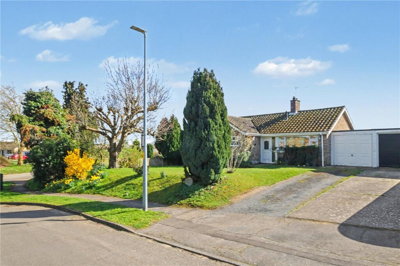
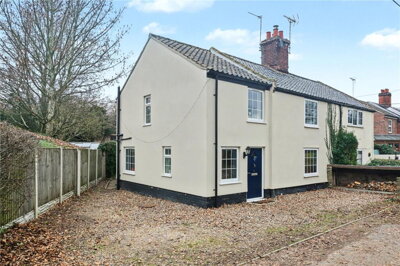
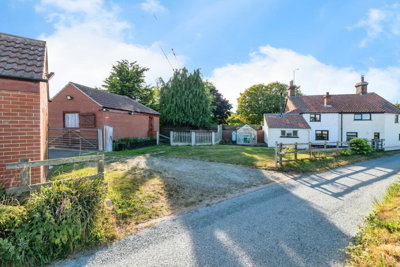
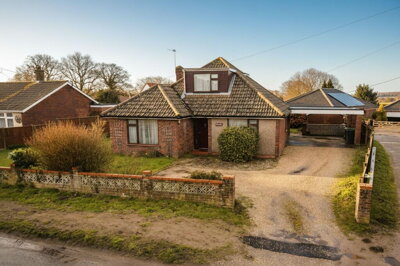
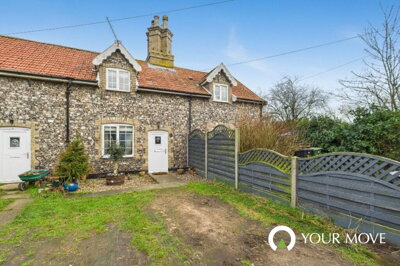
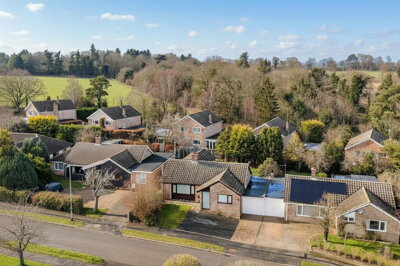
Browse 7 homes for sale in Carleton St. Peter from local estate agents.
Peter from local agents. Three bedroom properties represent a significant portion of the Carleton St. Peter housing market, offering space for families with multiple reception rooms and gardens in many cases. Browse detached, semi-detached, and terraced options ranging from period character homes to contemporary developments.
The Carleton St. Peter property market is characteristically quiet, with limited annual transaction volumes reflecting the village's small population and rural nature. Historical sales data shows detached properties dominating the market, with a notable transaction at 12 Ropers Cottage on Ferry Road completing for £435,500 in August 2018. Earlier sales in the village include properties on Ferry Road and New Road, with one three-bedroom property at 3 Ferry Road selling for £340,000 in May 2009. These figures illustrate the premium associated with detached homes in this desirable rural location, where properties with land and countryside views command higher prices than comparable homes in nearby towns.
Nearby East Carleton provides useful comparable data, with the average sold house price standing at approximately £565,000. This benchmark suggests that buyers searching in the broader Carleton area should expect to budget in the upper five-figure to lower six-figure range for quality detached homes with rural settings. The broader Sprowston area in Norwich shows different market dynamics, with average prices around £306,667 over the past year, but this should not be directly applied to Carleton St. Peter, which operates as a distinctly separate rural village market with different buyer demographics and property characteristics.
No active new-build developments exist specifically within the Carleton St. Peter postcode area, meaning buyers seeking modern construction will need to consider properties in nearby towns or be prepared to purchase character homes that may require modernisation. The village's housing stock appears to predominantly feature detached properties, consistent with its rural character and the preference for generous plot sizes that characterises South Norfolk village living. This scarcity of supply has historically supported property values in the village, even during periods when broader market conditions have been more volatile.
The village's location within the NR14 postcode places it among other desirable South Norfolk villages, many of which share similar market characteristics of limited supply and steady demand from buyers seeking rural lifestyles. Properties along Ferry Road and New Road represent the village's traditional housing stock, with period features and generous gardens typical of Norfolk village homes built during the Georgian and Victorian periods when the region's agricultural economy was at its peak.

Carleton St. Peter embodies the classic English village aesthetic, with St Peter's Church serving as a focal point for the community along Ferry Road. The village sits within a network of quiet country lanes that are popular with walkers and cyclists, connecting to neighbouring villages and the wider South Norfolk countryside. The presence of a historic church indicates the village's long settlement history, with many properties likely dating from the Georgian or Victorian periods when Norfolk's agricultural economy supported numerous small rural communities. Property listings in the area frequently describe homes as "period cottages," confirming the character-rich nature of the local housing stock.
The village offers a genuinely rural lifestyle while remaining commutable to Norwich and nearby market towns, according to property descriptions for the area. This balance of countryside tranquility and accessibility makes Carleton St. Peter particularly appealing to buyers working in Norwich who want to escape city living without facing excessive commute times. The nearby market town of Loddon provides essential daily amenities including a convenience store, post office, and pubs, while larger shopping facilities and supermarkets are accessible in nearby towns. The Broads National Park lies a short drive to the northeast, offering extensive waterways, nature reserves, and recreational opportunities for residents who enjoy outdoor activities.
Village life in Carleton St. Peter centres on the quiet rhythms of rural Norfolk, with community connections forged through the church, local walks, and village events. The absence of through-traffic contributes to the peaceful atmosphere, though residents should be prepared for the limited services typical of small villages. Shopping for groceries, medical appointments, and other routine needs typically involves a short drive to Loddon or neighbouring towns, making private vehicle ownership essential for daily life. The village's small scale also means that new residents are likely to quickly become known within the community, a factor that appeals to many buyers seeking the antithesis of anonymous urban living.

Families considering a move to Carleton St. Peter will find a selection of local schools within reasonable driving distance. The village falls within South Norfolk, where primary education is served by schools in neighbouring villages and towns. Schools in the surrounding area typically serve multiple villages, reflecting the rural nature of the region and the traditional pattern of village primaries feeding into larger secondary schools in market towns. Parents should verify current catchment areas and school performance data through Ofsted reports, as these can change and vary depending on specific addresses within the village.
Secondary education options in the area include schools in nearby towns, with many families travelling to access schools with strong academic records or specific curriculum offerings. The choice between state and independent education will depend on individual family preferences, with independent schools available in the wider Norfolk region for those seeking alternatives to the local state system. Sixth form provision is typically found in larger towns, meaning older students may need to travel further for advanced education options, a common consideration for rural families that is balanced against the benefits of village living.
Transport arrangements for school children require planning in a village location, as school bus services may operate on fixed schedules that affect after-school activities and flexibility. Many families find that the trade-off of longer school runs is offset by the educational advantages of rural school settings and the lifestyle benefits that village living provides. Parents are advised to contact Norfolk County Council's transport department to confirm eligibility for free school transport, which may be available depending on distance from the nearest qualifying school.
Carleton St. Peter benefits from its position in South Norfolk, offering reasonably straightforward access to Norwich for daily commuters. The journey to Norwich city centre can typically be completed within 30-40 minutes by car, depending on traffic conditions and the specific route taken. The village's location off main through-roads means that residents enjoy relatively congestion-free travel compared to those living in suburbs closer to the city. Major road connections in the area include routes towards Norwich and the Broads, providing access to the A47 and the broader Norfolk road network for travel beyond the immediate area.
Public transport options from Carleton St. Peter are limited, as is typical for small rural villages, with bus services connecting to nearby towns and villages on schedules that may suit occasional rather than daily commuting needs. Rail connections are accessed via Norwich railway station, which offers regular services to London Liverpool Street, Cambridge, and various destinations across East Anglia. The station is reachable by car or via connecting bus services, placing London within approximately two hours travel time for those working in the capital or needing to travel for business. Cyclists benefit from quieter country lanes, though the flat Norfolk landscape is perhaps better suited to leisure cycling than daily commuting.
For those working from home, Carleton St. Peter benefits from increasingly reliable broadband connections that support remote work, though prospective buyers should verify current speeds at their specific address. The village's peaceful setting can be particularly advantageous for home workers seeking a productive environment away from urban distractions. Local amenities in nearby Loddon include cafes and pubs where residents can work if desired, providing occasional variety from home-based work routines.
Before committing to a purchase in Carleton St. Peter, spend time exploring the village at different times of day and week to understand the community character, noise levels, and traffic patterns. Visit nearby Loddon to assess amenity accessibility, and drive the route to Norwich during rush hour if you plan to commute regularly. Speak with current residents to gain authentic insights into village life that cannot be gathered from property listings alone.
Unless you are a cash buyer, obtain a mortgage agreement in principle from a lender before viewing properties. This document confirms how much you can borrow and strengthens your position when making an offer, particularly in a village market where sellers may receive multiple enquiries. Contact our mortgage advisers who can compare rates across multiple lenders to find the most suitable deal for your circumstances.
Arrange viewings of available properties in Carleton St. Peter through our platform, paying attention to the condition of older homes, garden sizes, and any planning restrictions that may affect your plans. Once you find a suitable property, submit an offer through the selling agent with your proof of funds or mortgage agreement in principle attached to demonstrate your seriousness as a buyer.
Given that many properties in Carleton St. Peter are likely older period homes, a RICS Level 2 Survey (formerly Homebuyer Report) is strongly recommended before proceeding to exchange contracts. This survey checks for defects that may not be visible during a standard viewing, including structural issues, damp, roof condition, and electrical safety. Book through Homemove's survey partners who can arrange an inspection at a time that suits you.
Your solicitor will handle the legal work involved in purchasing your Carleton St. Peter home, including searches, contracts, and registration with the Land Registry. Using a solicitor with experience in rural Norfolk properties can be beneficial if the transaction involves unusual elements such as shared driveways, septic tanks, or agricultural restrictions. Our conveyancing partners offer fixed-fee packages for purchases in the NR14 area.
Once all surveys, searches, and legal work are satisfactory, you will exchange contracts and pay your deposit. Completion typically follows within days or weeks, depending on your agreed timeline, after which the keys are released and you can move into your new Carleton St. Peter home.
The housing stock in Carleton St. Peter predominantly consists of period properties built during the late Georgian and Victorian eras, when Norfolk's prosperous agricultural economy supported a network of thriving rural villages. Traditional construction in the area typically features Norfolk red brick masonry with clay tile or slate roofing, reflecting the materials readily available in this part of East Anglia. Properties along Ferry Road and New Road exemplify this traditional building style, with thick solid walls that provide excellent thermal mass but can present challenges around moisture management that buyers should understand before purchasing.
Detached houses dominate the village's property landscape, often sitting on generous plots with mature gardens that extend the living space outdoors during summer months. The prevalence of detached properties reflects both the rural setting and the historical pattern of land ownership in the area, where larger plots were standard for agricultural workers and estate workers who once populated villages like Carleton St. Peter. Converted farm buildings also appear in the local market, offering characterful alternatives to traditional cottages with features such as exposed beams, high ceilings, and original barn doors that appeal to buyers seeking distinctive rural homes.
Many properties in the village retain original features that contribute to their character, including sash windows, fireplaces, flagstone floors, and panelled doors typical of Norfolk period homes. These features require ongoing maintenance and may need gradual upgrading to meet modern energy efficiency standards, a factor that buyers should budget for when evaluating properties. The village's traditional building methods mean that properties here often require different maintenance approaches compared to modern construction, with lime-based mortars and traditional paints preferred over cement-based products for repairs to historic masonry.
Properties in Carleton St. Peter are likely to include period homes that require careful inspection for common issues associated with older construction. Look for signs of damp in walls and basements, particularly in properties with solid walls rather than cavity construction. Roof condition is crucial, as replacement costs can be substantial on detached homes with high rooflines. Electrical systems in older properties may require updating to meet current safety standards, and a RICS Level 2 Survey will identify any concerns that warrant further investigation or negotiation with the seller.
The presence of St Peter's Church and other historic buildings in the village suggests that some properties may be located within conservation considerations or be affected by planning restrictions designed to preserve the rural character of the area. Check with South Norfolk Council planning department whether any specific designations affect the property you are considering, as these can influence what alterations or extensions are permitted. Flood risk should be verified through official government mapping services, particularly for properties near waterways or low-lying land, as Norfolk has experienced flooding in various areas over the years.
Many rural properties in South Norfolk rely on private drainage systems such as septic tanks rather than mains sewerage, which is an important consideration for buyers unfamiliar with village living. These systems require regular maintenance and may need upgrading to meet current regulations. Similarly, some properties may use private water supplies rather than mains water, with associated testing and maintenance responsibilities. Factor these potential costs into your budget when evaluating properties in the village.
Properties in Carleton St. Peter typically operate independently from mains drainage infrastructure, relying instead on private septic tanks, treatment plants, or other private drainage systems. These arrangements are common in rural Norfolk villages where mains sewerage has not been extended to individual properties. Buyers should arrange for a drainage inspection as part of their survey process, verifying that the system is functioning correctly and meets current environmental regulations. Failing or inadequate drainage systems can represent significant unexpected costs, so this is an area where thorough investigation pays dividends before committing to a purchase.
Water supply arrangements should also be verified before completing a purchase, as some rural properties may connect to private boreholes or springs rather than the mains water network. Properties on private water supplies require regular testing to ensure water quality meets drinking water standards, with associated filtration or treatment equipment requiring periodic maintenance or replacement. The costs and responsibilities of maintaining private water supplies should be factored into the overall cost of ownership when comparing properties in the village.
Specific average price data for Carleton St. Peter is limited due to the village's small size and infrequent property transactions. Historical sales data shows detached properties selling between £340,000 and £435,500, with the most recent recorded sale at 12 Ropers Cottage on Ferry Road for £435,500 in August 2018. Nearby East Carleton shows an average sold price of approximately £565,000, providing a useful benchmark for the broader area. Buyers should budget in the £400,000 to £600,000 range for quality detached homes in this desirable South Norfolk village location, though properties with exceptional land, character features, or views may exceed this range.
Properties in Carleton St. Peter fall under South Norfolk Council for council tax purposes. The specific band depends on the property's valuation, with typical bands for period village homes ranging from C to E depending on the property's assessed value. Prospective buyers should check the current council tax band for any specific property through the Valuation Office Agency website or their solicitor during conveyancing, as bands can affect ongoing annual costs that should be factored into the overall budget for owning a home in the village. South Norfolk Council sets annual charges based on these bands, with higher-banded properties paying more each month.
Primary education is available at schools in nearby villages and the town of Loddon, with catchment areas that include Carleton St. Peter. Schools in the surrounding area typically serve multiple villages, reflecting the rural nature of the region and the traditional pattern of village primaries feeding into larger secondary schools in market towns. Parents should verify current school performance data and catchment boundaries, as these can change and vary depending on the specific address. Independent schooling options are available in the wider Norfolk region for families seeking alternatives to the local state education system, including schools in Norwich and surrounding market towns.
Public transport options in Carleton St. Peter are limited, reflecting the village's small rural nature. Bus services connect to nearby towns on schedules that may suit occasional travel rather than daily commuting, with services typically running at reduced frequencies compared to urban routes. Norwich railway station, offering services to London Liverpool Street in approximately two hours, is accessible by car or connecting bus. The village's position near country roads provides reasonable car access to Norwich and surrounding market towns, making private vehicle ownership essential for most residents who need to commute or access services regularly.
Carleton St. Peter offers the lifestyle benefits of rural village living combined with reasonable access to Norwich, making it attractive to buyers seeking long-term homes rather than purely financial investments. The village's limited property supply and rural character suggest that values may remain stable over time, supported by ongoing demand from buyers priced out of Norwich but wanting easy city access. Properties with land, character features, or views across Norfolk countryside tend to hold their value well in this market segment. The absence of new-build development in the immediate area helps preserve the character and scarcity value of existing properties.
Stamp duty (SDLT) rates for 2024-25 apply to all purchases in England, with the standard threshold at 0% for the first £250,000 of property value, 5% between £250,000 and £925,000, and higher rates above that. First-time buyers benefit from relief on the first £425,000, paying 5% between £425,000 and £625,000. For example, a £400,000 property would incur no stamp duty for first-time buyers, while a £500,000 home would attract SDLT of £2,500 for those qualifying for first-time buyer relief. Always calculate your specific liability based on purchase price and buyer status, as your solicitor will handle the filing and payment.
Given that many village properties are likely period homes, arrange a RICS Level 2 Survey to check for structural issues, damp, roof condition, and outdated electrics or plumbing. Verify the property's drainage arrangements (mains vs private septic tank), water supply, and any planning restrictions affecting the property or its surroundings. Check whether the property is in a conservation area and review the title deeds for any unusual covenants or rights that may affect use or future sale. Our survey partners can provide detailed inspections for any property you are considering, with reports tailored to the specific construction type and age of homes in this area.
From 4.5% APR
Competitive mortgage rates for Carleton St. Peter buyers
From £499
Fixed-fee solicitors for NR14 property purchases
From £350
Essential inspection for period properties
From £80
Energy performance certificate
Budgeting for stamp duty is an essential part of purchasing property in Carleton St. Peter, alongside survey costs, solicitor fees, and moving expenses. For properties priced below £250,000, standard buyers pay no stamp duty on the first threshold. Properties between £250,000 and £925,000 incur 5% on the amount above £250,000, which means a £400,000 property attracts £7,500 in SDLT. Higher value properties up to £1.5 million pay 10% above £925,000, with properties above this threshold attracting 12% on amounts exceeding £1.5 million. These thresholds apply to all English purchases during the 2024-25 tax year and are set by His Majesty's Revenue and Customs.
First-time buyers purchasing in Carleton St. Peter benefit from increased thresholds, paying no stamp duty on the first £425,000 of purchase price and 5% only on amounts between £425,000 and £625,000. A first-time buyer purchasing a £450,000 property would therefore pay only £1,250 in SDLT, compared to £10,000 for a non-first-time buyer. To qualify as a first-time buyer, you must not have previously owned property anywhere in the world, and relief cannot be claimed if the purchase price exceeds £625,000. Your conveyancing solicitor will file the SDLT return and ensure the correct amount is paid on your behalf as part of the completion process.
Beyond stamp duty, buyers should budget for a RICS Level 2 Survey starting from approximately £350 for standard properties, with costs varying based on property size and value. Solicitors typically charge £500 to £1,500 for conveyancing on a village property, including searches specific to the South Norfolk area. If the property requires a mortgage, arrangement fees of 0% to 2% of the loan amount may apply, though many lenders now offer fee-free mortgages. Removal costs, valuation fees, and initial utility connections complete the typical budget for buying a home in Carleton St. Peter.
Properties for Sale In London

Properties for Sale In Plymouth

Properties for Sale In Liverpool

Properties for Sale In Glasgow

Properties for Sale In Sheffield

Properties for Sale In Edinburgh

Properties for Sale In Coventry

Properties for Sale In Bradford

Properties for Sale In Manchester

Properties for Sale In Birmingham

Properties for Sale In Bristol

Properties for Sale In Oxford

Properties for Sale In Leicester

Properties for Sale In Newcastle

Properties for Sale In Leeds

Properties for Sale In Southampton

Properties for Sale In Cardiff

Properties for Sale In Nottingham

Properties for Sale In Norwich

Properties for Sale In Brighton

Properties for Sale In Derby

Properties for Sale In Portsmouth

Properties for Sale In Northampton

Properties for Sale In Milton Keynes

Properties for Sale In Bournemouth

Properties for Sale In Bolton

Properties for Sale In Swansea

Properties for Sale In Swindon

Properties for Sale In Peterborough

Properties for Sale In Wolverhampton

Enter your details to see if this property is within your budget.
Loans, cards, car finance
Estimated property budget
Borrowing + deposit
You could borrow between
Typical borrowing
Monthly repayment
Est. at 4.5%
Loan-to-value
This is an estimate only. Your actual budget may vary depending on interest rates, credit history, and personal circumstances. For an accurate affordability assessment, speak to one of our free mortgage advisors.
This calculator provides estimates for illustrative purposes only and does not constitute financial advice. Your home may be repossessed if you do not keep up repayments on your mortgage. Estimates based on 4.5% interest rate, repayment mortgage. Actual rates depend on your circumstances.
Homemove is a trading name of HM Haus Group Ltd (Company No. 13873779, registered in England & Wales). Homemove Mortgages Ltd (Company No. 15947693) is an Appointed Representative of TMG Direct Limited, trading as TMG Mortgage Network, which is authorised and regulated by the Financial Conduct Authority (FRN 786245). Homemove Mortgages Ltd is entered on the FCA Register as an Appointed Representative (FRN 1022429). You can check registrations at NewRegister or by calling 0800 111 6768.

We use cookies to show you personalised content and improve your experience of our website. Find out more in our Privacy policy and Cookie policy.