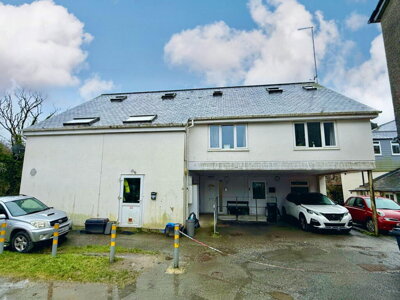
Browse 1 home for sale in Camelford, Cornwall from local estate agents.
One bed apartments provide a separate bedroom alongside distinct living space, bathroom, and kitchen areas. Properties in Camelford are available in various building types including mansion blocks, contemporary developments, and house conversions.
£0k
0
0
0
Source: home.co.uk
Showing 0 results for 1 Bedroom Flats for sale in Camelford, Cornwall.
The Camelford property market presents a diverse range of housing options across all price brackets, with Rightmove recording an overall average price of £273,433 over the past twelve months. Detached properties dominate the upper end of the market, with average prices around £368,000 to £370,000, reflecting the demand for generous living space and gardens that accommodate Cornwall's outdoor lifestyle. These larger family homes often feature traditional granite construction with slate roofs, blending seamlessly into the surrounding countryside while offering modern comforts inside.
Semi-detached properties in Camelford average approximately £233,000, representing solid value for first-time buyers seeking a foot on the property ladder in Cornwall. These homes typically offer three bedrooms over two floors, making them ideal for small families or those working from home who need dedicated office space. Terraced properties provide the most affordable entry point at around £209,000 on average, with many Victorian and Edwardian cottages along Fore Street and Chapel Street offering characterful accommodation with original features intact. Flats remain relatively scarce in Camelford, with limited availability and average prices around £96,000.
Price trends in Camelford have shown some volatility recently, with Rightmove reporting a 5% decline compared to the previous year and a 9% reduction from the 2021 peak of £299,790. However, HousePriceHistory.co.uk indicates a 4.8% increase over the past twelve months, suggesting market stabilisation as buyers recognise Camelford's genuine value proposition. For buyers, this mixed picture creates opportunities to negotiate favourable prices while the underlying demand for Cornwall properties remains strong. Planning permissions for new developments at Tregoodwell and other sites indicate continued investment in the town, with 37 new homes approved at Tregoodwell alone bringing fresh stock to a market where demand consistently outstrips supply in desirable locations.

Camelford occupies a privileged position at the crossroads of two of Cornwall's most celebrated landscapes, with Bodmin Moor rising dramatically to the east while the North Cornish coast lies just a short drive to the north and west. The town itself has a population of approximately 3,378 residents according to the 2021 Census, creating an intimate community where local businesses thrive on loyal patronage and newcomers are quickly made to feel welcome. The River Camel flows through the town centre, its valley providing scenic walks and contributing to the verdant character that makes Camelford so appealing to outdoor enthusiasts and nature lovers.
The town's commercial heart centres on the Market Place and Fore Street, where independent traders operate alongside familiar conveniences. Daily necessities are well catered for with a post office, convenience stores, and a butchers, while artisan shops and galleries reflect Cornwall's creative heritage. The local economy benefits from tourism generated by visitors exploring the surrounding moorland and coast, with several pubs and cafes serving both residents and visitors throughout the year. The Bowood Park hotel and golf course located approximately two miles southwest of the town adds a leisure dimension that attracts visitors and supports local employment.
The traditional building materials of Camelford reflect Cornwall's vernacular architecture, with granite walls, slate roofs, and cob construction evident throughout the town. These locally sourced materials have protected buildings for generations, creating the honey-coloured stone aesthetic that characterises the Conservation Area around the Market Place. Lime-based renders allow historic structures to breathe while shedding the heavy rainfall that Cornwall experiences throughout autumn and winter. For residents, these traditional construction methods contribute to homes with excellent thermal mass, keeping interiors cool in summer and retaining warmth during colder months.

Education provision in Camelford serves families with children of all ages, with Camelford Primary School providing essential early years and key stage one education within the town itself. The school serves the immediate community and surrounding rural parishes, offering a reassuringly local option for families with young children. For secondary education, the local secondary school provides key stage three and four provision, with students typically remaining in Camelford for their GCSE years before considering sixth form options in nearby towns.
Families moving to Camelford should note that post-sixteen education options require travel to larger towns such as Wadebridge, Bodmin, or Truro, which host further education colleges and sixth form centres. This commute consideration influences property decisions for families with older teenagers, who may prioritise proximity to transport links when choosing where to live in the area. Cornwall has historically faced challenges with rural education provision, though initiatives continue to improve accessibility to vocational and academic courses across the county. Independent school options exist throughout Cornwall, though these incur additional costs that families should factor into their budgeting.
For buyers prioritising educational outcomes, visiting local schools and understanding their current Ofsted ratings provides essential context for family decisions. Schools in rural Cornwall often benefit from smaller class sizes and more individual attention, though facilities may be more limited than those available in urban comprehensives. The community atmosphere in Camelford's schools reflects the wider town character, with strong parental engagement and support networks that help children settle quickly when families relocate to the area.
Transport connectivity from Camelford centres primarily on the A39 trunk road, which passes through the town and provides the main arterial route connecting North Cornwall with the rest of the county. The A39 offers relatively straightforward access to Wadebridge approximately twelve miles distant, where the River Camel estuary provides further connectivity. For commuting to work or accessing amenities in larger centres, the road network dominates, with Bodmin reachable within twenty minutes and Truro accessible within forty-five minutes under normal driving conditions. The scenic nature of Cornish country roads makes driving pleasurable rather than stressful, though single carriageway sections slow progress on busier routes.
Public transport options serving Camelford include bus routes connecting the town with surrounding communities and larger population centres. These services enable residents to travel without private vehicles, though frequencies are limited compared to urban areas and evening or weekend services require careful planning. The nearest railway stations are located at Bodmin Parkway and Truro, with Bodmin Parkway offering connections to Plymouth, Bristol, and London Paddington via the Great Western Railway network. For buyers who commute to work, these railway stations make periodic travel feasible, though the distances involved mean Camelford suits those who work locally or can work remotely for most of the week.
For cyclists and walkers, Camelford sits on several National Cycle Network routes and provides access to extensive footpaths crossing Bodmin Moor and the surrounding countryside. These recreational routes encourage active travel for local journeys and provide weekend leisure opportunities that attract residents to the area. Parking provision in the town centre accommodates visitors and residents parking for local trips, with larger car parks available for market days and community events. The relatively flat terrain around the town centre makes cycling practical for everyday purposes, though the hilly nature of Bodmin Moor limits cycling routes in that direction.
Begin by exploring current listings on Homemove to understand available properties, price ranges, and what your budget purchases in this North Cornwall town. Camelford's market differs significantly from coastal areas, with detached family homes available at £370,000 on average compared to premium coastal prices. Understanding the difference between traditional granite cottages and modern detached houses helps narrow your search effectively.
Before viewing properties, obtain a mortgage agreement in principle from a lender. This financial pre-qualification demonstrates your buying capacity to estate agents and sellers, strengthening your position when making offers. Camelford's property market moves at a measured pace, so having your finances arranged ensures you can act quickly when the right property becomes available.
Visit Camelford in person to assess the town, neighbourhood, and specific properties that interest you. Pay particular attention to flood risk areas, particularly properties near the River Camel and the A39 corridor. Check the condition of traditional construction features, roof conditions on older properties, and any signs of damp that commonly affect solid-walled buildings in Cornwall.
Once your offer is accepted, arrange a RICS Level 2 survey to assess the property condition thoroughly. For Camelford's older housing stock, this survey identifies defects common to granite construction, slate roofs, and traditional materials. Survey costs typically range from £400 to £800 depending on property size and specification, representing money well spent before committing to purchase.
Appoint a solicitor experienced in Cornwall property transactions to handle legal work including searches, contracts, and land registry checks. Local knowledge helps identify issues specific to Camelford, including conservation area restrictions, listed building considerations, and any local authority planning decisions affecting the property.
After satisfactory survey results and completed legal work, exchange contracts with the seller and pay your deposit. Completion typically follows within weeks, when you receive keys and take ownership of your Camelford home. Our recommended conveyancing providers can manage this process efficiently for properties throughout the Camelford area.
Properties in Camelford require careful inspection due to the town's geological and environmental characteristics that buyers should understand before committing to purchase. Flood risk represents a significant consideration, with the River Camel designated as a flood warning area that encompasses the A39, Market Place, and surrounding low-lying areas. Properties near the river or in valleys should be examined for flood resilience measures, past flooding history, and appropriate insurance provisions. The Environment Agency publishes flood maps that help identify at-risk locations before viewing properties.
The traditional building materials common throughout Camelford bring both charm and maintenance considerations that differ from modern construction. Granite walls, while exceptionally durable, may show signs of weathering or mortar deterioration that require specialist repair using appropriate lime-based products. Slate roofs on older properties often contain reclaimed tiles of varying ages, and replacement costs for matching slates can prove expensive. Understanding the condition of these traditional elements helps budget for future maintenance and prevents unexpected costs after purchase.
Conservation Area designation affects properties throughout central Camelford, imposing restrictions on alterations, extensions, and exterior changes that require consent from Cornwall Council. Listed Buildings scattered throughout the town and surrounding parish carry additional requirements for specialist surveys and heritage-consented work that must be undertaken by appropriately qualified contractors. Examples include the Camelford Methodist Church on Market Place, built in 1837 and Grade II listed, and several properties along Fore Street and Chapel Street that retain their historic character. Buyers should verify any planned modifications comply with these designations before purchase, as modifications can result in enforcement action and required restoration. The presence of a RICS Level 3 survey is advisable for listed properties given their specialist construction and protected status.
Camelford's architectural heritage reflects Cornwall's rich history of using locally sourced natural materials, with granite serving as the dominant building stone throughout the town. This igneous rock, varying in colour from light grey to pink tones, was quarried locally and cut by skilled masons to create the distinctive honey-coloured buildings that line the Market Place and surrounding streets. Our inspectors frequently encounter granite construction when surveying properties in Camelford, and we understand how this durable material behaves under Cornwall's wet climate conditions. The inherent strength of granite means that structural problems with granite walls are uncommon, though mortar deterioration between courses requires attention to prevent water penetration.
Slate roofing predominates throughout Camelford's older properties, sourced from Cornish quarries that produced high-quality roofing material for centuries. These traditional slate roofs often comprise tiles of varying ages, with repairs carried out using reclaimed material matched as closely as possible to the original. We check each slate roof thoroughly during surveys, looking for cracked or missing tiles, deteriorating ridge mortar, and any signs of roof spread that indicates structural movement. Re-roofing costs for traditional slate can be substantial, and understanding the current condition of the roof helps buyers budget appropriately for their Camelford property purchase.
Cob construction, using a mixture of clay, sand, straw, and water, appears in some older Camelford properties and represents Cornwall's vernacular building tradition. Cob walls offer excellent thermal mass and breathability, though they require adequate foundations and protection from persistent damp. Our surveyors assess cob walls carefully, looking for cracks, erosion at the base where water splashes from paths, and any signs of structural movement that might indicate foundation problems. Properties incorporating cob construction benefit from specialist maintenance approaches using compatible lime-based renders and traditional repair techniques that preserve the breathability of these historic walls.
The average house price in Camelford currently sits around £273,433 according to Rightmove data, though this varies significantly by property type. Detached properties average approximately £368,000 to £370,000, while semi-detached homes command around £233,000 and terraced properties average £209,000. Flats remain scarce in Camelford with limited availability around the £96,000 mark. Price trends have shown some variation recently, with Rightmove reporting a 5% decline from the previous year, though other sources indicate more stable conditions. For buyers, Camelford offers relatively accessible pricing compared to coastal Cornwall while maintaining proximity to the area's celebrated landscapes.
Properties in Camelford fall under Cornwall Council's jurisdiction for council tax purposes, with bands ranging from A through to H reflecting property values. Specific bands depend on individual property valuations, and buyers should verify the applicable band before purchase through the Valuation Office Agency website. Cornwall Council sets annual charges based on these bands, and properties in the Camelford area benefit from Cornwall's generally lower council tax rates compared to many urban authorities. New build properties may be assigned provisional bands until formal valuation occurs.
Camelford Primary School serves the town and surrounding rural communities for early years and key stage one education. The local secondary school provides comprehensive education through key stage four, with reasonably sized class sizes that enable individual attention. Post-sixteen students typically travel to further education colleges in Wadebridge, Bodmin, or Truro, which offer broader subject choices and specialist vocational courses. Parents should review current Ofsted reports when researching educational options, as school performance changes over time and personal priorities influence which school suits individual children best.
Public transport connectivity from Camelford relies primarily on bus services linking the town with surrounding communities and larger centres. Bus routes provide access to Wadebridge, Bodmin, and other North Cornwall destinations, though frequencies are limited compared to urban areas and evening services require advance planning. The nearest railway stations at Bodmin Parkway and Truro offer connections to the national rail network, with Bodmin Parkway providing services to Plymouth, Bristol, and London Paddington. For daily commuting, private vehicle ownership remains practically essential for most residents, though those working remotely or locally can manage comfortably with reduced transport requirements.
Camelford offers investment potential for buyers seeking long-term appreciation without the premium prices commanded by coastal hotspots. Planning permissions for new developments including 37 homes at Tregoodwell and additional sites off Higher Cross Lane and the A39 south indicate continued investment in local infrastructure. The town's position between Bodmin Moor and the North Cornish coast maintains its appeal for buyers seeking outdoor lifestyles at reasonable prices. However, investors should note that Cornwall's rural property markets can experience slower transaction times and greater sensitivity to economic conditions than urban areas. Rental demand exists from local workers and seasonal tourism staff, though this fluctuates throughout the year.
Stamp Duty Land Tax applies to all property purchases in England, with current thresholds starting at 0% for properties up to £250,000. For properties between £250,001 and £925,000, the rate increases to 5%, rising to 10% for the next bracket up to £1.5 million. First-time buyers benefit from increased thresholds, paying 0% up to £425,000 with 5% applying between £425,001 and £625,000. For a typical Camelford property at the current average of £273,433, standard buyers would pay no stamp duty while first-time buyers also benefit from zero liability within their threshold allowance.
Buyers should assess flood risk carefully given Camelford's position on the River Camel floodplain, particularly for properties near the river, A39, or Market Place areas. The Environment Agency flood warning system covers these areas, and appropriate insurance provisions should be verified. Ground conditions in Cornwall can include shrink-swell clay risks that affect foundations, though these vary throughout the area and a geological survey may be advisable for properties on problematic ground. Cornwall's mining heritage may influence ground conditions in some locations, with backfilled shafts potentially affecting stability in specific areas. Coastal erosion affects properties near the coast rather than Camelford itself, but increasing storm activity from climate change means all Cornwall properties benefit from consideration of environmental risks.
Camelford has a designated Conservation Area covering the historic town centre, and numerous Listed Buildings are scattered throughout the town and surrounding parish. Properties on Fore Street and Chapel Street include several Grade II listed buildings dating from the Georgian and Victorian periods, while the Church of St Julitta at Lanteglos holds Grade I listed status reflecting its architectural significance. Buying a listed property in Camelford requires specialist surveys and adherence to heritage regulations that restrict alterations and require consent for most works. Our inspectors have experience assessing traditional Cornish construction for listed properties, identifying defects that require specialist repair using appropriate traditional materials and techniques.
From 4.5%
Compare mortgage deals from trusted lenders
From £499
Expert property solicitors for Camelford purchases
From £400
Professional survey for your Camelford property
From £85
Energy performance certificate for your new home
Purchasing a property in Camelford involves several costs beyond the advertised purchase price, and understanding these expenses helps buyers budget accurately for their Cornwall move. The Stamp Duty Land Tax threshold currently sits at £250,000 for standard buyers, meaning the average Camelford property at £273,433 falls just above this threshold and attracts minimal SDLT. First-time buyers benefit from significantly increased thresholds, paying nothing on purchases up to £425,000 and only 5% on the portion between £425,001 and £625,000, making Camelford's average-priced properties exempt from stamp duty for most first-time buyer purchases.
Survey costs represent an essential investment for any Camelford property purchase, with RICS Level 2 surveys typically ranging from £400 to £800 depending on property size and specification. For the traditional granite-built properties common throughout Camelford, surveys identify defects specific to older construction including roof condition, damp penetration through solid walls, and timber deterioration that may not be apparent during viewings. Properties in the Conservation Area or those with Listed Building status may require the more comprehensive RICS Level 3 survey, which costs more but provides detailed assessment suitable for heritage properties with specialist maintenance requirements. Older properties built before 1900 often incur survey premiums of 20-40% due to their complex construction and potential for hidden defects.
Conveyancing costs for Camelford property purchases typically start from around £499 for standard transactions, covering legal work, local searches, and contract preparation. Additional costs arise for environmental searches including flood risk assessment and any mining records relevant to Cornwall properties. Land Registry fees for transferring ownership depend on property value, and buyers should budget for removal costs, potential decoration, and any immediate repairs identified during survey. Mortgage arrangement fees vary between lenders and may be offset against interest rates, so comparing total mortgage costs across multiple providers helps find the best deal for your circumstances.
Properties for Sale In London

Properties for Sale In Plymouth

Properties for Sale In Liverpool

Properties for Sale In Glasgow

Properties for Sale In Sheffield

Properties for Sale In Edinburgh

Properties for Sale In Coventry

Properties for Sale In Bradford

Properties for Sale In Manchester

Properties for Sale In Birmingham

Properties for Sale In Bristol

Properties for Sale In Oxford

Properties for Sale In Leicester

Properties for Sale In Newcastle

Properties for Sale In Leeds

Properties for Sale In Southampton

Properties for Sale In Cardiff

Properties for Sale In Nottingham

Properties for Sale In Norwich

Properties for Sale In Brighton

Properties for Sale In Derby

Properties for Sale In Portsmouth

Properties for Sale In Northampton

Properties for Sale In Milton Keynes

Properties for Sale In Bournemouth

Properties for Sale In Bolton

Properties for Sale In Swansea

Properties for Sale In Swindon

Properties for Sale In Peterborough

Properties for Sale In Wolverhampton

Enter your details to see if this property is within your budget.
Loans, cards, car finance
Estimated property budget
Borrowing + deposit
You could borrow between
Typical borrowing
Monthly repayment
Est. at 4.5%
Loan-to-value
This is an estimate only. Your actual budget may vary depending on interest rates, credit history, and personal circumstances. For an accurate affordability assessment, speak to one of our free mortgage advisors.
This calculator provides estimates for illustrative purposes only and does not constitute financial advice. Your home may be repossessed if you do not keep up repayments on your mortgage. Estimates based on 4.5% interest rate, repayment mortgage. Actual rates depend on your circumstances.
Homemove is a trading name of HM Haus Group Ltd (Company No. 13873779, registered in England & Wales). Homemove Mortgages Ltd (Company No. 15947693) is an Appointed Representative of TMG Direct Limited, trading as TMG Mortgage Network, which is authorised and regulated by the Financial Conduct Authority (FRN 786245). Homemove Mortgages Ltd is entered on the FCA Register as an Appointed Representative (FRN 1022429). You can check registrations at NewRegister or by calling 0800 111 6768.

We use cookies to show you personalised content and improve your experience of our website. Find out more in our Privacy policy and Cookie policy.