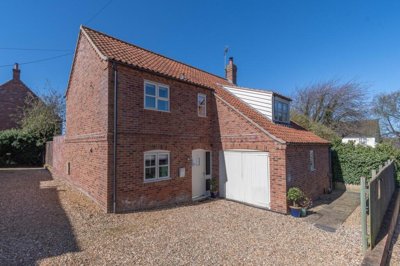
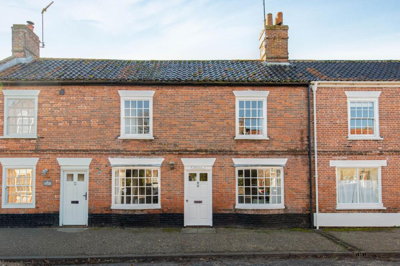
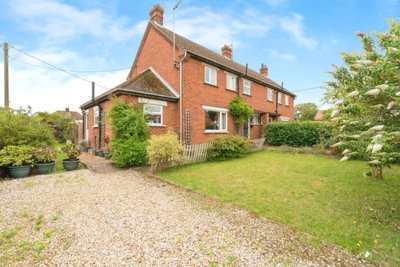
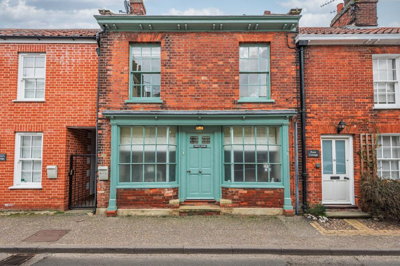
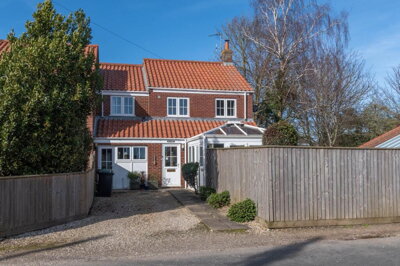
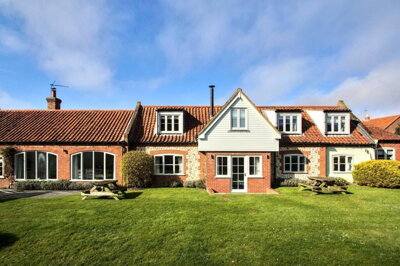
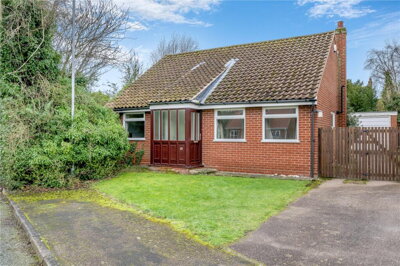
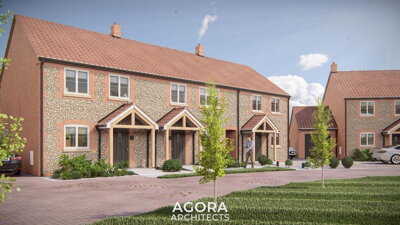
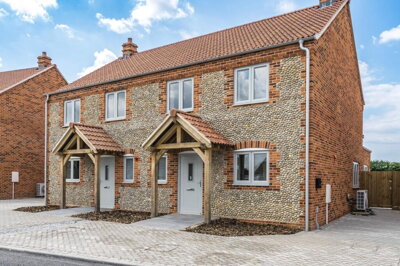
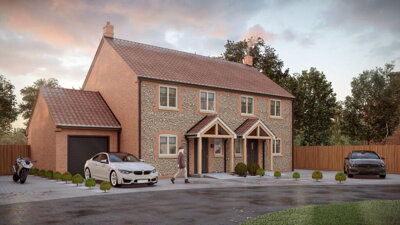
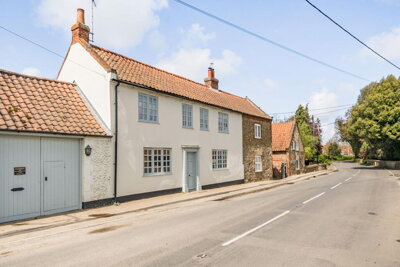
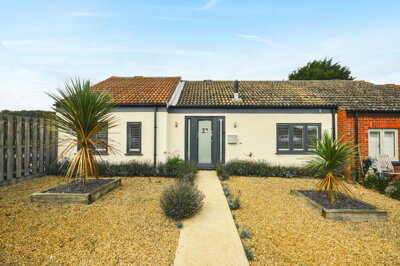
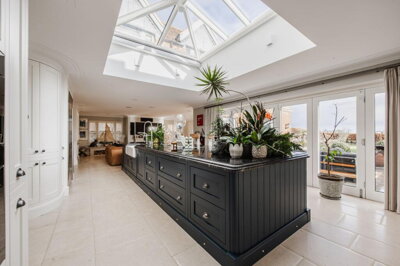
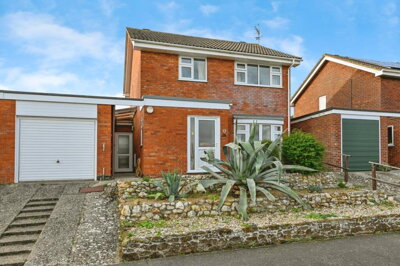
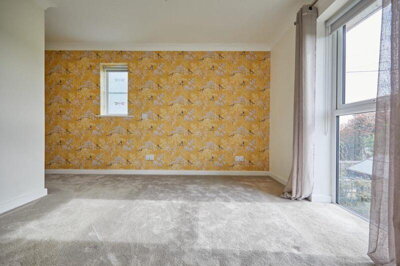
Browse 19 homes for sale in Burnham Norton from local estate agents.
Three bedroom properties represent a significant portion of the Burnham Norton housing market, offering space for families with multiple reception rooms and gardens in many cases. Browse detached, semi-detached, and terraced options ranging from period character homes to contemporary developments.
The Burnham Norton property market reflects the broader trends of the North Norfolk coastal area, with the broader "Burnham" region recording 82 property sales in 2025. Our data shows that detached properties command the highest prices, with a median sale price of £786,250 across 34 sales in the area, making them ideal for families seeking generous living space and gardens with rural or sea views. Semi-detached homes sold at a median of £550,000 across 27 transactions, offering excellent value for those looking for period features without the premium associated with fully detached properties.
Terraced properties in the area achieved a median price of £412,500 based on 10 sales, while flats in the broader Burnham area had a median sale price of £242,500 across 11 transactions. The market has shown notable resilience, with overall house prices in the broader Burnham area increasing by 12.4% over the past 12 months according to Land Registry data. However, the PE31 postcode area that includes Burnham Norton experienced a 12.6% price correction in the same period, suggesting some volatility in the coastal market segment. First-time buyers and investors should note that approximately 58% of dwellings in the surrounding study area are not primary residences, indicating a significant presence of second homes and holiday lets that influences both availability and pricing dynamics.
Housing stock in the study area is predominantly detached, with just under half of all properties falling into this category, and just over 30% being semi-detached. This compares to a national average of 23.2% detached and 31.5% semi-detached according to the 2021 Census, confirming that Burnham Norton offers a high proportion of spacious family homes. Flats represent only 4% of the housing stock, making them relatively scarce in the village itself, though more available in nearby market towns. The village retains much of its historic character, with most buildings dating to the 19th century and constructed from traditional materials including clunch, flint, and red brick.

Burnham Norton offers a distinctive lifestyle shaped by its coastal location, protected landscape, and proud agricultural heritage. The village sits within the North Norfolk Coast Area of Outstanding Natural Beauty, providing residents with immediate access to stunning salt marshes, creeks, and heathland that attract wildlife enthusiasts and walkers year-round. The village itself retains much of its historic character, with the 14th-century gatehouse of the Carmelite Friary and the west gable of the church standing as testaments to its medieval significance. Buildings throughout the conservation area predominantly feature traditional construction using local materials including soft limestone clunch, flint, and red brick, often topped with clay pantile roofs.
Norfolk has one of the highest percentages of second homes and holiday lets in England, and Burnham Norton exemplifies this trend. Research indicates that one in four properties in the nearby village of Burnham Market serves as a second home or holiday let, with the broader study area showing that 58% of all dwellings have no usual household resident. This figure significantly exceeds the King's Lynn and West Norfolk average of 10% and the England average of 6%, shaping both the character and availability of housing in the village. The decline in agricultural employment and associated trades has left Burnham Norton rather deserted during winter months, though the summer season brings an influx of visitors and holidaymakers drawn to its natural beauty and historic significance.
The demographic profile of Burnham Norton reveals a community with strong retirement and second-home characteristics. The 2011 Census recorded a population of 173, growing from 151 in 2001, while the surrounding study area had just 143 households against 341 total dwellings. This disparity highlights that over half of all housing serves non-permanent residents, a figure significantly above the borough average. The nearby village of Burnham Market, just a short drive away via the A149 coast road, provides essential services including a varied selection of traditional shops, hostelries, dental and medical surgeries, and other amenities that support daily life in this rural coastal community. King's Lynn, approximately 25 miles to the southwest, offers comprehensive retail, healthcare, and mainline rail services to London King's Cross.

Families considering a move to Burnham Norton will find educational provision concentrated in the nearby village of Burnham Market and the surrounding market towns. The nearest primary school to Burnham Norton is typically Snettisham Primary School or similar village schools in the surrounding area, with the broader King's Lynn and West Norfolk borough offering a mix of community primary schools and those with church affiliations including Vaughton's Church of England Primary School in nearby settlements. Parents should verify current catchment areas and admission arrangements with Norfolk County Council, as school places in coastal villages can be competitive due to seasonal population fluctuations and the rural nature of road networks connecting settlements.
Secondary education options in the area include springboard schools in surrounding towns, with students typically travelling to Fakenham Academy for GCSE and A-Level programmes, or to King's Lynn where institutions such as King Edward VII School and St Peter's School serve the wider area. The region's secondary schools have varying Ofsted ratings, and families are advised to research current performance data and available transport arrangements when considering properties in Burnham Norton. For families seeking independent education, several preparatory and senior schools operate in the wider Norfolk area, including Gresham's School in Holt and King Edward VI School in Norwich, though these require longer commutes from the coastal village.
Sixth-form provision and further education colleges are primarily located in King's Lynn, approximately 25 miles from Burnham Norton, with transport links available via the village's local bus services. The College of West Anglia offers a range of vocational and academic courses from its King's Lynn campus. Families should also note that Norfolk operates a selective grammar school system, with places determined by the eleven-plus examination, and parents in the Burnham area may wish to explore these options for secondary-age children. Transport to grammar schools in King's Lynn and Norwich requires careful planning given the rural location of Burnham Norton.
Transport connectivity from Burnham Norton relies primarily on road networks, with the village situated off the A149 coast road that runs between King's Lynn and Cromer. This scenic route passes through several coastal villages including Brancaster, Holkham, and Wells-next-the-Sea, providing access to local amenities and beaches while also carrying seasonal tourist traffic that can impact journey times during summer months and school holidays. The nearest major town, King's Lynn, lies approximately 25 miles to the southwest, offering mainline rail services to London King's Cross with journey times of around two hours. Norwich, Norfolk's principal city, is accessible via the A1066 and A47 trunk roads, providing connections to the East Anglian rail network and Norwich International Airport for domestic and European flights.
Local bus services operated by Norfolk Green and other providers connect Burnham Norton with surrounding villages and market towns including Burnham Market, Hunstanton, and King's Lynn, though frequencies are reduced compared to urban areas with fewer services on evenings and Sundays. The X8 bus route provides connections to Fakenham and beyond, while services to Hunstanton offer access to the coast in the opposite direction. Residents planning daily commutes should factor in the need for a car, while those working from home or seeking a peaceful retreat will appreciate the village's relative seclusion from major traffic routes. Parking within the village is generally straightforward, unlike the constrained conditions found in nearby coastal hotspots during peak season.
Cycling is popular in the area, with quiet country lanes and the North Norfolk Coast Path offering opportunities for recreational and commuter cycling, though the coastal terrain includes gentle hills that require moderate fitness levels. The National Cycle Network Route 1 passes through nearby sections of the Norfolk coast, connecting Burnham Norton with wider cycling routes. For longer journeys, the village's proximity to the A47 provides access to Norwich and the East of England, though the A149 itself can become congested during peak summer tourist season when visitors flock to the North Norfolk coast beaches and nature reserves.
Start by exploring current listings on Homemove and understanding Burnham Norton's property landscape. With an average price of £550,000 and properties ranging from terraced cottages to detached country homes, identifying your target price range and preferred property type will help focus your search efficiently. Consider that detached properties achieved a median of £786,250 in the broader area while terraced properties averaged £412,500, so your budget significantly influences what's available in this coastal village.
Once you have identified suitable properties, schedule viewings through the listed estate agents. Given the high proportion of second homes and holiday lets in the area, with approximately 58% of dwellings serving non-permanent residents, be prepared for viewings to be arranged around availability and for competition from buyers seeking weekend retreats. Properties may also be occupied only seasonally, so flexibility in viewing arrangements is advisable.
Before making an offer, secure a mortgage agreement in principle from a lender. This demonstrates your financial readiness to sellers and strengthens your negotiating position in what can be a competitive coastal market where properties with sea views or historic features attract multiple interested parties. Given the average property values in Burnham Norton, most buyers will require substantial mortgages, and having documentation ready speeds up the process considerably.
Given the age of properties in Burnham Norton, with many dating to the 19th century and built from traditional materials including flint, clunch, and clay pantiles, we strongly recommend a RICS Level 2 Survey for standard properties or a Level 3 Building Survey for listed buildings or those in poor condition. Our inspectors commonly find defects common to period properties including damp in solid-walled construction, roof issues from aging clay pantiles, timber decay, and structural movement related to the local geology. For Grade I or Grade II listed properties such as the Church of St Margaret or the Gatehouse of Carmelite Friary Ruins, specialist surveys are essential.
Once your offer is accepted, instruct a solicitor experienced in rural and coastal property transactions to handle the legal work, searches, and title verification specific to conservation areas and properties in areas of outstanding natural beauty. Flood risk searches are particularly important given Burnham Norton's location within the north Norfolk coastal flood warning area, and your solicitor should investigate any rental restrictions that may apply to holiday let properties.
Your solicitor will handle contract negotiations, local authority searches including flood risk assessments and conservation area checks, and coordinate with your mortgage lender for final funds transfer. Completion typically follows exchange within 2-4 weeks, after which you will receive the keys to your new Burnham Norton home. Budget for Stamp Duty Land Tax, which for a £550,000 property amounts to £15,000 for standard buyers, and ensure buildings insurance is arranged from completion given the coastal and flood-risk location.
Purchasing property in Burnham Norton requires careful attention to factors specific to coastal villages within an Area of Outstanding Natural Beauty. Flood risk is a primary consideration, as the village lies within the north Norfolk coastal flood warning area encompassing Burnham Deepdale, Burnham Norton, Burnham Over, and Burnham Market. The area is susceptible to coastal flooding, surface water flooding, and river flooding from the River Burn, which has historically caused issues in nearby Burnham Market due to high groundwater levels and overflowing sewers during periods of heavy rainfall. Norfolk has experienced significant flooding incidents affecting an estimated 37,000 properties during extreme weather events, making flood risk assessment essential for any purchase in this area.
The village's Conservation Area status, first designated in 1977, imposes planning controls on external alterations, extensions, and demolitions that differ from standard planning permission requirements. Properties of historical significance include the Grade I listed Church of St Margaret with its late 11th-century round tower and potentially Anglo-Saxon doorway, the Grade I listed Gatehouse of Carmelite Friary Ruins dating to around 1320, and the Grade II* listed Detached Gable Wall at the Friary Ruins. Several other structures including Friary Cottage, Norton Hall Farmhouse with its 17th-century origins, Prince of Wales House, and the House on Scolt Head Island hold Grade II listing. Any purchase of a listed building requires understanding of Listed Building Consent obligations, maintenance responsibilities, and the potential need for specialist surveys.
The predominant construction materials in Burnham Norton present specific considerations for prospective buyers. Buildings are predominantly 19th-century farm labourers' cottages and agricultural buildings constructed from clunch, flint, and red brick with clay pantile roofs. These traditional materials require ongoing maintenance and may be susceptible to issues common in period properties including damp in solid-walled construction without modern damp-proof courses, roof defects from aging coverings, and timber decay where ventilation is poor. The British Geological Survey indicates that areas with clay-rich soils, which may be present in parts of Norfolk, are at risk of shrink-swell behaviour that can cause subsidence, particularly during hot dry summers when clay minerals lose moisture.
Additionally, buyers should verify tenure carefully, as the area's holiday let market means some properties may have rental restrictions, management company obligations, or unusual lease terms that affect occupancy and resale value. Norfolk has one of the highest percentages of second homes and holiday lets in England, and this significantly influences the character of the local housing market. Buyers seeking primary residences should consider how seasonal population fluctuations affect community facilities and local services, as the village can be quiet during winter months when second-home owners are absent.
The overall average house price in Burnham Norton and the broader Burnham area stands at £550,000 according to recent data. Detached properties achieved a median price of £786,250 across 34 sales, making them the premium segment of the local market, while semi-detached homes sold at a median of £550,000 across 27 transactions. Terraced properties averaged £412,500 and flats £242,500, with the latter being relatively scarce in the village itself. Prices have risen by 12.4% in the broader Burnham area over the past year, though the PE31 postcode specifically saw a 12.6% correction, suggesting some volatility between micro-markets within the region. Given the coastal location, conservation status, and high proportion of second homes, prices for premium properties with sea views or historic features can significantly exceed these averages.
Properties in Burnham Norton fall under King's Lynn and West Norfolk Borough Council, with council tax bands ranging from A to H depending on property value and type. Band A properties typically start from around £1,200 annually, while higher-band properties in the area with larger period homes can exceed £3,000 per year. The village's predominantly older housing stock means many properties fall into mid-to-high bands, and buyers should verify the specific band with the local authority as part of their conveyancing searches. Factor these ongoing costs into your budget alongside mortgage payments, service charges, and maintenance expenses for period properties in a conservation area.
Burnham Norton is served by local primary schools in the surrounding villages, with the nearest typically being in Burnham Market for younger children, serving families within the SN postcode area that encompasses the village and nearby coastal settlements. The broader King's Lynn and West Norfolk area offers a range of primary and secondary schools with varying Ofsted ratings, and parents are advised to check current performance data and catchment boundaries with Norfolk County Council before committing to a property purchase. Secondary school options include schools in surrounding towns accessible via the A149 coast road, with transport arrangements varying by location and often requiring school bus services. Families seeking grammar school provision should note that Norfolk operates a selective system, and places are determined by the eleven-plus examination, with grammar schools available in King's Lynn and Norwich.
Burnham Norton has limited public transport connectivity, with local bus services providing connections to surrounding villages and market towns including Burnham Market, Hunstanton, and King's Lynn via the X8 and other routes operated by Norfolk Green. Bus frequencies are reduced compared to urban areas, with fewer services on evenings and Sundays, making private vehicle ownership essential for most residents. The nearest railway station is in King's Lynn, approximately 25 miles away, offering direct services to London King's Cross with journey times of around two hours. Norwich, accessible via the A47, provides additional rail connections and Norwich International Airport for domestic and European flights, though travel from Burnham Norton requires planning given the rural location.
Burnham Norton offers investment potential for several reasons, though buyers should understand the specific dynamics of this coastal market before committing capital. The village's location within the North Norfolk Coast Area of Outstanding Natural Beauty ensures continued demand from buyers seeking rural retreats and holiday lets, with the broader Norfolk coast attracting visitors year-round. However, the high proportion of second homes means rental demand for standard residential properties may be lower than in comparable villages with more permanent populations, and any rental plans may be subject to planning restrictions in this sensitive location. The 12.4% annual price growth in the broader area demonstrates capital appreciation potential, but the 12.6% correction in the PE31 postcode suggests volatility that investors should factor into their expectations.
Stamp Duty Land Tax applies to all property purchases in England, with current thresholds for residential purchases set at 0% on the first £250,000, 5% between £250,001 and £925,000, 10% between £925,001 and £1.5 million, and 12% on amounts exceeding £1.5 million. First-time buyers benefit from relief on the first £425,000, with 5% applying between £425,001 and £625,000. Given the average Burnham Norton property price of £550,000, a standard buyer would pay approximately £15,000 in stamp duty, calculated as 5% of the amount above £250,000. A first-time buyer would pay £6,250 on the same property, while properties priced above £625,000 do not qualify for first-time buyer relief and attract standard rates on the full purchase price.
New build activity within the specific village boundaries of Burnham Norton is limited, with most recent development occurring as individual new builds or significant renovations rather than large-scale developments. OnTheMarket lists a five-bedroom detached brick and flint new home in Burnham Norton with a guide price of £995,000, representing the premium end of the local new build market. Planning applications in the village include proposals by Woodson Homes on Friars Lane to extend an existing two-bedroom bungalow into a four-bedroom dwelling, demonstrating continued interest in residential development. For those seeking newer properties, nearby villages such as Burnham Market offer developments including Burnham Meadows and the Holkham Estate development off Creake Road with its mix of bungalows, terraced, semi-detached, and detached homes.
Flood risk is a significant consideration for any property purchase in Burnham Norton, given its location on the north Norfolk coast within the coastal flood warning area that encompasses Burnham Deepdale, Burnham Norton, Burnham Over, and Burnham Market. The area faces multiple flood risk sources including coastal flooding from the North Sea, river flooding from the River Burn which has historically caused issues during periods of heavy rainfall, and surface water flooding from intense rainfall events that have affected an estimated 37,000 properties across Norfolk. The village's low-lying position and proximity to tidal creeks and salt marshes enhance its natural beauty but also increase vulnerability to flooding. Prospective buyers should review Environment Agency flood maps, consider the property's elevation and history of flooding, and ensure appropriate insurance is available and affordable before committing to a purchase.
From £400
A survey for standard modern properties or those in reasonable condition. Ideal for conventional houses and flats.
From £600
A comprehensive building survey for older properties, non-standard construction, or those in poor condition. Recommended for listed buildings and period properties.
From 4.5%
Compare mortgage deals from leading lenders. Expert advice tailored to your circumstances.
From £499
Expert legal services for your property purchase. Fixed-fee conveyancing with no hidden costs.
Budgeting for your Burnham Norton purchase requires consideration of several costs beyond the property price. Stamp Duty Land Tax represents the most significant upfront expense, with standard rates applying 5% on the portion of purchase price between £250,001 and £925,000. For a typical £550,000 property in Burnham Norton, this amounts to £15,000. First-time buyers benefit from the enhanced threshold, paying 5% only on the portion between £425,001 and £625,000, reducing their stamp duty to £6,250 on the same property. These thresholds apply to the purchase price as the total property value, not the portion above a threshold, so accurate calculation requires adding each band rate to the cumulative amount.
Additional purchase costs include solicitor fees for conveyancing, typically ranging from £500 to £2,000 depending on complexity and whether the property is freehold or leasehold. Given that many properties in Burnham Norton are in conservation areas with listed building status, conveyancing may involve additional complexity and cost. Survey costs should be budgeted at £400-£800 for a standard RICS Level 2 Survey, though properties over £500,000 or those over 50 years old may incur higher fees due to their value and the additional inspection time required. Listed buildings and those in non-standard construction including flint, clunch, or timber-framed properties often require the more comprehensive RICS Level 3 Building Survey at £600-1,500 due to their complexity and the specialist knowledge required.
Local searches with King's Lynn and West Norfolk Borough Council typically cost £200-400, while mortgage arrangement fees range from £0 to £2,000 depending on lender and product chosen. Buildings insurance should be arranged from completion, with coastal and flood-risk properties sometimes requiring specialist insurers who understand the unique risks of properties in Areas of Outstanding Natural Beauty on the North Norfolk coast. Factor in moving costs, potential renovation expenses given the age of much of the local housing stock, and ongoing maintenance for period features including traditional flint and clunch walls, clay pantile roofs, and historic detailing when calculating your total budget for moving to Burnham Norton.
Properties for Sale In London

Properties for Sale In Plymouth

Properties for Sale In Liverpool

Properties for Sale In Glasgow

Properties for Sale In Sheffield

Properties for Sale In Edinburgh

Properties for Sale In Coventry

Properties for Sale In Bradford

Properties for Sale In Manchester

Properties for Sale In Birmingham

Properties for Sale In Bristol

Properties for Sale In Oxford

Properties for Sale In Leicester

Properties for Sale In Newcastle

Properties for Sale In Leeds

Properties for Sale In Southampton

Properties for Sale In Cardiff

Properties for Sale In Nottingham

Properties for Sale In Norwich

Properties for Sale In Brighton

Properties for Sale In Derby

Properties for Sale In Portsmouth

Properties for Sale In Northampton

Properties for Sale In Milton Keynes

Properties for Sale In Bournemouth

Properties for Sale In Bolton

Properties for Sale In Swansea

Properties for Sale In Swindon

Properties for Sale In Peterborough

Properties for Sale In Wolverhampton

Enter your details to see if this property is within your budget.
Loans, cards, car finance
Estimated property budget
Borrowing + deposit
You could borrow between
Typical borrowing
Monthly repayment
Est. at 4.5%
Loan-to-value
This is an estimate only. Your actual budget may vary depending on interest rates, credit history, and personal circumstances. For an accurate affordability assessment, speak to one of our free mortgage advisors.
This calculator provides estimates for illustrative purposes only and does not constitute financial advice. Your home may be repossessed if you do not keep up repayments on your mortgage. Estimates based on 4.5% interest rate, repayment mortgage. Actual rates depend on your circumstances.
Homemove is a trading name of HM Haus Group Ltd (Company No. 13873779, registered in England & Wales). Homemove Mortgages Ltd (Company No. 15947693) is an Appointed Representative of TMG Direct Limited, trading as TMG Mortgage Network, which is authorised and regulated by the Financial Conduct Authority (FRN 786245). Homemove Mortgages Ltd is entered on the FCA Register as an Appointed Representative (FRN 1022429). You can check registrations at NewRegister or by calling 0800 111 6768.

We use cookies to show you personalised content and improve your experience of our website. Find out more in our Privacy policy and Cookie policy.