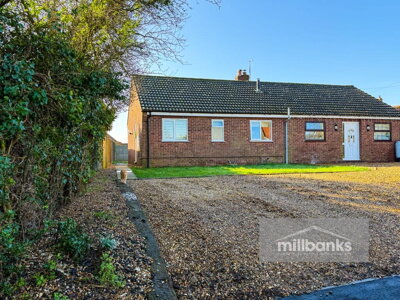
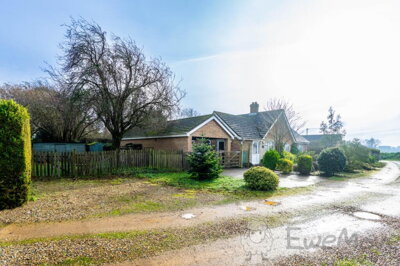
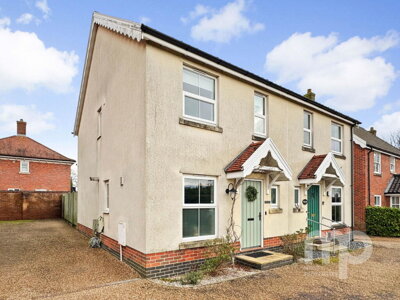
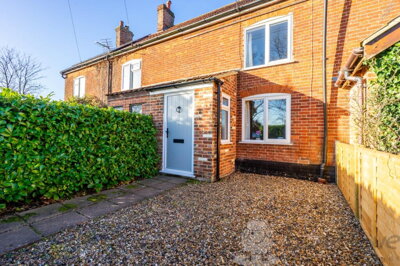
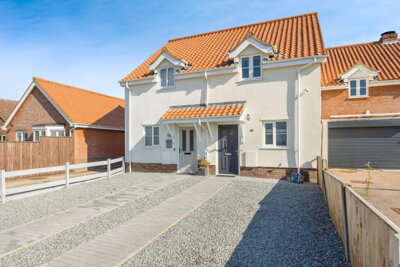
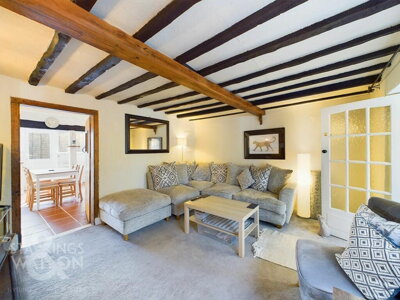
Browse 6 homes for sale in Bunwell, South Norfolk from local estate agents.
The 2 bed house market features detached, semi-detached, and terraced properties with two separate bedrooms plus living spaces. Properties in Bunwell range from Victorian and Edwardian period homes to modern new builds, with pricing varying across different neighbourhoods.
£290k
1
0
83
Source: home.co.uk
Showing 1 results for 2 Bedroom Houses for sale in Bunwell, South Norfolk. The median asking price is £290,000.
Source: home.co.uk
Terraced
1 listings
Avg £290,000
Source: home.co.uk
Source: home.co.uk
The Bunwell property market is characterised by its rural charm and predominantly detached housing stock, with approximately 60-70% of homes being detached properties. This predominance of larger homes reflects the village's historical development pattern, where generous plot sizes and period farmhouses have shaped the architectural character of the area. Buyers seeking generous living space will find the market well-suited to their requirements, with detached properties commanding an average price of £425,000. The village's housing stock spans several eras, from pre-1919 period cottages and farmhouses through to post-1980 detached family homes, creating a varied streetscape that maintains overall visual harmony.
Property prices in Bunwell span a range that accommodates various budgets and requirements. Semi-detached homes average £280,000, while terraced properties offer more accessible entry points at around £240,000. Flats remain relatively scarce in this village setting, with fewer than 5% of properties falling into this category, and those available typically command prices around £180,000. The absence of significant new-build development within the immediate postcode area means that buyers generally purchase existing properties, often with substantial gardens and outbuildings that reflect traditional Norfolk village layouts.
The market has demonstrated resilience and modest growth, with the 2.7% annual price increase suggesting healthy demand from buyers attracted to the area's rural credentials and practical connectivity. For buyers considering investment or long-term residence, this stable growth pattern indicates confidence in the local property market's fundamentals, driven by the ongoing appeal of Norfolk village life and proximity to growing regional employment hubs. First-time buyers will find terraced properties at around £240,000 offer the most accessible entry point, while families may gravitate toward the detached homes that dominate the local market.

Bunwell embodies the essence of rural Norfolk living, offering residents a peaceful village environment where community spirit thrives. The parish sits within the South Norfolk district, characterised by gentle undulating countryside, farmland, and the traditional village centre centred around St Michael and All Angels Church. The local population of 765 creates an intimate atmosphere where neighbours know one another, local events bring the community together, and the pace of life remains firmly grounded in village traditions. This sense of community proves particularly attractive to families with young children and retirees seeking a supportive environment.
The village retains a strong sense of historical character, with scattered listed buildings including period farmhouses and cottages that reflect centuries of agricultural heritage. Traditional building materials dominate the local architecture, with red and gault brick construction complemented by render and flint features that are characteristic of the Norfolk vernacular. Properties in Bunwell span several architectural eras, from pre-1919 period cottages and farmhouses through to post-1980 detached family homes, creating a varied streetscape that maintains overall visual harmony. The absence of a designated Conservation Area means that while many historic properties are protected as listed buildings, the wider village fabric remains less constrained than in some neighbouring parishes.
Daily life in Bunwell benefits from proximity to neighbouring towns. Attleborough and Wymondham provide convenient access to supermarkets, independent shops, healthcare facilities, and dining options, while Norwich offers a comprehensive range of cultural attractions, shopping centres, and employment opportunities within approximately 30 minutes by car. The local economy remains largely agricultural, with residents often combining rural property ownership with professional careers in the surrounding market towns or commuting further afield to Norwich and beyond. Village amenities within Bunwell itself are limited, reflecting its small population, though a village hall hosts community events throughout the year.

Families considering a move to Bunwell should note that the village itself does not have a primary school within its boundaries, meaning younger children typically attend schools in neighbouring communities. Primary education options within reasonable daily travel distance include schools in Carleton Rode, Attleborough, and the surrounding South Norfolk villages, with many families factoring school catchment areas into their property search. The A11 corridor through Attleborough provides access to several primary schools, with parents advised to verify current catchment boundaries and admission arrangements directly with schools before committing to a purchase.
Secondary education provision in the area includes Attleborough High School and Wymondham College, both serving students from Bunwell and surrounding villages through to sixth form. Wymondham College, a prominent secondary provider in South Norfolk, offers comprehensive education and has historically attracted students from a wide catchment area spanning multiple villages. Parents prioritising educational provision should research specific school performance data, catchment areas, and transport arrangements, as these factors can significantly influence daily routines and property values in particular locations.
For families prioritising educational choices, viewing the available property listings in Bunwell with school catchment information in mind allows buyers to balance the appeal of village living against practical considerations regarding school transport and daily routines. Many families successfully combine rural property preferences with educational requirements by securing places at schools within accessible distances, particularly where parents work in Norwich or surrounding towns where additional schooling options exist. Transport arrangements typically involve car journeys or school bus services, with families advised to confirm specific arrangements for their chosen schools before completing a purchase.
Transport connectivity from Bunwell relies primarily on road networks, with the village situated within convenient reach of major routes connecting South Norfolk to Norwich and the wider region. The A11 dual carriageway passes through Attleborough, providing efficient access to Norwich (approximately 15 miles) and onward connections to Cambridge and the M11 motorway beyond. This road infrastructure makes Bunwell practical for residents who commute to Norwich for work while enjoying the benefits of village residence outside the city, with typical car journey times to central Norwich taking around 25-35 minutes outside peak hours.
Public transport options serve the village through bus services connecting Bunwell to Attleborough, Wymondham, and Norwich, enabling residents to access rail services and broader regional destinations without private vehicle dependence. Bus services in rural Norfolk typically operate at reduced frequencies compared to urban routes, so residents should check current timetables for their specific requirements. Attleborough railway station provides regular services to Norwich, with journey times of approximately 20-30 minutes, and offers connections to Cambridge, London Liverpool Street, and destinations further afield through the Great Eastern Main Line. This rail access enhances Bunwell's appeal to commuters seeking to balance rural lifestyle preferences with professional requirements in larger urban centres.
For daily commuting needs, residents typically travel by car to reach employment centres, with most properties offering off-street parking reflecting the village's residential character. Cycling infrastructure varies throughout the area, with some residents choosing to commute by bicycle to nearby towns when weather and distances permit. The village's position within the Norfolk countryside provides scenic driving routes and cycling opportunities, though practical commuting generally requires access to private transport. Those considering properties in Bunwell should evaluate their specific commuting requirements and consider visiting at different times to assess typical journey times to their workplace.
Spend time exploring Bunwell and neighbouring villages to understand the local community, amenities, and lifestyle. Visit at different times of day and week, check commute times to your workplace, and speak with residents about their experiences of living in the village. Pay particular attention to proximity to schools, local bus routes, and the drive to nearest supermarkets in Attleborough or Wymondham.
Contact lenders or mortgage brokers to obtain an Agreement in Principle before beginning property viewings. With average prices around £376,000, understanding your borrowing capacity helps narrow your search to realistic options. First-time buyers should explore all available schemes and government support, including shared ownership options that may be available in the wider South Norfolk area.
Work with local estate agents to arrange viewings of suitable properties matching your requirements and budget. View multiple properties to compare condition, character, and value. Consider the specific considerations for older village properties including construction type, maintenance requirements, and any listed building status. In Bunwell, where many properties date from pre-1919, viewers should assess roof condition, damp-proof course integrity, and the condition of timber elements as standard practice.
Once your offer is accepted, arrange a comprehensive RICS Level 2 Survey to assess the property's condition. In Bunwell, where many properties are over 50 years old, surveys typically cost between £450-£750. The survey will identify defects common to the local housing stock including damp, roof condition, timber defects, and potential issues arising from the underlying clay geology. For listed buildings or particularly historic properties, a more comprehensive RICS Level 3 Building Survey may prove more appropriate.
Appoint a solicitor to handle the legal aspects of your purchase. They will conduct searches including local authority searches with South Norfolk Council, drainage and water searches, and environmental searches to identify any ground conditions relevant to the property. Local knowledge of Norfolk property transactions helps ensure smooth progression through the conveyancing process, particularly for properties with unusual titles or those adjacent to agricultural land.
Once all searches are satisfactory and financing is confirmed, your solicitor will arrange contract exchange with the seller. Completion typically follows within 2-4 weeks, after which you will receive keys and take possession of your new Bunwell home. We recommend arranging building insurance to commence before completion and taking meter readings on the day you move in.
Properties in Bunwell present specific considerations that buyers should carefully evaluate before committing to a purchase. The underlying geology of the area features superficial deposits of glacial till (boulder clay) overlying chalk bedrock, creating a moderate to high shrink-swell risk for properties built on shallow foundations. This geological characteristic means that clay soils can expand and contract significantly with changes in moisture content, potentially leading to subsidence or heave during prolonged dry spells or heavy rainfall periods. Buyers should specifically enquire about foundation depth and any history of structural movement or underpinning.
Surface water flooding represents a localised consideration in certain low-lying areas of the village, and buyers should review flood risk assessments for specific properties. While Bunwell has no significant rivers and is not subject to coastal flooding, low-lying areas may experience surface water accumulation during heavy rainfall events. Properties situated away from natural drainage channels and low-lying land generally present lower flood risk, though climate patterns increasingly warrant careful evaluation of this factor across all property purchases. Your survey should identify any historical flooding issues or drainage concerns affecting the property.
The presence of listed buildings throughout Bunwell means that some properties may carry statutory protections requiring specialist consideration during purchase. Listed Building Consent is required for alterations to protected properties, and buyers should factor potential restrictions into renovation budgets and plans. Common defects in older properties across Bunwell include rising or penetrating damp in buildings lacking adequate damp-proof courses, deterioration of roof coverings and lead flashing, timber defects such as woodworm or wet rot in floor and roof timbers, outdated electrical installations that may not meet current safety standards, and chimney stack issues including deteriorated mortar and flashing. Older properties built before 2000 may also contain asbestos in materials such as Artex, roof tiles, or insulation.
The average house price in Bunwell stands at £376,000 as of early 2026, with prices having increased by 2.7% over the preceding 12 months. Detached properties average £425,000, semi-detached homes command around £280,000, and terraced properties typically sell for approximately £240,000. Flats remain rare in this village setting, with those available averaging around £180,000. This pricing reflects the village's appeal as a rural community with strong transport connections to larger employment centres in Norwich and the surrounding market towns.
Properties in Bunwell fall within South Norfolk Council's jurisdiction, with council tax bands assigned according to property value at the 1991 valuation date. Most detached family homes in the village fall within bands D through F, typically resulting in annual charges between £1,800 and £2,400 depending on the specific band and current council tax rates. Smaller terraced properties and period cottages may be positioned in bands B through C, offering lower annual costs around £1,400-£1,600. Exact council tax charges should be confirmed with South Norfolk Council closer to your purchase date, as bands are assessed individually at valuation.
Bunwell itself does not have a primary school within the village, with children typically attending schools in neighbouring communities such as Carleton Rode or schools in Attleborough for primary education. Notable primary schools within reasonable distance include those serving the surrounding South Norfolk villages, with parents advised to check current catchment areas as these can influence admissions. Secondary education options include Attleborough High School and Wymondham College in the nearby market towns, both offering comprehensive education through to sixth form. Parents should verify current catchment areas and admission criteria with Norfolk County Council, as school allocations can influence property selection for families with children.
Public transport connectivity from Bunwell relies on local bus services operating between the village and nearby market towns, with connections to Attleborough and Wymondham providing access to railway stations. Bus services typically operate at reduced frequencies in this rural setting, so residents should check current timetables for their specific requirements. Attleborough station offers regular services to Norwich (20-30 minutes) and onward connections to Cambridge and London Liverpool Street. However, private vehicle ownership remains practical for most residents given the village's rural location, and those relying heavily on public transport should factor bus routes and frequencies into their property search.
The Bunwell property market has demonstrated steady growth with a 2.7% annual price increase, suggesting stable demand from buyers seeking rural Norfolk living. The village benefits from proximity to growing employment centres in Norwich and the surrounding market towns, while limited supply of properties for sale helps support values. Rental demand in the village is likely to come primarily from professionals working in Norwich or the surrounding towns who prefer village living, though the small population and predominant detached housing stock limits the typical rental market compared to larger towns. Investors should consider the village's small population and limited local amenities when evaluating rental demand or long-term capital growth prospects.
Stamp Duty Land Tax (SDLT) in England applies at standard rates from April 2025: 0% on the first £250,000 of purchase price, 5% between £250,001 and £925,000, 10% between £925,001 and £1.5 million, and 12% above £1.5 million. For a typical Bunwell property averaging £376,000, this would result in SDLT of approximately £6,300, calculated as 5% on the amount above £250,000. First-time buyers purchasing properties up to £625,000 may qualify for relief that removes SDLT on the first £425,000, significantly reducing costs on qualifying purchases.
Given that a substantial proportion of Bunwell's housing stock is over 50 years old, arranging a RICS Level 2 Survey before completing your purchase is strongly advisable. Common defects found in older Norfolk village properties include damp issues arising from inadequate damp-proof courses, roof deterioration affecting tiles, slates, and lead flashing, timber defects such as woodworm or wet rot in floor joists and roof structures, and outdated electrical installations. The underlying boulder clay geology also means that properties should be assessed for potential subsidence risk relating to foundation conditions. Survey costs in the Bunwell area typically range from £450-£750 depending on property size and complexity.
Purchasing a property in Bunwell involves several costs beyond the purchase price that buyers should budget for from the outset. The Stamp Duty Land Tax represents the most significant additional cost, calculated on the portion of the purchase price falling within each tax band. For a typical Bunwell property at the current average price of £376,000, SDLT at current rates would amount to approximately £6,300 for standard rate buyers, with relief potentially available for qualifying first-time purchasers reducing this to £0 on the first £425,000 of a property valued up to £625,000.
Professional survey costs warrant careful consideration in Bunwell given the village's predominantly older property stock. RICS Level 2 Surveys typically range from £450 to £750 depending on property size, age, and complexity, with larger detached period properties at the higher end of this range. For listed buildings or particularly historic properties, a more comprehensive RICS Level 3 Building Survey may be more appropriate despite higher costs, as this provides enhanced assessment of traditional construction methods and historical fabric. The local geological conditions featuring boulder clay also mean that surveys should specifically address foundation conditions and potential subsidence risk.
Conveyancing costs for property transactions in South Norfolk typically start from around £499 for standard purchases, with additional costs for local authority searches with South Norfolk Council, drainage and water searches, Land Registry fees, and disbursements. Buyers should allow approximately £1,500 to £2,500 for legal fees and associated costs on a typical transaction. Mortgage arrangement fees, valuation costs, and broker charges should also be factored into overall budgets, particularly for buyers requiring larger mortgages where arrangement fees can reach 0.5% or more of the loan amount. Buildings insurance should be arranged to commence before completion, and buyers should also budget for moving costs and any immediate repairs or improvements identified during survey.
Properties for Sale In London

Properties for Sale In Plymouth

Properties for Sale In Liverpool

Properties for Sale In Glasgow

Properties for Sale In Sheffield

Properties for Sale In Edinburgh

Properties for Sale In Coventry

Properties for Sale In Bradford

Properties for Sale In Manchester

Properties for Sale In Birmingham

Properties for Sale In Bristol

Properties for Sale In Oxford

Properties for Sale In Leicester

Properties for Sale In Newcastle

Properties for Sale In Leeds

Properties for Sale In Southampton

Properties for Sale In Cardiff

Properties for Sale In Nottingham

Properties for Sale In Norwich

Properties for Sale In Brighton

Properties for Sale In Derby

Properties for Sale In Portsmouth

Properties for Sale In Northampton

Properties for Sale In Milton Keynes

Properties for Sale In Bournemouth

Properties for Sale In Bolton

Properties for Sale In Swansea

Properties for Sale In Swindon

Properties for Sale In Peterborough

Properties for Sale In Wolverhampton

Enter your details to see if this property is within your budget.
Loans, cards, car finance
Estimated property budget
Borrowing + deposit
You could borrow between
Typical borrowing
Monthly repayment
Est. at 4.5%
Loan-to-value
This is an estimate only. Your actual budget may vary depending on interest rates, credit history, and personal circumstances. For an accurate affordability assessment, speak to one of our free mortgage advisors.
This calculator provides estimates for illustrative purposes only and does not constitute financial advice. Your home may be repossessed if you do not keep up repayments on your mortgage. Estimates based on 4.5% interest rate, repayment mortgage. Actual rates depend on your circumstances.
Homemove is a trading name of HM Haus Group Ltd (Company No. 13873779, registered in England & Wales). Homemove Mortgages Ltd (Company No. 15947693) is an Appointed Representative of TMG Direct Limited, trading as TMG Mortgage Network, which is authorised and regulated by the Financial Conduct Authority (FRN 786245). Homemove Mortgages Ltd is entered on the FCA Register as an Appointed Representative (FRN 1022429). You can check registrations at NewRegister or by calling 0800 111 6768.

We use cookies to show you personalised content and improve your experience of our website. Find out more in our Privacy policy and Cookie policy.