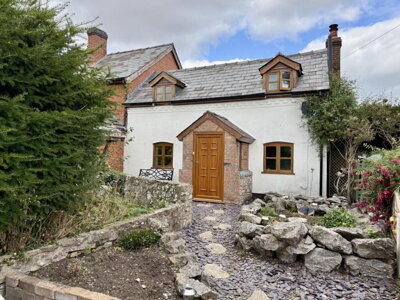
Browse 1 home for sale in Bridge Sollers from local estate agents.
The 2 bed house market features detached, semi-detached, and terraced properties with two separate bedrooms plus living spaces. Properties in Bridge Sollers range from Victorian and Edwardian period homes to modern new builds, with pricing varying across different neighbourhoods.
The Bridge Sollers property market operates as a specialist niche within the wider Herefordshire housing landscape, offering properties that rarely come to market due to the village's small population and strong community ties. Recent sales within the HR4 postcode area that encompasses Bridge Sollers demonstrate the range of opportunities available, from a semi-detached cottage sold for £190,000 through to substantial period farmhouses commanding premium prices. Bridge Farmhouse, a distinguished black and white Grade II listed property, sold for £795,000, illustrating the value placed on historic character homes in this sought-after location. Semi-detached properties have sold between £190,000 and £345,000, while flats in converted period buildings have achieved around £385,000, indicating consistent demand across different property types.
The wider Hereford market has experienced a cooling period, with average prices declining by approximately £21,300 over the twelve months to December 2025, representing a 6% reduction across the HR4 postcode area. Sales volumes have also contracted, with transaction numbers falling by 14.4% compared to the previous year. This market correction presents genuine opportunities for buyers in Bridge Sollers, where the combination of village rarity and historic housing stock maintains strong underlying demand. New build developments in the surrounding area, including Taylor Wimpey's Elgar Place on Canon Pyon Road with properties priced from £320,000 to £465,000, and Bloor Homes' Hereford Point with homes from £345,000 to £450,000, provide comparison benchmarks for modern equivalents, though they lack the irreplaceable character of Bridge Sollers' period properties.
Properties within Bridge Sollers itself fall into distinct categories reflecting the village's architectural heritage. The Nelson Barn, a substantial detached conversion in the HR4 7JN postcode, sold for £595,000 in May 2019, demonstrating the premium achievable for characterful conversions. Bridge Ash, another detached property in the HR4 7JL postcode area, achieved £250,000 in September 2017, while Bramley Cottage, a semi-detached property in the same postcode, sold for £345,000 in September 2023. These transactions illustrate the range of property types available and the consistent demand from buyers seeking the unique lifestyle offering of this small Herefordshire village.

Bridge Sollers embodies the timeless appeal of Herefordshire rural life, situated on the fertile flood plain of the River Wye where the pastoral landscape has shaped the community for centuries. The village takes its name from the ancient bridge crossing the River Wye, a defining feature that connects Bridge Sollers to the neighbouring village of Madley and the surrounding countryside. The community's agricultural heritage remains evident today, with the river valley's rich alluvial soils supporting the large dairy herds that characterise the local farming landscape. This is a place where traditional hedgerows, meadows, and farmland create an environment of genuine natural beauty, offering residents daily encounters with wildlife and the changing seasons that only a riverside village can provide.
The demographic profile of Bridge Sollers reflects its position as a small, established community within Herefordshire's rural heartland. With a population of 184 residents according to the 2021 Census, the village maintains an intimate scale that fosters genuine neighbourly connections uncommon in larger settlements. The presence of St. Andrew's Church, a Grade I listed building dating primarily to the 12th and 13th centuries, stands as the spiritual and historical heart of the community, its ancient stone walls and traditional construction speaking to generations of local worship and community gathering. The church's position as a Grade I listed structure - the highest designation for buildings of exceptional interest - underscores the deep historical significance of Bridge Sollers as a settlement.
Bridge Farmhouse, a distinguished Grade II listed black and white timber-framed property, represents the architectural heritage that defines the village's character, while the use of Old Red Sandstone throughout older properties reflects the geological foundation upon which Herefordshire's built environment was constructed. The underlying geology of this area, characterised by the Old Red Sandstone that gives Herefordshire its distinctive red soil and building materials, has shaped construction practices for centuries. This same geological base creates the fertile agricultural land that continues to support the farming community surrounding Bridge Sollers, linking the village's built heritage directly to its agricultural economy and natural landscape.

Families considering a move to Bridge Sollers will find educational provision centred on the surrounding villages and Hereford city, with primary education available in nearby communities and secondary education primarily delivered within Hereford's comprehensive and independent school network. The rural setting means that primary schools in villages such as Madley and Woolhope serve local communities, while secondary pupils typically travel to Hereford for schooling at establishments including Aylestone School, Hereford Academy, and the acclaimed King James Academy. The presence of excellent grammar schools in Hereford, including the prestigious Hereford Cathedral School and The Hereford Academy with its strong academic record, provides families with exceptional educational options without requiring relocation to a major city.
For families seeking independent education, Hereford offers several well-regarded private schools including St. Mary's RC High School and the Hereford Cathedral School, which provides education from nursery through sixth form. The broader Herefordshire area maintains strong educational standards, with the county consistently performing above national averages for pupil attainment at both primary and secondary levels. Parents should note that school catchment areas in rural Herefordshire can be extensive, and early registration is advisable for popular schools. For sixth form and further education, Hereford's colleges provide a comprehensive range of A-level and vocational courses, ensuring that teenagers have access to appropriate pathways regardless of their academic direction.
The travel implications of Bridge Sollers' rural location should be factored into educational planning, as primary school pupils in Madley or Woolhope will require school transport arrangements or parental drop-offs. Secondary pupils attending Hereford schools face a daily journey of approximately 6 miles each way, which families should consider when evaluating the practical demands of school-run logistics. Many families find that the lifestyle benefits of village living in Bridge Sollers more than compensate for these transportation considerations, particularly when compared to the pressures and costs associated with urban schooling.
Bridge Sollers benefits from its position along the B4352 road that connects the village to Madley to the north and to Hereford city centre approximately 6 miles to the east, providing essential road connectivity for daily commuting and amenities access. The journey to Hereford typically takes around 20 minutes by car, enabling residents to combine the peace of rural living with the employment, shopping, and cultural opportunities available in the county town. The A438 runs through the nearby area, providing connections to the A465 Heads of the Valleys road and the M50 motorway, while the A49 provides a direct north-south route through Herefordshire connecting to Shrewsbury and south to Ross-on-Wye and the M50 corridor toward Bristol and the Midlands.
Public transport options reflect Bridge Sollers' rural character, with bus services connecting the village to Hereford and surrounding villages, though service frequencies are limited compared to urban areas and residents without private vehicles should carefully review timetables before committing to a move. The nearest railway station is Hereford station, offering regular services to major destinations including Birmingham New Street, Cardiff Central, and London Paddington via the Hereford line. For commuters working in Birmingham or Cardiff, the approximately 2-hour rail journey from Hereford provides a realistic if lengthy commute option, while the direct London service takes around 3.5 hours. Air travel is accessible via Birmingham Airport, approximately 75 miles north, and Bristol Airport around 60 miles south, both offering international connections.
The practical reality for Bridge Sollers residents is that private vehicle ownership is effectively essential for daily life, given the limited public transport options and the rural nature of the surrounding area. However, the village's position on the B4352 provides reasonable road access to Hereford city centre within approximately 20 minutes, making the practical demands of rural living manageable for those accustomed to country driving. The A438 and A49 connections ensure that regional travel to Worcester, Gloucester, and beyond is straightforward for those requiring access to larger urban centres.
Properties in Bridge Sollers present unique considerations that buyers should carefully evaluate before committing to a purchase, beginning with the village's position on the River Wye flood plain. Flood risk represents a significant factor for any property located near the river, with the area known to experience fluvial flooding during periods of heavy rainfall and snowmelt. The road between Madley and Bridge Sollers has historically experienced flooding, and the Environment Agency issues flood alerts for the River Wye from Hay-on-Wye to Ross-on-Wye, affecting low-lying land and roads along the watercourse. Prospective buyers should review the government's flood risk maps, check property history for flood incidents, and consider whether flood resilience measures such as property-level barriers or raised electrical installations have been implemented.
The historic nature of Bridge Sollers' housing stock brings additional considerations that differ from modern properties, including the prevalence of traditional construction methods using local stone and timber framing that require specialist understanding to assess properly. Properties such as Bridge Farmhouse with its black and white timber-framed construction exemplify the character properties that define the village, but they also require owners willing to maintain them according to listed building guidelines. Older properties often feature solid walls without cavity insulation, original single-pane windows, and plumbing and electrical systems that may not meet current standards, all of which should be factored into renovation budgets.
Dampness represents one of the most frequently encountered issues in Bridge Sollers properties, with the combination of age, traditional construction, and proximity to the River Wye creating conditions where both rising damp and penetrating damp can occur. Properties built before modern damp-proof courses are particularly susceptible to rising damp, while the porous nature of traditional solid walls means that penetrating damp can develop from defective gutters, aging roof coverings, or splash-back from rainfall. Timber defects including rot and woodworm also require careful investigation in older properties, as the timber framing common to Bridge Sollers' historic buildings can be vulnerable where ventilation is poor or moisture has penetrated the building fabric.
Structural movement and foundation issues warrant particular attention given the clay-rich soils prevalent across Herefordshire. The shrink-swell behaviour of clay soils, particularly during alternating dry and wet weather cycles, can cause subsidence and foundation problems that manifest as cracking to walls, uneven floors, or misaligned doors and windows. Properties with mature trees close to the building footprint face increased risk, as tree roots can exacerbate moisture variation in the underlying soil. Properties built on the shallow foundations common to traditional construction are particularly vulnerable to these ground movement issues, and specialist structural surveys should be considered for any property showing signs of movement or cracking.
Understanding the traditional construction methods used in Bridge Sollers properties helps buyers appreciate both the character and the maintenance requirements of the village's historic housing stock. The predominant building material for older properties in this part of Herefordshire is Old Red Sandstone, a distinctive reddish-brown stone quarried locally that has been used for centuries in the construction of farmhouses, cottages, walls, and agricultural buildings. This geological resource shaped the vernacular architecture of the region, resulting in the warm-toned buildings that blend harmoniously with the surrounding countryside and give Bridge Sollers its characteristic appearance.
Timber-framed construction represents another defining feature of Bridge Sollers' built heritage, exemplified by the Grade II listed black and white farmhouse in the village. Traditional timber-framed buildings feature structural frames of oak or other hardwood, with the characteristic "black and white" appearance created by exposed timber beams filled with wattle and daub or brick infill panels. Over centuries, many of these infill panels have been replaced with brick or rendered to improve weather resistance, but the underlying timber structure requires ongoing maintenance and protection from moisture to prevent rot. Properties with original timber framing should be inspected by surveyors experienced in traditional construction techniques, as deterioration of concealed timbers can be difficult to assess without invasive investigation.
The solid wall construction used throughout Bridge Sollers' older properties differs fundamentally from modern cavity wall construction, with significant implications for insulation, moisture management, and renovation work. Solid walls, typically 18 to 24 inches thick, lack the cavity that allows moisture to escape in modern construction, meaning that breathability must be maintained through appropriate materials and ventilation strategies. The application of non-breathable modern paints or renders to solid walls can trap moisture within the fabric, leading to deterioration of the underlying stone or timber. Buyers planning renovation work should consult with conservation specialists to ensure that any alterations respect the traditional construction methods and maintain the breathability essential for the long-term preservation of these historic buildings.
Start by exploring current property listings in Bridge Sollers and the surrounding Herefordshire villages to understand what is available at various price points. Given the village's limited stock, consider neighbouring communities including Madley, Woolhope, and Credenhill to build a complete picture of your options. Bridge Sollers properties rarely appear on the open market, so registering with local estate agents and setting up property alerts can help you identify opportunities before they reach mainstream listing sites.
Before arranging viewings, obtain a mortgage agreement in principle from a lender to confirm your budget and demonstrate your seriousness to sellers. Local mortgage brokers familiar with Herefordshire properties can provide valuable guidance on available products and lending criteria for rural properties. Properties in flood risk areas or those with non-standard construction may require specialist lending arrangements, so discussing your intended property type with your broker early in the process can prevent delays later.
Visit properties in Bridge Sollers with your estate agent, paying particular attention to the condition of older properties, flood risk considerations given the River Wye proximity, and the potential need for specialist surveys on listed buildings or period properties. Take time to visit the village at different times of day and week to gauge the atmosphere, traffic on the B4352, and the availability of local services in nearby Madley.
Given the prevalence of older properties in Bridge Sollers, arrange a comprehensive RICS Level 2 Home Survey to identify any structural issues, damp problems, or required renovations. Properties near the River Wye may warrant particular attention to flood resilience measures and historical flood damage. For Grade II listed properties such as Bridge Farmhouse, a more detailed RICS Level 3 Building Survey may be recommended to fully assess the condition of traditional construction methods and identify any works that may require Listed Building Consent.
Choose a conveyancing solicitor with experience in rural Herefordshire properties, including any that may be listed buildings or located in flood risk areas. They will handle local searches including flood risk assessments, drainage and water searches, and environmental data before you commit to the purchase. For properties near the River Wye, a specific flood risk search should be requested to identify the property's flood history and any flood resilience measures in place.
Once all surveys, searches, and legal work are satisfactory, your solicitor will exchange contracts and agree a completion date. On completion day, the remaining funds are transferred and you receive the keys to your new Bridge Sollers home. Given the small number of households in the village, completing your purchase also means joining an established community - an exciting prospect for those seeking the peaceful countryside lifestyle that Bridge Sollers uniquely offers.
Specific price data for Bridge Sollers itself is limited due to the village's small size and infrequent property sales, but the wider Hereford postcode area (HR4) shows an average property price of approximately £316,000. Individual sales within the village have ranged considerably, from traditional cottages around £190,000 through to substantial detached period properties exceeding £795,000. The market has experienced a 6% decline over the past twelve months, creating potential opportunities for buyers in this traditionally resilient rural location where properties rarely come to market. Recent comparable sales include The Nelson Barn at £595,000 and Bramley Cottage at £345,000, demonstrating the range of values across different property types.
Bridge Sollers falls under Herefordshire Council administration, and properties are assigned council tax bands from A through H based on their assessed value. Given the mix of property types in the village, including period cottages and substantial farmhouses, council tax bands will vary accordingly. Properties in the lowest band A typically pay around £1,200 annually, while higher-banded properties command proportionally more. You can check the specific band for any property through the Valuation Office Agency website using the property address or postcode HR4. The Grade II listed Bridge Farmhouse would likely fall into a higher council tax band reflecting its substantial value as a distinguished period property.
Bridge Sollers itself does not have a school within the village, with primary education provided in nearby villages such as Madley, while secondary pupils attend schools in Hereford city, approximately 6 miles away. Hereford offers excellent educational options including King James Academy, Aylestone School, and Hereford Cathedral School for secondary education. The city also provides strong further education provision through Hereford College of Arts and Hereford College of Technology. Families should verify current catchment areas with Herefordshire Council as these can change and vary by year group. Primary-aged children in Bridge Sollers typically attend schools in the surrounding villages, with school transport arrangements managed through the local authority for those beyond walking distance.
Public transport connectivity in Bridge Sollers reflects its rural character, with limited bus services connecting the village to Hereford and surrounding communities. The nearest railway station is Hereford, offering regular services to Birmingham, Cardiff, and London Paddington. For daily commuting, a car is effectively essential for residents of Bridge Sollers, though the village's position on the B4352 provides reasonable road access to Hereford city centre within approximately 20 minutes. The A438 and A49 provide onward connections to the regional road network, including the M50 motorway for access to Bristol, the Midlands, and beyond. Residents working in Hereford city report the commute as manageable, while those travelling further afield benefit from the direct rail services available from Hereford station.
Bridge Sollers offers a compelling investment case for buyers prioritising lifestyle and long-term value over rapid capital growth. The village's extremely limited property supply, with only 11 households in the entire parish, means that suitable properties rarely come to market, creating inherent scarcity that supports values over time. The wider Herefordshire property market has shown resilience through previous economic cycles, with the recent 6-7% price correction potentially presenting a buying opportunity before values stabilise. Properties with river views, period features, or potential for sympathetic renovation are likely to maintain their appeal to buyers seeking the Herefordshire countryside lifestyle. The village's designation as a conservation-quality environment, combined with its heritage assets including the Grade I listed St. Andrew's Church and Grade II listed Bridge Farmhouse, suggests that the character of the area will be preserved for future generations.
Stamp Duty Land Tax rates for residential purchases from April 2025 are 0% on the first £250,000 of property value, 5% on the portion from £250,001 to £925,000, 10% on the portion from £925,001 to £1.5 million, and 12% on any amount exceeding £1.5 million. First-time buyers enjoy increased thresholds with 0% on the first £425,000 and 5% between £425,001 and £625,000. Given that most Bridge Sollers properties fall within the lower price bands, standard rates will typically apply, with first-time buyers potentially benefiting from relief on properties up to £625,000. A property at the wider area average of £316,000 would attract SDLT of £3,300 under standard rates, while first-time buyers would pay nothing on the first £425,000 and 5% only on any amount above that threshold. Always verify current thresholds as these can change with each Budget.
Flood risk is a material consideration for Bridge Sollers properties, particularly those located near the River Wye which runs through the village. The Environment Agency identifies areas along the river as being at risk from fluvial flooding, with Flood Zone 3 representing land with greater than 1 in 100 annual probability of river flooding. Properties close to the watercourse or on low-lying ground may face regular flooding incidents during periods of heavy rainfall or snowmelt. Prospective buyers should request a flood risk search, check historical flood records, and consider the potential cost of flood insurance, which can be significantly higher in flood risk areas. The road between Madley and Bridge Sollers has experienced flooding during heavy rainfall events, indicating the practical disruption that flood conditions can cause. Properties with existing flood resilience measures such as raised electrical systems, property-level flood barriers, and non-return valves on drainage may command a premium reflecting the reduced risk.
Bridge Sollers contains several listed buildings reflecting its historic importance within Herefordshire. St. Andrew's Church holds Grade I listing as a building of exceptional interest, dating primarily to the 12th and 13th centuries with later additions including the south chapel rebuilt in the 14th century. Bridge Farmhouse holds Grade II listing as an outstanding black and white timber-framed farmhouse of significant architectural interest. Properties that are listed or located within a conservation area require specialist surveys due to the need for expert knowledge of traditional materials, construction techniques, and the legal restrictions on alterations. Conservation Accredited surveyors are recommended for such properties, as standard surveys may not fully address the specialist requirements of heritage buildings. Any works to listed properties require Listed Building Consent from Herefordshire Council, adding complexity to renovation projects that buyers should factor into their planning.
From 4.5% APR
Specialist rural mortgage advice for Bridge Sollers properties
From £499
Conveyancing solicitors experienced in Herefordshire rural properties
From £420
Comprehensive survey for Bridge Sollers period properties
From £85
Energy performance certificate for your new home
Understanding the full cost of purchasing property in Bridge Sollers extends beyond the asking price to include stamp duty, legal fees, survey costs, and ongoing financial commitments that together represent a significant additional investment. Stamp Duty Land Tax applies to all freehold purchases above £250,000, with rates of 5% on the portion between £250,001 and £925,000, meaning a typical Bridge Sollers property at around £316,000 would attract SDLT of approximately £3,300. First-time buyers purchasing properties up to £625,000 benefit from increased thresholds, paying nothing on the first £425,000 and 5% only on the amount between £425,001 and £625,000, providing meaningful savings for those eligible.
Professional costs including conveyancing and surveys represent essential investments that protect your purchase, with conveyancing fees in Herefordshire typically ranging from £500 to £1,500 depending on the complexity of the transaction and whether the property is leasehold or involves a mortgage. A RICS Level 2 Home Survey costs between £400 and £1,000 depending on property size and value, with higher fees applying to larger or more complex period properties common in Bridge Sollers. For example, a three-bedroom cottage would expect survey costs around £437 on average, while a substantial period farmhouse would command higher fees reflecting the additional inspection time required. Search fees, land registry fees, and bankruptcy checks typically add another £300 to £500 to your legal costs, bringing total purchase costs to approximately 3-5% of the property price, which should be budgeted alongside your deposit and mortgage arrangement.
Ongoing costs following purchase should also be considered when budgeting for your Bridge Sollers move. Council tax bands will depend on the property valuation, with Band A properties paying around £1,200 annually while higher-banded properties pay proportionally more. Properties with historic construction methods, including solid walls without cavity insulation and original single-glazed windows, may have higher energy costs than modern equivalents, meaning that an EPC assessment should be obtained before purchase to understand the property's energy performance rating. Flood insurance costs should be factored into ongoing budgeting for properties near the River Wye, as premiums in flood risk areas can be significantly higher than standard policies.
Properties for Sale In London

Properties for Sale In Plymouth

Properties for Sale In Liverpool

Properties for Sale In Glasgow

Properties for Sale In Sheffield

Properties for Sale In Edinburgh

Properties for Sale In Coventry

Properties for Sale In Bradford

Properties for Sale In Manchester

Properties for Sale In Birmingham

Properties for Sale In Bristol

Properties for Sale In Oxford

Properties for Sale In Leicester

Properties for Sale In Newcastle

Properties for Sale In Leeds

Properties for Sale In Southampton

Properties for Sale In Cardiff

Properties for Sale In Nottingham

Properties for Sale In Norwich

Properties for Sale In Brighton

Properties for Sale In Derby

Properties for Sale In Portsmouth

Properties for Sale In Northampton

Properties for Sale In Milton Keynes

Properties for Sale In Bournemouth

Properties for Sale In Bolton

Properties for Sale In Swansea

Properties for Sale In Swindon

Properties for Sale In Peterborough

Properties for Sale In Wolverhampton

Enter your details to see if this property is within your budget.
Loans, cards, car finance
Estimated property budget
Borrowing + deposit
You could borrow between
Typical borrowing
Monthly repayment
Est. at 4.5%
Loan-to-value
This is an estimate only. Your actual budget may vary depending on interest rates, credit history, and personal circumstances. For an accurate affordability assessment, speak to one of our free mortgage advisors.
This calculator provides estimates for illustrative purposes only and does not constitute financial advice. Your home may be repossessed if you do not keep up repayments on your mortgage. Estimates based on 4.5% interest rate, repayment mortgage. Actual rates depend on your circumstances.
Homemove is a trading name of HM Haus Group Ltd (Company No. 13873779, registered in England & Wales). Homemove Mortgages Ltd (Company No. 15947693) is an Appointed Representative of TMG Direct Limited, trading as TMG Mortgage Network, which is authorised and regulated by the Financial Conduct Authority (FRN 786245). Homemove Mortgages Ltd is entered on the FCA Register as an Appointed Representative (FRN 1022429). You can check registrations at NewRegister or by calling 0800 111 6768.

We use cookies to show you personalised content and improve your experience of our website. Find out more in our Privacy policy and Cookie policy.