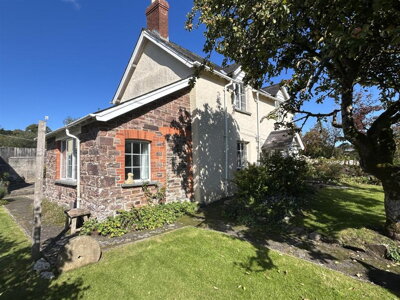
Browse 1 home for sale in Brayford, North Devon from local estate agents.
The 2 bed house market features detached, semi-detached, and terraced properties with two separate bedrooms plus living spaces. Properties in Brayford range from Victorian and Edwardian period homes to modern new builds, with pricing varying across different neighbourhoods.
£0k
0
0
0
Source: home.co.uk
Showing 0 results for 2 Bedroom Houses for sale in Brayford, North Devon.
The Brayford property market has demonstrated consistent growth over the past decade, with prices in the EX32 postcode area rising by 49.9% over ten years and by 22.9% over the past five years alone. The most recent 12-month period saw prices increase by 4.4%, suggesting continued demand for properties in this desirable North Devon village despite broader market fluctuations across Devon county. Our listings show semi-detached properties are among the most commonly traded in the EX32 7PS area, with an estimated average value of £510,949, while detached homes and converted barns command premium prices that can exceed £700,000 for the most desirable properties with land and panoramic views across the surrounding moorland.
New build activity in Brayford itself is limited to individual projects rather than large-scale developments. The village has seen several barn conversions and planning applications for converting agricultural buildings into residential dwellings, which appeals to buyers seeking character properties with modern specifications. Recent planning application 77541 involved the demolition of a barn and erection of a new dwelling with associated works, demonstrating ongoing interest in bespoke new builds within the village. Properties in Brayford typically include traditional stone cottages constructed from local sandstone, farmhouses dating back several centuries, and more recent detached homes built using materials that complement the area's architectural heritage.
The village sits on Exmoor's Devonian bedrock, where the Baggy Sandstone Formation creates distinctive local geology that has influenced building styles for generations. The Brayford Quarry on the village outskirts produces hardstone with high polished stone value, a material historically used in local construction and still available for renovation projects. This connection between local geology and building tradition means that properties in Brayford often feature the characteristic warm sandstone tones that define the village's appearance. Buyers should note that the housing stock reflects the village's agricultural heritage while offering diverse options for different buyer requirements and budgets, from modest cottages to substantial country estates.

Brayford is a small rural community with a population of approximately 407 residents according to the 2021 Census, growing to an estimated 432 in 2024, making it an intimate village where neighbours often know one another and community spirit thrives. The village sits within the stunning Exmoor National Park, offering residents immediate access to miles of moorland, ancient woodlands, and breath-taking scenery that changes with each season. The River Bray flows through the village, contributing to its charm but also requiring prospective buyers to consider flood risk when evaluating properties in certain locations. The surrounding area is predominantly agricultural, with many farms dotting the landscape and contributing to the local economy alongside the significant Brayford Quarry operated by Heidelberg Materials Aggregates on the village outskirts.
The character of Brayford is deeply rooted in its history, with buildings constructed primarily from local stone and brick using traditional methods that have shaped the village's architectural identity over centuries. The Grade I listed Church of All Saints dates from Norman times and stands as testament to the village's long history, while numerous Grade II listed buildings including the Baptist Chapel, Glebelands Farmhouse, Charlestown Barton, and several historic farmsteads contribute to the conservation-minded character of the area. Additional listed structures include Kedworthy Farmhouse, Mockham Farmhouse, and associated chest tombs and gravestones in the churchyard, creating a heritage-rich environment that distinguishes Brayford from more modern settlements. Local amenities include the Exmoor Forest Inn serving hearty Devon fare, and the broader community hosts events throughout the year that bring residents together.
Tourism plays a growing role in the local economy, with visitors drawn to Exmoor's outdoor pursuits including walking, cycling, and wildlife watching, all of which enhance the vibrancy of village life. The village's economic profile includes higher than average self-employment rates and a strong presence of small and micro businesses, reflecting the entrepreneurial spirit common in rural Devon communities. Agriculture remains significant in the surrounding area, while the quarry operations provide local employment. However, prospective buyers should be aware that lower than average wages and housing affordability challenges (with Devon showing an affordability ratio of 9.5 compared to the national average of 7.7) affect the broader community dynamics. These economic factors contribute to Brayford's character as a place where people choose to live for lifestyle reasons rather than employment opportunities alone.

Families considering a move to Brayford will find a selection of primary schools in the surrounding North Devon villages, with the closest options typically located in nearby towns such as South Molton and Barnstaple. Primary education in rural Devon often involves travelling to surrounding villages, with school transport arrangements in place for families living further from their nearest school. The village's small scale means that younger children may require transport to reach their primary school, a factor worth considering when evaluating properties at different ends of the village or on its outskirts. Parents should research specific school catchments and admission arrangements, as these can significantly impact which properties are most suitable for family buyers.
Secondary education is available in the nearby market towns, with several well-regarded schools serving the EX32 postcode area and surrounding villages. Students typically progress to schools in Barnstaple or South Molton, with school transport routes connecting these communities. Barnstaple, as the largest town in North Devon, offers multiple secondary school options and hosts several grammar schools, though entry to these selective schools is determined by the 11-plus examination and catchment areas may not align with Brayford's location. For families prioritising academic excellence, researching individual school performance data and Ofsted ratings is essential when choosing where to settle in North Devon. The proximity to quality schools should be weighed against the rural nature of Brayford and the associated travel commitments for secondary-aged children.
Further education opportunities including sixth forms and college courses are available in Barnstaple, which is accessible via the A361 road that connects the region to the wider road network. Young people from Brayford can access vocational and academic courses without necessarily relocating to larger cities, though some families choose to relocate closer to educational facilities as children progress through their secondary education. The broader Devon area benefits from several universities and higher education institutions in Exeter and Plymouth, which are reachable via the M5 motorway connection at Tiverton. Planning a property purchase in Brayford should account for the educational journey requirements that family life may involve over the coming years.
Transport connections from Brayford reflect its rural nature, with residents relying primarily on private vehicles for daily commuting and essential journeys. The A361 North Devon link road passes through the region, connecting South Molton to Barnstaple and providing access to the M5 motorway at Tiverton for journeys further afield. Bristol is approximately two hours away by car, making it feasible for occasional commuting or day trips, while Exeter can be reached in around one hour, offering connections to the M5 and national rail services. For air travel, Exeter Airport provides domestic and limited international flights, while Bristol Airport offers a broader range of destinations with approximately 90 minutes driving time from Brayford.
Public transport options in rural North Devon are limited compared to urban areas, with bus services operating on less frequent timetables that may not align with traditional working hours. The nearest railway stations are located in Barnstaple and Crediton, with Barnstaple offering services on the Tarka Line to Exeter and beyond, though journey times to major cities require connections at Exeter St Davids or Exeter Central. Cyclists and walkers benefit from the extensive public footpaths and bridleways crossing Exmoor, making active travel popular for leisure and local journeys when weather permits. Those planning to commute regularly from Brayford should factor in the need for a vehicle and consider the distances involved when evaluating the practicality of working from home or travelling to office locations in larger towns.
The rural transport challenges facing Brayford residents are shared across much of Devon, where lack of access to public transport and digital connectivity has been identified as having a major impact on rural communities. The 2021 Census data showing higher than average self-employment rates partly reflects the ability to work from home, which many rural residents have embraced. Prospective buyers should assess their commuting requirements honestly before purchasing in Brayford, particularly if regular travel to office locations is anticipated. The village's position on the edge of Exmoor provides beautiful scenery for those who do need to travel, but the distances involved should not be underestimated when planning a move to this rural community.
Explore current property listings in Brayford and understand price trends before beginning your search. With prices averaging £478,250 and rising 4.4% year-on-year, researching comparable sales helps set realistic expectations. We recommend reviewing recent transactions in the EX32 postcode area, including semi-detached properties averaging £510,949, to understand the full range of values across different property types in the village.
Contact lenders or brokers to obtain a mortgage agreement in principle before viewing properties in Brayford. This strengthens your position when making offers and demonstrates to sellers that you have financing secured. Given that property prices in this North Devon village can exceed £700,000 for premium detached homes and barn conversions, securing appropriate financing early is essential for a smooth transaction.
Visit multiple properties in Brayford to understand the different character areas, property conditions, and proximity to amenities. Consider flood risk areas near the River Bray when evaluating specific locations within the village, and pay attention to which properties fall within Exmoor National Park boundaries, as planning restrictions differ between zones.
For most properties in Brayford, a Level 2 Survey is recommended to identify any structural issues, particularly in older properties with traditional construction. Given the prevalence of historic buildings featuring solid stone walls, timber framing, and traditional roofing materials, a detailed survey by our qualified inspectors can reveal defects common to these construction types. Properties with thatched roofs or those constructed using cob may require the more comprehensive RICS Level 3 Survey.
Choose a conveyancing solicitor experienced in rural Devon property transactions to handle legal searches, title checks, and the contract process. Local knowledge of Exmoor National Park planning requirements and listed building regulations can be valuable, particularly for properties with consent conditions attached to barn conversions or historic structures.
Once all surveys and searches are satisfactory, your solicitor will exchange contracts and set a completion date. On completion day, the remaining balance is transferred and you receive the keys to your new Brayford home. Given the village's position on the River Bray, ensure your solicitor has confirmed satisfactory flood risk assessments before proceeding to exchange.
Properties in Brayford require careful inspection due to the village's age and construction heritage. Many homes are built using traditional methods including solid stone walls, timber framing, and traditional roofing materials that may differ significantly from modern construction standards. The prevalence of older properties means damp, timber decay, and roof deterioration are common issues that a thorough survey can identify before purchase. Our inspectors frequently encounter signs of penetrating damp in stone properties where mortar pointing has deteriorated over time, and wet or dry rot affecting timber elements where moisture has penetrated the building fabric. Properties constructed from local sandstone may show weathering patterns specific to this material, while those featuring cob construction require specialist assessment for structural integrity.
Given the village sits on Exmoor's Devonian sandstone geology and near the River Bray, specific attention should be paid to flood risk assessments and potential moisture penetration in properties located near watercourses. Brayford falls within a Flood Warning Area for the River Bray from Challacombe to Meethe, including the village and Clapworthy, with flash flooding also documented in the village historically. Surface water flooding represents an additional risk factor given local topography and drainage patterns. Properties at varying elevations within the village may present different risk profiles, and our surveyors can advise on specific flood resilience considerations during inspection.
Conservation considerations are essential when purchasing in Brayford, as the village contains numerous listed buildings including the Grade I Church of All Saints and several Grade II structures including the Baptist Chapel, Glebelands Farmhouse, Charlestown Barton, and various historic farmsteads. Properties within Exmoor National Park are subject to strict planning controls that may affect extensions, alterations, and permitted development rights. Our surveyors understand the implications of listed building status and can identify elements of historic significance during inspection. Barn conversions in the area may have been completed under specific planning conditions relating to agricultural-to-residential conversion rights that buyers should review carefully with their solicitor before proceeding.
The village's history includes iron smelting dating back 2000 years, with identified sites at Sherracombe Ford, Mill Lane, and Bray Vale. While this historical mining activity does not necessarily indicate current structural risk, specialist mining searches may be appropriate for certain properties. Our inspectors can recommend appropriate searches and specialist surveys based on the specific property and its history. Given the high proportion of properties over 50 years old in Brayford, we strongly recommend commissioning a detailed survey before committing to purchase, regardless of the property's apparent condition at initial viewing.
The average sold house price in Brayford over the past 12 months is £478,250. Prices in the EX32 postcode area have risen by 4.4% year-on-year, 22.9% over five years, and an impressive 49.9% over the past decade, indicating strong long-term demand for properties in this North Devon village. Semi-detached properties average around £510,949 in the EX32 7PS area, while detached homes and converted barns with land can command significantly higher prices, with some premium properties exceeding £700,000 and occasionally reaching into seven figures for the most desirable holdings with extensive grounds and panoramic views across Exmoor.
Properties in Brayford fall under North Devon Council, with council tax bands varying depending on property type and value. Bands typically range from A through to H, with smaller cottages and terraced properties generally falling in lower bands while larger detached homes, farmhouses, and converted barns may be placed in higher bands. The village's historic properties, including those dating from the 17th century and earlier, often fall into mid-to-upper bands due to their size and character. Prospective buyers should check the specific banding with the Valuation Office Agency or request this information during the conveyancing process, as council tax costs should be factored into the overall budget for owning property in the village.
Primary schools in the surrounding North Devon villages serve Brayford families, with local transport arrangements typically available for children attending schools in nearby settlements. Secondary education options include schools in Barnstaple and South Molton, which serve the broader EX32 postcode area. Barnstaple Grammar School and other selective schools may be accessible for families willing to prepare for the 11-plus examination, though catchment areas require careful research. Parents should research individual school Ofsted ratings and admission catchment areas when considering where to purchase, as school places can be competitive in popular villages with good reputations. Further education facilities including sixth forms and colleges are available in Barnstaple, approximately 20 minutes drive from Brayford via the A361.
Public transport options in Brayford are limited due to its rural location, with bus services operating on less frequent timetables than urban areas. The nearest railway stations are in Barnstaple and Crediton, offering services on the Tarka Line to Exeter with connections to the national rail network at Exeter St Davids. Most residents rely on private vehicles for daily commuting and essential journeys, with the A361 providing access to the M5 motorway at Tiverton and onward connections to Bristol and the wider motorway network. Bristol is approximately two hours away by car, while Exeter can be reached in around one hour. Exeter Airport and Bristol Airport serve the region for air travel, with Bristol offering a broader range of international destinations.
Brayford has shown consistent property price growth over the past decade, with prices rising by nearly 50% in ten years, suggesting solid long-term investment potential. The village's location within Exmoor National Park, limited new build supply, and ongoing demand from buyers seeking rural lifestyles support continued interest in the area. However, buyers should note that rural properties can take longer to sell, and the local economy has lower than average wages which may affect rental demand. Properties with land, character features, or barn conversion potential tend to hold their value well in this North Devon location. The affordability ratio of 9.5 for Devon compared to 7.7 nationally indicates strong demand relative to local earnings, which can constrain some buyer segments but also demonstrates the area's desirability.
Brayford is located on the River Bray and falls within a Flood Warning Area covering the river from Challacombe to Meethe, including the village and Clapworthy. Flash flooding has occurred in the village, and surface water flooding is a risk factor given the local topography and drainage patterns across the Exmoor landscape. The North Devon Catchment Flood Management Plan identifies rural North Devon, including Brayford, as an area where flood risk is mainly from rivers and surface water, with pockets of high socio-economic risk despite relatively small numbers of people affected. Prospective buyers should review the Environment Agency flood maps, commission appropriate searches, and consider flood resilience measures when evaluating properties in areas closer to the river. Properties at higher elevations within the village may offer lower flood risk while still benefiting from village amenities.
Stamp Duty Land Tax rates for 2024-25 are 0% on properties up to £250,000, 5% on the portion from £250,001 to £925,000, 10% from £925,001 to £1.5 million, and 12% above £1.5 million. First-time buyers receive relief on the first £425,000 of a purchase, with 5% applied between £425,001 and £625,000. Given the average Brayford property price of £478,250, a standard buyer purchasing at this price would pay approximately £11,412 in stamp duty, calculated as 5% on the £228,250 portion above the £250,000 threshold. First-time buyers purchasing at this price point would pay zero stamp duty due to the relief available on purchases up to £425,000, making the village particularly accessible for those entering the property market with appropriate financing.
Properties in Brayford predominantly feature traditional construction methods reflecting the village's rural character and historical development. Local sandstone from the Brayford Quarry has been used extensively in building construction, creating the characteristic warm-toned walls that define much of the village's architecture. Many historic properties feature solid stone walls without cavity insulation, timber-framed structures with infill panels, and traditional slate or thatched roofing. Cob construction, common throughout Devon, may also be present in older properties. Our surveyors are experienced in assessing these traditional building methods and can identify issues specific to each construction type, from mortar deterioration in stone walls to timber condition in historic frames.
From £350
Recommended for most Brayford properties to identify defects in traditional construction
From £500
Essential for listed buildings, barn conversions, and historic properties
From £85
Required for property sales and rentals
From 4.5%
Competitive rates for Brayford property purchases
From £499
Expert solicitors for rural Devon property transactions
Budgeting for a property purchase in Brayford requires careful consideration of stamp duty and associated costs beyond the property price itself. For a typical home priced at the village average of £478,250, standard buyers without first-time buyer status would pay approximately £11,412 in Stamp Duty Land Tax under current 2024-25 rates. This calculation applies 0% to the first £250,000 and 5% to the remaining £228,250. First-time buyers purchasing at this price point would pay zero stamp duty due to the relief available on purchases up to £425,000, making the village particularly accessible for those entering the property market with appropriate financing. Premium properties exceeding £925,000 would incur higher rates, so buyers should calculate their specific liability based on the purchase price.
Beyond stamp duty, buyers should budget for solicitor fees averaging £500-£1,500 for conveyancing, with rural properties potentially requiring additional searches due to their location within Exmoor National Park and proximity to agricultural land. A RICS Level 2 Survey typically costs approximately £400-£600 depending on property size and type, though properties exceeding £500,000 in value may incur higher survey fees averaging around £586. Our inspectors can provide specific quotes based on the property details. Local searches including drainage, environmental, and mining searches typically total £200-£400, with the historical iron smelting activity in the Brayford area potentially requiring specialist mining reports.
Removal costs, surveyor fees for listed building valuations if required, and potential renovation costs should also be considered, particularly for character properties that may require updating. Many Brayford properties are historic buildings where maintenance costs for traditional construction methods, stone walls, and period features require specialist contractors and should be factored into renovation budgets. The village's location within Exmoor National Park may affect what renovations are permitted, and buyers should budget for any planning application fees or specialist reports required for listed building consent. Given that Devon has an affordability ratio of 9.5 compared to the national average of 7.7, prospective buyers should ensure their overall financial position can accommodate both the purchase price and the ongoing costs of maintaining a rural property in this desirable North Devon village.
Properties for Sale In London

Properties for Sale In Plymouth

Properties for Sale In Liverpool

Properties for Sale In Glasgow

Properties for Sale In Sheffield

Properties for Sale In Edinburgh

Properties for Sale In Coventry

Properties for Sale In Bradford

Properties for Sale In Manchester

Properties for Sale In Birmingham

Properties for Sale In Bristol

Properties for Sale In Oxford

Properties for Sale In Leicester

Properties for Sale In Newcastle

Properties for Sale In Leeds

Properties for Sale In Southampton

Properties for Sale In Cardiff

Properties for Sale In Nottingham

Properties for Sale In Norwich

Properties for Sale In Brighton

Properties for Sale In Derby

Properties for Sale In Portsmouth

Properties for Sale In Northampton

Properties for Sale In Milton Keynes

Properties for Sale In Bournemouth

Properties for Sale In Bolton

Properties for Sale In Swansea

Properties for Sale In Swindon

Properties for Sale In Peterborough

Properties for Sale In Wolverhampton

Enter your details to see if this property is within your budget.
Loans, cards, car finance
Estimated property budget
Borrowing + deposit
You could borrow between
Typical borrowing
Monthly repayment
Est. at 4.5%
Loan-to-value
This is an estimate only. Your actual budget may vary depending on interest rates, credit history, and personal circumstances. For an accurate affordability assessment, speak to one of our free mortgage advisors.
This calculator provides estimates for illustrative purposes only and does not constitute financial advice. Your home may be repossessed if you do not keep up repayments on your mortgage. Estimates based on 4.5% interest rate, repayment mortgage. Actual rates depend on your circumstances.
Homemove is a trading name of HM Haus Group Ltd (Company No. 13873779, registered in England & Wales). Homemove Mortgages Ltd (Company No. 15947693) is an Appointed Representative of TMG Direct Limited, trading as TMG Mortgage Network, which is authorised and regulated by the Financial Conduct Authority (FRN 786245). Homemove Mortgages Ltd is entered on the FCA Register as an Appointed Representative (FRN 1022429). You can check registrations at NewRegister or by calling 0800 111 6768.

We use cookies to show you personalised content and improve your experience of our website. Find out more in our Privacy policy and Cookie policy.