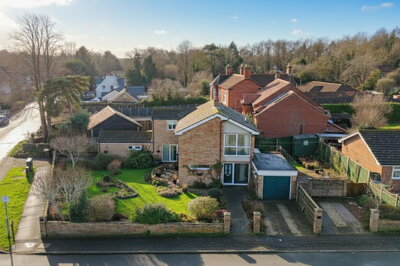
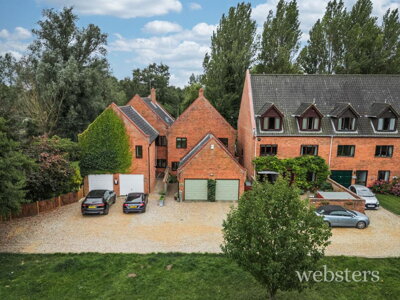
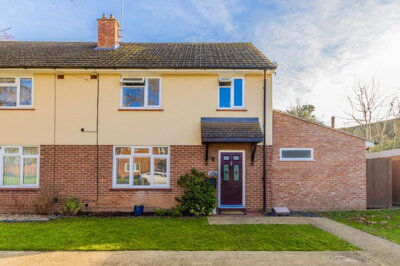
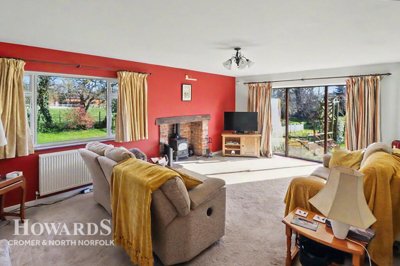
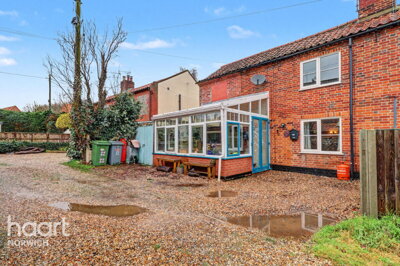
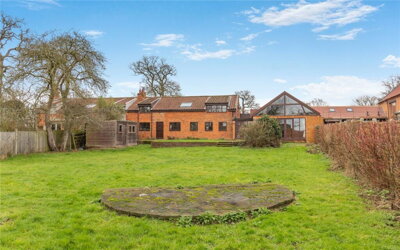
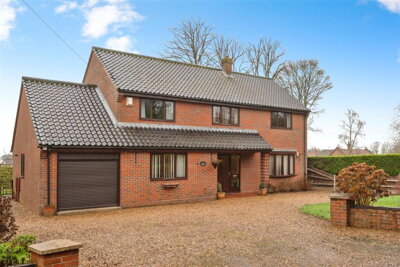
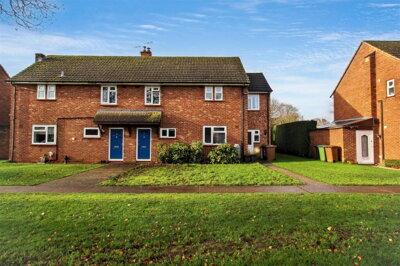
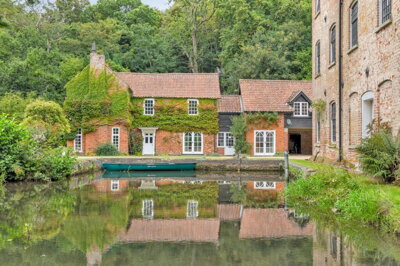
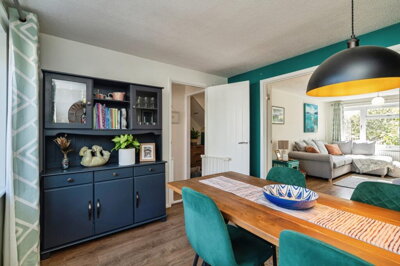
Browse 10 homes for sale in Brampton from local estate agents.
The larger property sector typically features multiple bathrooms, substantial reception space, and private gardens or off-street parking. Four bedroom houses in Brampton span detached, semi-detached, and occasionally terraced configurations, with styles ranging from period properties to modern executive homes.
The property market in Brampton reflects the broader strength of the Broadland district, which has seen average house prices rise by 1.9% over the year to December 2025. Within the wider district, detached properties command an average of £424,000, semi-detached homes reach £277,000, and terraced properties average £228,000. Flats in the broader area average around £147,000, though values in this category have softened by 2.6% over the past twelve months. These figures provide useful context for understanding what to expect when searching for property in this part of rural Norfolk.
Semi-detached properties have proven particularly resilient in the Broadland market, with prices rising by 2.8% over the year to December 2025. This trend suggests strong demand from families seeking the balance of space and affordability that semi-detached homes offer. Our current listings in Brampton showcase the variety available, from characterful period cottages to more recent constructions that suit different budgets and lifestyle preferences. Speaking with local estate agents who know the village intimately will help you identify properties that match your specific requirements and negotiate effectively.
For buyers seeking detached family homes, the Brampton market offers properties at a notably lower average than the broader Broadland district figure of £424,000. The village's village-edge properties often feature generous gardens and private parking, attributes that command premiums in more urban locations. Terraced properties in Brampton represent particularly good value at an average well below the district figure of £228,000, making them attractive options for first-time buyers looking to establish themselves in this desirable part of Norfolk without stretching their budget to breaking point.

Brampton sits within the beautiful Broadland district of Norfolk, an area celebrated for its mix of rolling countryside, nature reserves, and proximity to the Norfolk Broads. The village itself offers a peaceful retreat from busier urban centres while maintaining the essential amenities that modern family life requires. Residents benefit from a strong sense of community, with local events and village facilities fostering connections between long-established families and newcomers alike. The surrounding landscape provides excellent opportunities for walking, cycling, and wildlife watching, with the Bure Valley path nearby offering scenic routes through the countryside.
The village location means residents can easily access the wider amenities of Aylsham, just a short drive away, where weekly markets and independent shops provide daily necessities. Norwich, Norfolk's magnificent cathedral city, lies within reasonable commuting distance, opening up employment opportunities, cultural attractions, and major retail centres. For those who appreciate coastal scenery, the Norfolk coastline with its famous beaches and seaside towns remains accessible for day trips. The combination of rural tranquility and convenient access to urban amenities makes Brampton particularly attractive to buyers seeking the best of both worlds in Norfolk.
The community spirit in Brampton shows itself through various village activities and the presence of a historic parish church that has stood the settlement for centuries. Local pubs provide gathering points where residents can socialise, and the village hall hosts events throughout the year that bring the community together. The surrounding Norfolk countryside offers exceptional walking opportunities, with public footpaths crossing farmland and leading to neighbouring villages, each with their own character and amenities. Wildlife enthusiasts particularly appreciate the proximity to areas managed for nature conservation, where diverse birdlife and other wildlife can be observed throughout the seasons.

Families considering a move to Brampton will find a reasonable selection of educational options within the broader Broadland area. Primary education is available at schools in surrounding villages and the nearby town of Aylsham, where several schools serve the local community with good reputations for pastoral care and academic standards. The village's position within Norfolk means children can access a network of primary schools, with most families able to secure places at their preferred local option depending on catchment area boundaries.
Secondary education in the area centres on schools in Aylsham and the broader district, with several well-regarded institutions serving students from Brampton and surrounding villages. For families with older children, the nearby market towns offer sixth form provision and further education college options. Researching specific school catchment areas and admission criteria before property purchase is always advisable, as school performance can influence property values and your children's educational journey. The presence of good schools in the surrounding area adds significantly to Brampton's appeal as a location for families at various stages.
The broader Broadland area maintains several primary schools that serve the surrounding villages, with most offering good standards of education and manageable class sizes compared to larger urban schools. Parents should check current Ofsted reports and performance data for schools in nearby towns such as Aylsham, where historical primary schools have served local communities for many years. Secondary school options include popular choices that regularly achieve solid examination results, though competition for places at the most oversubscribed schools can be keen. Families are encouraged to visit potential schools and speak with headteachers before finalising any property purchase to ensure the educational provision matches their children's needs.
Transport connectivity from Brampton strikes a practical balance between rural peace and accessibility. The village sits within comfortable reach of the A140 main road, which provides direct routes towards Norwich and the north Norfolk coast. For commuters working in Norwich, the journey time by car typically falls within reasonable bounds, making the city accessible for daily work while allowing residents to enjoy countryside living outside urban boundaries. The nearby town of Aylsham offers additional transport options, including bus services connecting to larger centres.
Rail services are accessible from Norwich, which provides direct connections to London Liverpool Street with journey times of around two hours. For those who need to travel further afield, Norwich Airport offers domestic and international flights, adding another dimension to the area's connectivity. Cyclists benefit from quieter country lanes and designated routes through the surrounding landscape, while the Bure Valley Railway provides a heritage steam train experience connecting the area to the coast. Parking provision varies by specific location within the village, with most properties offering off-street parking suitable for family needs.
The A140 corridor serves as the main artery for road travel, connecting Brampton to Norwich in one direction and to the north Norfolk coast in the other. Journey times to Norwich city centre typically take around 25 to 30 minutes by car, making it feasible for residents to commute while maintaining a countryside lifestyle. Bus services operating through the village provide connections to Aylsham, where further onward travel options become available. For air travel, Norwich Airport offers flights to destinations across the UK and Europe, with Amsterdam easily reachable for international connections. The Bure Valley Railway, a heritage steam railway, provides an enjoyable alternative for days out, running between Aylsham and the coast at Wroxham.
Start by exploring our current property listings in Brampton and familiarise yourself with the local market. Understanding price trends in the broader Broadland district, where prices have risen by 1.9% annually, helps set realistic expectations and identify good value. Take time to drive through the village at different times of day to get a feel for the neighbourhood and its amenities.
Once you have identified properties of interest, contact the listing estate agents to arrange viewings. Seeing properties in person reveals details photographs cannot capture, from the condition of fixtures to the orientation of gardens and the feel of the neighbourhood at different times of day. Consider viewing multiple properties to compare options and refine your preferences before making any commitments.
Before making an offer, secure a mortgage agreement in principle from a lender. This demonstrates to sellers that you are a serious buyer with financing in place, strengthening your position in competitive situations and streamlining the formal application process later. Obtain agreement in principle from at least two lenders to compare rates and terms before committing.
Work with your estate agent to craft a competitive offer that reflects current market conditions in Brampton and the broader Broadland area. Be prepared to negotiate on price and terms, particularly for properties that have been on the market for some time. Your agent can provide guidance on comparable sales and help you structure an offer that balances competitiveness with value.
Arrange a RICS Level 2 Survey once your offer is accepted, particularly for older properties. This professional assessment identifies any structural issues, maintenance needs, or defects that might affect your decision or require price adjustments before completion. For period properties in Brampton, surveys can reveal common issues with original features, roofing, or damp that may not be immediately obvious during viewings.
Your solicitor handles the legal work of transferring ownership, conducting searches, and ensuring all documentation is in order. Choose a conveyancer with experience in Norfolk property transactions to navigate local considerations efficiently. Local searches will reveal planning history, flood risk, and any other factors specific to the property and its location.
Property buyers considering Brampton should approach their search with awareness of the village's rural Norfolk setting. Properties in this area typically include a mix of construction ages and styles, reflecting the organic growth of the village over many decades. When viewing properties, pay close attention to the condition of roofs, original features that may require maintenance, and the quality of recent renovations. Properties with spacious gardens are common in the village and represent a significant selling point for families seeking outdoor space.
Understanding tenure arrangements is essential before committing to any purchase. While many properties in rural Norfolk are freehold, some may be leasehold or share freehold arrangements that carry specific obligations. Check service charges and any maintenance fees carefully for flats or managed properties. Planning restrictions in the Broadland district may affect what modifications you can make to properties, so reviewing local planning records provides valuable insight before purchase. Your solicitor's local searches will reveal any relevant planning applications, flood risk assessments, and other factors that might influence your decision.
Period properties in Brampton often feature traditional construction methods common throughout Norfolk, including solid wall construction and original timber elements that may require ongoing maintenance. When viewing older properties, look carefully at the condition of roofing materials, the presence of any signs of damp or subsidence, and the state of original windows and doors. Modern extensions and conversions should be checked to ensure proper building regulations approval was obtained and documented. Properties that have been recently renovated to a high standard may command premiums but can offer better value over time through reduced maintenance requirements.
The average sold price in Brampton, Norfolk stood at approximately £205,000 over the past year. This positions the village attractively within the broader Broadland district, where the overall average house price reaches £315,000 as of December 2025. Detached properties in the wider district average £424,000, semi-detached homes £277,000, terraced properties £228,000, and flats around £147,000. The village offers good value compared to surrounding areas, making it appealing for buyers seeking more affordable entry into this desirable part of Norfolk.
Properties in Brampton, Broadland fall under South Norfolk Council for council tax purposes. Bands range from A through to H, with most residential properties falling within bands A to D. The specific band depends on the property's assessed value, which reflects its market value as determined by the Valuation Office Agency. Prospective buyers should request the council tax band from the seller or verify through the Valuation Office Agency website before completing a purchase to budget accurately for ongoing costs. Annual council tax bills in Norfolk typically remain competitive compared to larger urban centres.
Education options in the Brampton area include primary schools in surrounding villages and the nearby town of Aylsham, where several schools serve local communities with varying reputations. Families should research specific school performance data, Ofsted ratings, and admission catchment areas when considering property purchase. Secondary education is available at schools in Aylsham and the broader Broadland district, with sixth form provision accessible in nearby market towns. School quality can significantly influence property values, so checking current educational provision remains important for family buyers. The proximity to well-performing schools often affects which villages prove most popular with families.
Brampton benefits from reasonable transport connections for a rural Norfolk village. Bus services operate routes through the village connecting to Aylsham and surrounding areas, while the nearby town provides additional transport hubs. Norwich railway station offers mainline services to London Liverpool Street in approximately two hours, making day commuting feasible for some workers. The A140 provides road access towards Norwich and the north Norfolk coast. For international travel, Norwich Airport offers flights from various destinations. Cyclists can enjoy the scenic Bure Valley path, a dedicated traffic-free route that connects to surrounding villages and towns.
The Broadland district has demonstrated consistent market resilience, with prices rising by 1.9% over the year to December 2025. Semi-detached properties have performed particularly well with 2.8% annual growth, suggesting strong demand in this segment. Brampton's positioning within easy reach of Norwich, combined with the area's natural beauty and access to the Norfolk Broads, supports long-term demand from buyers seeking rural lifestyles with urban accessibility. Properties with additional land or unique character features tend to hold their value well in this market. The village's position within the Broads Authority boundary ensures ongoing protection of the natural environment that makes the area attractive to buyers.
Stamp duty rates (officially Stamp Duty Land Tax) from April 2025 start at zero on the first £250,000 of residential property purchases. The rate then applies at 5% on the portion from £250,001 to £925,000, 10% up to £1.5 million, and 12% on amounts exceeding that threshold. First-time buyers relief raises the zero-rate threshold to £425,000, with 5% applying between £425,001 and £625,000. For most properties in Brampton, which typically sell below the national average, stamp duty costs remain relatively modest compared to more expensive regions. A property at the village average of £205,000 would incur zero stamp duty for qualifying purchasers.
When viewing properties in Brampton, pay particular attention to the condition of original features in period properties, as these may require maintenance or updating over time. Check the orientation and privacy of gardens, as these represent significant selling points in the village. Investigate parking arrangements, as off-street parking can be limited at some older properties. For properties near farmland, consider potential noise from agricultural activities during different seasons. Your solicitor will conduct local searches to identify any planning applications, environmental factors, or rights of way that might affect the property.
Understanding the full costs of purchasing property in Brampton helps buyers budget accurately and avoid unexpected expenses. The property's £205,000 average sold price in Brampton means most transactions fall within the lower stamp duty brackets, keeping this particular cost manageable for buyers. For a typical property priced around the village average, a standard buyer would pay no stamp duty on the first £250,000, resulting in zero SDLT for the purchase itself. First-time buyers may benefit from reduced rates depending on their specific circumstances and the property price.
Beyond stamp duty, buyers should budget for solicitor conveyancing fees, which typically range from £500 to £1,500 depending on complexity and whether the transaction involves a mortgage. Survey costs for a RICS Level 2 Survey usually start from around £350 for standard properties, rising for larger or more complex homes. Mortgage arrangement fees vary by lender but commonly fall between £500 and £2,000. Local search fees, land registry fees, and moving costs add further amounts to the overall budget. Obtaining a detailed breakdown from your solicitor early in the process ensures you have complete visibility of all costs involved in your Brampton property purchase.
Additional costs to factor into your budget include building insurance from completion day, moving company fees, and any furniture or fixtures you may need to purchase for your new home. Properties requiring renovation or updating may involve additional expenditure that surveys can help identify before purchase. Setting aside a contingency fund equivalent to around 10% of your purchase price is prudent for covering unexpected costs that commonly arise during property transactions. Your solicitor should provide a comprehensive list of all anticipated costs as part of their initial quote, allowing you to plan your finances with confidence.
From 4.5%
Expert mortgage advice from qualified advisers
From £499
Expert property solicitors for your transaction
From £350
Professional survey of your new home
From £60
Energy performance certificate for your property
Properties for Sale In London

Properties for Sale In Plymouth

Properties for Sale In Liverpool

Properties for Sale In Glasgow

Properties for Sale In Sheffield

Properties for Sale In Edinburgh

Properties for Sale In Coventry

Properties for Sale In Bradford

Properties for Sale In Manchester

Properties for Sale In Birmingham

Properties for Sale In Bristol

Properties for Sale In Oxford

Properties for Sale In Leicester

Properties for Sale In Newcastle

Properties for Sale In Leeds

Properties for Sale In Southampton

Properties for Sale In Cardiff

Properties for Sale In Nottingham

Properties for Sale In Norwich

Properties for Sale In Brighton

Properties for Sale In Derby

Properties for Sale In Portsmouth

Properties for Sale In Northampton

Properties for Sale In Milton Keynes

Properties for Sale In Bournemouth

Properties for Sale In Bolton

Properties for Sale In Swansea

Properties for Sale In Swindon

Properties for Sale In Peterborough

Properties for Sale In Wolverhampton

Enter your details to see if this property is within your budget.
Loans, cards, car finance
Estimated property budget
Borrowing + deposit
You could borrow between
Typical borrowing
Monthly repayment
Est. at 4.5%
Loan-to-value
This is an estimate only. Your actual budget may vary depending on interest rates, credit history, and personal circumstances. For an accurate affordability assessment, speak to one of our free mortgage advisors.
This calculator provides estimates for illustrative purposes only and does not constitute financial advice. Your home may be repossessed if you do not keep up repayments on your mortgage. Estimates based on 4.5% interest rate, repayment mortgage. Actual rates depend on your circumstances.
Homemove is a trading name of HM Haus Group Ltd (Company No. 13873779, registered in England & Wales). Homemove Mortgages Ltd (Company No. 15947693) is an Appointed Representative of TMG Direct Limited, trading as TMG Mortgage Network, which is authorised and regulated by the Financial Conduct Authority (FRN 786245). Homemove Mortgages Ltd is entered on the FCA Register as an Appointed Representative (FRN 1022429). You can check registrations at NewRegister or by calling 0800 111 6768.

We use cookies to show you personalised content and improve your experience of our website. Find out more in our Privacy policy and Cookie policy.