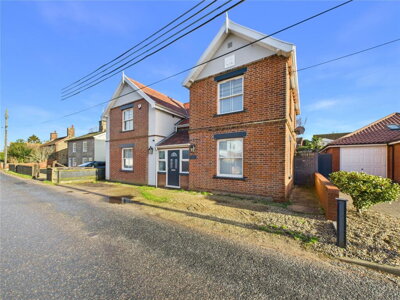
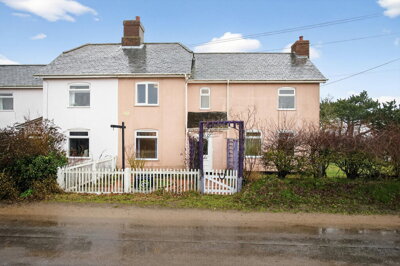
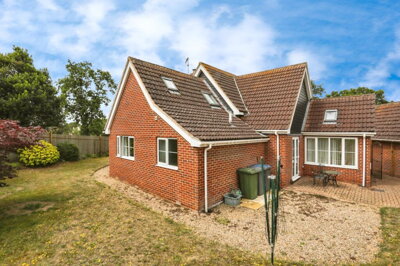
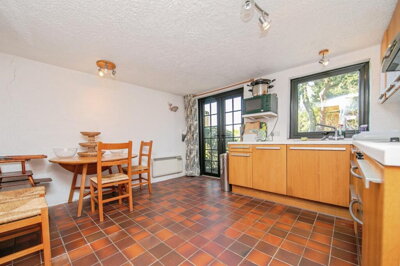
Browse 4 homes for sale in Boyton from local estate agents.
The larger property sector typically features multiple bathrooms, substantial reception space, and private gardens or off-street parking. Four bedroom houses in Boyton span detached, semi-detached, and occasionally terraced configurations, with styles ranging from period properties to modern executive homes.
The Boyton property market reflects its status as a smaller rural village within the East Suffolk district. Our current listings showcase the variety of property types available, from traditional period cottages to more substantial family homes. The village housing stock predominantly consists of detached and semi-detached properties, consistent with the wider Suffolk pattern where detached homes account for approximately 35.8% of all properties and semi-detached properties make up around 28.9% of the housing stock. This distribution reflects the historical development patterns of rural Suffolk, where larger farm workers' cottages and manor houses have shaped the built environment over centuries.
When considering broader East Suffolk context, the December 2025 average house price stood at £284,000, showing a modest 1.2% increase from the previous year. Property type significantly influences values, with detached homes averaging £412,000, semi-detached properties at £271,000, terraced homes at £210,000, and flats and maisonettes at £145,000. For Boyton specifically, the average of £350,000 aligns with the detached property category, suggesting our village listings typically feature properties at the higher end of the local market. The recent 146% increase in Boyton prices compared to the previous year reflects low transaction volumes in small villages, where even one or two sales can significantly shift average figures.
Suffolk county recorded 9,700 property sales in the previous twelve months, though this represented a 14.1% decline in transaction volumes. New build activity remains modest in the region, with new homes comprising just 4.9% of all sales across Suffolk, accounting for 476 properties. This means buyers in Boyton are overwhelmingly purchasing from the existing housing stock, which predominantly consists of older properties built before 1964 with solid wall construction. The limited new build supply reinforces the character of the village and contributes to the scarcity of modern amenities in some properties.

Boyton embodies the quintessential English village lifestyle that attracts many buyers to rural Suffolk. The 2011 census recorded just 147 residents in the village, making it a truly intimate community where neighbours know one another and local events bring the community together. This small population size contributes to the peaceful, unhurried pace of life that defines the village, with residents enjoying fresh air, scenic countryside walks, and the camaraderie of a close neighbourhood. Of the 147 residents, 112 were aged 45 or over, reflecting the appeal of village life for those in midlife and retirement.
The demographic profile of Boyton reveals a village popular with older residents, with 35.3% of the population identifying as retired. This is significantly higher than many urban areas and contributes to the tranquil atmosphere. Only 21% of residents are in full-time employment, which reflects both the retired population and the nature of rural employment opportunities. Employment sectors include public administration and defence, along with traditional rural industries such as agriculture, forestry, and fishing, which remain important to the local economy and character. These employment patterns shape the village economy and influence the types of properties in demand.
East Suffolk more broadly has experienced significant population growth, with approximately 23,000 new households added between 2011 and 2021 and over 17,000 additional households projected over the next twenty years. This growth reflects increasing interest in the area's combination of rural charm, coastal access, and improving connectivity to major employment centres. Boyton, while maintaining its small-scale character, benefits from this regional interest and the improved infrastructure that accompanies population growth. The village remains sufficiently small to avoid the busier nature of larger settlements while still offering reasonable access to regional amenities.

Families considering a move to Boyton will find educational options within reasonable travelling distance. As a small village, Boyton itself has limited schooling facilities, but the surrounding East Suffolk area offers a range of primary and secondary schools. Parents should research specific catchment areas and consider transport arrangements when budgeting for school runs, as village living often involves travel to nearby towns for educational provision. The dispersed nature of rural settlements means that school transport becomes an important consideration in the overall household budget.
For primary education, local villages and the nearby market towns of Woodbridge and Saxmundham host several well-regarded primary schools serving the rural community. Primary schools in the surrounding villages typically serve small catchments, providing a community-focused education for younger children. Parents often value the smaller class sizes and personal attention that rural primary schools can offer, though they may need to travel further as children progress through the education system. The curriculum is aligned with national requirements while often incorporating local context and outdoor learning opportunities that suit the rural environment.
Secondary education options include schools in Woodbridge, with its strong academic reputation, and other nearby towns. The area also features grammar school provision, with selective admissions based on the 11-plus examination for eligible students meeting the required academic threshold. Families considering secondary education should verify current performance data and admission policies, as grammar school places are competitive and catchment areas can span significant distances in rural Suffolk. Independent schooling options exist in the broader region for families seeking alternative educational pathways for their children.
Boyton's location in rural East Suffolk means that private transport is essential for most daily activities, though the village maintains reasonable connectivity to the wider region. The A12 trunk road runs through nearby communities, providing direct access to Ipswich to the south and the Suffolk coast including Aldeburgh and Southwold to the north. This makes Boyton accessible for those who need to commute to larger employment centres while enjoying village life. The A12 is the main arterial route through this part of Suffolk, connecting numerous villages and market towns along its route through the county.
For rail travel, the nearest stations are located in the nearby market towns, with connections to Ipswich where travellers can access the mainline services to London Liverpool Street. Journey times to the capital typically range from around 75 minutes to two hours depending on connections and the specific service taken. The nearest station provides a valuable connection for commuters working in London or using the capital as a transport hub for longer journeys. However, the limited frequency of services at smaller stations means that journey planning is important for regular commuters.
Local bus services operate in the area, though frequencies are limited compared to urban routes, reinforcing the importance of car ownership for residents. Bus services connecting rural villages typically run at reduced frequencies outside peak hours and may not operate on Sundays or public holidays. Cyclists and walkers can enjoy the quiet country lanes that criss-cross the Suffolk countryside, though dedicated cycling infrastructure is limited. The flat terrain of Suffolk makes cycling a practical option for shorter journeys, particularly during the summer months when the weather is favourable for outdoor activities.
Start your search by exploring current listings in Boyton and understanding price trends. With an average property price of £350,000 and market conditions favourable for buyers in some segments, gathering local market intelligence helps you identify genuine value and avoid overpaying. Review recent sales data for comparable properties in the village and surrounding area to understand what similar homes have sold for recently, paying attention to property size, condition, and features when comparing values.
Before viewing properties, obtain a mortgage agreement in principle from a lender. This strengthens your position when making offers and demonstrates to sellers that you have financing secured. Speak to our mortgage partners who can compare rates and find suitable products for your circumstances. Having mortgage approval in place signals to sellers that you are a serious buyer capable of completing the purchase, which can be particularly advantageous in competitive market conditions where multiple offers may be received.
View multiple properties in Boyton to understand what your budget buys in this specific market. Consider factors such as property condition, age of the build, and any renovation potential. Many village properties are older, so factor potential maintenance costs into your assessment. Viewing properties at different times of day and in various weather conditions can reveal different aspects of a property, from natural light levels to how the home performs in adverse weather.
Given that many properties in Suffolk were built before 1964 and feature solid wall construction, a Level 2 survey is strongly recommended. This homebuyer report identifies structural issues, damp, roof condition, and energy efficiency concerns that are common in older properties. Book through Homemove's survey partners who understand the local housing stock and can provide detailed assessments tailored to Suffolk properties. The survey cost from £350 represents a worthwhile investment given the potential issues that can be identified in older properties.
Once your offer is accepted, instruct a solicitor to handle the legal aspects of your purchase. They will conduct searches, review contracts, and manage the transfer of ownership. Our conveyancing partners offer competitive fixed fees and understand the local property landscape in East Suffolk. Your solicitor will apply for searches with East Suffolk Council and investigate any planning constraints that may affect the property, including listed building status or conservation area restrictions that are common in traditional villages like Boyton.
Your solicitor will coordinate the final steps, including searches with East Suffolk Council, finance arrangements, and completion of the sale. On completion day, you will receive the keys to your new Boyton home and can begin settling into village life. Ensure that you have arranged buildings insurance to commence from the contract completion date and that you have made arrangements for transferring utilities and services to your name.
Purchasing a property in a rural Suffolk village requires careful consideration of factors specific to the local housing stock and environment. Many properties in the Boyton area were built before 1964 and feature solid wall construction, which is common across Suffolk. Solid wall properties can be more difficult to insulate effectively and may be more susceptible to damp issues compared to modern cavity wall builds. A thorough survey can identify any existing problems with moisture penetration or ventilation that could affect your enjoyment of the property or require remedial work.
Energy efficiency represents another important consideration for buyers. Older properties with solid walls typically have higher energy costs and lower EPC ratings than modern builds. When evaluating properties, consider the potential costs of upgrading insulation, windows, and heating systems. These improvements can be significant but also enhance comfort and reduce ongoing utility bills. Some period properties may qualify for grants or schemes aimed at improving energy efficiency in older homes, so it is worth investigating available support when considering renovation work. The flat terrain of Suffolk can also create exposure to wind, which affects heating requirements and outdoor living arrangements.
Rural properties may also present considerations around drainage, as some rely on private septic systems rather than mains sewage. Flood risk, while not specifically detailed for Boyton, should be assessed using available government maps, particularly given East Suffolk's proximity to the coast and rivers. For properties that may be listed buildings or located within conservation areas, additional planning restrictions may apply, affecting permitted development rights and renovation options. Properties in rural Suffolk villages often have historic boundaries and access arrangements that should be verified before purchase to avoid future disputes with neighbours.
The average house price in Boyton, East Suffolk was £350,000 over the last year according to available data. This represents a significant 146% increase compared to the previous year, though it remains 57% below the 2015 peak of £820,000. Property prices in Boyton align closely with detached property values in the wider East Suffolk market, where detached homes average £412,000. The village offers relatively accessible pricing compared to some neighbouring coastal areas while providing the rural lifestyle that characterises this part of Suffolk. Low transaction volumes in small villages mean that average prices can fluctuate significantly with just one or two sales, so buyers should consider individual property values rather than relying solely on village averages.
Properties in Boyton fall under East Suffolk Council's jurisdiction for council tax purposes. Specific band distributions for the village are not publicly detailed, but band values range from A through to H based on property valuation. Rural village properties, particularly older period homes and larger detached houses, often fall into mid-to-higher bands due to their size and character. Prospective buyers should check the specific property's council tax band on the Valuation Office Agency website before completing a purchase, as this forms part of the ongoing cost of ownership that should be factored into budgeting. East Suffolk Council sets council tax rates annually, and the amounts collected fund local services including waste collection, road maintenance, and community facilities.
Boyton itself has limited schooling facilities due to its small size, with families typically relying on schools in nearby towns and villages. Primary education options exist in surrounding communities including schools within a reasonable driving distance that serve the rural catchment areas. Secondary schools are available in nearby towns like Woodbridge, which has a strong academic reputation and attracts students from across the region. The area also offers grammar school provision for students who pass the 11-plus examination, with places allocated based on academic selection and proximity to the school. Parents should research specific catchment areas and consider travel arrangements when choosing a property, as distances to schools can be significant in rural locations and school transport arrangements may be needed.
Boyton has limited public transport connectivity, consistent with its status as a small rural village. The nearest bus services operate on routes connecting nearby market towns, though frequencies are low compared to urban areas. The nearest railway stations are located in surrounding towns, with services to Ipswich where connections to London Liverpool Street are available. Journey times to London typically range from 75 minutes to two hours depending on the specific train service and connection times. Most residents rely on private car ownership for daily transportation needs, including shopping, school runs, and accessing services. This dependence on private vehicles means that buyers should ensure they have reliable transport arrangements before committing to a purchase in Boyton.
Boyton and the wider East Suffolk area show continued interest from buyers seeking rural lifestyles and coastal access. The regional average house price increased by 1.2% in the year to December 2025, indicating a stable market with modest growth trajectories. East Suffolk is projected to grow by over 17,000 households over the next 20 years, suggesting sustained demand for housing in the region. However, investors should note the small population and limited rental market locally, which could affect rental yields and the speed of future sales. The village appeals most to buyers seeking long-term residence rather than rental yield, with rental demand likely concentrated in nearby larger towns where employment opportunities and amenities attract tenants.
Stamp duty rates for 2024-25 are as follows: 0% on properties up to £250,000, 5% on the portion from £250,001 to £925,000, 10% on the portion from £925,001 to £1.5 million, and 12% on amounts exceeding £1.5 million. First-time buyers receive relief on properties up to £425,000, paying 5% between £425,001 and £625,000. Given the £350,000 average price in Boyton, a typical purchase would attract stamp duty of £5,000 for non-first-time buyers or nil for qualifying first-time buyers. Additional property purchases, such as second homes or buy-to-let investments, attract a 3% surcharge on all stamp duty rates, which should be factored into investment calculations.
Many properties in Boyton and the wider Suffolk area were built before 1964 and feature solid wall construction. This construction type can make properties more susceptible to damp and more challenging to insulate effectively, potentially leading to higher energy costs and comfort issues. Prospective buyers should budget for potential energy efficiency improvements, which can include window replacement, wall insulation, and heating system upgrades. A RICS Level 2 survey is strongly recommended for any older property purchase to identify issues with damp, roof condition, and structural integrity that may not be visible during a standard viewing. Properties may also be subject to planning restrictions if they are listed buildings or located within conservation areas, which can limit renovation options and require specialist consents for alterations.
From 4.5%
Compare mortgage rates and find the right finance for your Boyton property purchase
From £499
Expert legal services for your property purchase in Boyton
From £350
Detailed homebuyer report for your Boyton property
From £60
Energy performance certificate for your Boyton home
When purchasing a property in Boyton, budget planning should account for stamp duty along with other associated costs. For a typical Boyton property priced around the £350,000 average, non-first-time buyers will pay stamp duty land tax of £5,000, calculated at 5% on the amount above £250,000. First-time buyers purchasing properties up to £425,000 can benefit from relief and pay zero stamp duty on the first £425,000 of their purchase. The threshold for first-time buyer relief means that most properties in Boyton fall below the upper limit, making the village particularly accessible for those taking their first step onto the property ladder.
Beyond stamp duty, buyers should factor in solicitor conveyancing fees, typically ranging from £500 to £1,500 depending on complexity and whether the property is freehold or leasehold. A RICS Level 2 survey costs from £350 for standard properties, though larger or older homes may incur higher fees. Property surveys are particularly important in Boyton given the prevalence of older properties with solid wall construction that may have underlying issues. Additional costs include mortgage arrangement fees, search fees with East Suffolk Council, and removal expenses, which together can add several thousand pounds to the total purchase cost.
Life in Boyton comes with manageable ongoing costs. Council tax in East Suffolk is generally competitive compared to urban areas, though rates vary by property band and the level of services provided by the local authority. Energy costs may be higher for older solid wall properties due to poorer insulation, so factoring potential improvement costs into your budget makes sense when evaluating properties. Village living typically involves lower parking costs and entertainment expenses than urban alternatives, while also offering access to the beautiful Suffolk countryside and coast that provide free leisure opportunities throughout the year. The proximity to market towns like Woodbridge and Saxmundham ensures that residents have access to a good range of services without needing to travel long distances for everyday needs.
Properties for Sale In London

Properties for Sale In Plymouth

Properties for Sale In Liverpool

Properties for Sale In Glasgow

Properties for Sale In Sheffield

Properties for Sale In Edinburgh

Properties for Sale In Coventry

Properties for Sale In Bradford

Properties for Sale In Manchester

Properties for Sale In Birmingham

Properties for Sale In Bristol

Properties for Sale In Oxford

Properties for Sale In Leicester

Properties for Sale In Newcastle

Properties for Sale In Leeds

Properties for Sale In Southampton

Properties for Sale In Cardiff

Properties for Sale In Nottingham

Properties for Sale In Norwich

Properties for Sale In Brighton

Properties for Sale In Derby

Properties for Sale In Portsmouth

Properties for Sale In Northampton

Properties for Sale In Milton Keynes

Properties for Sale In Bournemouth

Properties for Sale In Bolton

Properties for Sale In Swansea

Properties for Sale In Swindon

Properties for Sale In Peterborough

Properties for Sale In Wolverhampton

Enter your details to see if this property is within your budget.
Loans, cards, car finance
Estimated property budget
Borrowing + deposit
You could borrow between
Typical borrowing
Monthly repayment
Est. at 4.5%
Loan-to-value
This is an estimate only. Your actual budget may vary depending on interest rates, credit history, and personal circumstances. For an accurate affordability assessment, speak to one of our free mortgage advisors.
This calculator provides estimates for illustrative purposes only and does not constitute financial advice. Your home may be repossessed if you do not keep up repayments on your mortgage. Estimates based on 4.5% interest rate, repayment mortgage. Actual rates depend on your circumstances.
Homemove is a trading name of HM Haus Group Ltd (Company No. 13873779, registered in England & Wales). Homemove Mortgages Ltd (Company No. 15947693) is an Appointed Representative of TMG Direct Limited, trading as TMG Mortgage Network, which is authorised and regulated by the Financial Conduct Authority (FRN 786245). Homemove Mortgages Ltd is entered on the FCA Register as an Appointed Representative (FRN 1022429). You can check registrations at NewRegister or by calling 0800 111 6768.

We use cookies to show you personalised content and improve your experience of our website. Find out more in our Privacy policy and Cookie policy.