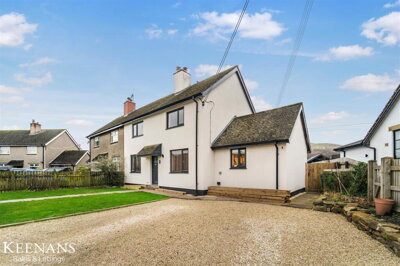
Browse 1 home for sale in Bowland Forest Low from local estate agents.
Three bedroom properties represent a significant portion of the Bowland Forest Low housing market, offering space for families with multiple reception rooms and gardens in many cases. Browse detached, semi-detached, and terraced options ranging from period character homes to contemporary developments.
The property market in Bowland Forest Low and the surrounding Forest of Bowland area has demonstrated steady growth, with sold prices climbing 4% over the past twelve months and reaching 9% above the 2022 peak of £400,261. This consistent upward trajectory reflects increasing buyer interest in rural Lancashire properties, driven by remote working opportunities and a heightened desire for countryside living following recent global events. The market here tends toward the upper end of the pricing spectrum, with detached homes averaging £579,486 and semi-detached properties at approximately £370,423, indicating buyer preference for space and privacy.
Property types in Bowland Forest Low are dominated by larger detached homes, reflecting the rural nature of the area and the substantial plot sizes that characterize properties here. Terraced properties, averaging around £261,975, offer more accessible entry points to the local market while retaining the character of traditional Lancashire farmsteads and village terraces. The housing stock includes historic farmhouses dating from the seventeenth and eighteenth centuries alongside more recent additions, with construction typically using local stone and traditional building methods that require specific maintenance knowledge.
New build opportunities are limited but include leisure lodges at Bowland Escapes in the PR3 area, ranging from £225,000 to £275,000 for two-bedroom models such as the Prestige Hampton at £275,000 and the Lakeland Leisure Westmorland at £225,000. While these new lodge developments offer modern amenities and lower maintenance requirements compared to historic properties, buyers should verify precise locations within the civil parish boundaries when considering such purchases, as the PR3 postcode encompasses a wider rural area beyond Bowland Forest Low itself.

Bowland Forest Low sits within the Forest of Bowland AONB, an area of approximately 312 square miles encompassing the heather moors, limestone pavements, and enclosed farmland of the Lancashire Pennines. The AONB supports a residential population of roughly 16,000 people spread across its villages and farmsteads, with the majority concentrated in the Ribble and Lune valleys. This sparse population density creates an exceptionally peaceful environment where neighbours know each other by name and community events at village halls bring residents together throughout the year.
The local economy of Bowland Forest Low and the surrounding area is firmly rooted in agriculture, with 678 registered farm holdings contributing to the working landscape that defines the region. Major estate holdings including United Utilities Bowland Estate, Abbeystead, and The Duchy of Lancaster own significant portions of the land, maintaining traditional field patterns and drystone walls that characterize the picturesque countryside. These estate relationships influence property ownership patterns in the area, with many properties sold subject to agricultural ties or with rights of way across farmland that future owners should understand before completing a purchase.
Community life centres around small villages where village shops, local pubs, and parish councils maintain the essential services that residents need, while larger towns like Clitheroe provide access to supermarkets, healthcare, and other urban amenities within a short drive. The market town of Clitheroe, situated approximately 10-15 miles from the heart of Bowland Forest Low, serves as the commercial hub for the surrounding area and hosts a weekly market, independent shops, and dining options that complement the basic necessities available locally. The proximity to a well-served market town makes Bowland Forest Low practical for permanent residence while retaining its rural character.
Outdoor recreation forms the backbone of lifestyle in Bowland Forest Low, with extensive footpaths, bridleways, and open access land offering opportunities for walking, cycling, and horse riding throughout every season. The area attracts visitors from across the North West who come to explore landmarks such as Pendle Hill, the Trough of Bowland, and the rolling heather moorland that blooms purple in late summer. Local cultural attractions include traditional agricultural shows, craft markets, and literary heritage linked to the famous Bowland fells that inspired writers and artists throughout history.

Families considering a move to Bowland Forest Low will find a selection of primary schools serving the dispersed rural communities of the Forest of Bowland AONB. Village primary schools in nearby settlements provide education for children up to age eleven, with smaller class sizes that allow for personalized attention and strong community links that often extend beyond the classroom. Parents should research specific catchment areas and admissions policies, as rural school catchments can vary significantly depending on exact residence locations within the extensive AONB boundaries.
The closest primary schools to Bowland Forest Low are typically located in surrounding villages within a reasonable driving distance, with some families choosing schools based on specific curricula, religious affiliations, or particular educational approaches. The village school setting often means that teachers know each child individually and can adapt teaching methods to suit different learning styles, which many parents find preferable to the larger school environment in urban areas. Transport arrangements are essential to consider when selecting a property, as school bus services may operate on specific routes and schedules that affect daily routines.
Secondary education options include schools in the surrounding market towns, with secondary schools in Clitheroe serving many families from the Bowland area. These institutions typically offer a broad curriculum, sixth form provision, and various extracurricular activities that smaller rural primaries cannot provide. Clitheroe Royal Grammar School and other nearby secondary schools have established reputations for academic achievement, though competition for places can be keen given the wide geographic area they serve. Families should verify current school performance data, including recent Ofsted ratings, and consider transportation arrangements when selecting a property, as school transport routes and journey times vary considerably across this geographically dispersed area.
Further education opportunities are available at colleges in Clitheroe, Lancaster, and Preston, with sixth form colleges serving students progressing from secondary education. The proximity of Lancaster University and the University of Central Lancashire means that older children have access to higher education without travelling excessive distances from the family home, while still benefiting from the upbringing and lifestyle advantages that Bowland Forest Low provides during their formative years. The rural character of Bowland Forest Low and the surrounding area makes it particularly attractive to families seeking to balance academic opportunity with the benefits of countryside living.
Transport connections from Bowland Forest Low reflect the rural nature of the area, with private vehicle travel forming the primary means of transportation for most residents. The AONB is served by a network of country lanes that connect villages to each other and to larger towns, with the nearest major road connections accessible via routes to Clitheroe and Lancaster. Journey times to larger urban centres vary depending on exact property locations, but residents should expect that daily commuting will require significant driving time compared to urban or suburban settings.
The A59 trunk road passes through the nearby area, providing connection to Preston and the M6 motorway network, while routes through Clitheroe connect to the A65 leading toward Leeds and Skipton. For residents working in Manchester, the journey from Bowland Forest Low typically takes around 90 minutes by car, though this varies significantly based on exact property location and traffic conditions on country roads. Many residents find that working from home or adopting flexible working patterns makes the rural location more practical, reducing the frequency of longer journeys to urban employment centres.
Public transport options in Bowland Forest Low are limited, as is typical for sparsely populated rural areas. Bus services connect some villages to market towns, but frequencies are generally low, with some routes operating only on specific days of the week rather than daily services. The nearest railway stations are located in Lancaster, Clitheroe, and Wennington, offering connections to regional and national rail networks. Lancaster station provides direct services to Manchester, Leeds, and London, with fastest journey times to London Euston of approximately two and a half hours, making day trips to the capital feasible for those working or conducting business there.
For residents working remotely or in flexible employment arrangements, the rural location of Bowland Forest Low becomes less of a constraint, with superfast broadband increasingly available across the area. Mobile network coverage varies across the AONB, with some valleys experiencing reduced signal strength, though major networks have improved coverage in recent years. Cycling is popular among residents for both recreation and short-distance travel, with dedicated routes and quiet country lanes providing relatively safe cycling conditions away from major traffic. The scenic landscape also attracts touring cyclists, with the Forest of Bowland forming part of several long-distance cycling routes that connect to the wider Lancashire cycle network.
Spend time exploring Bowland Forest Low and surrounding villages to understand which community best suits your lifestyle, checking proximity to schools, shops, and essential services while getting a feel for the property market and typical asking prices. Take time to drive the country lanes, visit local pubs, and speak with residents about what living in the area is really like beyond the statistics.
Contact lenders or brokers to obtain an agreement in principle before viewing properties, as this strengthens your position when making offers in a competitive rural market where properties can sell quickly to cash buyers and those with financing already arranged. Given the premium nature of properties in Bowland Forest Low, with average prices exceeding £400,000, securing appropriate financing well in advance is essential.
Work with local estate agents to arrange viewings of suitable properties, paying attention to access roads, broadband availability, and any planning restrictions that may affect your intended use of the property or land. Many properties in the area are rural farmsteads where access may be via unmade tracks or shared private roads, so understanding these arrangements before committing is important.
Arrange a RICS Level 2 Survey for any property you intend to purchase, particularly important given the age of many properties in the area where traditional construction methods and potential maintenance issues should be assessed by a qualified surveyor. Historic farmhouses and converted barns may have structural quirks, original features, and materials that require specialist knowledge to evaluate properly.
Choose a conveyancing solicitor with experience in rural property transactions to handle legal work, searches, and contracts while coordinating with your mortgage provider and the seller's solicitor throughout the process. Rural properties may involve additional legal considerations including rights of way, drainage arrangements, and agricultural tenancy agreements that require experienced handling.
Once all searches are satisfactory and finances are arranged, exchange contracts with the seller to commit to the purchase before completing on the agreed completion date when ownership transfers and keys are released. In rural property transactions, completion dates may need to allow for additional logistics such as collecting keys from agents located in nearby market towns.
Properties in Bowland Forest Low often include historic farmhouses, converted barns, and traditional stone cottages that may predate modern building regulations and construction standards. When viewing properties, pay close attention to the condition of roofs, the age and condition of drainage systems, and any signs of damp or structural movement that commonly affect older rural properties. Properties dating from the seventeenth, eighteenth, and nineteenth centuries may retain original features such as exposed beams, open fires, and timber floors that require ongoing maintenance and specialist care.
The construction of properties in Bowland Forest Low typically features local stone walls, often with solid brick or stone internal divisions, and traditional roof structures using natural slate or stone tiles. These construction methods, while durable when properly maintained, can present challenges that differ from modern cavity wall construction, including increased susceptibility to penetrating damp, less effective thermal insulation, and potential for structural movement in older properties. Understanding the construction type and its maintenance implications helps buyers budget appropriately for the ongoing care of a historic property.
Flood risk assessment is essential for any property in Bowland Forest Low, particularly those located in valley bottoms or adjacent to watercourses. While specific flood risk data for the civil parish was not readily available, the topography of the Forest of Bowland includes streams and rivers that can experience significant water flow during periods of heavy rainfall. The rivers and becks that thread through the valley landscape can rise rapidly after heavy rain, affecting properties in low-lying positions. Commission a thorough survey that includes assessment of surface water drainage, the condition of any existing flood defences, and the property's history regarding water ingress or flooding events.
Conservation areas and listed buildings are present in the wider Forest of Bowland region, with historic properties such as Lower Lee House and associated barns dating from 1694 indicating the heritage value of structures in this area. If you are purchasing a listed building, be aware that permitted development rights may be restricted, requiring planning permission for alterations that would normally be permitted on unlisted properties. Research the specific designation of any property you are considering and factor the additional responsibilities and costs of owning heritage property into your decision-making process. Listed building consent is required for most external and structural alterations, and failure to obtain proper permissions can result in enforcement action.
While specific sales data for Bowland Forest Low is limited, the broader Forest of Bowland area shows an average sold price of £437,103 over the past twelve months. Detached properties average £579,486, semi-detached homes around £370,423, and terraced properties approximately £261,975. Prices have risen 4% year-on-year and are 9% above the 2022 peak, indicating steady demand for rural properties in this Lancashire AONB. The premium pricing reflects both the scarcity of available properties and the enduring appeal of living within a designated Area of Outstanding Natural Beauty.
Properties in Bowland Forest Low fall under Ribble Valley Borough Council, with specific council tax bands varying by property depending on its valuation band. Rural properties in the area typically range from band A to band G, with larger detached farmhouses and converted barns often falling into higher bands due to their substantial size and premium location values. Prospective buyers should verify the exact council tax band of any property they are considering, as this affects annual running costs alongside other expenses such as rural insurance premiums that tend to be higher than urban equivalents.
Primary education is served by village schools in surrounding communities, with secondary schools in nearby Clitheroe serving the wider Bowland area including Bowland Forest Low. Parents should research current Ofsted ratings and admission catchment areas, as school transport arrangements and journey times vary significantly across this dispersed rural area. The village primary schools in the surrounding area typically have small cohorts that allow for individual attention, while secondary schools in Clitheroe offer broader curricula and facilities. The proximity to good schools should be verified against specific property locations before purchasing, as catchment boundaries can affect which school children can attend.
Public transport options in Bowland Forest Low are limited, reflecting the rural nature of the area and the sparse population spread across the AONB. Bus services connect some villages to market towns but with low frequencies, and some routes operate only on specific days rather than daily services. The nearest railway stations are in Lancaster, Clitheroe, and Wennington, offering regional and national connections to Manchester, Leeds, and London. Most residents rely on private vehicles for daily transportation, and this should be factored into any purchasing decision, particularly for those who need to commute regularly to urban employment centres.
The Forest of Bowland AONB has demonstrated consistent property price growth, with prices rising 4% annually and 9% above previous peaks, suggesting a stable investment environment for rural property. The area attracts buyers seeking rural lifestyle properties, holiday homes, and retirement residences, supporting demand in the local market. However, investment returns may be slower than in urban areas due to lower transaction volumes and the specialized nature of the rural property market. Properties in premium locations within the AONB, particularly those with land or traditional agricultural buildings suitable for conversion, may offer stronger long-term appreciation potential.
Stamp duty rates (SDLT) in 2024-25 start at 0% for properties up to £250,000, then 5% on the portion from £250,001 to £925,000, 10% up to £1.5 million, and 12% above that. First-time buyers benefit from relief on properties up to £625,000, paying 0% up to £425,000 then 5% to £625,000. Given that detached properties in Bowland Forest Low average £579,486, many purchases will incur SDLT of approximately £16,474 for standard buyers, while first-time buyers may qualify for relief reducing this cost substantially.
From 4.5%
Expert mortgage advice for Bowland Forest Low properties
From £499
Specialist rural property solicitors
From £350
Detailed property inspection for historic homes
From £60
Energy performance certificate
Purchasing a property in Bowland Forest Low involves several costs beyond the purchase price, with stamp duty land tax forming a significant portion of upfront expenses. For a typical detached home averaging £579,486, a standard buyer would pay 5% on the portion between £250,001 and £500,000 (£12,500) plus 5% on the portion between £500,001 and £579,486 (£3,974), totaling approximately £16,474 in SDLT. First-time buyers may benefit from relief on properties up to £625,000, reducing costs substantially for those eligible, though the higher average price point in Bowland Forest Low means many purchases will exceed this threshold.
Survey costs are particularly important for properties in Bowland Forest Low, where the age and character of many homes mean that professional assessments are money well spent. A RICS Level 2 Survey typically costs from £350 for a standard property, rising for larger homes and those with complex construction, and provides detailed information on construction, condition, and any defects that may require attention. Given that many properties in the area date from the nineteenth century or earlier, surveys often reveal maintenance issues that, while not necessarily deal-breakers, should inform your offer negotiation and budget planning for future repairs. Additional specialist surveys may be required for listed buildings or properties with unusual construction.
Conveyancing costs for rural property transactions in Bowland Forest Low typically start from £499 for basic legal work, with costs rising for leasehold properties, properties with complex titles, or those involving agricultural land or tenant farmers. Additional search costs include local authority searches, drainage and water searches, and environmental searches specific to the Lancashire countryside, which can reveal issues such as mining history, flood risk, or contaminated land that may affect the property or its value. Budget for total buying costs of approximately 3-5% of the purchase price to ensure you have sufficient funds available when completing your Bowland Forest Low purchase, including mortgage arrangement fees, valuation fees, and legal costs alongside SDLT.
Properties for Sale In London

Properties for Sale In Plymouth

Properties for Sale In Liverpool

Properties for Sale In Glasgow

Properties for Sale In Sheffield

Properties for Sale In Edinburgh

Properties for Sale In Coventry

Properties for Sale In Bradford

Properties for Sale In Manchester

Properties for Sale In Birmingham

Properties for Sale In Bristol

Properties for Sale In Oxford

Properties for Sale In Leicester

Properties for Sale In Newcastle

Properties for Sale In Leeds

Properties for Sale In Southampton

Properties for Sale In Cardiff

Properties for Sale In Nottingham

Properties for Sale In Norwich

Properties for Sale In Brighton

Properties for Sale In Derby

Properties for Sale In Portsmouth

Properties for Sale In Northampton

Properties for Sale In Milton Keynes

Properties for Sale In Bournemouth

Properties for Sale In Bolton

Properties for Sale In Swansea

Properties for Sale In Swindon

Properties for Sale In Peterborough

Properties for Sale In Wolverhampton

Enter your details to see if this property is within your budget.
Loans, cards, car finance
Estimated property budget
Borrowing + deposit
You could borrow between
Typical borrowing
Monthly repayment
Est. at 4.5%
Loan-to-value
This is an estimate only. Your actual budget may vary depending on interest rates, credit history, and personal circumstances. For an accurate affordability assessment, speak to one of our free mortgage advisors.
This calculator provides estimates for illustrative purposes only and does not constitute financial advice. Your home may be repossessed if you do not keep up repayments on your mortgage. Estimates based on 4.5% interest rate, repayment mortgage. Actual rates depend on your circumstances.
Homemove is a trading name of HM Haus Group Ltd (Company No. 13873779, registered in England & Wales). Homemove Mortgages Ltd (Company No. 15947693) is an Appointed Representative of TMG Direct Limited, trading as TMG Mortgage Network, which is authorised and regulated by the Financial Conduct Authority (FRN 786245). Homemove Mortgages Ltd is entered on the FCA Register as an Appointed Representative (FRN 1022429). You can check registrations at NewRegister or by calling 0800 111 6768.

We use cookies to show you personalised content and improve your experience of our website. Find out more in our Privacy policy and Cookie policy.