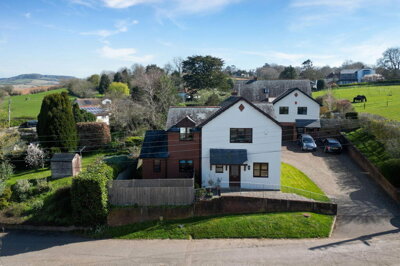
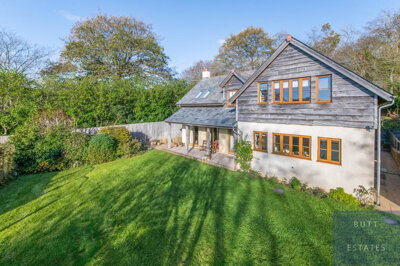
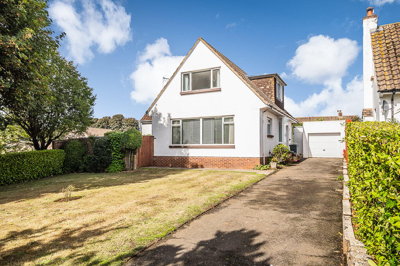
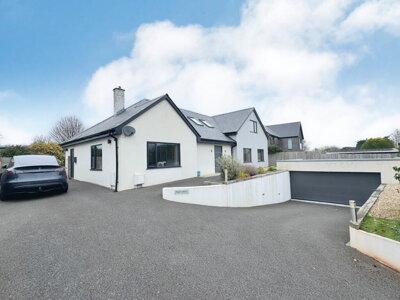
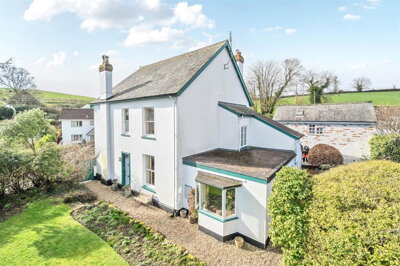
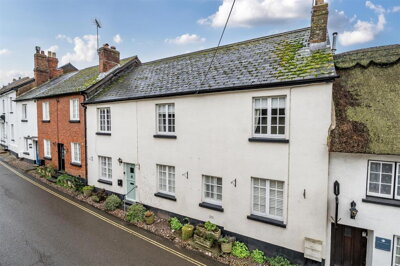
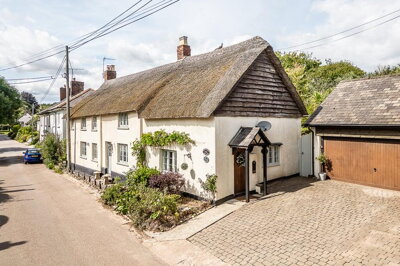
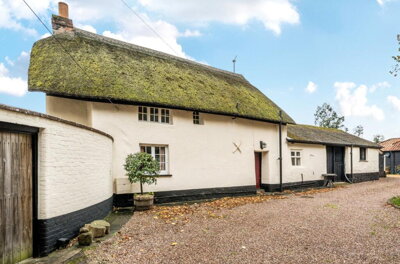
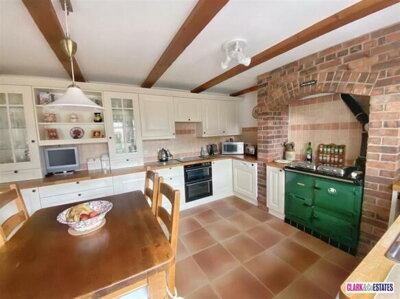
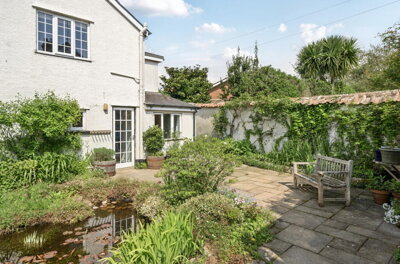
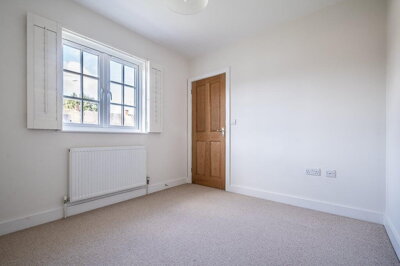
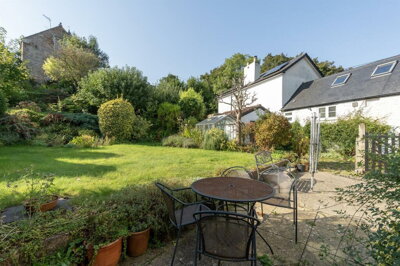
Browse 12 homes for sale in Bicton from local estate agents.
The larger property sector typically features multiple bathrooms, substantial reception space, and private gardens or off-street parking. Four bedroom houses in Bicton span detached, semi-detached, and occasionally terraced configurations, with styles ranging from period properties to modern executive homes.
The Bicton property market presents a compelling opportunity for buyers looking to establish themselves in East Devon. Over the last year, the average house price in Bicton reached £410,000, reflecting a market that has experienced a 10% correction compared to the previous twelve months. Prices have also settled 22% below the 2023 peak of £522,500, creating more accessible entry points for buyers who may have found the market challenging at its height. Detached properties dominate the local sales mix, with these larger family homes averaging £488,750, while semi-detached properties fetch around £435,000 and terraced homes offer more modest price points averaging £296,667. This variety ensures that buyers across different budget ranges can find something suitable within the village and its immediate surroundings.
For the broader East Devon area, recent data shows approximately 1,975 property sales in the twelve months leading to early 2026, demonstrating continued activity despite wider market fluctuations. Across Devon county as a whole, around 15,500 properties changed hands between January and December 2025, with sales volumes dropping by 15.6% compared to the previous year. While no active new-build developments were identified specifically within the Bicton EX9 postcode area, the characterful older properties that define the village offer their own appeal. Bicton House itself, constructed in red brick and limestone, exemplifies the quality of period architecture available in this area. Buyers interested in newer construction may wish to explore properties in nearby towns, though the village's heritage properties provide a unique opportunity to own a piece of Devon's architectural history.
The dominance of detached properties in Bicton's sales mix reflects the village's appeal to families seeking space and character. Many of these larger homes sit within generous plots, taking advantage of the area's rural setting where land is more readily available than in urban centres. The presence of equestrian facilities, including Bicton Arena, has attracted buyers who require space for horses or other livestock, further driving demand for detached properties with land. Semi-detached and terraced properties, while less common in the village, often represent excellent value for first-time buyers or those seeking a more manageable property footprint while still benefiting from Bicton's village atmosphere and community spirit.

Life in Bicton revolves around the stunning natural landscape and rich heritage that defines this corner of East Devon. The village sits on the dip-slopes of the Budleigh Salterton Pebble Beds, with ground levels rising to reveal the impressive Otter Sandstone formations that characterize the local geology. The area belongs to the East Budleigh with Bicton Parish, an administrative unit that helps maintain the village's distinct identity while connecting residents to local services and community initiatives. Bicton Park Botanical Gardens offers one of the region's most beloved attractions, providing residents with beautifully landscaped grounds to explore throughout the year. The gardens feature an impressive collection of plant species and serve as a venue for events and gatherings that bring the community together.
The economic fabric of Bicton reflects its agricultural heritage and educational institutions. Bicton College, housed within the magnificent Bicton House, serves as a significant local employer and provides further and higher education courses in agriculture and land-based industries. This connection to Clinton Devon Estates, which manages approximately 25,000 acres of agricultural land across Devon and maintains its headquarters nearby, reinforces the area's rural economy. Bicton Arena hosts equestrian events that draw visitors from across the region, adding a recreational dimension to local life. The village's demographic profile suggests a mix of established families, retired couples drawn to the peaceful environment, and professionals who appreciate the balance between countryside living and access to employment centres.
The village's heritage extends beyond its agricultural roots to encompass remarkable architectural treasures. Bicton House itself, a Grade II* listed Georgian country house built in red brick and limestone, stands as the quality of construction found throughout the area. The Church of St Mary, also Grade II* listed, provides a spiritual centre for the community while showcasing centuries of ecclesiastical architecture. Bicton Cross, another Grade II* listed monument, marks the historic centre of village life. Community spirit runs strong here, with residents taking an active interest in preserving the village's character through parish council activities and local conservation efforts. The East Budleigh Conservation Area Appraisal Review and Management Plan 2020 provides a framework for protecting the historic character of the wider area, ensuring that new development respects the village's established patterns and traditional materials.
Families considering a move to Bicton will find a range of educational options available within reach of the village. Bicton College itself offers further and higher education courses, making it a valuable local resource for older students seeking vocational qualifications in agriculture and land management. The college's presence within Bicton House, a historic Grade II* listed building, provides students with a unique learning environment that combines heritage architecture with modern facilities. Courses in agriculture, horticulture, countryside management, and environmental sciences are particularly well-suited to students from Bicton and the surrounding villages, given the area's strong connections to farming and land-based industries through Clinton Devon Estates.
For younger children, the primary school options in the surrounding East Devon villages provide essential early years and Key Stage 1 education. The rural setting means that primary schools often serve smaller catchments, allowing for more personalized attention and strong community connections between students, teachers, and families. Many primary schools in the area have close ties to their local communities, with village halls, farms, and community projects often incorporated into the curriculum to provide hands-on learning experiences that urban schools cannot easily replicate. Parents should research specific catchment areas and admission policies for their chosen property, as these can significantly impact school placement decisions.
Secondary education in East Devon is served by schools in nearby towns such as Sidmouth, Exmouth, and Honiton, each offering different strengths and extracurricular programmes. Honiton Community College provides secondary education with sixth form provision, offering a range of academic and vocational qualifications that prepare students for higher education or employment. Sidmouth College offers a similar range of academic and vocational courses, with strong pastoral support that parents often cite as a key strength. For families prioritising academic excellence, researching each school's most recent Ofsted ratings and examination results will prove worthwhile. Private education options in the broader Devon area include schools in Exeter and Taunton for those seeking alternative educational approaches. The proximity of Bicton College also means that older children interested in agriculture, horticulture, or environmental sciences have a prestigious institution practically on their doorstep, potentially reducing the need for boarding arrangements or lengthy daily commutes for older students.

While Bicton maintains its peaceful village character, residents benefit from reasonable transport connections to larger employment centres. The nearest railway stations can be found in Exmouth, Honiton, and Exeter, providing access to mainline services that connect East Devon with destinations across the South West and beyond. Exeter St Davids station offers regular services to London Paddington, with journey times of around two and a half hours making day commuting feasible for some residents. Bristol and Plymouth are also accessible via regular train services, opening up employment opportunities across the wider region. For those working in Exeter itself, the journey typically takes 30 to 45 minutes by car under normal traffic conditions, though this can extend during peak hours.
Local bus services operated by Stagecoach and other providers connect Bicton with surrounding villages and towns, though frequencies may be limited compared to urban routes. The 57 bus service connects Budleigh Salterton with Exmouth, passing through or near several villages in the East Budleigh with Bicton Parish area, providing a lifeline for residents without private vehicles. Residents planning to rely on public transport should check current timetables carefully and consider whether a car would be necessary for daily logistics, particularly for school runs or shopping trips that may fall outside bus service hours.
For drivers, the A30 provides the main arterial route through Devon, connecting the region to Exeter and beyond via the M5 motorway. The journey to Exeter city centre takes approximately 30 to 40 minutes under normal traffic conditions, while Sidmouth and Budleigh Salterton are reached within 15 to 20 minutes. The A376 provides a direct route to Exmouth, while the A3052 connects the coastal towns with the inland road network. Parking in the village itself is typically straightforward, with properties generally offering off-street parking or garage facilities that reflect the more spacious character of rural property. Cycling infrastructure in East Devon continues to develop, with scenic routes available for those who enjoy exploring the countryside on two wheels, though the hilly terrain around Bicton means that cycling requires a reasonable level of fitness.
Spend time exploring Bicton and its surrounding villages to understand the neighbourhood character, local amenities, and community atmosphere. Visit at different times of day and on weekends to get a genuine feel for what daily life would be like. Take note of nearby facilities like shops, pubs, and healthcare services. Bicton Park Botanical Gardens provides an excellent starting point for familiarising yourself with the area, while the village pub and local parish council meetings offer opportunities to meet existing residents and gauge the community atmosphere firsthand.
Obtain a mortgage agreement in principle before beginning your property search. This strengthens your position when making offers and demonstrates to sellers that you are a serious buyer. Contact multiple lenders or use a mortgage broker to find the best rates available for your circumstances. Given the property values in Bicton, with average prices around £410,000 and detached properties averaging £488,750, most buyers will require significant mortgage financing. A broker with experience in rural and heritage properties can be particularly valuable if you are purchasing a listed building or a property with non-standard construction.
Browse listings on Homemove and contact local estate agents to arrange viewings of properties that match your requirements. View several properties before deciding, and do not hesitate to revisit promising homes at different times of day or in various weather conditions. Pay particular attention to the condition of traditional construction elements such as cob walls, thatched or slate roofs, and original windows, as these can indicate the maintenance history of the property and potential future costs.
Before purchasing a property in Bicton, we strongly recommend booking a RICS Level 2 Homebuyer Survey. Given the prevalence of cob construction and period properties in the area, a professional survey can identify potential issues with damp, structural movement, or roofing that may not be apparent during a standard viewing. Properties in Bicton often feature traditional construction methods including cob walls dating back centuries, thatched roofs, and natural slate, all of which require specialist knowledge to assess properly. A thorough survey will examine the condition of these elements and provide advice on any necessary repairs or maintenance.
Once you have found your ideal property, submit a formal offer through the selling estate agent. Be prepared to negotiate on price based on the property's condition, market comparables, and any issues identified during surveys. Your mortgage offer should align with the agreed purchase price. In Bicton's market, where many properties are character homes with heritage features, negotiation often reflects the age and condition of the property as well as the results of building surveys.
Appoint a conveyancing solicitor to handle the legal aspects of your purchase. They will conduct searches, review contracts, and coordinate with the seller's representatives to ensure a smooth transaction through to completion. Your solicitor should conduct specific searches relevant to Bicton, including local authority drainage and environmental searches for the East Devon area, flood risk assessments for properties in identified flood areas, and planning history checks that may reveal previous permissions for traditional building works or listed building consents.
Purchasing a property in Bicton requires careful attention to factors specific to this part of East Devon. The geological characteristics of the area present particular considerations for prospective buyers. Bicton sits on ground underlain by the Budleigh Salterton Pebble Beds and Otter Sandstone, with the Aylesbeare Mudstone forming part of the wider landscape. These clay-rich soils, particularly the mudstone deposits, can be susceptible to shrink-swell movement that causes subsidence in properties with inadequate foundations. Trees in close proximity to older buildings can exacerbate this risk by extracting moisture from the ground during dry periods. Any property with signs of cracking, subsidence, or movement should be investigated thoroughly before purchase, and a RICS Level 2 survey becomes especially valuable in identifying these concerns.
Flood risk warrants careful consideration despite Bicton's inland position. The East Budleigh with Bicton Parish Council maintains a Flood Resilience Plan, acknowledging that certain areas face flooding concerns, particularly from the River Otter and surface water runoff. Locations such as Lower Yettington, Middletown Lane, and Tidwell Lane have been identified as experiencing historical flooding issues. Frogmore Road and Lower Budleigh have also been flagged for flooding from rising water in the River Otter and field run-off. Budleigh Hill represents another area of concern during significant rainfall events. Prospective buyers should enquire about any flood history with current owners or the parish council and review the Environment Agency flood maps before committing to a purchase.
The construction materials common to East Devon properties also merit attention during viewings and surveys. Cob buildings, which feature prominently in the local architecture and some dating from the 15th century or earlier, require appropriate maintenance to prevent moisture penetration that can lead to damp and structural problems. The earth construction, made from compacted natural materials, is susceptible to weathering if not properly maintained, with particular vulnerability at the wall head where the cob meets the roof structure. Thatched roofs, once common throughout the area using Devon reed, demand specialist knowledge and ongoing maintenance, with re-thatching representing a significant expense that should be factored into budgeting. Traditional brick and stone properties may show their age through outdated electrical systems, dated plumbing, or inadequate insulation.
Properties within or near conservation areas may face additional planning restrictions that affect renovation or extension possibilities. With several Grade II* and Grade II listed buildings in Bicton, including the Church of St Mary, Bicton House, and Bicton Cross, buyers should understand that listed status brings responsibilities for maintenance and potential limitations on alterations. Bicton House and its gardens appear on Historic England's Heritage at Risk Register 2025, partly due to the expansion of Bicton College, which may have implications for the surrounding area and neighbouring properties. Properties at Bicton College demonstrate how traditional materials like natural slate continue to be used in newer constructions, providing insight into the quality standards expected in the area. When evaluating service charges and maintenance commitments for any property, understanding these local construction characteristics helps ensure realistic budgeting for ongoing upkeep.
The average house price in Bicton over the last twelve months stands at £410,000. Detached properties command higher prices averaging £488,750, while semi-detached homes average around £435,000 and terraced properties average £296,667. The market has experienced a 10% correction compared to the previous year and sits 22% below the 2023 peak of £522,500, creating more favourable conditions for buyers entering the market. This price adjustment has opened opportunities across different property types, from characterful terraced cottages to substantial detached family homes with land. The dominance of detached properties in Bicton's sales mix reflects buyer preferences for space and the rural character that defines village life in this corner of East Devon.
Properties in Bicton fall under East Devon District Council for council tax purposes. Specific bands vary by property depending on the valuation and type, ranging from Band A through to Band H for the most valuable properties. Period properties with heritage features, including listed buildings and homes of historical significance, may fall into higher bands reflecting their market value. Prospective buyers should check the council tax band directly with East Devon District Council or through the property listing details, as this affects ongoing annual costs. Properties at Bicton College and other institutional buildings may fall outside standard domestic council tax classifications.
Primary education in the Bicton area is served by schools in nearby villages, with catchment areas typically aligned to the East Budleigh with Bicton Parish boundaries. These smaller rural schools often provide excellent teacher-to-pupil ratios and strong community connections that parents frequently value. Secondary education options include Honiton Community College and Sidmouth College, both offering sixth form provision alongside a range of academic and vocational qualifications. Bicton College provides further and higher education courses in agriculture, horticulture, and land-based industries, making it a prestigious local institution for older students pursuing careers in these sectors. Parents should research individual school Ofsted ratings and admission catchment areas, as these can vary significantly and impact placement decisions for families moving to the area. Private schooling options in Exeter and Taunton provide alternatives for families seeking particular educational approaches.
Bicton has limited local bus services connecting to surrounding towns and villages, with the 57 service providing a connection between Budleigh Salterton and Exmouth via several villages. Frequencies are notably lower than in urban areas, meaning that residents without private vehicles may find some daily logistics challenging. The nearest railway stations are in Exmouth, Honiton, and Exeter, providing access to mainline rail services that connect East Devon with destinations across the South West. Exeter St Davids offers connections to London Paddington (approximately two and a half hours), Bristol, and Plymouth, making occasional commuting feasible for those working further afield. Most residents rely on private vehicles for daily commuting, with Exeter approximately 30 to 40 minutes away by car via the A30 and M5 motorway.
Bicton offers several factors that appeal to property investors and homebuyers alike, including its picturesque setting, heritage properties, and proximity to the East Devon coastline. The village's concentration of listed buildings and conservation area status help preserve property values by maintaining the character of the area. Bicton College and Clinton Devon Estates provide stable local employment, while the broader Devon economy benefits from tourism, agriculture, and educational sectors. Properties requiring renovation may offer value-add opportunities for those willing to invest in improvements, particularly period cottages or farm buildings that could be converted or enhanced. The East Devon property market has shown resilience despite national fluctuations, with the recent 10% price correction creating more accessible entry points for new buyers.
Stamp Duty Land Tax rates for standard purchases in England are 0% on the first £250,000, 5% on £250,001 to £925,000, 10% on £925,001 to £1.5 million, and 12% on any amount above £1.5 million. First-time buyers benefit from relief on the first £425,000, with 5% applying between £425,001 and £625,000. Given the average Bicton property price of £410,000, a first-time buyer purchasing at this price point would pay no stamp duty, while a moving buyer would pay £8,000 (5% on £160,000 above the threshold). For higher-value properties averaging around £488,750 for detached homes, the stamp duty liability increases accordingly. Consulting a financial advisor is recommended to confirm your specific liability based on your circumstances and purchase price.
Older properties in Bicton, including the many listed buildings and cob construction homes dating from the 15th century onwards, face specific risks that buyers should understand thoroughly before committing to a purchase. Clay-rich soils in the area, including the Aylesbeare Mudstone formation, can cause shrink-swell subsidence, particularly affecting properties with trees nearby or inadequate foundations that struggle to cope with seasonal moisture changes. Flood risk exists in certain locations despite Bicton's inland position, with the parish council maintaining a flood resilience plan for areas including Lower Yettington, Middletown Lane, Tidwell Lane, Frogmore Road, and Budleigh Hill. Traditional construction methods like cob and thatch require specialist maintenance knowledge and represent ongoing costs that differ from modern properties. Properties with listed status may face restrictions on alterations and require specific materials for any repairs. A thorough RICS Level 2 survey is strongly recommended before purchasing any older property in the village, with particular attention paid to foundations, roof structure, and wall head conditions on cob buildings.
From 3.5%
Finding the right mortgage for your Bicton purchase
From £499
Legal services for your property purchase
From £354
Professional survey for your Bicton property
From £85
Energy performance certificate
Understanding the full costs of purchasing property in Bicton, East Devon, is essential for budgeting effectively and avoiding surprises during the transaction. The primary upfront cost is Stamp Duty Land Tax, which applies to all property purchases above £250,000 in England. For a property at the current Bicton average price of £410,000, a standard buyer would incur SDLT of £8,000, calculated as 5% on the portion between £250,001 and £410,000. This represents a significant sum that should be factored into your financial planning from the outset. First-time buyers purchasing properties up to £425,000 pay no SDLT at all, making homeownership significantly more accessible for those meeting the eligibility criteria. At the terraced property average of £296,667, many buyers would pay no stamp duty, while those purchasing at the detached average of £488,750 would incur SDLT of approximately £11,938.
Beyond stamp duty, several other costs combine to make up the total purchase expense. A RICS Level 2 Homebuyer Survey typically costs between £354 and £600 depending on property size, age, and construction type. Older properties in Bicton, particularly those with cob construction, thatched roofs, or listed status, may incur higher survey fees due to their complex nature and the specialist expertise required to assess traditional building materials and construction methods. Conveyancing fees for legal work, local searches, and transaction management generally range from £499 to over £1,500 depending on complexity and whether the property requires additional investigations. Local searches through East Devon District Council cover drainage, environmental, and planning matters specific to the Bicton area, including any flood risk or conservation area considerations.
For buyers purchasing with a mortgage, the additional costs include arrangement fees that can range from zero to over £2,000 depending on the lender and deal selected. Many buyers choose to add these fees to their mortgage rather than pay upfront, though this increases the total interest paid over the mortgage term. Valuation fees, which are separate from the RICS survey, may also apply depending on your lender's requirements. Life insurance and buildings insurance must be in place from completion, with annual premiums varying based on property value, construction type, and risk factors such as flood history. Given that Bicton properties often feature traditional construction methods like cob or thatch, some insurers may apply specific conditions or premiums that reflect the potential repair costs associated with these materials. Properties in identified flood risk areas may face additional insurance considerations that should be discussed with providers before purchase. Budgeting for these ongoing costs alongside the initial purchase expenses ensures a realistic picture of the financial commitment involved in homeownership in this attractive East Devon village.
Properties for Sale In London

Properties for Sale In Plymouth

Properties for Sale In Liverpool

Properties for Sale In Glasgow

Properties for Sale In Sheffield

Properties for Sale In Edinburgh

Properties for Sale In Coventry

Properties for Sale In Bradford

Properties for Sale In Manchester

Properties for Sale In Birmingham

Properties for Sale In Bristol

Properties for Sale In Oxford

Properties for Sale In Leicester

Properties for Sale In Newcastle

Properties for Sale In Leeds

Properties for Sale In Southampton

Properties for Sale In Cardiff

Properties for Sale In Nottingham

Properties for Sale In Norwich

Properties for Sale In Brighton

Properties for Sale In Derby

Properties for Sale In Portsmouth

Properties for Sale In Northampton

Properties for Sale In Milton Keynes

Properties for Sale In Bournemouth

Properties for Sale In Bolton

Properties for Sale In Swansea

Properties for Sale In Swindon

Properties for Sale In Peterborough

Properties for Sale In Wolverhampton

Enter your details to see if this property is within your budget.
Loans, cards, car finance
Estimated property budget
Borrowing + deposit
You could borrow between
Typical borrowing
Monthly repayment
Est. at 4.5%
Loan-to-value
This is an estimate only. Your actual budget may vary depending on interest rates, credit history, and personal circumstances. For an accurate affordability assessment, speak to one of our free mortgage advisors.
This calculator provides estimates for illustrative purposes only and does not constitute financial advice. Your home may be repossessed if you do not keep up repayments on your mortgage. Estimates based on 4.5% interest rate, repayment mortgage. Actual rates depend on your circumstances.
Homemove is a trading name of HM Haus Group Ltd (Company No. 13873779, registered in England & Wales). Homemove Mortgages Ltd (Company No. 15947693) is an Appointed Representative of TMG Direct Limited, trading as TMG Mortgage Network, which is authorised and regulated by the Financial Conduct Authority (FRN 786245). Homemove Mortgages Ltd is entered on the FCA Register as an Appointed Representative (FRN 1022429). You can check registrations at NewRegister or by calling 0800 111 6768.

We use cookies to show you personalised content and improve your experience of our website. Find out more in our Privacy policy and Cookie policy.