Browse 3 homes for sale in Baconsthorpe, North Norfolk from local estate agents.
The larger property sector typically features multiple bathrooms, substantial reception space, and private gardens or off-street parking. Four bedroom houses in Baconsthorpe span detached, semi-detached, and occasionally terraced configurations, with styles ranging from period properties to modern executive homes.
£0k
0
0
0
Source: home.co.uk
Showing 0 results for 4 Bedroom Houses for sale in Baconsthorpe, North Norfolk.
The Baconsthorpe property market reflects the broader trends affecting North Norfolk, where the average house price fell by 3.6% between December 2024 and December 2025, according to recent market data. This modest correction has created opportunities for buyers entering the market, particularly in a village where property availability has traditionally been limited by the small size of the community. Norfolk county as a whole saw approximately 11,600 property sales in the twelve months to December 2025, though this represented a 14.1% decrease in transaction volumes compared to the previous year. The village itself has seen consistent activity, with Rightmove recording around 57 sold properties in Baconsthorpe over various periods, including homes with NR25 postcodes shared with nearby Holt.
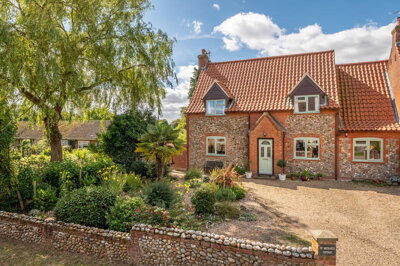
New build activity in Baconsthorpe has brought a welcome addition of properties to the village in recent times. The Old Farmyard development by Devlin Developments represents one of the most significant new housing schemes, offering five barn-style bungalows featuring the traditional brick and flint construction methods that honour local building heritage. Plot 5 at The Old Farmyard provides over 1,900 square feet of living space, with completion targeted for Autumn 2025. Nearby, Chestnut House offers a high-specification new-build property extending to 2,416 square feet with a south-facing garden, demonstrating the variety of modern homes now available alongside period properties. Meadow Grange by B Beales Developers offers a further collection of five renovated brick and flint barns, appealing to buyers seeking character properties with contemporary amenities.
Property prices across North Norfolk show considerable variation by type, with flats and maisonettes averaging £153,000 and terraced properties around £225,000. Semi-detached homes in the district average £268,000, while detached properties command an average of £402,000. These figures demonstrate the premium that buyers place on space and character in this sought-after coastal region, where demand from retirees, second-home buyers, and those seeking rural lifestyles continues to influence the market despite recent modest price corrections.
The village's NR25 postcode, shared with the neighbouring town of Holt, places it within one of North Norfolk's most desirable property markets. Sales data from Zoopla shows individual transactions across various Baconsthorpe postcodes including NR25 6LH, NR25 6LE, NR25 6LX, NR25 6LJ, NR25 6LP, and NR25 6LW, indicating ongoing market activity despite the village's small population. For buyers, this data suggests that while Baconsthorpe properties may be limited in number, the village maintains its appeal within the broader North Norfolk housing landscape.
Life in Baconsthorpe centres on the village's rich historical character and strong sense of community. The village takes its name from the Baconsthorpe Castle site, established in the 15th century by the influential Heydon family who accumulated considerable wealth through the wool industry. Today, the castle ruins and the associated Baconsthorpe Castle site remain protected as both listed structures and a Scheduled Ancient Monument, offering residents a tangible connection to the village's medieval past. The Conservation Area, designated in February 1975, encompasses the length of The Street and preserves the architectural character that makes the village so distinctive, with traditional buildings creating a streetscape that has evolved over centuries yet retains its essential character.
The village population of approximately 205 residents (as recorded in the 2021 Census, down from earlier estimates) supports a close-knit community atmosphere. Historic buildings from the 18th century and earlier line The Street, including the Grade II* listed Manor House with its 18th-century facade concealing an earlier core dating to 1635, and the Church of St Mary's, also Grade II* listed. Five additional Grade II listed structures, including the gate piers for the Manor House and The White House on The Street (an 18th-century rendered dwelling with black glazed pantiles), contribute to the village's architectural heritage. The latter half of the 20th century saw sympathetic residential expansion along the north side of The Street, where semi-detached houses and bungalows added to the housing stock without compromising the village's essential character.
Beyond its architectural heritage, Baconsthorpe offers practical access to the amenities of nearby Holt, approximately three miles distant, where residents find supermarkets, independent shops, healthcare services, and restaurants. The stunning Norfolk coastline, with its beaches and coastal paths, lies within easy driving distance, making Baconsthorpe an ideal base for exploring this Area of Outstanding Natural Beauty. Local farms still in agricultural use punctuate the surrounding countryside, maintaining the rural character that has defined the village for centuries.

Understanding the local building traditions is essential when considering property purchase in Baconsthorpe. The predominant construction materials across North Norfolk, including Baconsthorpe, are flint, red brick, and red clay pantiles. These materials are not merely aesthetic choices but reflect the local geology and centuries of building expertise developed in this region. Flint, gathered from the chalk deposits underlying much of Norfolk, provides durable and weather-resistant walling when combined with the mortar that binds it. Red brick appears as quoins around corners, surrounds for windows and doors, and as decorative string courses, sometimes creating intricate patterns within the flintwork.
The clay pantile roofs that top most traditional properties in Baconsthorpe are distinctive to East Anglia, with their characteristic 'S' profile providing excellent weather resistance while allowing the roof structure to breathe. These tiles are heavier than slate and require robust roof timbers, which surveyors always check carefully when inspecting older properties. The combination of flint walls with brick detailing and pantile roofs creates the quintessential Norfolk vernacular that makes Baconsthorpe properties so visually appealing, but buyers should understand that these materials require specific maintenance approaches that differ from modern construction.
Traditional buildings in Baconsthorpe were constructed using lime-based mortars and renders rather than modern cement products. Lime mortar is softer and more flexible than cement, allowing historic walls to accommodate slight movement without cracking. More importantly, lime mortar is breathable, meaning moisture can escape from the wall structure rather than becoming trapped, which would lead to damp and decay. Properties that have been incorrectly pointed or rendered with cement-based products may show signs of deterioration that a RICS Level 2 survey would identify. For buyers considering renovation of a period property, understanding these traditional building methods is crucial for planning appropriate maintenance and avoiding costly mistakes.
Families considering a move to Baconsthorpe will find a selection of educational options within reasonable driving distance. Primary education is available at schools in nearby villages and towns, with several well-regarded primary schools serving the North Norfolk area. The village's small population means that children typically travel to neighbouring communities for their primary education, with schools in Holt and the surrounding villages providing for younger age groups. Parents should research specific catchment areas and admission arrangements, as these can vary and are subject to change annually based on demand and capacity.
Secondary education options include schools in Holt, Sheringham, and other North Norfolk towns, with several offering sixth form provision for students continuing their education beyond GCSE level. Cromer, a short drive away, provides additional secondary school options, while the market town of Fakenham hosts further choices for families. The Bittern Line railway connecting Sheringham to Norwich also provides options for students continuing to higher education in the county city, with journey times of approximately 40 minutes.
For families seeking private education, several independent schools in Norfolk serve the county, with some offering boarding facilities for students from further afield. School performance data, including examination results and Ofsted inspection outcomes, is publicly available through government websites and provides valuable comparison information when evaluating educational options. Given the importance of school quality and catchment areas in property purchasing decisions, we recommend contacting the local education authority for the most current information on school performance, admission policies, and transport arrangements available to Baconsthorpe residents.
Transport connectivity from Baconsthorpe reflects its position as a rural North Norfolk village, with residents typically relying on private vehicles for most daily travel. The village sits approximately three miles from Holt, the nearest market town, where residents access everyday amenities including supermarkets, independent shops, and healthcare services. The A148 road, connecting King's Lynn to Cromer, passes through the wider North Norfolk area and provides access to the region's main transport routes. Norwich, the county city, lies approximately 25 miles south of Baconsthorpe, offering comprehensive shopping, healthcare, and cultural amenities for those willing to travel.
Public transport options for Baconsthorpe include bus services connecting the village to nearby towns and villages, though frequencies are limited compared to urban areas. The nearest railway stations are located in Sheringham (on the Bittern Line connecting to Norwich) and Cromer, providing connections to Norwich and onward to Cambridge and London Liverpool Street. These rail services make day trips to the capital feasible for work or leisure, though most residents choose to drive for commuting purposes given the rural nature of the village.
For air travel, Norwich International Airport offers domestic flights and limited European destinations, providing connectivity for business and leisure travel without the need to travel to London airports. Cyclists will appreciate the scenic rural lanes that characterize North Norfolk, though the gently rolling terrain in some areas requires moderate fitness. Many Baconsthorpe residents embrace the quiet country roads for cycling, connecting to the broader network of lanes that crisscross the Norfolk countryside. The North Norfolk coast path and various bridleways provide additional recreational routes for walkers and cyclists enjoying the Area of Outstanding Natural Beauty.
Start your property search by exploring listings in Baconsthorpe and the surrounding North Norfolk villages on Homemove. Understanding current property types, typical prices, and what each area offers will help you focus your search on homes that genuinely meet your needs. Given the limited number of properties typically available in small villages like Baconsthorpe, setting up property alerts can ensure you don't miss new listings when they come to market.
Before arranging viewings, contact a mortgage broker to obtain an agreement in principle. This demonstrates to sellers that you are a serious buyer with financing in place, strengthening your position when making offers on properties in competitive village locations. With North Norfolk property prices averaging £289,000, most buyers will require mortgage financing, and having this arranged early streamlines the purchase process considerably.
Visit properties that match your criteria, paying attention to the construction materials (flint, brick, clay pantiles are traditional here), the condition of older buildings, and any features specific to listed buildings or Conservation Area properties. Take photographs and notes to compare properties afterwards. Properties in Baconsthorpe often feature traditional construction methods that differ from modern standards, so understanding what to look for during viewings is valuable.
For any property over 50 years old, which includes many Baconsthorpe homes, a RICS Level 2 survey provides valuable assessment of condition. Given the prevalence of period properties and listed buildings in the village, professional surveys identify issues such as damp, structural concerns, or the need for maintenance that may not be apparent during viewings. With properties often featuring traditional lime mortar and historic construction, a professional survey is particularly valuable for identifying maintenance requirements specific to older Norfolk buildings.
Appoint a conveyancing solicitor with experience in Norfolk property transactions to handle the legal aspects of your purchase. They will conduct searches, handle local authority enquiries, and manage the transfer of ownership through to completion. Solicitors familiar with North Norfolk properties understand the specific issues that can arise, including those related to listed buildings and Conservation Areas.
Once all searches are satisfactory and finances are confirmed, your solicitor will exchange contracts and agree a completion date. On completion day, the remaining funds are transferred and you receive the keys to your new Baconsthorpe home. For properties in the village, completion typically occurs at a mutually convenient time, and we recommend arranging building insurance from the point of exchange.
Purchasing a property in Baconsthorpe requires awareness of several local factors that distinguish this village from larger towns. The presence of a designated Conservation Area means that any significant external alterations to properties may require planning permission from North Norfolk District Council, and permitted development rights may be more limited than in non-designated areas. If you are considering making changes to a period property, we recommend consulting the local planning authority before committing to a purchase, as restrictions can affect renovation plans and future property value.
Given the village's heritage, many properties feature traditional construction techniques using flint, brick, and lime-based mortars and renders. These materials require specific maintenance approaches that differ from modern construction, and buyers should understand the implications for ongoing upkeep costs. Lime mortar, while more expensive than cement-based alternatives, is essential for maintaining the breathability of historic walls and preventing moisture-related issues. Properties within the Conservation Area or those that are listed buildings may have additional obligations regarding maintenance and alterations, potentially affecting insurance arrangements and future saleability.
The traditional Norfolk construction using flint and brick with clay pantile roofs creates distinctive properties but requires awareness of potential issues. Roof tiles may be fragile on older properties, and flint walls, while durable, can be susceptible to impact damage. When making offers on period properties, we strongly recommend commissioning a RICS Level 2 or Level 3 survey, particularly for buildings dating from the 18th century or earlier. These surveys will assess the condition of the fabric, identify any structural concerns, and highlight maintenance requirements that could affect your purchase decision or negotiating position.
Seven listed buildings within the village, including the Grade II* Manor House and Church of St Mary's, demonstrate the heritage importance of Baconsthorpe's architecture. Listed building status brings additional responsibilities, as any alterations that might affect the building's character require consent from the local planning authority. Insurance for listed buildings may also require specialist providers, and standard mortgage conditions may include requirements regarding the property's listed status. Buyers should factor these considerations into their decision-making process when evaluating period properties in the village.
Specific aggregated price data for Baconsthorpe itself is not published separately due to the village's small size and limited transaction volumes. However, the broader North Norfolk district shows an overall average house price of £289,000 (December 2025), with detached properties averaging £402,000, semi-detached homes at £268,000, terraced properties around £225,000, and flats at £153,000. Property prices in Baconsthorpe village itself tend to reflect the premium associated with period and listed properties in desirable North Norfolk villages, with the distinctive brick and flint construction adding to the character and value of traditional homes. Recent sales data from various NR25 postcodes in Baconsthorpe indicates ongoing market activity despite the village's modest population of approximately 205 residents.
Council tax bands in Baconsthorpe are set by North Norfolk District Council, following the national valuation bandings from A through H. The specific band for any property depends on its assessed value as of April 1991, when the current banding system was introduced. To find the council tax band for a specific Baconsthorpe property, you can check the Valuation Office Agency website using the property address or postcode NR25. Newer properties and recent conversions may have different banding arrangements, and bands can be challenged if there is evidence of material change in circumstances affecting the property's value.
North Norfolk offers several well-regarded primary schools in nearby villages and towns, with schools in Holt and surrounding communities serving the Baconsthorpe area. Secondary education is available at schools in Holt, Sheringham, and Cromer, with Cromer Academy and several other local schools offering sixth form provision for students continuing beyond GCSE level. Parents should verify current school performance data through Ofsted reports and contact Norfolk County Council for information about catchment areas and transport arrangements. School admission policies can be complex in rural areas, and properties in villages like Baconsthorpe may have priority arrangements that differ from those in urban locations.
Public transport options from Baconsthorpe are limited, reflecting its status as a small rural village in North Norfolk. Bus services connect Baconsthorpe to Holt and surrounding villages, though frequencies are lower than in urban areas, making private vehicles the primary transport mode for most residents. The nearest railway stations are at Sheringham and Cromer, both offering connections on the Bittern Line to Norwich, with onward services to Cambridge and London Liverpool Street. Most residents rely on private vehicles for daily commuting and activities, with Norwich approximately 25 miles away by road via the A148.
Baconsthorpe offers several factors that may appeal to property investors, including its position within North Norfolk, an area that historically demonstrates stable demand driven by tourism, retirement buyers, and those seeking rural lifestyles. The village's Conservation Area status and limited availability of properties help preserve character, while the presence of listed buildings and the historic Baconsthorpe Castle site maintain local interest. However, the small village size limits rental demand and liquidity compared to larger towns, and investors should carefully consider their objectives, whether rental income or capital appreciation, when evaluating Baconsthorpe properties. Property in the village typically commands premiums for period features and heritage elements that may support long-term value.
Stamp Duty Land Tax (SDLT) rates for standard purchases in England from April 2025 are: 0% on the first £250,000 of purchase price, 5% on the portion from £250,001 to £925,000, 10% on £925,001 to £1.5 million, and 12% on any amount above £1.5 million. First-time buyers paying between £425,001 and £625,000 pay 5% on that portion, with no relief available above £625,000. For a typical Baconsthorpe property in North Norfolk averaging around £289,000, a standard buyer would pay no stamp duty on the first £250,000 and 5% on the remaining £39,000, totalling £1,950.
Given the age and construction of many properties in Baconsthorpe, a RICS survey is particularly valuable for identifying issues that may not be apparent during viewings. Most properties in the village date from the 18th century or earlier, featuring traditional construction using flint, brick, and lime mortar that requires specialist knowledge to assess properly. A RICS Level 2 survey typically costs between £350 and £600 depending on property size and value, rising to £600 or more for older, larger, or more complex properties. For listed buildings or those in the Conservation Area, a more detailed RICS Level 3 Building Survey may be advisable to thoroughly assess the condition and identify any maintenance concerns specific to historic Norfolk properties.
New build options in Baconsthorpe include The Old Farmyard development by Devlin Developments, offering five barn-style bungalows with brick and flint construction totalling over 1,900 square feet per plot. Chestnut House provides a high-specification new-build extending to 2,416 square feet with a south-facing garden. Meadow Grange by B Beales Developers offers five renovated brick and flint barns combining period character with contemporary amenities. These new build properties provide alternatives to the older period cottages and farmhouses that form the backbone of the traditional housing stock in the village.
From 4.5% APR
Compare mortgage deals from leading lenders for your Baconsthorpe purchase
From £499
Expert conveyancing solicitors with North Norfolk property experience
From £350
Professional survey recommended for Baconsthorpe period properties
From £600
Comprehensive building survey for older properties
Understanding the full costs of purchasing property in Baconsthorpe extends beyond the asking price. Stamp Duty Land Tax represents the most significant additional cost for most buyers, and current thresholds mean that a property priced at the North Norfolk average of £289,000 would incur SDLT of £1,950 for a standard buyer purchasing their main residence. First-time buyers benefit from relief on properties up to £625,000, paying 0% on the first £425,000 and 5% on the amount between £425,001 and £625,000, though this relief does not extend to higher-value purchases. Properties above £925,000 attract higher rates, with the portion between £925,001 and £1.5 million taxed at 10%.
Beyond stamp duty, buyers should budget for survey costs, with a RICS Level 2 survey typically ranging from £350 to £600 depending on property size and value. For Baconsthorpe's older properties, particularly those in the Conservation Area or listed buildings, a RICS Level 3 Building Survey at £600 or more may be advisable given the potential for issues in historic construction. Survey costs can be higher for properties over £500,000 (averaging £586) or for pre-1900 properties where the complexity of traditional construction requires additional inspection time.
Conveyancing fees typically start from around £499 for standard transactions, though leasehold properties, complex titles, or properties with planning complications may incur higher costs. Local search fees, bankruptcy checks, land registry fees, and teleport charges add several hundred pounds, while mortgage arrangement fees vary by lender. Additional moving costs include removal expenses, building insurance (essential from the point of exchange of contracts), and potential storage costs if your move-in date requires bridging between properties. For leasehold properties, which may exist in some Baconsthorpe developments, ground rent and service charges should be investigated carefully, as these ongoing costs vary significantly and may include provisions that affect future saleability. We recommend obtaining a comprehensive breakdown of all costs from your solicitor before proceeding, and factor in a contingency of at least 5% of the purchase price for unforeseen expenses that frequently arise during property purchases in rural locations.

Properties for Sale In London

Properties for Sale In Plymouth

Properties for Sale In Liverpool

Properties for Sale In Glasgow

Properties for Sale In Sheffield

Properties for Sale In Edinburgh

Properties for Sale In Coventry

Properties for Sale In Bradford

Properties for Sale In Manchester

Properties for Sale In Birmingham

Properties for Sale In Bristol

Properties for Sale In Oxford

Properties for Sale In Leicester

Properties for Sale In Newcastle

Properties for Sale In Leeds

Properties for Sale In Southampton

Properties for Sale In Cardiff

Properties for Sale In Nottingham

Properties for Sale In Norwich

Properties for Sale In Brighton

Properties for Sale In Derby

Properties for Sale In Portsmouth

Properties for Sale In Northampton

Properties for Sale In Milton Keynes

Properties for Sale In Bournemouth

Properties for Sale In Bolton

Properties for Sale In Swansea

Properties for Sale In Swindon

Properties for Sale In Peterborough

Properties for Sale In Wolverhampton

Enter your details to see if this property is within your budget.
Loans, cards, car finance
Estimated property budget
Borrowing + deposit
You could borrow between
Typical borrowing
Monthly repayment
Est. at 4.5%
Loan-to-value
This is an estimate only. Your actual budget may vary depending on interest rates, credit history, and personal circumstances. For an accurate affordability assessment, speak to one of our free mortgage advisors.
This calculator provides estimates for illustrative purposes only and does not constitute financial advice. Your home may be repossessed if you do not keep up repayments on your mortgage. Estimates based on 4.5% interest rate, repayment mortgage. Actual rates depend on your circumstances.
Homemove is a trading name of HM Haus Group Ltd (Company No. 13873779, registered in England & Wales). Homemove Mortgages Ltd (Company No. 15947693) is an Appointed Representative of TMG Direct Limited, trading as TMG Mortgage Network, which is authorised and regulated by the Financial Conduct Authority (FRN 786245). Homemove Mortgages Ltd is entered on the FCA Register as an Appointed Representative (FRN 1022429). You can check registrations at NewRegister or by calling 0800 111 6768.

We use cookies to show you personalised content and improve your experience of our website. Find out more in our Privacy policy and Cookie policy.