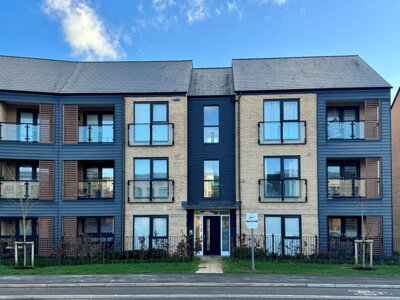
Browse 1 home for sale in Ardington, Vale of White Horse from local estate agents.
One bed apartments provide a separate bedroom alongside distinct living space, bathroom, and kitchen areas. Properties in Ardington are available in various building types including mansion blocks, contemporary developments, and house conversions.
£0k
0
0
0
Source: home.co.uk
Showing 0 results for 1 Bedroom Flats for sale in Ardington, Vale of White Horse.
The Ardington property market reflects the village's status as a premium rural location within easy reach of Oxfordshire's economic hubs. Property prices in the OX12 8 postcode area have demonstrated strong long-term growth, rising by 7% over the past year and an impressive 17.6% over the past five years, with a total increase of 37% over the past decade. This sustained appreciation underscores the enduring appeal of village living in this part of the South East, where demand consistently outstrips supply given the limited number of properties that become available in any given year. Historical data shows significant price volatility at the top end of the market, with the 2019 peak reaching approximately £1,525,000 before correcting, yet the underlying demand for quality village homes remains robust.
Detached properties command the highest prices in Ardington, with the average currently around £825,000 to £875,000, reflecting the desirability of generous garden space and period features that characterise the village's larger homes. Semi-detached properties typically sell for around £550,000, while terraced cottages offer a more accessible entry point at approximately £450,000. Notably, there are no active new-build developments within Ardington itself, as the village's Conservation Area status and limited development boundaries protect its established character. Any future development proposals, such as the Lockinge Estate's consideration of a small housing scheme at the northern edge of the village, would need to meet stringent planning requirements while providing a mix of housing types including affordable homes for local families and key workers.
Transaction volumes in Ardington remain naturally limited by the village's small size, with typically only a handful of properties changing hands each year. This scarcity creates a competitive environment where well-presented homes can attract multiple interested parties, particularly those seeking the village's unique combination of historic character and accessibility. Prospective buyers should work with local estate agents who understand the village's tight-knit market dynamics, as many properties sell through word-of-mouth or before reaching mainstream property portals. Setting up alerts with agents active in the OX12 8 postcode and being prepared to move quickly when suitable properties emerge will serve buyers well in this distinctive market.

Ardington offers a lifestyle that many aspire to but few manage to achieve, combining the charm of a traditional English village with modern conveniences within easy reach. The village centre features a traditional public house, The Boar's Head, which serves as the social heart of the community, alongside a well-stocked village store and post office, a popular tearoom, and the historic Loyd-Lindsay Rooms providing a venue for events and gatherings. The Ardington Sports Club provides facilities for various activities, ensuring that residents have opportunities for recreation without needing to travel to larger towns, while the surrounding countryside offers extensive walking and cycling routes through the Vale of White Horse.
The Ardington and Lockinge estate plays a significant role in village life, encompassing approximately 6,000 to 7,500 acres of farmland and over 200 domestic and commercial properties. This historic landownership has shaped the village's development over centuries, with the estate remaining a major employer and steward of the local landscape. The parish stretches from loam-rich farmland in the north to chalk downlands in the south, creating diverse scenery and habitats that attract wildlife enthusiasts and outdoor lovers. Community events throughout the year, from village fetes to seasonal celebrations at the parish church, foster the strong sense of belonging that defines life in Ardington and makes it particularly attractive to families and those seeking a close-knit neighbourhood.
Day-to-day life in Ardington requires some adjustment for those accustomed to urban amenities, as the village naturally offers fewer services than larger settlements. Broadband speeds can vary across the village, with some properties enjoying fibre connections while others rely on slower ADSL services, a common reality in rural Oxfordshire. Mobile phone signal strength similarly varies by network and location, making it worthwhile for prospective residents to test coverage at specific properties before committing. Most residents accept these limitations as a fair trade for the village's considerable charms, stocking up on groceries in nearby Wantage or Didcot and relying on car travel for daily requirements, with the understanding that village life operates at a different pace than urban existence.

The architectural character of Ardington reflects centuries of continuous habitation and careful stewardship, making it one of the most architecturally significant villages in the Vale of White Horse. the village stands the Church of Holy Trinity, a Grade I listed building dating to around 1200, featuring Early English architectural elements and a striking Victorian tower that anchors the village skyline. This exceptional building draws visitors from across the region and serves as a tangible reminder of Ardington's long history as a centre of religious and community life.
Ardington House represents another architectural landmark, this Grade II* listed country house built in 1720 and notable for its unusually fine brickwork that distinguishes it from contemporary country houses in the region. The house and its associated cottages and farm buildings demonstrate the high quality of craftsmanship employed by the estate's 18th-century builders, setting a standard that influenced subsequent development throughout the village. Numerous other properties carry Grade II listing, creating an exceptionally rich of historic architecture that has been carefully preserved under the village's Conservation Area designation.
The Conservation Area status that covers Ardington imposes meaningful controls on development and alterations, ensuring that changes to buildings and spaces respect the village's established character. Properties within the Conservation Area require planning permission for certain works that might affect the street scene, including extensions, significant alterations to windows and doors, and even external paintwork in some cases. These restrictions, while occasionally frustrating for homeowners wishing to modernise, serve to protect the substantial investment that property owners have made in their homes and maintain the village's distinctive appearance for future generations to enjoy.
Families considering a move to Ardington will find a selection of educational options available in the surrounding area, with primary schools in nearby villages serving the local community. The village's position within the Vale of White Horse district means that children typically attend primary school in one of the surrounding villages or in the market town of Wantage, approximately 5 miles away, which offers several well-regarded primary schools catering to different age groups and educational philosophies. Parents should research individual school Ofsted ratings and admission catchment areas, as these can vary and change over time, making it essential to verify current arrangements before committing to a property purchase.
Secondary education options include schools in Wantage and surrounding towns, with some families also considering independent schools in Oxfordshire and Berkshire. For older students, sixth form and further education facilities are available in Didcot, Abingdon, and Oxford, providing a full range of academic and vocational pathways. The presence of quality educational options within reasonable travelling distance adds to Ardington's appeal as a location for families, though prospective buyers should always confirm current school performance data and admission policies directly with Oxfordshire County Council or individual schools, as these details can evolve and may influence which year groups are best served by the local provision.
Transport arrangements for school-age children require careful consideration, as the limited public bus services serving Ardington mean that most families rely on private transport to reach schools in surrounding villages and towns. Many families find that school runs become a significant part of their daily routine, particularly during the primary school years when catchment areas may require travel to schools several miles from the village. Some families choose to locate in Ardington specifically for its community character and accept this trade-off, while others prioritise proximity to schools and factor this into their property search.
Despite its rural character, Ardington enjoys excellent connectivity to major transport links and employment centres, making it a practical choice for commuters who need to access wider Oxfordshire and beyond. The village is situated approximately 5 miles from Didcot Parkway railway station, which offers regular services to Oxford, Reading, and London Paddington, with journey times to the capital typically around 45-60 minutes depending on the service. This rail access transforms Ardington from a purely rural retreat into a viable base for professionals working in London, Reading, or the Thames Valley corridor, significantly expanding the potential buyer pool for local properties.
Road connections are equally strong, with the A417 passing nearby providing access to the A419 and M4 motorway corridor to the south, while the A4185 connects to the Oxford ring road and M40 motorway to the north. This dual motorway access means that major employment centres in Swindon, Reading, and Oxford are all within comfortable driving distance, typically 30-45 minutes. For those working locally, Wantage is just a few miles away and offers a range of employment opportunities, shops, and services. Bus services connect Ardington to surrounding villages and towns, though frequencies are limited on rural routes, making car ownership practically essential for most residents who need flexibility in their daily movements.
Cycling represents a viable option for shorter journeys, with the surrounding countryside offering scenic routes to nearby towns, though the hilly terrain of the Vale of White Horse requires reasonable fitness. Electric bikes have become increasingly popular among residents tackling the area's inclines, making commuting to nearby employment centres more feasible for those seeking to reduce car dependence. Secure cycle storage at home and awareness of country lane traffic levels should factor into planning for anyone considering cycling as a regular commuting option.
Start by exploring current listings in Ardington to understand the range of properties available, from traditional stone cottages to Victorian estate homes, and familiarise yourself with prices ranging from around £450,000 for terraced properties to over £800,000 for detached homes. Consider engaging with local estate agents who know the village intimately, as many properties sell before reaching mainstream portals due to strong local networks. Set up property alerts and build relationships with agents active in the OX12 8 postcode to ensure you hear about new listings quickly.
Spend time in Ardington at different times of day and week to get a genuine feel for the community, local amenities, and noise levels from farming operations. Walk the village lanes, visit The Boar's Head pub, and explore the countryside footpaths to assess whether the rural lifestyle matches your expectations. Speak with existing residents if possible to understand the practical realities of village living, including broadband speeds and mobile signal coverage that can vary significantly between properties.
Before making offers, obtain a mortgage agreement in principle from a lender to confirm your borrowing capacity and strengthen your position when bidding against other buyers. Properties in Ardington attract strong interest given the limited supply, so having your finances arranged demonstrates serious intent to sellers and their agents, potentially giving you an advantage in competitive situations. Given the higher property values in the area, ensure your mortgage broker understands the rural property market and can access appropriate lending products for village homes.
View multiple properties in Ardington to compare the condition, character, and value of different options. Given the village's significant proportion of older, historic properties, we strongly recommend booking a RICS Level 2 Survey for standard properties or a Level 3 Building Survey for listed buildings, as common issues include damp, timber defects, and potential structural movement on clay soils. Budget £400-£1,000 for survey costs depending on property value and type, with comprehensive surveys from certified RICS inspectors providing essential protection for buyers investing in historic properties.
Once your offer is accepted, instruct a conveyancing solicitor to handle the legal transfer of ownership, including local searches, title verification, and coordination with your mortgage lender. Your solicitor will liaise with the seller's representatives, deal with any listed building or conservation area considerations, and guide you through exchange of contracts through to completion, typically taking 8-12 weeks for straightforward transactions. For listed property purchases, additional due diligence regarding scheduled maintenance, existing consents, and any planning conditions affecting the property will be necessary.
Buying property in Ardington requires careful consideration of the village's Conservation Area status and the prevalence of listed buildings, which impose significant restrictions on what buyers can do with their properties. Properties within the Conservation Area require planning permission for certain alterations, extensions, and even external paintwork that might affect the street scene, while listed buildings require Listed Building Consent for any works that would alter their character or fabric. Before purchasing, potential buyers should satisfy themselves that they understand these constraints and are comfortable with the limitations they place on future modifications, whether they wish to extend a kitchen, replace windows, or alter the roofline.
The local geology presents practical considerations for property buyers, as Ardington's underlying chalk bedrock is generally stable, but superficial clay deposits can create shrink-swell risks that may affect foundations, particularly for properties with large nearby trees or inadequate drainage. Properties adjacent to the Letcombe Brook face some risk of river flooding, and surface water flooding can occur in low-lying areas during periods of heavy rainfall. Building materials throughout the village predominantly feature local stone and traditional brick, with solid wall construction common in older properties, meaning buyers should expect traditional building techniques and factor potential insulation improvements into their renovation budgets, as older homes may have poor thermal performance compared to modern standards.
Structural concerns in Ardington's older properties merit careful investigation, with surveys frequently identifying issues related to damp penetration in solid wall construction, deterioration of traditional lime mortar pointing, and timber defects including woodworm and wet or dry rot affecting floor joists and roof structures. Roof coverings on historic properties often feature traditional slate or clay tile, which may require renewal or repair, while leadwork on valleys and junctions can deteriorate over decades. Electrical wiring and plumbing systems in older properties frequently require updating to meet current standards, representing a significant additional cost that buyers should budget for when assessing renovation requirements. Properties with large nearby trees deserve particular scrutiny, as root systems can compromise foundations and drainage over time, especially in areas with clay deposits prone to shrink-swell movement.
Insurance considerations for Ardington properties differ from standard urban homes, with listed buildings requiring specialist insurance coverage that accounts for the higher costs of traditional building repairs and materials. Standard buildings insurance may not adequately cover the reinstatement costs for period properties, making it essential to obtain quotes from insurers experienced in historic homes. Some mortgage lenders impose additional conditions on older properties, particularly those with solid wall construction or known structural issues, so understanding any lender requirements early in the process helps avoid delays during conveyancing.
The average house price in Ardington is currently around £675,000, though this varies significantly by property type. Detached properties average approximately £825,000 to £875,000, semi-detached homes around £550,000, and terraced cottages from £450,000. The OX12 8 postcode area has seen strong price growth of 7% over the past year and 37% over the past decade, reflecting sustained demand for village properties in this desirable part of Oxfordshire. Properties in the OX12 8PW postcode area have achieved even higher values, with detached properties averaging over £875,000 according to recent transaction data.
Properties in Ardington fall under the Vale of White Horse District Council and Oxfordshire County Council jurisdiction for council tax purposes. Specific bandings depend on the property's assessed value, with older stone and brick properties in the village typically falling across bands D through H given their character and size. Prospective buyers should verify the exact council tax band for any specific property through the Valuation Office Agency website or their solicitor during conveyancing, as bands can influence ongoing running costs and should be factored into the overall budget for property ownership.
Ardington itself does not have a school within the village, so children typically attend primary schools in surrounding villages or in Wantage, approximately 5 miles away. Parents should research individual school Ofsted ratings and admission catchment areas through Oxfordshire County Council's school admissions portal, as entry criteria can be competitive and catchment boundaries may exclude some village properties. Secondary schools in the wider area include options in Wantage, Didcot, and Abingdon, with further and sixth form education available in these larger towns. Transport arrangements for school children require private vehicle use in most cases, as rural bus services do not adequately cover school run requirements.
Ardington has limited public transport options, with rural bus services connecting to Wantage and surrounding villages but at frequencies that make car ownership practically essential for most residents. The nearest railway station is Didcot Parkway, approximately 5 miles away, offering regular services to Oxford, Reading, and London Paddington with journey times of around 45-60 minutes to the capital. The village's position near the A417 also provides good road connections to the M4 and M40 motorways, making Didcot Parkway accessible by car for those combining rail travel with road transport.
The Ardington property market has demonstrated consistent long-term growth, with prices rising 37% over the past decade and 17.6% over the past five years, indicating strong fundamentals for investment. The village's Conservation Area status limits new development, helping to protect property values by maintaining the character and scarcity of homes available. However, rental demand may be limited given the small village population, and any investment should account for the costs of maintaining historic properties, including potential Listed Building Consent requirements for alterations. Capital growth prospects remain positive given the enduring appeal of village living in South East England and the limited supply of available properties.
Stamp Duty Land Tax rates for standard buyers start at 0% on the first £250,000 of purchase price, then 5% on the portion from £250,001 to £925,000, 10% up to £1.5 million, and 12% above that. First-time buyers benefit from relief on the first £425,000, paying 5% between £425,001 and £625,000, with no relief above that threshold. For example, a typical £675,000 property in Ardington would incur approximately £21,250 in SDLT for a standard buyer or £12,500 for a first-time buyer claiming relief, with higher-value detached properties potentially attracting additional SDLT charges.
Purchasing a property in Ardington involves several costs beyond the purchase price itself, and understanding these from the outset helps buyers budget accurately and avoid surprises during the transaction. Stamp Duty Land Tax represents the largest additional cost, calculated on a tiered system where buyers pay nothing on the first £250,000, then 5% on amounts between £250,001 and £925,000. For the average Ardington property priced at £675,000, this amounts to approximately £21,250 for standard buyers, while first-time buyers benefiting from relief on the first £425,000 would pay around £12,500, making significant savings that can be redirected towards moving costs or property improvements.
Survey costs are particularly important in Ardington given the age and character of the housing stock, with RICS Level 2 Surveys typically ranging from £400 to £1,000 depending on property value and size, while more comprehensive Level 3 Building Surveys for historic or listed properties may cost £600 to £1,500 or more. Solicitors' fees for conveyancing generally start from around £499 for straightforward transactions but can increase depending on complexity, particularly for properties with unusual titles, rights of way, or listed building status requiring additional legal due diligence. Other costs to budget include land registry fees, search fees, mortgage arrangement fees, and removal costs, which together can add several thousand pounds to the total expenditure.
When budgeting for Ardington property purchases, buyers should also consider the potential renovation and maintenance costs associated with older historic properties. Solid wall construction common throughout the village provides poor thermal insulation compared to modern cavity wall properties, and bringing older homes up to contemporary energy efficiency standards can require significant investment in insulation, double glazing for windows in keeping with listed building character, and heating system upgrades. Specialist contractors experienced in historic building conservation may command premium rates compared to standard builders, and materials matching original construction can add further to costs. We recommend obtaining quotes from multiple providers and ensuring your mortgage in principle is in place before viewing properties, as this positions you favourably when making offers on desirable village homes that attract competitive interest.
From 3.5%
Finding the right mortgage for your Ardington purchase
From £499
Expert legal services for your property purchase
From £400
Comprehensive condition report for your new home
From £600
Detailed building survey for older or complex properties
Properties for Sale In London

Properties for Sale In Plymouth

Properties for Sale In Liverpool

Properties for Sale In Glasgow

Properties for Sale In Sheffield

Properties for Sale In Edinburgh

Properties for Sale In Coventry

Properties for Sale In Bradford

Properties for Sale In Manchester

Properties for Sale In Birmingham

Properties for Sale In Bristol

Properties for Sale In Oxford

Properties for Sale In Leicester

Properties for Sale In Newcastle

Properties for Sale In Leeds

Properties for Sale In Southampton

Properties for Sale In Cardiff

Properties for Sale In Nottingham

Properties for Sale In Norwich

Properties for Sale In Brighton

Properties for Sale In Derby

Properties for Sale In Portsmouth

Properties for Sale In Northampton

Properties for Sale In Milton Keynes

Properties for Sale In Bournemouth

Properties for Sale In Bolton

Properties for Sale In Swansea

Properties for Sale In Swindon

Properties for Sale In Peterborough

Properties for Sale In Wolverhampton

Enter your details to see if this property is within your budget.
Loans, cards, car finance
Estimated property budget
Borrowing + deposit
You could borrow between
Typical borrowing
Monthly repayment
Est. at 4.5%
Loan-to-value
This is an estimate only. Your actual budget may vary depending on interest rates, credit history, and personal circumstances. For an accurate affordability assessment, speak to one of our free mortgage advisors.
This calculator provides estimates for illustrative purposes only and does not constitute financial advice. Your home may be repossessed if you do not keep up repayments on your mortgage. Estimates based on 4.5% interest rate, repayment mortgage. Actual rates depend on your circumstances.
Homemove is a trading name of HM Haus Group Ltd (Company No. 13873779, registered in England & Wales). Homemove Mortgages Ltd (Company No. 15947693) is an Appointed Representative of TMG Direct Limited, trading as TMG Mortgage Network, which is authorised and regulated by the Financial Conduct Authority (FRN 786245). Homemove Mortgages Ltd is entered on the FCA Register as an Appointed Representative (FRN 1022429). You can check registrations at NewRegister or by calling 0800 111 6768.

We use cookies to show you personalised content and improve your experience of our website. Find out more in our Privacy policy and Cookie policy.