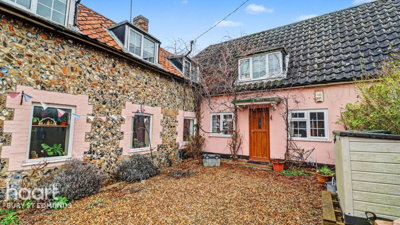
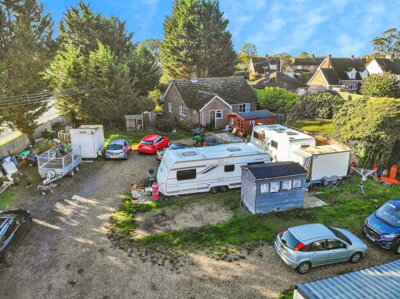
Browse 2 homes for sale in Ampton, West Suffolk from local estate agents.
Three bedroom properties represent a significant portion of the Ampton housing market, offering space for families with multiple reception rooms and gardens in many cases. Browse detached, semi-detached, and terraced options ranging from period character homes to contemporary developments.
£0k
0
0
0
Source: home.co.uk
Showing 0 results for 3 Bedroom Houses for sale in Ampton, West Suffolk.
The Ampton property market operates within the broader context of West Suffolk, where recent data shows house prices have experienced modest growth. Across Suffolk county, average property prices increased by approximately 1% (£1,700) over the twelve months leading to December 2025, though some sources indicate growth of 2.6% year-on-year. This relatively stable market provides an encouraging environment for buyers seeking long-term value in a rural setting. New build properties in the county showed stronger growth, increasing by 6% (£23,500) over the same period, suggesting continued demand for modern accommodation in the region.
Property types in Ampton typically include traditional detached cottages, converted agricultural buildings, and substantial period homes befitting a historic Suffolk village. Within Suffolk county overall, detached properties dominate sales at 35.8% of transactions, followed by semi-detached homes at 28.9%, terraced properties at 27.5%, and flats comprising just 7.8%. This distribution reflects the rural nature of the area, where spacious accommodation and land often appeal to buyers seeking a lifestyle change or family home with garden space. The village's proximity to Bury St Edmunds enhances its appeal, with commuting professionals drawn to the village's peaceful setting while maintaining access to comprehensive town amenities.
The village sits within the IP31 postcode area, which encompasses several surrounding villages including Timworth, Ingham, and Culford. This broader area provides context for property availability and pricing in the Ampton market. Sales data for the wider Suffolk county indicates a total of 9,700 property transactions in the twelve months to December 2025, though this figure represents a decline of 14.1% compared to the previous year. The reduction in transaction volume means buyers searching for homes for sale in Ampton may encounter limited stock, making it worthwhile to act quickly when suitable properties are listed. Working with local estate agents who understand the village market can provide valuable early access to properties before they appear on major portals.
Flats in Suffolk county average around £145,000, though village locations like Ampton typically see few apartment-style properties. Instead, the village housing stock consists predominantly of individual houses ranging from modest cottages to substantial period residences. This scarcity of smaller properties means that starter homes and smaller family houses in Ampton command premium prices relative to their size, as demand consistently outstrips supply in this sought-after village location.

Ampton embodies the quintessential English village experience, sitting within the rolling farmland of Suffolk's undulating countryside. The village forms part of the larger civil parish in West Suffolk, a region characterised by picturesque landscapes, ancient hedgerows, and the gentle rhythms of rural life. Traditional Suffolk architecture defines the local built environment, with timber-framed buildings, Suffolk pink wash finishes, and local brickwork contributing to the village's distinctive appearance. Many properties in Ampton date back several generations, lending the settlement an established, settled atmosphere that new residents quickly come to appreciate.
The village's location provides an ideal balance between countryside tranquility and practical accessibility. As a small rural community, Ampton relies on nearby towns for many everyday services, with Bury St Edmunds serving as the principal hub for shopping, healthcare, and cultural activities. The town offers comprehensive facilities including the arc shopping centre, Bury St Edmunds Hospital, and a thriving market twice weekly. Residents of Ampton typically travel the short distance to Bury St Edmunds for supermarket shopping, GP appointments, and leisure facilities including the town's cinema, restaurants, and historic cathedral.
Local communities in this part of Suffolk often organise seasonal events and activities, fostering the strong neighbourly connections that make village living so appealing to families and retirees alike. The village's historic church provides a focal point for community gatherings, while public footpaths crisscross the surrounding farmland offering miles of scenic walking routes. The surrounding countryside features the rolling agricultural land typical of West Suffolk, with crops, livestock, and traditional farmsteads creating a landscape that changes beautifully with the seasons. Cyclists enjoy the quiet country lanes, though riders should be prepared for some narrow roads and occasional farm traffic.
The underlying geology of this part of Suffolk includes chalk and clay deposits, which are typical of the East Anglian region. Clay soils can present some shrink-swell risk for properties with foundations affected by moisture changes, particularly during prolonged dry periods or where mature trees and hedgerows are present near buildings. These geological considerations are generally manageable with appropriate property maintenance and are worth noting during surveys of older village properties. Most homes for sale in Ampton will have stood for decades with stable foundations, but buyers should still investigate condition as part of their purchase due diligence.

Families considering a move to Ampton will find educational options available within reasonable travelling distance. The village falls within the West Suffolk local authority area, which manages a network of primary and secondary schools serving rural communities across the region. Primary education in the surrounding villages typically includes village primary schools that offer a community-focused education with smaller class sizes, an advantage often cited by parents of younger children. For secondary education, pupils generally travel to schools in nearby towns, with Bury St Edmunds offering several options including both comprehensive and grammar school pathways.
Bury St Edmunds hosts several well-regarded secondary schools including St Benedict's Catholic School, King Edward VI School (a selective grammar school), and Bury St Edmunds County Upper School. Parents should research current Ofsted inspection outcomes and consider catchment area boundaries when assessing school options, as admission policies can significantly affect which schools children can access. The travel distance from Ampton to Bury St Edmunds secondary schools is manageable by car, with school transport options available through the local authority for eligible families.
West Suffolk maintains a tradition of strong educational provision, with schools regularly appearing in Ofsted inspection outcomes that reflect good or outstanding provision. Parents should research specific school performance data and consider catchment areas when budgeting for property in Ampton, as distances to schools can vary significantly depending on the exact property location. Primary schools in nearby villages such as Ingham and Culford provide local options for younger children, reducing the need for daily long-distance travel for families with primary-age children.
For families with older children, Bury St Edmunds provides access to sixth form colleges and further education establishments including Suffolk One and King Edward VI Sixth Form, ensuring continuity of education through to adulthood. The rural setting also offers valuable opportunities for outdoor learning and connection with agriculture, aspects that many parents find beneficial for their children's development. Village life in Ampton provides children with safe spaces to play, strong community connections, and an appreciation for the natural environment that urban settings often cannot match.
Transport connectivity from Ampton centres on road networks linking the village to surrounding towns and villages. The A14 trunk road runs through the region, providing direct access to Cambridge to the west and Ipswich to the southeast, while the A143 connects Bury St Edmunds with surrounding communities including the villages of the IP31 area. These routes enable residents to access comprehensive services in larger towns while enjoying the benefits of village life. Bus services operate between villages in the IP31 area, though frequency may be limited compared to urban routes, making car ownership practical for most households.
Rail travel options are available from Bury St Edmunds railway station, which sits on the East Anglian Main Line with services to Cambridge in approximately 45 minutes and London Liverpool Street in around 90 minutes. The station also provides connections to Norwich and Peterborough, opening up wider travel opportunities for residents who work in different directions. For those employed in Cambridge's technology and research sectors, the drive from Ampton to Cambridge takes approximately 40 minutes via the A14, making day commuting feasible for professionals who split their working week.
For those working locally, Bury St Edmunds town centre provides employment across retail, healthcare, education, and professional services sectors. The town has developed significantly as an employment centre, with major employers including West Suffolk Hospital, Greene King headquarters, and various technology and professional services firms. Many residents of Ampton work in Bury St Edmunds, benefiting from the short commute while enjoying village life outside working hours. The town also offers part-time and flexible working opportunities that complement the lifestyle of rural residents.
Cycling infrastructure varies throughout the area, with country lanes offering scenic but sometimes narrow routes for experienced cyclists. The flat terrain of Suffolk is generally favourable for cycling, though riders should exercise caution on country roads with limited verges. Most residents rely on private vehicles as their primary transport method, with the village's position meaning that even short journeys typically require a car. When viewing homes for sale in Ampton, prospective buyers should factor in the practical requirement for at least one vehicle per household, along with associated running costs including fuel, insurance, and maintenance.
Explore current listings in Ampton and surrounding West Suffolk villages. Understanding local prices, property types, and market trends helps you identify the right property and negotiate effectively. Review sold prices for comparable properties on The Street and nearby roads to gauge realistic values. The village's average price of £635,245 reflects premium village positioning, while the broader Suffolk market shows detached properties averaging £439,000 and semi-detached homes around £269,000. Register with multiple estate agents covering the IP31 postcode area to receive early notifications of new listings.
Before viewing properties, secure a mortgage agreement in principle from a lender. This demonstrates your financial credibility to estate agents and sellers, strengthening your position when making an offer. With Suffolk average prices around £322,000-£333,000 and village properties commanding higher prices, budget accordingly for deposit and monthly repayments. Speak to a mortgage broker familiar with Suffolk properties if you need guidance on suitable products for village homes, as some lenders have specific criteria for rural properties.
Visit properties in Ampton to assess their condition, location, and suitability. Pay attention to the age of properties, as many village homes will be period constructions requiring varying levels of maintenance. Consider factors like garden orientation, parking availability, and proximity to local amenities in Bury St Edmunds. Many properties in Ampton date back centuries and feature traditional construction methods including timber framing and Suffolk pink wash finishes.
For properties over 50 years old, which constitutes much of Ampton's housing stock, a RICS Level 2 Survey (Homebuyer Report) provides essential insight into condition, defects, and maintenance requirements. This professional assessment identifies issues that may not be visible during a standard viewing, including potential problems with period construction methods typical of rural Suffolk. A thorough survey is particularly important for listed buildings or properties in conservation areas, where specialist understanding of traditional building techniques may be required.
Appoint a conveyancing solicitor to handle the legal aspects of your purchase. They will conduct searches with West Suffolk local authority, review contracts, and manage the transfer of ownership. Average conveyancing costs for Suffolk properties typically start from £499. Your solicitor should conduct local authority searches with West Suffolk Council, drainage and water searches, and environmental searches to identify any issues that might affect the property.
Once all searches are satisfactory and financing is confirmed, you will exchange contracts and pay your deposit. Completion typically follows within weeks, when you receive the keys to your new Ampton home and become an official member of the village community. Factor in Stamp Duty Land Tax costs, which for a typical £635,245 Ampton property would amount to approximately £19,262 at standard rates or around £10,512 for first-time buyers claiming relief.
Buying property in a historic Suffolk village like Ampton requires attention to specific considerations beyond standard property searches. Many village homes will be period constructions featuring traditional building methods that differ significantly from modern properties. Timber-framed structures, common throughout Suffolk, may require specialist understanding when assessing condition and maintenance needs. Original features such as thatched roofs, exposed beams, and inglenook fireplaces add character but also carry ongoing maintenance responsibilities that buyers should factor into their budgeting.
Properties in rural Suffolk villages may fall within conservation areas or contain listed buildings, imposing restrictions on alterations and improvements. If you are considering a property with listed building status, ensure you understand the implications for future works and factor in any additional costs for specialist tradespeople and permissions. Listed buildings in England are graded I, II*, and II, with varying levels of restriction on alterations. Many historic properties in Ampton may have listed status given the village's heritage character, making thorough research essential before purchase.
Energy efficiency presents another consideration, as older properties may have higher heating costs and limited insulation. An EPC assessment provides valuable data on a property's energy performance, helping you estimate future running costs. Properties in Ampton with solid walls rather than cavity wall insulation, single-glazed windows, or older heating systems will have higher ongoing costs that should be reflected in your budgeting. Some buyers negotiate improvements as part of their purchase agreement or factor the cost of upgrades into their offer price.
Flood risk in Ampton appears limited given the village's inland position, though buyers should review general flood risk information for complete . The village sits away from major river systems, though surface water flooding can occur during exceptional rainfall events. Your conveyancing solicitor should include a flood risk search as part of the standard local authority searches. Given the underlying clay geology present in parts of Suffolk, subsidence risk should also be considered, particularly for properties with large trees nearby or those that have experienced previous foundation movement.
Building materials used in traditional Suffolk properties include local brick, flint, and timber framing with rendered or pebble-dash finishes. These materials are generally durable when maintained but require understanding of appropriate repair methods. DIY improvements using modern materials can sometimes cause problems with historic buildings, so buyers should budget for specialist tradespeople when planning renovations or maintenance. Understanding the construction and materials helps you appreciate the property's character while planning for its long-term upkeep.
The average sold house price in The Street, Ampton (IP31) stands at approximately £635,245, which is notably higher than the Suffolk county average of £322,000-£333,000. This premium reflects the village's desirable rural character, limited property supply, and proximity to Bury St Edmunds. Across Suffolk county, detached properties average £439,000, semi-detached homes around £269,000, terraced properties approximately £226,000, and flats £145,000. The village market experiences modest price growth, with Suffolk county showing increases of around 1-2.6% annually, though individual property values depend on specific location, condition, and amenities.
Properties in Ampton fall under West Suffolk Council, which sets council tax bands according to property valuation bands A through H. Most period homes in the village would typically fall within bands C through F, depending on their assessed value and size. Exact band information is available through the Valuation Office Agency website or by contacting West Suffolk Council directly. As a guide, buyers should budget council tax as part of their ongoing household costs alongside mortgage payments, insurance, and utilities.
The Ampton area is served by West Suffolk schools, with primary pupils typically attending local village schools in surrounding communities such as Ingham or Culford. Secondary education options include schools in Bury St Edmunds, which hosts several well-regarded institutions including King Edward VI selective grammar school and St Benedict's Catholic School. Parents should research current Ofsted ratings, consider catchment area boundaries, and plan transport arrangements when assessing school options. Bury St Edmunds also provides sixth form and further education college facilities for older students including Suffolk One.
Public transport options from Ampton are limited, reflecting its rural village character. Bus services operate between villages in the IP31 area but with frequencies significantly lower than urban routes. Bury St Edmunds railway station, accessible by a short drive from the village, provides main line rail services to London Liverpool Street (approximately 90 minutes), Cambridge (around 45 minutes), and Norwich. Most residents of Ampton rely on private vehicles as their primary transport method, and car ownership is practically essential for daily commuting and family activities.
Ampton offers several factors that may appeal to property investors, including the village's prestigious rural positioning and proximity to Bury St Edmunds. The Suffolk property market has shown steady performance with modest annual price increases of 1-2.6% in recent years. Rental demand may exist from professionals seeking countryside living within commuting distance of Bury St Edmunds, Cambridge, or other major employment centres. However, investors should consider the limited liquidity of small village markets, any planning restrictions affecting listed or conservation area properties, and the importance of maintaining period features to preserve property values.
Stamp Duty Land Tax (SDLT) rates from April 2025 apply as follows: no SDLT on purchases up to £250,000, 5% on the portion between £250,001 and £925,000, 10% between £925,001 and £1.5 million, and 12% above £1.5 million. First-time buyers receive enhanced relief with 0% SDLT up to £425,000 and 5% between £425,001 and £625,000. For a typical Ampton property priced around £635,245, a standard buyer would pay approximately £19,262 in SDLT, while a first-time buyer would pay approximately £10,512 after claiming relief.
As a historic village with origins dating back centuries, Ampton contains several listed buildings including properties along The Street and buildings associated with the village's heritage. Listed building status imposes restrictions on alterations, extensions, and even routine maintenance, requiring consent from West Suffolk Council for significant works. Buyers considering a listed property should understand these obligations and budget for potential additional costs for specialist tradespeople who understand historic building conservation. Your solicitor should confirm the listed status of any property during conveyancing searches.
The drive from Ampton to Cambridge takes approximately 40 minutes via the A14 trunk road, which passes nearby and provides a direct route to the city. Bury St Edmunds railway station offers train services to Cambridge in around 45 minutes, making rail commuting feasible for those working in the city. Cambridge's technology and research sectors employ many professionals who choose to live in Suffolk villages like Ampton, benefiting from the commute while enjoying rural village life. Regular commuters may find season tickets or park-and-ride options useful for reducing daily travel costs.
Understanding the full costs of purchasing property in Ampton extends beyond the asking price to encompass SDLT, legal fees, and surveying costs. For a property valued at the village average of approximately £635,245, standard SDLT rates from April 2025 would apply at 5% on the portion exceeding £250,000, resulting in a tax liability of £19,262 for a buyer without first-time buyer status. First-time buyers benefit from relief extending the 0% threshold to £425,000, reducing their SDLT to approximately £10,512. These figures underscore the importance of factoring tax obligations into your overall budget when planning your Ampton purchase.
Additional buying costs include solicitor conveyancing fees, typically starting from £499 for standard transactions, along with local authority searches conducted with West Suffolk Council. Survey costs should be budgeted at £350 or more for a RICS Level 2 Homebuyer Report, which proves particularly valuable given the age of many Ampton properties. A comprehensive survey can identify defects in period construction, potential structural issues, and maintenance requirements that might not be apparent during viewings. For listed buildings, a more specialist survey may be advisable to assess heritage features and conservation requirements.
Mortgage arrangement fees vary by lender but commonly range from £0 to £1,500, with some lenders offering fee-free mortgages that compensate with slightly higher interest rates. Land registry fees for transferring ownership and search fees for drainage, environmental, and planning matters add further modest costs of around £200-£300 combined. Building insurance must be arranged from the point of exchange, and buyers should also budget for moving costs and any immediate repairs or improvements following completion. Setting aside a contingency fund equivalent to around 10% of the property value for unexpected costs after purchase is prudent, particularly for older village properties.
Properties for Sale In London

Properties for Sale In Plymouth

Properties for Sale In Liverpool

Properties for Sale In Glasgow

Properties for Sale In Sheffield

Properties for Sale In Edinburgh

Properties for Sale In Coventry

Properties for Sale In Bradford

Properties for Sale In Manchester

Properties for Sale In Birmingham

Properties for Sale In Bristol

Properties for Sale In Oxford

Properties for Sale In Leicester

Properties for Sale In Newcastle

Properties for Sale In Leeds

Properties for Sale In Southampton

Properties for Sale In Cardiff

Properties for Sale In Nottingham

Properties for Sale In Norwich

Properties for Sale In Brighton

Properties for Sale In Derby

Properties for Sale In Portsmouth

Properties for Sale In Northampton

Properties for Sale In Milton Keynes

Properties for Sale In Bournemouth

Properties for Sale In Bolton

Properties for Sale In Swansea

Properties for Sale In Swindon

Properties for Sale In Peterborough

Properties for Sale In Wolverhampton

Enter your details to see if this property is within your budget.
Loans, cards, car finance
Estimated property budget
Borrowing + deposit
You could borrow between
Typical borrowing
Monthly repayment
Est. at 4.5%
Loan-to-value
This is an estimate only. Your actual budget may vary depending on interest rates, credit history, and personal circumstances. For an accurate affordability assessment, speak to one of our free mortgage advisors.
This calculator provides estimates for illustrative purposes only and does not constitute financial advice. Your home may be repossessed if you do not keep up repayments on your mortgage. Estimates based on 4.5% interest rate, repayment mortgage. Actual rates depend on your circumstances.
Homemove is a trading name of HM Haus Group Ltd (Company No. 13873779, registered in England & Wales). Homemove Mortgages Ltd (Company No. 15947693) is an Appointed Representative of TMG Direct Limited, trading as TMG Mortgage Network, which is authorised and regulated by the Financial Conduct Authority (FRN 786245). Homemove Mortgages Ltd is entered on the FCA Register as an Appointed Representative (FRN 1022429). You can check registrations at NewRegister or by calling 0800 111 6768.

We use cookies to show you personalised content and improve your experience of our website. Find out more in our Privacy policy and Cookie policy.