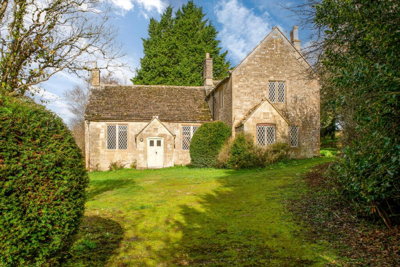
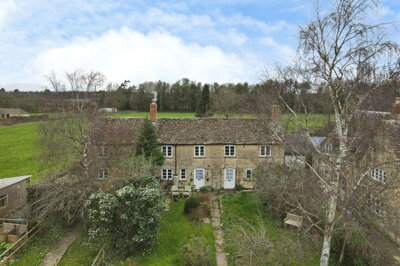
Browse 2 homes for sale in Ampney Crucis from local estate agents.
The 2 bed house market features detached, semi-detached, and terraced properties with two separate bedrooms plus living spaces. Properties in Ampney Crucis range from Victorian and Edwardian period homes to modern new builds, with pricing varying across different neighbourhoods.
£744,400
Average Sold Price
45
Listed Buildings
245
Village Homes
636
Population
The Ampney Crucis property market reflects the broader strength of Cotswold village life, with recent sales data showing an average price paid of £759,000 according to OnTheMarket records as of January 2026. Our platform aggregates listings across multiple postcode sectors within the GL7 area, including GL7 5SA where the average sits at £760,000, and GL7 5SF with properties averaging £662,000. These figures demonstrate the premium commanded by village locations within this protected landscape, where buyer demand consistently outstrips supply of quality family homes. Understanding these micro-market variations helps buyers identify the best value within different parts of this compact village.
Property types available in Ampney Crucis include 2-bedroom terraced houses perfect for first-time buyers, alongside 4-bedroom detached houses and 5-bedroom detached homes suited to growing families. Semi-detached properties, particularly 3 and 4-bedroom examples, represent a popular middle-market option, while bungalows and apartments provide retirement-friendly accommodation for downsizers. The most common property types listed are substantial detached houses with generous gardens, reflecting the village's predominantly residential character and generous plot sizes typical of Cotswold developments. The village's compact layout means that even terraced properties often benefit from surprisingly generous rear gardens, a feature increasingly rare in modern developments.
Recent market activity shows varied performance across different postcode sectors within Ampney Crucis. Properties in GL7 5SA have demonstrated resilience with an 11% price increase compared to the previous year, rising 23% above the 2016 peak of £615,500. However, the wider market has experienced correction, with overall sold prices falling 29% year-on-year and 52% below the 2011 peak of £1,538,938. This creates opportunities for buyers willing to take a medium-term view, particularly for character properties where supply remains genuinely limited. The GL7 5RY sector has seen prices fall 10% year-on-year, while GL7 5SF has experienced a more significant 49% correction from its 2020 peak, suggesting different micro-markets within the village respond to broader conditions in distinct ways.

Life in Ampney Crucis centres on its extraordinary concentration of heritage assets, with 45 listed buildings creating an streetscape that has changed little in centuries. The village takes its name from the Holy Rood (Holy Cross) that once marked its medieval crossroads, and the Church of the Holy Rood remains the spiritual heart of the community. This Grade I listed church contains Saxon and Norman architectural elements, testifying to the continuous settlement of this riverside location since the early medieval period. The Ampney Crucis cross standing in the church courtyard represents another Grade I protected monument, connecting residents to a thousand years of local history. Census data shows the village comprises 104 married households, 72 pensioner households, and 26 cohabiting households, reflecting a diverse community that maintains strong social bonds despite its modest size.
The Ampney Brook flows through the village, a tributary of the River Thames that adds to the pastoral character of this Cotswold settlement. Local building traditions favour the distinctive honey-coloured Cotswold limestone, with properties like Ampney Park manor demonstrating how historic construction techniques using coursed and dressed stone on plinth have created buildings of enduring appeal. Nurses Cottage exemplifies the quintessential Cotswold aesthetic with its stone slate roofing, representing the architectural vernacular that makes this part of Gloucestershire so desirable. Properties dating from the late 1500s through to the 18th century line the village lanes, creating an atmosphere impossible to replicate in newer developments. The village supports traditional pub offerings and village hall activities, while residents benefit from the footpaths and bridleways criss-crossing the surrounding farmland that forms part of the Cotswold Area of Outstanding Natural Beauty.
Community life in Ampney Crucis reflects its status as a village rather than a town, with residents typically knowing their neighbours and maintaining the close-knit atmosphere that defines traditional English village life. The village hall hosts regular events including parish council meetings, craft groups, and community gatherings that provide opportunities for new residents to integrate quickly. Local footpaths connect the village to surrounding farmland and neighbouring communities, with popular routes leading to nearby Ampney Sheephouse and the wider network of public rights of way that criss-cross this scenic part of the Cotswolds. The proximity to Cirencester, approximately three miles distant, means residents can access comprehensive retail, healthcare, and dining facilities while returning each evening to the tranquility of village life.

Families considering a move to Ampney Crucis will find educational provision concentrated in the nearby market town of Cirencester, approximately three miles distant. Primary education is available through several well-regarded village schools in the surrounding area, with the school admission process operating through Gloucestershire County Council's coordinated placement system. Parents should note that catchment areas significantly influence placement decisions, making early investigation essential when planning a school transfer alongside a house purchase. The village's rural character means that primary school children typically require transport arrangements, either through family vehicles or local bus services operating on fixed routes. Several village primaries in nearby settlements have achieved Good or Outstanding ratings from Ofsted, though these ratings change over time and parents should verify current reports directly.
Secondary education in the area centres on Cirencester's secondary schools, which serve families from across the wider Cotswold district including Ampney Crucis. The town has developed a strong reputation for educational standards, with facilities often exceeding those found in comparable rural locations. For families requiring sixth form provision, Cirencester College offers a comprehensive range of A-level and vocational courses, eliminating the need for older teenagers to travel further afield. Parents should verify current Ofsted ratings and admission policies directly with schools, as these can change and may influence property values in specific streets or developments. The Cotswold Learning Campus provides additional educational options for families with specific requirements, offering flexible learning opportunities that complement traditional school provision.
Historic properties in Ampney Crucis itself, including listed buildings, may not be suitable for families with very young children due to staircase configurations or garden boundaries, though such properties often prove ideal for families with older children who can appreciate the heritage significance of their Cotswold home. Planning permission for any property alterations affecting listed structures requires consultation with conservation officers, which can influence decisions about educational accessibility modifications. When viewing period properties in the village, families should assess whether the existing layout can accommodate family needs, particularly for properties with steep staircases, low doorways, or unfenced gardens that characterise many historic homes. Properties converted from agricultural buildings may offer more family-friendly layouts with larger rooms and better light, though original features such as flagstone floors and exposed beams add to maintenance considerations.
Ampney Crucis benefits from its position within the Cotswold landscape, offering road connections that serve both local and regional destinations. The village sits approximately three miles from Cirencester, the principal market town of the Cotswold district, where residents access major supermarkets, healthcare facilities, and retail amenities. The A419 provides swift access to Swindon to the east, connecting residents to the M4 motorway corridor and the broader strategic road network. Westward travel leads through the Cotswold towns of Cheltenham and Gloucester, each offering direct rail connections to Birmingham, Bristol, and London Paddington. For commuters working in London, Swindon station provides fastest services to Paddington in approximately one hour, making day commuting feasible for those with flexible working arrangements.
Public transport options serving Ampney Crucis reflect its status as a small village, with bus services operating on limited frequencies between local settlements. The nearest railway stations are located in Kemble (serving regional connections) and Swindon (offering faster services to London Paddington in approximately one hour). Commuters planning to use rail services should factor in the need for vehicle transport to reach station facilities, a consideration that influences the practical viability of daily commuting from this village location. Many residents work locally in Cirencester or the surrounding Cotswold towns, where employment in hospitality, retail, professional services, and light manufacturing provides job opportunities without requiring lengthy daily journeys.
Cycling infrastructure in the Cotswolds has developed in recent years, with designated routes connecting Ampney Crucis to surrounding villages and the broader National Cycle Network. The rolling Cotswold landscape presents both opportunities and challenges for cyclists, with scenic routes offset by demanding gradients that require reasonable fitness levels. Most households in Ampney Crucis maintain at least one private vehicle, with off-street parking valued highly given the historic nature of many properties where garages and drives represent a premium feature. The village's compact centre and walking-friendly layout mean that local trips within the settlement rarely require vehicle use, though visits to Cirencester or further afield typically necessitate car ownership. For those considering electric vehicles, several households have installed charging points, taking advantage of available grants and the increasing availability of EV models suitable for rural driving.
Begin by exploring current listings in Ampney Crucis through Homemove, comparing prices against recent sold prices averaging £744,400. Understand the seasonal nature of the Cotswold property market, where demand peaks during spring and summer months. Review the postcode-specific data showing GL7 5SA properties averaging £760,000 and GL7 5SF averaging £662,000 to identify realistic pricing expectations across different parts of the village.
Contact mortgage brokers to discuss your borrowing capacity before viewing properties. Getting an Agreement in Principle strengthens your position when making offers on character homes in this competitive village location. For properties above £500,000, expect lenders to require detailed financial documentation, and consider consulting brokers familiar with Cotswold property values who understand the challenges of lending against historic properties.
View multiple properties across different postcode sectors including GL7 5SA, GL7 5SF, and GL7 5RY. Pay particular attention to property condition for older listed buildings, noting that conservation area restrictions may affect renovation plans. When viewing period properties, look beyond cosmetic presentation to assess the condition of stone walls, roof coverings, and any signs of damp or structural movement that might require remedial work.
Submit your offer through the listing estate agent, including your financial position details. For properties priced above £500,000, expect negotiation on asking price, with sellers typically expecting 5-10% below asking for realistic offers. In the current market where overall prices have corrected 29% year-on-year, well-priced properties attract multiple interest quickly, making decisive action important for serious buyers.
Arrange a RICS Level 2 Home Survey for properties under £500,000, or consider a Level 3 Building Survey for older listed properties. With many homes dating from the 17th and 18th centuries, specialist assessment of stone construction and traditional building methods proves valuable. For a 4-bedroom family home averaging £744,400, expect survey costs of approximately £495-600 for a Level 2 survey, rising to £600-800 or more for a comprehensive Level 3 assessment.
Appoint a property solicitor experienced with Cotswold property transactions, particularly for listed buildings or properties within the conservation area where additional searches may be required. Your solicitor should conduct drainage and water searches given the village's reliance on private water sources in some areas, and investigate any planning permissions or listed building consents that may affect the property.
Finalise mortgage arrangements, pay stamp duty, and arrange building insurance that accounts for the age and character of traditional Cotswold stone properties before exchanging keys. For a typical £744,400 purchase, budget approximately £24,720 in SDLT plus solicitor fees of £800-1,500 and survey costs of £400-800. Buildings insurance for period properties may cost more than standard quotes due to the specialist repair techniques required for traditional construction.
Purchasing property in Ampney Crucis requires particular attention to the heritage status that defines so much of the village's character. With 45 listed buildings including numerous Grade II properties and Grade I ecclesiastical features, buyers must understand that any external alterations require Listed Building Consent from Cotswold District Council. Internal works to listed structures also often require permission, making it essential to establish the listing status of any property before committing to purchase. Our platform indicates listing status where known, but buyers should verify independently through the Planning Portal before completing surveys. The listed building register can be searched by address or location to confirm the precise status of any property under consideration.
Conservation Area designation affects properties beyond those individually listed, with the entire historic core of Ampney Crucis falling within protected boundaries. This restricts permitted development rights, meaning that extensions, outbuildings, and certain external alterations require planning permission that might be allowable elsewhere. Pre-application advice from the local planning authority is recommended if considering any works that alter the external appearance of a property. These restrictions help preserve the village character that attracts buyers in the first place, though they require understanding before purchase. Properties near the Ampney Brook may face additional considerations regarding watercourse proximity and potential flood risk that warrant thorough investigation.
The age of properties in Ampney Crucis necessitates thorough structural surveys, with homes dating from the late 1500s through to the 18th century representing the majority of the housing stock. Traditional Cotswold construction using limestone walls and stone slate roofing creates beautiful homes but requires specialist understanding of maintenance requirements. Potential buyers should budget for ongoing maintenance costs that may exceed those for modern properties, including repointing, roof repairs, and potential damp management in solid-walled construction. Properties converted from agricultural use may have received sympathetic modernisation, though original features such as flagstone floors and exposed beams add to maintenance considerations that experienced surveyors can identify and quantify.
Flood risk awareness is important for any property near the Ampney Brook, which flows through the village as a tributary of the River Thames. While specific flood risk data for individual properties was not detailed in available searches, the watercourse proximity warrants careful investigation through the Environment Agency flood maps and local drainage records. Properties in lower-lying areas of the village may be susceptible to surface water flooding during periods of heavy rainfall, and appropriate building insurance should be secured before completion. Recent planning applications in the village, including an appeal for two dwellings south of Dudley Farm that was dismissed in July 2024, indicate ongoing development pressure that may influence future infrastructure provision and local character.
Ampney Crucis properties exemplify traditional Cotswold construction methods that differ significantly from modern building techniques. The predominant building material is local honey-coloured limestone, typically used in coursed and dressed blocks on a plinth foundation, with stone slate roofing on earlier properties. Properties like Ampney Park manor demonstrate the quality of historic construction, built with careful attention to detail that has allowed these buildings to survive for centuries. Understanding these construction methods helps buyers appreciate why specialist surveyors are essential for older properties, as standard building surveys may not identify issues specific to traditional materials and techniques.
Common defects in period Cotswold properties include deterioration of mortar joints through weathering and salt crystallisation, which requires repointing using appropriate lime-based mortars rather than modern cement. Stone slate roofing, while durable, can develop slipped or broken tiles that allow water penetration into roof spaces. Solid-walled construction lacks the cavity barriers found in modern properties, making damp management particularly important, especially in properties where original ventilation has been reduced by double glazing installation. Properties with multiple extensions over the years may have complex roof structures where junctions between different construction periods create potential leak paths that require careful inspection.
Electrical systems in older properties often require complete rewiring, as dated installations may not meet current safety standards and insurance requirements. Many Cotswold cottages retain original fuse boards and wiring from the mid-20th century that should be assessed by a qualified electrician before purchase. Plumbing systems similarly may comprise old copper or even lead pipework that requires replacement. When commissioning surveys for historic properties, ensure your surveyor has experience with traditional construction and can recommend appropriate specialists for any defects identified. The additional cost of a Level 3 Building Survey for older listed properties is money well spent, given the specialist knowledge required to assess traditional building fabric and advise on sympathetic repair approaches.
The average sold price in Ampney Crucis currently stands at £744,400 according to Rightmove data, with OnTheMarket recording £759,000 as of January 2026. Zoopla reports £760,000 for the GL7 5SA postcode sector specifically, £662,000 for GL7 5SF, and £807,500 for GL7 5RY. Prices have experienced correction recently, with overall sold prices falling 29% year-on-year and 52% below the 2011 peak of £1,538,938. However, the GL7 5SA sector shows resilience with prices 11% up on the previous year, suggesting that well-priced properties in good condition continue to attract buyer interest despite broader market volatility.
Ampney Crucis falls under Cotswold District Council and Gloucestershire County Council administration for council tax purposes. Properties are assigned bands A through H based on 1991 valuation, with the majority of traditional Cotswold stone cottages likely falling into bands C or D, while larger detached properties and period homes may occupy bands E through G. Buyers should verify the specific band for any property through the Valuation Office Agency website before budgeting for annual running costs, as these bands affect the ongoing cost of ownership alongside mortgage payments and maintenance.
Primary education options in the surrounding area include several Ofsted-rated Good or Outstanding village schools, though specific ratings change over time and parents should verify current Ofsted reports directly. Cirencester hosts secondary schools serving the Ampney Crucis catchment area, with the town also providing sixth form provision through Cirencester College for older students requiring advanced qualifications. The admission process operates through Gloucestershire County Council's coordinated scheme, with catchment areas influencing placement decisions for primary and secondary applications, making it essential to research school admission zones before committing to a specific property purchase in this village location.
Public transport options from Ampney Crucis are limited, reflecting its status as a small village where private vehicle ownership remains effectively essential for most residents. Bus services operate on reduced frequencies connecting to Cirencester and surrounding villages, though these services may not align with typical commuter requirements. The nearest railway stations are at Kemble (regional connections) and Swindon (direct services to London Paddington in approximately one hour). The A419 provides road access to Swindon and the M4 motorway approximately 15 miles east of the village, making car ownership a practical necessity for residents who need to commute or access facilities not available locally.
Ampney Crucis offers strong fundamentals for property investment, with the Cotswold location consistently commanding premium values and the village's heritage status limiting new development supply. Proposed plans for 660 new homes would increase the village by 270%, though this development faces significant local opposition and remains in the planning consultation phase with no confirmed timeline or developer. For medium to long-term investment, period properties in the conservation area with planning permission for sympathetic expansion may offer capital growth potential, particularly given the limited supply of character homes coming to market in this protected village setting.
Stamp duty rates for 2024-25 apply as follows: 0% on the first £250,000, 5% on £250,001 to £925,000, 10% on £925,001 to £1,500,000, and 12% on any amount above £1,500,000. First-time buyer relief raises the nil-rate threshold to £425,000, with 5% applying between £425,001 and £625,000, but no relief above £625,000. For a typical Ampney Crucis property at £744,400 purchased by a non-first-time buyer, stamp duty would amount to £24,720 on the portion above £250,000, calculated as 5% of the remaining £494,400.
Ampney Crucis contains 45 listed buildings, including the Grade I listed Church of the Holy Rood and the Ampney Crucis cross in the church courtyard. Grade II listed properties include Ampney Park manor and numerous cottages throughout the village, representing various periods of local architectural history. Purchasing a listed building requires acceptance of restrictions on alterations, with both internal and external works potentially requiring Listed Building Consent from Cotswold District Council. Maintenance costs for listed properties often exceed those for comparable unlisted homes, and buildings insurance premiums may be higher due to the cost of specialist repair techniques using traditional materials and craftspeople with appropriate expertise.
Cotswold District Council's Local Plan Review proposes allocating 660 new homes in Ampney Crucis, representing a 270% increase from the current 245 homes. This urban extension plan remains in the Regulation 18 Consultation phase and faces strong opposition from local residents concerned about infrastructure pressure and harm to the heritage landscape. Specific details including developer names, development phases, and pricing for the proposed homes have not been confirmed, and the planning process may take several years to resolve. Buyers should consider both the potential for future housing supply expansion and the uncertainty surrounding these proposals when making purchase decisions in the village.
From 4.5%
Expert mortgage advice for Ampney Crucis properties, with access to exclusive deals from leading lenders
From £499
Property solicitors experienced in Cotswold transactions including listed buildings and conservation areas
From £400
Thorough inspection of properties up to £500,000, ideal for standard construction homes
From £600
Comprehensive building survey for older, larger or listed properties requiring specialist assessment
Buying a property in Ampney Crucis involves several costs beyond the purchase price itself, with stamp duty representing the largest single additional expense for most buyers. The current SDLT thresholds for residential purchases in 2024-25 apply zero rate on the first £250,000, then 5% on the portion from £250,001 to £925,000, 10% on amounts between £925,001 and £1,500,000, and 12% on any value exceeding £1,500,000. For a typical Ampney Crucis home at £744,400 purchased by a non-first-time buyer, the calculation works as £0 on the first £250,000, plus £24,720 on the remaining £494,400, giving a total SDLT liability of £24,720 that should be factored into your overall budget alongside other purchase costs.
First-time buyers benefit from increased thresholds under current relief provisions, with the nil-rate band extending to £425,000 and a 5% rate applying between £425,001 and £625,000. This relief cannot be claimed on properties valued above £625,000, meaning that most substantial family homes in Ampney Crucis would not qualify for first-time buyer relief given the average property price of £744,400. However, the relief can be claimed by joint purchasers where at least one person qualifies as a first-time buyer, and previous ownership of any residential property anywhere in the world disqualifies applicants from this relief. Given the high average values in Ampney Crucis, many buyers will find themselves outside first-time buyer relief eligibility and should plan accordingly for the full SDLT liability.
Additional buying costs include solicitor fees for conveyancing, typically ranging from £800 to £1,500 depending on complexity and whether the property is freehold or leasehold, with listed buildings and conservation area properties often requiring additional searches and specialist attention. Survey costs should be budgeted separately, with RICS Level 2 Home Surveys starting from approximately £400 for smaller properties and rising to £500-600 for substantial family homes of four bedrooms or more. Older listed properties or those with complex construction may require the more comprehensive Level 3 survey, starting from around £600 and potentially exceeding £1,000 for very large historic houses. Land Registry registration fees, mortgage arrangement fees, and removal costs complete the typical purchase budget, with buyers well-advised to set aside a contingency equivalent to around 2-3% of the purchase price for these incidentals and any unexpected costs that arise during the transaction process.
Properties for Sale In London

Properties for Sale In Plymouth

Properties for Sale In Liverpool

Properties for Sale In Glasgow

Properties for Sale In Sheffield

Properties for Sale In Edinburgh

Properties for Sale In Coventry

Properties for Sale In Bradford

Properties for Sale In Manchester

Properties for Sale In Birmingham

Properties for Sale In Bristol

Properties for Sale In Oxford

Properties for Sale In Leicester

Properties for Sale In Newcastle

Properties for Sale In Leeds

Properties for Sale In Southampton

Properties for Sale In Cardiff

Properties for Sale In Nottingham

Properties for Sale In Norwich

Properties for Sale In Brighton

Properties for Sale In Derby

Properties for Sale In Portsmouth

Properties for Sale In Northampton

Properties for Sale In Milton Keynes

Properties for Sale In Bournemouth

Properties for Sale In Bolton

Properties for Sale In Swansea

Properties for Sale In Swindon

Properties for Sale In Peterborough

Properties for Sale In Wolverhampton

Enter your details to see if this property is within your budget.
Loans, cards, car finance
Estimated property budget
Borrowing + deposit
You could borrow between
Typical borrowing
Monthly repayment
Est. at 4.5%
Loan-to-value
This is an estimate only. Your actual budget may vary depending on interest rates, credit history, and personal circumstances. For an accurate affordability assessment, speak to one of our free mortgage advisors.
This calculator provides estimates for illustrative purposes only and does not constitute financial advice. Your home may be repossessed if you do not keep up repayments on your mortgage. Estimates based on 4.5% interest rate, repayment mortgage. Actual rates depend on your circumstances.
Homemove is a trading name of HM Haus Group Ltd (Company No. 13873779, registered in England & Wales). Homemove Mortgages Ltd (Company No. 15947693) is an Appointed Representative of TMG Direct Limited, trading as TMG Mortgage Network, which is authorised and regulated by the Financial Conduct Authority (FRN 786245). Homemove Mortgages Ltd is entered on the FCA Register as an Appointed Representative (FRN 1022429). You can check registrations at NewRegister or by calling 0800 111 6768.

We use cookies to show you personalised content and improve your experience of our website. Find out more in our Privacy policy and Cookie policy.