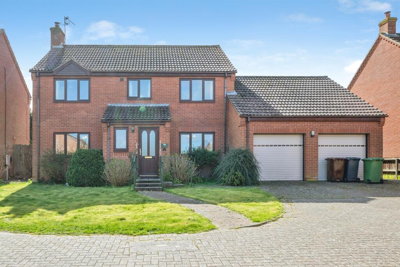
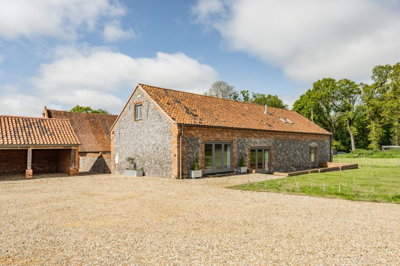
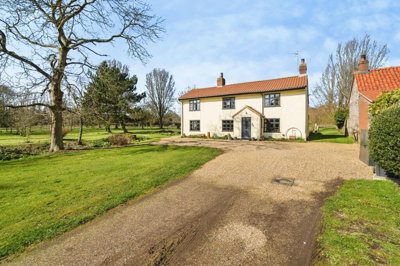
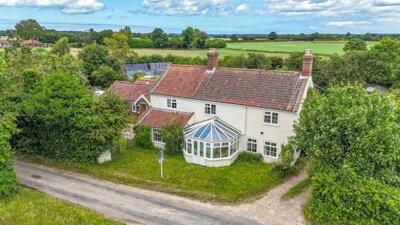
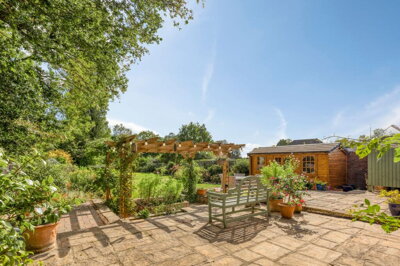
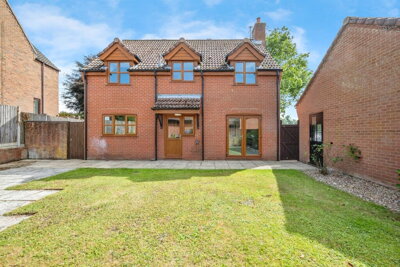
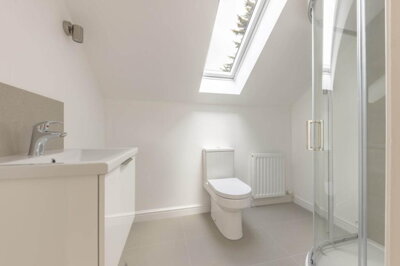
Browse 7 homes for sale in Aldborough and Thurgarton from local estate agents.
The larger property sector typically features multiple bathrooms, substantial reception space, and private gardens or off-street parking. Four bedroom houses in Aldborough And Thurgarton span detached, semi-detached, and occasionally terraced configurations, with styles ranging from period properties to modern executive homes.
The Aldborough and Thurgarton property market has demonstrated steady resilience, with overall prices increasing by approximately 3% over the past twelve months. This moderate growth reflects the consistent demand for rural Norfolk properties rather than the volatile fluctuations seen in metropolitan areas. Detached properties command the highest values, averaging around £450,000, which represents a 4% annual increase and reflects the premium placed on space, privacy, and the generous gardens that characterise homes in this area. The dominant housing stock consists of detached properties, comprising an estimated 60-70% of the local market, making this property type the backbone of the local housing landscape.
Semi-detached homes in Aldborough and Thurgarton average £290,000, with prices rising by around 2% annually, while terraced properties offer more accessible entry points at approximately £250,000. The terraced market has shown the most modest price growth at 1%, suggesting stable but slower appreciation in this segment. Recent sales data indicates approximately 20-30 property transactions within the broader NR11 6 postcode area over the past year, a figure that highlights the limited but active nature of the local market. New build activity remains minimal, with no large-scale developments identified within the parish boundaries, meaning buyers purchasing existing properties can expect the authentic character that defines rural Norfolk living.
The absence of significant new-build construction preserves the area's historic charm and ensures that properties on the market typically offer the period features and traditional construction methods that discerning buyers often seek. Traditional Norfolk construction in the villages predominantly uses red brick walls, often with pantile or slate roofs, while some older properties showcase the distinctive flint work common to the region. Properties within the Conservation Area or those listed will face stricter planning controls, which can affect renovation options but also protects the investment value of homes in these designations. Prospective purchasers should note that solid wall construction, common in period properties here, requires different considerations regarding insulation and damp resistance compared to modern cavity-wall buildings.

Aldborough and Thurgarton embody the classic Norfolk village experience, with a combined population of approximately 700-800 residents spread across a landscape of rolling farmland, country lanes, and mature woodland. The villages retain much of their historic character, with properties predominantly constructed from traditional red brick and featuring pantile or slate roofs that reflect the regional building vernacular. Some older properties showcase the distinctive flint work common to Norfolk, while rendered finishes appear on both period cottages and more contemporary extensions. This architectural variety creates an engaging streetscape that tells the story of the villages through successive generations of construction.
The villages operate as genuine rural communities where neighbours know one another and local events bring residents together throughout the year. St Andrew's Church in Thurgarton stands as a Grade I listed building, representing the architectural heritage that enriches the parish alongside the Conservation Area designation in Aldborough. The underlying chalk geology of the area contributes to the gentle, undulating landscape that defines the Norfolk countryside surrounding the villages and generally provides good natural drainage for most properties. Agriculture remains central to the local economy, though many residents commute to larger settlements including Aylsham, Cromer, and Norwich for employment.
The proximity to these market towns means that village residents enjoy the best of both worlds: the tranquility of countryside living with practical access to retail, healthcare, and employment opportunities. Local amenities include village pubs that serve as community hubs, while more comprehensive shopping and services are available in the nearby market towns of Aylsham and Cromer. Tourism contributes to the broader North Norfolk economy, with visitors drawn to the area's natural beauty, coastal attractions, and historic architecture. Residents benefit from the sense of permanence and continuity that protected areas provide, knowing that the essential character of their neighbourhood will be preserved for future generations.
Families considering a move to Aldborough and Thurgarton will find a selection of educational options within reasonable distance of the villages. The primary years are typically served by village schools in the surrounding area, with children progressing to secondary education at schools in nearby market towns. The presence of good schools influences property values and desirability across the local housing market, making school catchment information an important consideration for families house-hunting in the area. Parents should research specific school performance data and admission criteria when evaluating properties, as catchment boundaries can affect placement eligibility.
For secondary education, pupils often travel to schools in Aylsham, Cromer, or other North Norfolk towns, with school transport arrangements supporting this pattern of daily commuting. Aylsham High School serves as a significant secondary option for families across the wider catchment area, while other North Norfolk secondary schools also attract students from surrounding villages. Several secondary schools in the region have established reputations for academic achievement and extracurricular provision, attracting students from across the surrounding villages. Secondary school options typically include both grammar school pathways and comprehensive education, allowing parents to choose provision that matches their children's learning requirements and aspirations.
The village setting also supports strong community connections through school events and local activities, with primary age children particularly benefiting from the security and familiarity of village school environments. Norfolk County Council education department publishes detailed information about school admissions, catchment areas, and performance data that prospective buyers can consult during their research. For families prioritising educational provision, visiting potential schools and discussing arrangements with local estate agents can provide valuable insight into daily logistics and long-term educational planning.
Transport connections from Aldborough and Thurgarton centre on road networks that link the villages to surrounding market towns and to larger cities including Norwich. The A140 provides an important north-south corridor connecting the area to Norwich, while roads heading east and west access the coastal towns and inland Norfolk. For residents working in Norwich, the commute by car typically takes between 30 and 45 minutes depending on traffic conditions, making day-to-day commuting feasible for those whose employment is based in the city. The rural nature of the road network means that driving is generally straightforward, though country lanes require appropriate speeds and care during adverse weather conditions.
Public transport options reflect the pattern typical of rural Norfolk villages with small populations. Bus services connect some villages to nearby towns, though frequency may be restricted to several services per day rather than comprehensive timetables. Residents without access to private vehicles should carefully assess bus timetables and journey times when considering a move to Aldborough and Thurgarton, as dependence on public transport may require significant planning. Railway connections are available at stations in larger nearby towns, with Norwich offering direct rail services to London Liverpool Street, Cambridge, and other major destinations.
For commuters who travel to London or other distant destinations, Norwich railway station provides the most practical rail access, with journey times to London Liverpool Street typically around two hours. The combination of road and rail access makes Aldborough and Thurgarton viable for commuters who can work hybrid schedules, spending several days working from home while travelling to the office on fewer occasions. Cyclists will find both the Norfolk countryside and the roads between villages offer pleasant cycling opportunities, though the narrow country lanes require appropriate safety awareness.
Explore current property listings in Aldborough and Thurgarton and surrounding North Norfolk villages. Understanding price trends, property types available, and the pace of the local market will help you set realistic expectations and identify opportunities that match your requirements and budget. Our comparison tool allows you to benchmark properties against local averages, with detached homes averaging £450,000, semi-detached around £290,000, and terraced properties near £250,000.
Once you have identified properties of interest, arrange viewings through local estate agents or Homemove. Visiting properties in person allows you to assess the condition, character, and practical aspects of the home, including garden size, natural light, and proximity to neighbours. We recommend requesting the vendor's property information pack from the estate agent before attending viewings, as this documentation provides valuable context about the property and any renovations completed.
Before making an offer, secure a mortgage agreement in principle from a lender. This demonstrates your financial readiness to sellers and their agents, strengthening your position when negotiating on what is often a competitive rural property market. Given that average property prices in the area stand at approximately £391,500, most buyers will require substantial mortgage borrowing, making pre-approval particularly valuable for demonstrating serious intent.
Given the age of many properties in Aldborough and Thurgarton, arranging a RICS Level 2 Survey (HomeBuyer Report) before completing your purchase is strongly recommended. Survey costs typically range from £400 to £800+ depending on property size and value. For a typical 3-bedroom detached property in the villages, expect costs towards the upper end of this range. The survey will identify defects such as damp, roof condition issues, timber defects, and outdated electrics that are common in period properties.
Choose a conveyancing solicitor to handle the legal aspects of your purchase. Your solicitor will conduct searches, review contracts, and manage the registration of your ownership with the Land Registry. Homemove offers conveyancing services to support your purchase efficiently. For properties within the Conservation Area or listed buildings, we recommend choosing a solicitor with experience of the additional planning considerations these designations require.
Once all searches are satisfactory and financing is confirmed, you will exchange contracts and pay your deposit. Completion typically follows within days or weeks, at which point you receive the keys and take ownership of your new home in Aldborough and Thurgarton.
Properties in Aldborough and Thurgarton often include period features that require informed assessment during the buying process. Given that 60-70% of properties are estimated to be over fifty years old, with many dating from the pre-1919 period, prospective buyers should pay particular attention to construction quality and maintenance history. Traditional solid wall construction, common in older Norfolk properties, requires different considerations than modern cavity-wall buildings, particularly regarding insulation, damp resistance, and heating efficiency. Our recommended RICS Level 2 Survey will identify any issues requiring attention or negotiation with the seller.
Flood risk in Aldborough and Thurgarton is primarily related to surface water rather than river or coastal flooding, as the villages are situated away from major waterways. However, low-lying areas and properties with overwhelmed drainage systems may face occasional surface water issues during periods of heavy rainfall. Checking the Environment Agency flood risk maps for specific properties provides valuable information before committing to a purchase, particularly for properties with basements or ground-floor accommodation. Properties in areas of concern may require specialist insurance or additional precautions.
The presence of listed buildings and the Conservation Area status of Aldborough impose planning restrictions that affect what changes owners can make to properties. Anyone purchasing a listed building or property within the Conservation Area should understand these constraints before proceeding, as permitted development rights may be limited or removed entirely. Renovations, extensions, and even external alterations may require Listed Building Consent or Conservation Area consent from North Norfolk District Council. These restrictions protect property values and the historic character of the village but require careful planning for any future modifications to the home.
The average house price in Aldborough and Thurgarton currently sits at approximately £391,500. Detached properties average around £450,000, semi-detached homes around £290,000, and terraced properties approximately £250,000. Price trends over the past twelve months show modest growth of 1-4% depending on property type, with detached homes showing the strongest appreciation at 4% annually. These figures reflect transactions within the NR11 6 postcode area, indicating a stable market with consistent demand for rural Norfolk properties.
Properties in Aldborough and Thurgarton fall under North Norfolk District Council jurisdiction and are assigned council tax bands ranging from A to H based on assessed property value. The Valuation Office Agency determines these bands, and they can vary significantly between properties even on the same street depending on size, condition, and improvements. Prospective buyers should check the specific band for any property through the Valuation Office Agency website or by contacting North Norfolk District Council directly, as council tax bands affect ongoing ownership costs.
Primary education is served by village schools in the surrounding area, with secondary schools located in nearby market towns including Aylsham and Cromer. Aylsham High School serves as a significant secondary option for families across the broader catchment area, while parents should research individual school Ofsted ratings and admission catchment areas, as these can affect placement eligibility. Several secondary schools in the broader North Norfolk area have established academic reputations, making them popular choices for families willing to travel.
Public transport options are limited, reflecting the rural nature of the villages. Bus services connect to nearby towns, though frequencies are lower than urban routes with multiple daily services rather than comprehensive timetables. Norwich railway station provides the most practical rail access, offering direct services to London Liverpool Street in approximately two hours along with connections to Cambridge, Birmingham, and other major destinations. Road connections via the A140 provide access to Norwich within 30-45 minutes by car, making commuting feasible for hybrid workers.
The Aldborough and Thurgarton property market has demonstrated steady price growth of approximately 3% annually over the past year, reflecting a stable market with consistent demand rather than dramatic fluctuations. The limited supply of properties combined with consistent demand from buyers seeking rural Norfolk homes suggests that values are likely to remain stable or appreciate over time. Properties in Conservation Areas and listed buildings benefit from additional protections that can preserve character and value. However, buyers should consider their personal circumstances and how the limited local amenities and transport options might affect future resale appeal.
For standard purchases, stamp duty applies at 0% on the first £250,000 of property value, 5% on the portion from £250,001 to £925,000, 10% up to £1.5 million, and 12% above that threshold. Using the current average property price of £391,500 as an example, a standard buyer would pay approximately £7,075 in SDLT, consisting of nothing on the first £250,000 and 5% on the remaining £141,500. First-time buyers purchasing properties up to £625,000 benefit from relief on the first £425,000, meaning many first-time buyers in this market would pay no stamp duty at all under current thresholds.
Given the prevalence of older properties in the area, common defects include damp affecting walls and foundations, roof deterioration impacting original slate or pantile coverings, and timber defects such as woodworm and rot in joists and window frames. Many period properties have outdated electrical wiring and plumbing systems that do not meet current standards, along with inadequate insulation in walls and lofts causing heat loss. Chimney stack deterioration and localised subsidence related to clay soils or mature tree roots can also affect properties in the villages. Properties within the Conservation Area or listed buildings may have additional complexities requiring specialist survey attention from surveyors experienced with traditional Norfolk construction methods.
From 4.5%
Compare rates from leading lenders to find the right mortgage for your Aldborough and Thurgarton property
From £499
Expert legal services for your property purchase in North Norfolk
From £400
Professional survey to identify defects in period properties
From £80
Energy performance certificate for your new home
Purchasing a property in Aldborough and Thurgarton involves several costs beyond the purchase price itself. The primary expense is Stamp Duty Land Tax (SDLT), which applies to all property purchases above £250,000 for standard buyers. At current thresholds, a property priced at £391,500 (the current average for the area) would attract SDLT of approximately £7,075. First-time buyers purchasing properties up to £425,000 would pay no stamp duty at all under current relief provisions, making the market significantly more accessible for those without existing property ownership.
Beyond stamp duty, buyers should budget for survey costs, which are particularly important given the age of properties in the area. RICS Level 2 Surveys typically cost between £400 and £800+ depending on property size and value, with larger detached homes requiring higher fees. For a typical 3-bedroom detached property in Aldborough or Thurgarton, expect costs towards the upper end of this range. An Energy Performance Certificate (EPC) is mandatory and costs from approximately £80-150. Solicitors' fees for conveyancing typically start from around £499 for standard transactions, though more complex purchases involving listed buildings or unusual tenure arrangements may cost more.
Additional costs include mortgage arrangement fees (often 0.5-1% of the loan amount), valuation fees charged by your lender, and searches conducted by your solicitor including local authority, drainage, and environmental searches. Buildings insurance must be in place from the point of completion, and removals costs should also be factored into your budget. When making an offer on properties in Conservation Areas or involving listed buildings, factoring in potential future maintenance costs is prudent, as planning restrictions may affect how easily issues can be addressed and may require specialist contractors for period properties.
Properties for Sale In London

Properties for Sale In Plymouth

Properties for Sale In Liverpool

Properties for Sale In Glasgow

Properties for Sale In Sheffield

Properties for Sale In Edinburgh

Properties for Sale In Coventry

Properties for Sale In Bradford

Properties for Sale In Manchester

Properties for Sale In Birmingham

Properties for Sale In Bristol

Properties for Sale In Oxford

Properties for Sale In Leicester

Properties for Sale In Newcastle

Properties for Sale In Leeds

Properties for Sale In Southampton

Properties for Sale In Cardiff

Properties for Sale In Nottingham

Properties for Sale In Norwich

Properties for Sale In Brighton

Properties for Sale In Derby

Properties for Sale In Portsmouth

Properties for Sale In Northampton

Properties for Sale In Milton Keynes

Properties for Sale In Bournemouth

Properties for Sale In Bolton

Properties for Sale In Swansea

Properties for Sale In Swindon

Properties for Sale In Peterborough

Properties for Sale In Wolverhampton

Enter your details to see if this property is within your budget.
Loans, cards, car finance
Estimated property budget
Borrowing + deposit
You could borrow between
Typical borrowing
Monthly repayment
Est. at 4.5%
Loan-to-value
This is an estimate only. Your actual budget may vary depending on interest rates, credit history, and personal circumstances. For an accurate affordability assessment, speak to one of our free mortgage advisors.
This calculator provides estimates for illustrative purposes only and does not constitute financial advice. Your home may be repossessed if you do not keep up repayments on your mortgage. Estimates based on 4.5% interest rate, repayment mortgage. Actual rates depend on your circumstances.
Homemove is a trading name of HM Haus Group Ltd (Company No. 13873779, registered in England & Wales). Homemove Mortgages Ltd (Company No. 15947693) is an Appointed Representative of TMG Direct Limited, trading as TMG Mortgage Network, which is authorised and regulated by the Financial Conduct Authority (FRN 786245). Homemove Mortgages Ltd is entered on the FCA Register as an Appointed Representative (FRN 1022429). You can check registrations at NewRegister or by calling 0800 111 6768.

We use cookies to show you personalised content and improve your experience of our website. Find out more in our Privacy policy and Cookie policy.