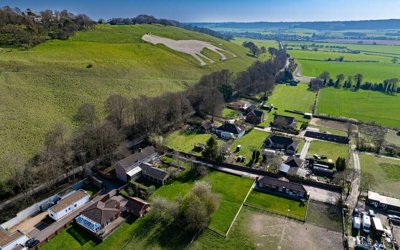
Whipsnade is a small village with a population of 455 according to the 2021 census, representing growth from 420 residents recorded in 2011. The village derives much of its character and economic identity from ZSL Whipsnade Zoo, one of the UK's largest zoological parks spanning 600 acres and home to over 11,000 animals. The zoo serves as a major local employer and conservation hub, contributing significantly to the area's economy and character. This unique attraction draws visitors from across the country and supports related businesses in the village.
The village's geography shapes its built environment significantly. Situated on the chalk downs of the Chiltern Hills, the area benefits from generally stable ground conditions with lower shrink-swell risk compared to clay-rich regions. The chalk geology is evident at Whipsnade Zoo, where the chalk downs grassland has been designated a Site of Special Scientific Interest. This geological stability is reflected in the property stock, with older buildings generally performing well structurally, though the presence of numerous listed buildings does require careful consideration for buyers.
Whipsnade's conservation credentials are strong, with eight listed buildings including the Church of St Mary Magdalen (Grade II*), the famous Elephant House at the zoo designed by Lubetkin and Tecton in reinforced concrete, and several other Grade II properties including Hill Grove, Old Hunter's Lodge, Rosemary Cottage, Whipsnade House, and Yew Tree Cottage. These historic properties contribute significantly to the village's character and attract buyers seeking period homes with architectural interest. The predominantly residential character, combined with excellent transport links to Dunstable, Luton, and onward to London, makes Whipsnade particularly attractive to commuters seeking a rural lifestyle.
Local amenities in the village include the popular Whipsnade Tree Cafe, the Zero Escape Rooms attraction, and several pubs and eateries that serve both residents and visitors to the zoo. The village falls within the Central Bedfordshire schooling catchment, with several highly regarded schools in the nearby towns. Transport links via the A5 and proximity to M1 junction 11 provide reasonable access to Milton Keynes and London, while train stations at Leighton Buzzard and Harlington offer commuter services into London.











 Fine & Country
-2d ago
Fine & Country
-2d ago