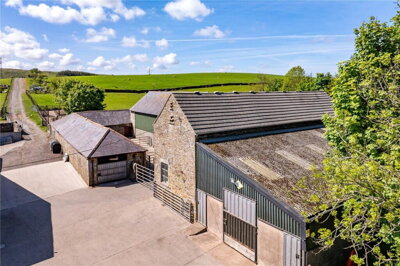
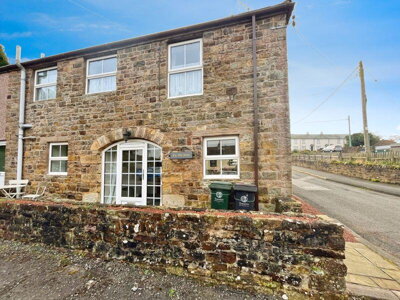
Thirlwall is a small but historically significant village in Northumberland, situated directly alongside the iconic Hadrian's Wall corridor. The village is centred around Thirlwall Castle, a Grade I listed Scheduled Ancient Monument dating from the 12th century, which was built using locally sourced sandstone, many stones originally taken from Hadrian's Wall itself. This rich historical character defines the area's appeal, with the landscape around Thirlwall characterised by rolling farmland, drystone walls, and far-reaching views across the Tyne Valley toward the Pennines.
The River Tipalt flows through Thirlwall, creating both a scenic feature and a consideration for property buyers regarding flood risk. Properties immediately adjacent to watercourses should be subject to appropriate searches, though the risk is generally limited to specific low-lying areas. The underlying geology of the region features varied formations, with sandstone predominant in the Hadrian's Wall area, and buyers considering older properties should be aware that traditional construction methods using lime mortar and stone flags are common in the area's older housing stock.
Demographically, Thirlwall reflects the pattern of small Northumberland villages, with a population that has historically fluctuated between 360 and 400 inhabitants in the 19th century, though precise modern figures are aggregated with the broader Haltwhistle parish. The local economy centres on agriculture, tourism related to Hadrian's Wall, and small local businesses, with many residents commuting to larger settlements like Haltwhistle, Hexham, or Carlisle for employment. Northumberland as a county hosts major international employers including Coca-Cola, MSD, and GE, providing broader employment opportunities within accessible distance.
Transport connections serve Thirlwall reasonably well for a rural village, with the A69 road providing direct access to Carlisle to the west and Newcastle to the east, making the area viable for commuters seeking a rural lifestyle within reasonable distance of city amenities. The nearest railway stations are at Haltwhistle and Hexham, offering connections to Newcastle and Carlisle. Local schools serve the surrounding area, and the market town of Haltwhistle provides everyday amenities including shops, pubs, and medical facilities, while larger centres like Hexham offer more extensive retail and healthcare options.











 Pattinson Estate Agents
-38d ago
Pattinson Estate Agents
-38d ago