Stambourne is a small village with a population of 421 residents across 176 households according to the 2021 Census, representing growth from 409 residents in 2011. The village maintains an overwhelmingly owner-occupied housing profile with 82% of households owning their homes, compared to just 8% in social rented accommodation and 10% in private rental. This high owner-occupancy rate reflects the stability and desirability of the area, where residents typically stay long-term rather than moving frequently.
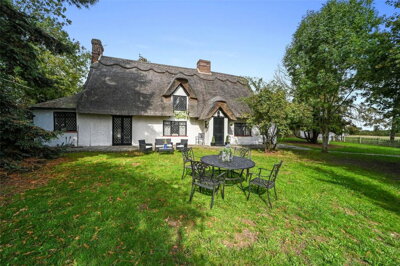
The village boasts a remarkable concentration of historic buildings, including the Grade I listed Parish Church of St Peter and St Thomas Becket dating from the 11th century, and the 15th-century Grade II listed Stambourne Hall, a moated site. The Red Lion Public House holds Grade II* listed status, while numerous farmhouses and cottages throughout the village carry Grade II listing. Properties are predominantly constructed using traditional methods with timber frames, plaster finishes, and red brick, topped with handmade red clay tiles that characterise the Essex rural vernacular.
Transport links serve the village adequately for a rural location, with nearby towns providing rail connections to London and Cambridge. The A1017 and A604 roads provide reasonable access to larger settlements. Local amenities include the historic pub and village hall, while the nearby towns of Halstead and Saffron Walden offer additional shopping and services. The area shows 42.9% economically inactive households, slightly higher than the Braintree district average of 36.9%, reflecting the retirement community that often characterizes smaller villages.
Many properties in Stambourne pre-date 1919, with some dating back to the 11th and 15th centuries, meaning potential defects related to damp, timber condition, roofing, and outdated services may be present. Our surveyors frequently encounter these issues when inspecting period properties in the area, particularly in timber-framed buildings where movement and rot can compromise structural integrity over centuries of occupancy.










 Mullucks
-82d ago
Mullucks
-82d ago






























