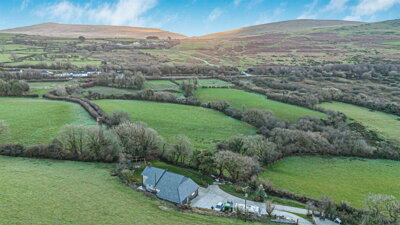
Sourton is a small but vibrant parish with a population of approximately 420 residents, according to the 2011 census. The community is widely dispersed across the parish, encompassing hamlets such as Boasley, Thorndon, Bowerland, Week, Lake, Southerley, Prewley, and Forda. This scattered settlement pattern reflects the agricultural origins of the village, with farming remaining very much the community.
The geological character of the area is defined by its position on Dartmoor's north-western edge, with Sourton Quarry providing evidence of historical limestone extraction. Traditional building materials include rendered cob and stone rubble walls, granite and local stone rubble, with roofs featuring concrete tiles, wood shingles, and thatch on older properties. The village contains numerous listed buildings, including the Grade II* Church of St Thomas of Canterbury and historic farmhouses dating back to the 16th century.
Transport links serve the community through the A386, connecting to Okehampton and onwards to Plymouth. In 2001, census data showed the average distance people travelled to work was 10 km, with a significant proportion working from home. Today, 38.2% of the working population work mainly from home, reflecting the growth in remote working opportunities. The Highwayman Inn provides a popular local venue, while the nearby Sourton Forest offers recreational opportunities.
The split between Dartmoor National Park Authority and West Devon Borough Council for planning purposes means sellers need to be aware that properties on different sides of the A386 may face different regulatory requirements, particularly for listed buildings or properties within the National Park boundary.










 Godfrey Short & Squire
-67d ago
Godfrey Short & Squire
-67d ago