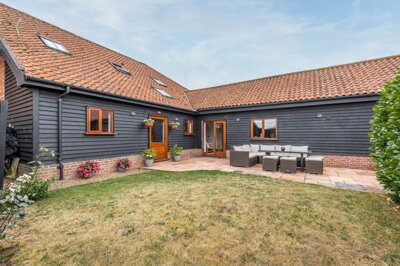
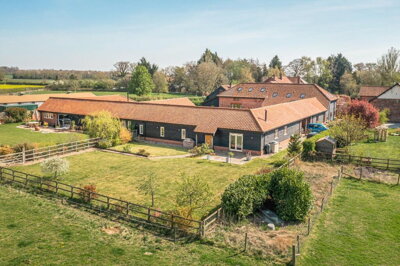
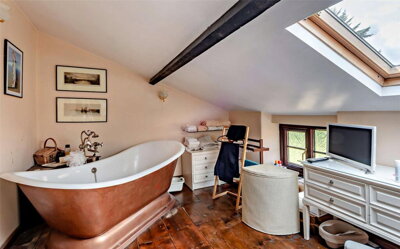
Scoulton is a picturesque village in the Breckland district of Norfolk, with a population of approximately 419 residents across 169 households according to the 2021 Census. The village retains a strong rural character, with properties predominantly featuring traditional brick construction, often in red brick, with rendered finishes and clay or concrete tiled roofs. The surrounding landscape is characterised by agricultural land and woodland, making it particularly attractive to buyers seeking a peaceful rural lifestyle while remaining within reasonable commuting distance of larger towns. The village features a mix of period farmhouses, Victorian and Edwardian cottages, post-war homes, and modern infill developments.
The local geology presents some considerations for property owners. The wider Norfolk area, including Scoulton, is characterised by superficial deposits of glacial till (boulder clay), sand, and gravel overlying chalk bedrock. Areas with significant clay content can experience moderate to high shrink-swell risk, particularly for properties with shallow foundations, which is an important consideration for buyers of older properties. Surface water flooding represents a notable risk in certain parts of the village, though river and coastal flooding risks are generally low due to the inland location. We always recommend that buyers factor these geological considerations into their property decision, particularly when purchasing older properties that may have experienced ground movement over time.
Transport links from Scoulton are good for a rural village, with the village benefiting from proximity to the A11 corridor providing access to Norwich, Cambridge, and London. The nearest railway stations are at Wymondham and Attleborough, offering connections to Norwich and Cambridge. Local amenities include the historic St. John the Baptist Church, Scoulton Hall (a Grade II listed building), and several working farms, while the nearby towns of Wymondham and Attleborough provide additional shopping, healthcare, and educational facilities. The village falls within the Catchgate Primary School catchment area, with secondary options in surrounding towns including Wymondham and Attleborough.
Employment in Scoulton is closely linked to agriculture, local services, and commuting to nearby towns including Attleborough, Wymondham, and Norwich. The local economy is not dominated by any single large employer, which is typical of a village of this size. The presence of several Grade II listed buildings, including Scoulton Hall and St. John the Baptist Church, adds to the village's historical character and attracts buyers interested in heritage properties. There are no designated conservation areas wholly within Scoulton, though the scattered listed buildings help preserve the traditional village atmosphere. This heritage character means that many properties in the village may have specific requirements or restrictions affecting renovation and extension.










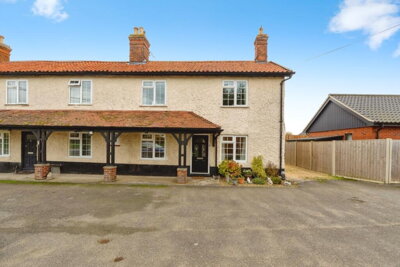
 Abbotts
-138d ago
Abbotts
-138d ago