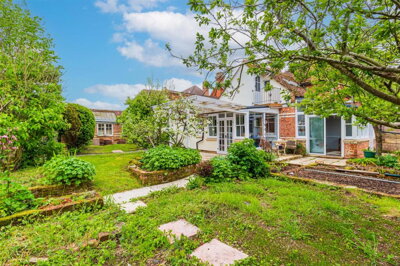
Poslingford embodies the classic Suffolk village, with a population of 202 residents according to the 2021 Census, down slightly from 187 in 2011. The village sits within the West Suffolk district, characterized by its rural landscape, historical architecture, and peaceful atmosphere. The population is distributed across approximately 91 households, representing a stable community that has seen gradual change over recent decades, rising from 78 households in 2001.
The village's historical significance is evident in its rich architectural heritage. Poslingford boasts at least 18 listed buildings, including the notable Chipley Abbey, a 17th-century timber-framed house with red brick, flint, and stone construction, and Poslingford House, built around 1820 in stuccoed brick. The Church of St Mary holds Grade II* status, while numerous farmhouses and cottages throughout the village contribute to its conservation area character. The presence of these historic properties, many dating from the 17th and 19th centuries, shapes both the aesthetic and the practical considerations for property owners in the village.
Transport connections serve the village adequately for a rural location, with the nearest railway stations in Sudbury and Clare providing links to Cambridge, Ipswich, and London Liverpool Street. Local road connections to the A14 and A12 corridor offer reasonable access to Cambridge, Bury St Edmunds, and the coast. However, the village has seen the closure of its school, post office, small shop, and The Shepherd and Dog public house in recent years, meaning most residents now travel to nearby towns for daily requirements and employment. This commuting pattern influences the type of buyer attracted to Poslingford, typically those working in professional roles in larger settlements who value the village's tranquil setting.
The flood risk in Poslingford is relatively low but not nonexistent. The village has a stream that feeds into the Chilton stream and then the Suffolk Stour, which can experience heightened water levels during periods of heavy rainfall. Surface water flooding may occur in low-lying areas near watercourses, and our surveyors always recommend that buyers check specific flood risk for any property they are considering, particularly those near The Street where the main watercourse runs.











 David Burr Estate Agents
-52d ago
David Burr Estate Agents
-52d ago