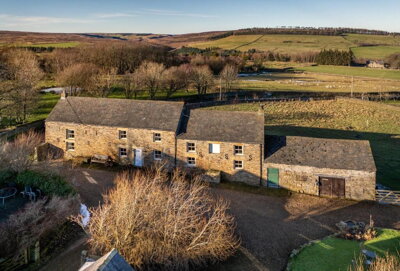
Hunstanworth is a small but historically significant hamlet located in the Derbyshire Dales district of County Durham, situated within the North Pennines Area of Outstanding Natural Beauty. The village's location offers stunning scenery, with the surrounding landscape characterised by rolling hills, farmland, and proximity to the River Derwent. The Church of St James in Hunstanworth is a Grade II listed building, reflecting the historical significance of this small community and indicating that the village likely contains other listed buildings or properties within a Conservation Area.
The local geology presents considerations for property owners and buyers. The underlying geology typically consists of Carboniferous rocks, including sandstones, limestones, and shales, with superficial deposits that can include glacial till (boulder clay) and peat. Properties in areas with significant clay content may be susceptible to shrink-swell movement, which can affect foundations. Additionally, Hunstanworth's proximity to the River Derwent means that properties immediately adjacent to watercourses may be at risk of fluvial flooding, and surface water flooding can occur in areas with poor drainage or during heavy rainfall given the hilly terrain.
The local economy around Hunstanworth is predominantly rural, with agriculture, tourism, and small local businesses serving as key sectors. The attractive scenic location within the North Pennines AONB makes the area popular with those seeking a rural lifestyle, second homes, or holiday lets. Employment opportunities are typically found in nearby larger towns such as Consett or Hexham, with the broader Newcastle upon Tyne area within reasonable commuting distance. The population of the wider civil parish of Hunstanworth was recorded as 152 in the 2011 Census, reflecting the small, tight-knit nature of this rural community.
Transportation links serving Hunstanworth connect the village to nearby towns and cities, though as with many rural areas, a car is generally necessary for daily commuting and accessing services. The nearest railway stations can be found in larger towns in the region, providing connections to Newcastle, Durham, and beyond. Local amenities in the immediate village may be limited, with residents typically travelling to nearby towns for shopping, healthcare, and other services.











 Brunton Residential
-115d ago
Brunton Residential
-115d ago






























