






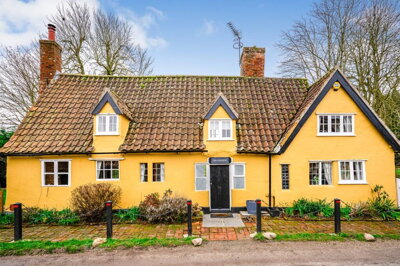
£500,000
Cottage, 3 bed
Lower Green, CB8 8PN
£500,000
Cottage, 3 bed
Lower Green, CB8 8PN
Auction House
-25d ago
Compare 2 local agents, data from 3 active listings


We track 2 estate agents actively marketing properties in Denston, a picturesque village in the West Suffolk district of Suffolk. We've ranked them based on live listing data, market share, and current asking prices to help you find the right partner for your property sale. Our comprehensive comparison helps you make an informed decision based on real market activity rather than marketing claims.
Denston offers a quintessential rural Suffolk lifestyle with a population of just 134 residents across 58 households. The village boasts a designated Conservation Area and numerous listed buildings, including the impressive Denston Hall and St Nicholas' Church, both Grade I listed. With an average property price of £415,000 and properties ranging from traditional terraced cottages to substantial detached homes, the market presents diverse opportunities for sellers. looking to sell a period cottage or a country estate, understanding the local market dynamics is essential for achieving the best outcome.

2
Active Estate Agents
£875,000
Average Asking Price
3
Properties For Sale
The Denston property market reflects the character of this small but desirable West Suffolk village. Our data shows that the current average asking price stands at £875,000, though this figure is influenced by a limited number of high-value listings. According to Rightmove data from February 2026, the more typical average property price in Denston sits at £415,000, representing a 12-month change of +1.2% and indicating steady, modest growth in this rural enclave. The positive price movement demonstrates continued demand for properties in this sought-after village location, despite the relatively low transaction volumes typical of small rural communities.
Property types in Denston span the traditional spectrum of Suffolk rural housing. Detached properties command the highest values at approximately £575,000, reflecting the spacious plots and period features common in the area. Semi-detached homes average around £350,000, while terraced properties typically sell for approximately £275,000. The limited availability of flats in this village setting means there is insufficient data to establish a reliable average for this property type. Buyers seeking modern apartment-style living would likely need to look to larger nearby towns such as Bury St Edmunds or Sudbury, where the housing stock offers greater diversity.
Transaction volumes in Denston remain modest, with 4 property sales recorded in the 12 months between February 2025 and February 2026. This low turnover is typical of small villages with limited housing stock, where properties can change hands infrequently but often command strong prices due to sustained demand from buyers seeking the rural Suffolk lifestyle. The gap between asking and selling prices in such markets tends to be relatively narrow, as the scarcity of available properties creates competitive situations for quality listings. Sellers in Denston benefit from the fact that motivated buyers often compete for the few properties that become available, helping to maintain prices even in a quiet market.
Based on 1 live listings with an average asking price of £500,000.
Source: home.co.uk
See which agents are selling fastest and at the best prices in Denston.
Compare Estate Agents FreeThe current listing mix in Denston reveals interesting patterns about market activity. Our live data shows 3 active sale listings managed by 2 estate agents, with a bedroom distribution heavily weighted towards 3-bedroom properties, which account for 2 listings at an average price of £562,500. A single 6-bedroom listing at £1,500,000 represents the upper end of the market, managed by David Burr Estate Agents who specialize in premium rural properties. This concentration of larger family homes reflects the profile of buyers drawn to Denston, typically families and downsizers seeking space and village character rather than the convenience of town centre locations.
The price range distribution shows most activity in the £500,000 to £750,000 bracket, which contains 2 listings, while one property sits in the over £1 million category. This distribution reflects the rural nature of Denston, where larger period properties and character homes command premium prices. The rental market shows minimal activity with just 1 listing managed by Jackson-Stops, indicating that rental demand in this small village is limited compared to neighbouring larger towns. The average rental price of £2,995 per month positions Denston as a premium rental location, though the limited supply means rental options are scarce for those not ready to commit to purchase.
New build activity specifically within the Denston postcode area remains minimal, with no active developments identified through general searches. The village's Conservation Area status and abundance of listed buildings mean that new development is carefully controlled, preserving the historic character that attracts buyers to the area in the first place. This lack of new supply means that buyers seeking modern conveniences may need to consider renovation projects or look to surrounding villages where development activity is higher.

Denston occupies a tranquil position in the West Suffolk countryside, approximately 8 miles from Bury St Edmunds and within easy reach of Sudbury and Newmarket. The village sits atop chalk bedrock overlaid with glacial till, a geological composition that creates moderate to high shrink-swell risk for property foundations, particularly during periods of drought or excessive rainfall. Prospective buyers should be aware that properties with shallow foundations on the clay-rich soils may require careful structural assessment. The presence of mature trees close to buildings can exacerbate foundation movement, a factor that surveyors will typically investigate during the property assessment process.
The village centre clusters around The Street, where a concentration of listed buildings creates the historic core that defines Denston's character. Beyond the residential properties, Denston offers direct access to the River Glem, a watercourse that poses low but present fluvial flood risk during periods of intense rainfall. Surface water flooding can also occur in areas with poor drainage, typical of many rural villages, though the overall flood risk remains low compared to coastal or riverside locations. Buyers should request flood risk searches as part of their due diligence, particularly for properties near the river or in low-lying areas of the village.
Demographically, Denston's population of 134 residents across 58 households represents a close-knit rural community. The majority of housing stock dates from the pre-1919 period, consistent with the village's Conservation Area designation and numerous listed buildings. Properties constructed using traditional Suffolk brick, timber framing, and lime mortar require specialist knowledge for both maintenance and renovation, making the expertise of an experienced local estate agent particularly valuable for buyers and sellers alike. The character of the village means that properties often come to market infrequently, making early engagement with a knowledgeable agent essential for buyers seeking to secure a property in this desirable location.
Given the age and character of Denston's housing stock, buyers should be aware of common defects encountered in the area's older properties. Traditional Suffolk construction methods, including timber-framed walls with wattle and daub or brick infill, Suffolk brickwork, and lime mortar pointing, require specialist understanding during both survey and renovation. Many properties lack modern damp-proof courses, making rising damp a frequent issue identified in surveys. Additionally, the use of lime-based mortars and renders means that inappropriate modern repairs using cementitious products can trap moisture and cause structural problems.
Timber defects represent another significant concern in Denston's older properties. Properties with exposed timber frames or traditional construction are vulnerable to woodworm infestation and wet or dry rot, particularly where damp conditions exist or where ventilation is poor. Roof timbers are especially susceptible, with many heritage properties showing signs of historic beetle activity that may require treatment or ongoing monitoring. Our data indicates that roof condition issues, including slipped tiles, failing leadwork, and general wear on traditional roofing materials, appear regularly in surveys of local properties.
Subsidence and heave present notable risks in Denston due to the underlying clay geology. Properties with older, shallower foundations are particularly vulnerable to movement as soil moisture levels fluctuate across seasons. The presence of large trees close to buildings can accelerate foundation movement as tree roots extract moisture from the clay subsoil. Buyers purchasing older properties in Denston should ensure their surveyor pays particular attention to foundation conditions and any signs of previous movement or repair. Electrical systems in properties built before the 1980s often require upgrading to meet current safety standards, representing an additional cost consideration for buyers.
Selecting the right estate agent in a small rural market like Denston requires careful consideration of local expertise and market knowledge. David Burr Estate Agents, based in nearby Clare, currently manages the premium end of the market with a £1,500,000 average asking price, demonstrating particular strength in marketing high-value period properties and country houses. Their expertise in heritage properties and rural estates makes them well-suited to properties within Denston's Conservation Area or those with listed building status. The firm's established network of buyers seeking premium rural homes provides valuable exposure for sellers of distinctive properties.
Auction House, operating across East Anglia, represents an alternative approach with a focus on properties at the more accessible price point of £500,000 average. This auction model can prove particularly effective for properties that may struggle to sell through traditional methods, offering a different route to market that can accelerate the sales process. Both agents demonstrate the diversity of approaches available within Denston's small market, giving sellers options depending on their circumstances and objectives. The auction method can be particularly appealing for properties requiring renovation or those in situations where a quick sale is desirable.
Estate agent fees in England typically range from 1% to 3% plus VAT, with the average sitting around 1.5% plus VAT. In a market like Denston where transactions are infrequent, negotiating the right fee structure becomes important. Many sellers opt for sole agency agreements lasting 8 to 16 weeks, though multi-agency arrangements can sometimes secure broader market coverage for premium properties. The most crucial step remains obtaining free valuations from multiple agents before making your decision, ensuring you secure the most accurate assessment of your property's market value. Remember that the lowest fee does not necessarily represent the best value if the agent lacks relevant local experience.
Look for agents with specific experience in Denston and the surrounding West Suffolk villages, particularly those familiar with period properties and homes in Conservation Areas. Check their current listings and recent sales in similar villages to gauge their understanding of the local market.
Request free property valuations from at least 3 agents to compare their assessments and understand the range of values your property might achieve in the current market. Ask each agent to explain their valuation methodology and provide comparable evidence to support their figures.
Ask potential agents about their marketing approaches, including online presence, local advertising, and database of prospective buyers, especially those seeking rural properties. In a small market like Denston, an agent's database of registered buyers can be particularly valuable for generating early interest in your property.
Enquire about recent sales in similar villages or comparable properties, and how quickly properties have sold in the local area under their marketing. While Denston's low transaction volume means recent local sales may be limited, agents should be able to demonstrate relevant experience with similar properties in the surrounding area.
Discuss fee structures, contract lengths, and what services are included. Remember that the cheapest fee may not represent the best value if the agent lacks relevant local expertise. Consider whether the agent offers additional services such as professional photography, virtual tours, or targeted marketing campaigns that could add value to your sale.
Choose an agent you feel comfortable with and who demonstrates genuine knowledge of Denston and the wider West Suffolk property market. Your agent will be representing your most valuable asset, so establishing good communication and trust is essential for a successful sale.
In a small market like Denston with limited active listings, the expertise of your estate agent matters significantly. Properties in Conservation Areas or those with listed building status require an agent who understands the additional considerations and buyer demographic these homes attract. Don't hesitate to ask potential agents about their experience with heritage properties before instructing them. The right agent will not only market your property effectively but also guide you through the complexities of selling a historic home.
Understanding how bedroom count affects property values in Denston helps sellers position their homes effectively in the market. Our listing data reveals that 3-bedroom properties dominate the current supply, with 2 active listings averaging £562,500. These family-sized homes represent the backbone of the local market and typically appeal to buyers seeking a balance of space and village character. The relative scarcity of 3-bedroom properties on the market means that well-presented homes in this category can attract strong interest from buyers competing for limited options.
The single 6-bedroom listing at £1,500,000 illustrates the premium that larger period properties command in Denston. These substantial homes, often featuring original features, generous gardens, and multiple reception rooms, attract buyers specifically seeking the rural lifestyle that Denston offers. The jump in value from 3-bedroom to 6-bedroom properties demonstrates the premium that additional space and period features can command in this niche market. Properties of this caliber typically require specialist marketing to reach the appropriate buyer demographic, making the choice of estate agent particularly important for sellers in this segment.
For buyers entering the market, the 3-bedroom sector offers the most choice and generally represents the most accessible price point. Properties at this level typically include traditional cottages and semi-detached homes that benefit from village centre locations and proximity to local amenities. The relative scarcity of 1 and 2-bedroom properties in Denston suggests demand outstrips supply at the more affordable end of the market. First-time buyers or those seeking smaller properties may find limited options within the village itself and may need to consider surrounding villages or towns for more diverse choices.
1 properties currently listed across Denston. Here are the most recently added.
£500,000
Cottage, 3 bed
Lower Green, CB8 8PN
£500,000
Cottage, 3 bed
Lower Green, CB8 8PN

Auction House
-25d ago

Get free, no-obligation valuations from the top-performing local agents. Compare fees, services, and track records before you decide.
Compare Agents FreeBased on our live market data, David Burr Estate Agents and Auction House are the two active agents currently marketing properties in Denston. David Burr Estate Agents focuses on the premium sector with an average asking price of £1,500,000 and specialist expertise in rural and period properties. Their base in nearby Clare provides established connections with buyers seeking the Suffolk rural lifestyle. Auction House offers an alternative auction-based model with properties averaging £500,000, providing a different route to market for properties at various price points. The best agent for your property will depend on your specific circumstances, the type of property you are selling, and whether a traditional or auction sale method suits your objectives.
Estate agent fees in England typically range from 1% to 3% plus VAT, meaning the total cost falls between 1.2% and 3.6% of your sale price. In a small rural market like Denston, fees may be negotiable, particularly if your property is straightforward to market or if you are considering using the same agent for both sales and lettings. Always obtain quotes from multiple agents and ensure you understand exactly what services are included. Some agents offer fixed-fee packages, while others work on a percentage basis, and the right choice will depend on your property type and marketing requirements.
Yes, property prices in Denston have shown positive movement with a 12-month change of +1.2% as of February 2026, according to Rightmove data. While this represents modest growth, it indicates a stable market in this desirable West Suffolk village. The average property price stands at approximately £415,000, though current asking prices average £875,000 due to the mix of premium listings currently on the market. The positive price trend reflects sustained demand for properties in rural Suffolk, with buyers continuing to seek the lifestyle that villages like Denston provide. However, the limited transaction volume means that price movements should be interpreted with caution.
Denston is a charming rural village with a population of 134 residents across 58 households, offering a close-knit community atmosphere. The village features a Conservation Area, numerous listed buildings including Denston Hall and St Nicholas' Church, and sits near the River Glem. Residents enjoy access to the surrounding Suffolk countryside while being within reasonable distance of Bury St Edmunds, Sudbury, and Newmarket for commuting and amenities. The village has a strong sense of community and is popular with families and those seeking a peaceful rural lifestyle. Local facilities include a village hall and access to footpaths across the surrounding countryside, though day-to-day shopping requires travel to nearby towns.
Detached properties command the highest prices in Denston, averaging approximately £575,000, followed by semi-detached homes at around £350,000 and terraced properties at approximately £275,000. The limited supply of properties, particularly in the 3-bedroom category, means that well-presented homes in the mid-price range tend to attract strong interest. Properties with period features, character, and village centre locations are particularly sought after. The lack of new build properties in Denston means that demand is concentrated on the existing housing stock, creating competitive conditions for quality period homes that meet buyer expectations.
Given Denston's abundance of older properties, listed buildings, and Conservation Area designations, a RICS Level 2 Survey is strongly recommended for most purchases. Properties in this area commonly feature traditional construction methods including timber framing, Suffolk brick, and lime mortar, all of which require experienced surveyors to assess properly. Common defects identified in local surveys include damp issues related to the lack of modern damp-proof courses, timber defects such as rot and woodworm, and roof condition problems. For listed buildings, a more detailed RICS Level 3 Building Survey may be advisable to fully understand the condition of traditional construction. Local survey costs typically range from £450 to £800 depending on property size and type.
Denston is located inland and benefits from relatively low flood risk compared to coastal or major river locations. The village sits near the River Glem, which poses a generally low risk of fluvial flooding during periods of extreme weather. Surface water flooding can occur in areas with poor drainage, as is common in many rural villages, particularly during periods of intense rainfall. The underlying geology of clay soils can also affect drainage characteristics. Overall, flood risk should not be a major concern for most properties in Denston, though buyers in specific locations near watercourses should seek appropriate searches and consider the specific topography of individual plots.
There have been 4 property sales in Denston in the 12 months between February 2025 and February 2026, according to Rightmove data. This low transaction volume is typical for a village of Denston's size, where the limited housing stock means properties become available infrequently. The modest number of sales underscores the importance of pricing accurately and marketing effectively when selling, as competition for available properties can be keen among buyers seeking to enter this desirable rural community. Sellers should work closely with their estate agent to ensure their property is presented to maximum effect when it does come to market.
Selling a listed property in Denston requires an estate agent with specific experience in heritage and historic homes. Look for agents who understand the additional considerations affecting listed buildings, including the need for Listed Building Consent for certain alterations and the unique marketing requirements of period properties. Agents should be able to demonstrate knowledge of the Conservation Area and its implications for property marketing. Premium agents like David Burr Estate Agents specialize in this sector and can connect sellers with buyers specifically seeking historic rural properties. Ensure your agent provides comprehensive marketing that highlights the character and features that make listed properties desirable.
From £450
Essential for older properties in Denston's Conservation Area
From £800
Recommended for listed buildings and period properties
From £120
Required for marketing all properties
From £300
For properties sold under government schemes
Estate Agents In London

Estate Agents In Plymouth

Estate Agents In Liverpool

Estate Agents In Glasgow

Estate Agents In Sheffield

Estate Agents In Edinburgh

Estate Agents In Coventry

Estate Agents In Bradford

Estate Agents In Manchester

Estate Agents In Birmingham

Estate Agents In Bristol

Estate Agents In Oxford

Estate Agents In Leicester

Estate Agents In Newcastle

Estate Agents In Leeds

Estate Agents In Southampton

Estate Agents In Cardiff

Estate Agents In Nottingham

Estate Agents In Norwich

Estate Agents In Brighton

Estate Agents In Derby

Estate Agents In Portsmouth

Estate Agents In Northampton

Estate Agents In Milton Keynes

Estate Agents In Bournemouth

Estate Agents In Bolton

Estate Agents In Swansea

Estate Agents In Swindon

Estate Agents In Peterborough

Estate Agents In Wolverhampton

Compare 2 local agents, data from 3 active listings
Find Agents


Homemove is a trading name of HM Haus Group Ltd (Company No. 13873779, registered in England & Wales). Homemove Mortgages Ltd (Company No. 15947693) is an Appointed Representative of TMG Direct Limited, trading as TMG Mortgage Network, which is authorised and regulated by the Financial Conduct Authority (FRN 786245). Homemove Mortgages Ltd is entered on the FCA Register as an Appointed Representative (FRN 1022429). You can check registrations at NewRegister or by calling 0800 111 6768.




























