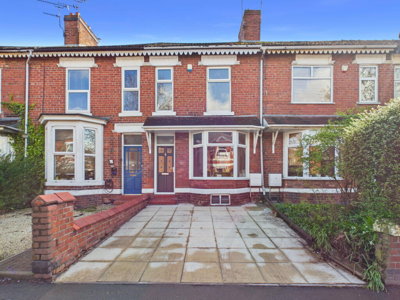
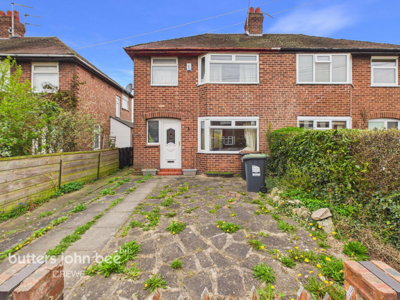
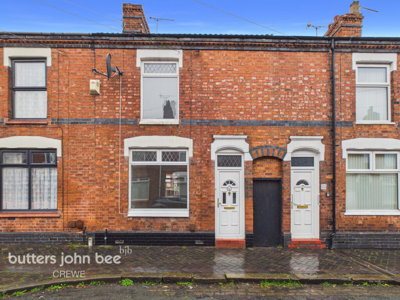
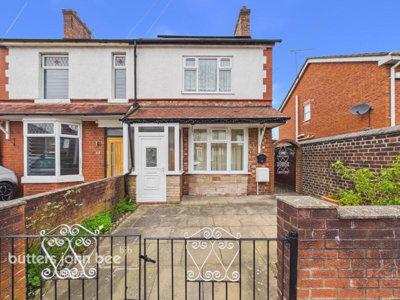
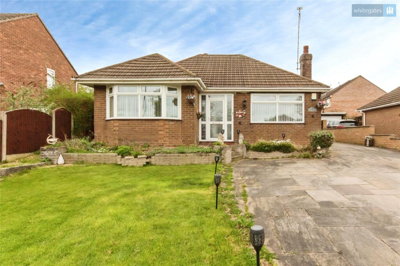
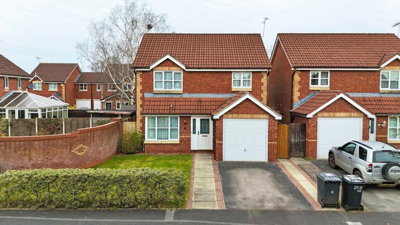
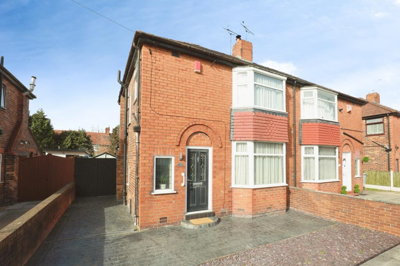
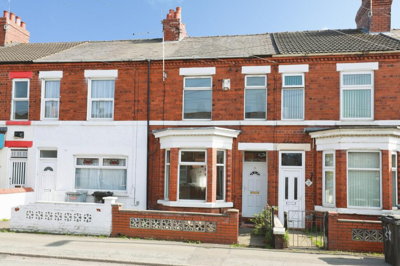
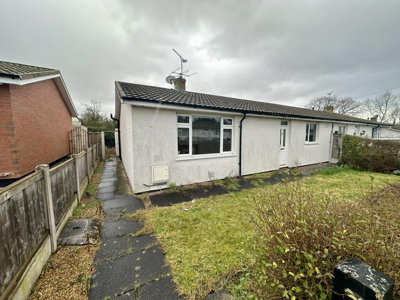
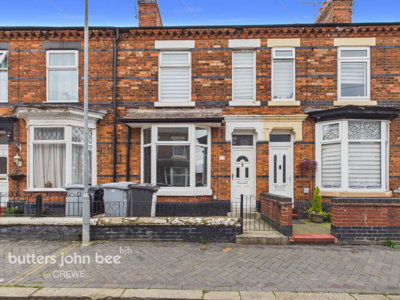
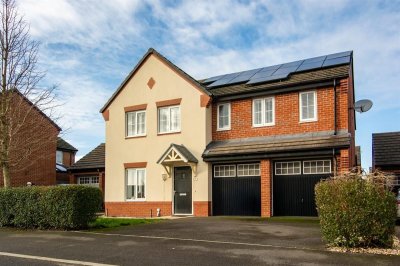
Crewe's character as a railway town remains evident in its architecture and urban layout, with the Crewe Railway Conservation Area protecting the historic railway buildings and surrounding Victorian streets. The town's population of approximately 76,000 residents across 32,500 households makes it one of the larger towns in Cheshire East. The housing stock reflects this historical development, with 29.8% of properties built pre-1919, representing substantial Victorian and Edwardian terraced housing, while 30.5% were constructed between 1945 and 1980, predominantly semi-detached family homes.
The predominant construction method in Crewe uses traditional brick, often red brick, reflecting the Victorian and Edwardian railway town heritage. Many properties also incorporate render or pebbledash finishes, particularly on older terraced and semi-detached homes. Older properties typically feature solid walls, while those built post-1930s utilise cavity wall construction. Timber roofs with slate or tile coverings are common across the housing stock, and many older homes feature suspended timber floors on the ground level.
The geology of Crewe presents important considerations for property owners and buyers. The underlying Mercia Mudstone Group, comprising mudstones, siltstones, and sandstones, creates a moderate to high shrink-swell risk in some areas, particularly during periods of extreme wet and dry weather. Superficial deposits include glacial till and alluvial deposits along watercourses, which can affect foundation conditions. Flood risk varies across Crewe, with elevated risk along the River Weaver and its tributaries, as well as surface water flooding in urban areas with extensive impermeable surfaces.
Transport connectivity significantly influences Crewe's appeal as a residential location. The town benefits from excellent rail links connecting to major cities including Manchester, Birmingham, and London, while the M6 motorway provides straightforward road access. Bentley Motors remains a major employer, anchoring the local economy alongside railway engineering, logistics, and distribution sectors. The presence of the Crewe Municipal Buildings, former Crewe Works, and various churches and historic houses reflects the town's rich industrial heritage, with numerous listed buildings concentrated around the railway conservation area and town centre.











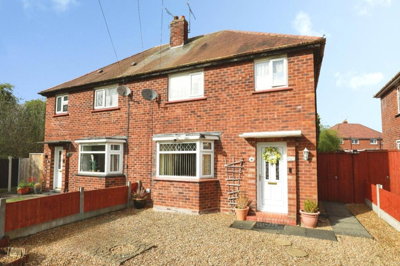
 Bridgfords
-2d ago
Bridgfords
-2d ago