Colney occupies a distinctive position as a village that combines authentic Norfolk rural charm with exceptional convenience for commuters and families alike. Located just a few miles from Norwich city centre, residents enjoy access to comprehensive urban amenities including shopping, dining, and cultural facilities while living in a village atmosphere surrounded by open countryside. The proximity to the University of East Anglia and Norfolk and Norwich University Hospital makes the area particularly attractive to academic staff, medical professionals, and NHS workers seeking quality housing within a manageable commute, creating a stable and affluent buyer pool that underpins demand in the village.
The local geography of Colney reflects typical South Norfolk characteristics, with the village sitting on generally undulating terrain common to this part of the county. While specific geological data for Colney was not found in our research, Norfolk generally features chalk, glacial tills, and river valley deposits across different areas. Properties built on clay soils can present shrink-swell considerations for foundations, particularly during periods of prolonged dry weather or sustained rainfall, and potential buyers should factor this into their property considerations. We always recommend that buyers commissioning surveys in the NR4 area request specific assessment of foundation conditions, particularly for older properties where ground movement may have occurred over time.
Flood risk in Colney is generally considered low compared to coastal or riverside locations in Norfolk, though surface water flooding can occur in low-lying areas near watercourses after periods of heavy rainfall. The village's inland position means it avoids coastal erosion concerns that affect some other parts of Norfolk. Transport links serve the area well, with straightforward access to Norwich railway station and the city's broader road network via the NR4 postcode. Local amenities in nearby Cringleford, including shops and services, complement the larger retail and recreational facilities in Norwich itself, all easily accessible by car from properties in Colney.
The housing stock in Colney includes a mix of period properties dating from the early twentieth century alongside more modern constructions developed in later decades. Research in the broader NR4 area identified properties built between 1912 and 1935, representing the early-century housing that forms part of Norfolk's architectural heritage. Properties in Colney typically feature traditional brick construction, though variations including flint and render appear in older properties across South Norfolk. The village does not fall within a designated conservation area based on available research, giving property owners reasonable flexibility with improvements and extensions while maintaining the character that makes Colney attractive to buyers seeking village living with modern convenience.










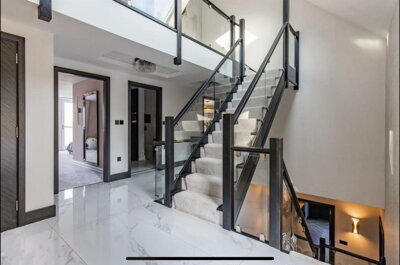
 Pantera Property
-537d ago
Pantera Property
-537d ago






























