Chelsworth is a small but historically significant village in the Babergh District of Suffolk, situated on the north bank of the River Brett. According to the 2021 Census, the parish has a population of just 212 residents across 96 households, making it one of Suffolk's tighter-knit communities. The village is entirely designated as a Conservation Area, and remarkably, it contains 33 listed buildings recorded in the National Heritage List for England, including one Grade I building, three Grade II* properties, and 29 Grade II listings. The Church of All Saints stands as a particular architectural highlight, while The Grange, The Old Forge, and Princhetts represent the village's exceptional heritage.
The underlying geology significantly influences local property characteristics. Chelsworth sits in the River Brett valley, where the underlying boulder clay and pockets of older London Clay create conditions prone to shrink-swell movement. This clay-rich soil is the most damaging geohazard in Britain for property, potentially causing subsidence during periods of drought. Prospective buyers should factor this into their survey requirements, particularly given the age of the housing stock. The flood plain of the River Brett lies to the south of The Street, and while no active flood warnings exist, surface water and fluvial flooding remain considerations for lower-lying properties.
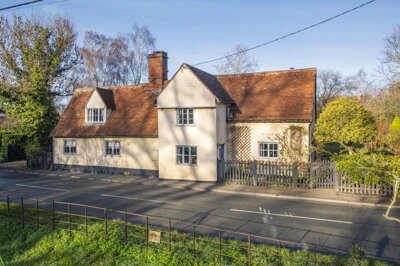
The predominant construction materials in Chelsworth reflect centuries of local building traditions. Timber-framed houses with rendered walls and plain tiled roofs dominate the streetscape, while Victorian properties typically use the distinctive Suffolk soft red or white bricks, often rendered to match the vernacular. Decorative pargetting, exposed timber-framing, and thatched or slated roofs add visual character. The older housing stock means that damp, roof condition, and outdated electrics are common issues identified in surveys, making a RICS Level 2 or Level 3 survey essential for any purchase in the village.
Demographically, Babergh has an older population profile compared to national averages, with 26.6% of residents aged 65 and over versus 18.4% across England. This suggests a community that may include retirees and established residents, with fewer families with young children. Local amenities are limited in the village itself, with residents typically travelling to larger settlements for services. Transport links include the A1141 providing access to Sudbury and Hadleigh, while the mainline railway stations at Sudbury and Colchester offer connections to London. The village benefits from a pub restaurant, making it attractive for those seeking a peaceful lifestyle with basic conveniences nearby.











 David Burr Estate Agents
-87d ago
David Burr Estate Agents
-87d ago






























