Bradwall is a small but historically rich village nestled in the Cheshire East countryside. The population stands at approximately 182 residents across 67 households, based on 2011 census data, making it an intimate community where neighbours often know one another. The village maintains its agricultural roots, with local businesses including Willis's Drainage Company, Carbutts Turf at Pewitt Hall Farm, and Fields Farm Fisheries and Turkey Farm operating in the surrounding area. This rural character defines daily life in Bradwall.
The geological landscape beneath Bradwall presents unique considerations for property owners and buyers. The village primarily sits on fine-grained mudstone, with bedrock including the Wilkesley Halite member containing halite stone. The surrounding area features Devensian glacial till comprising sand, gravel, boulder clay, alluvium, and peat. This geological composition suggests potential for shrink-swell ground movement, and the historical brine extraction in Cheshire has led to ground stability concerns in some areas, though specific risks for Bradwall properties require individual survey assessment.
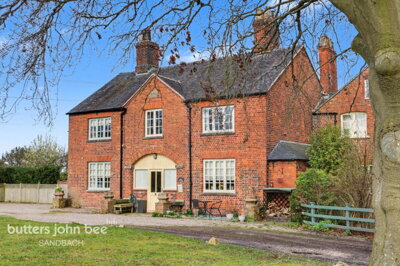
Bradwall contains three Grade II listed buildings that showcase the area's heritage: Hall Cottage and its coach house (associated with the former Bradwall Hall), Plumtree Farmhouse, and School Cottages (a former reformatory school and farm). These properties date from the 17th century and around 1700, reflecting the village's long history. The predominance of brick with tiled roofs characterises the traditional buildings, with some possibly having timber-framed origins.
The village has no formal conservation area, but the historic buildings and agricultural setting contribute to its character. For buyers, this means properties may have restrictions regarding alterations or extensions. The lack of extensive modern development has preserved the village feel, though that is about to change with the new housing development approved nearby.










 Butters John Bee
-30d ago
Butters John Bee
-30d ago






























