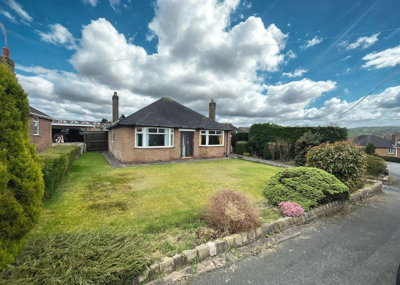
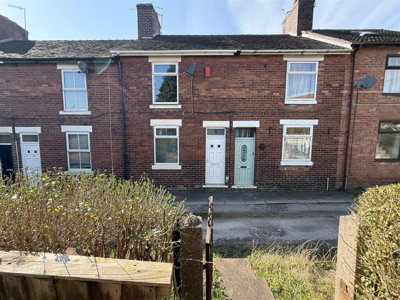
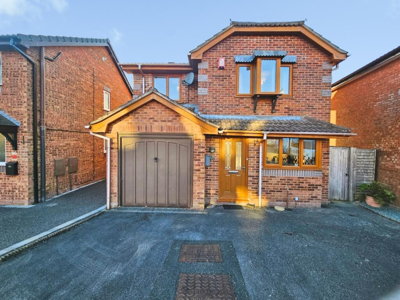
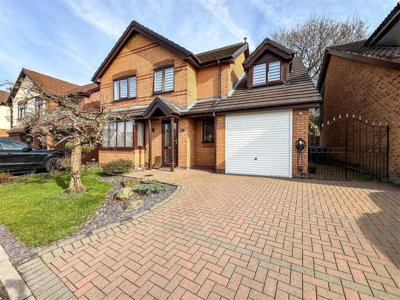
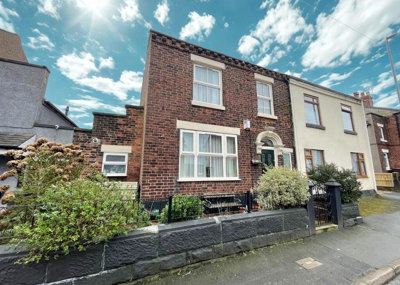
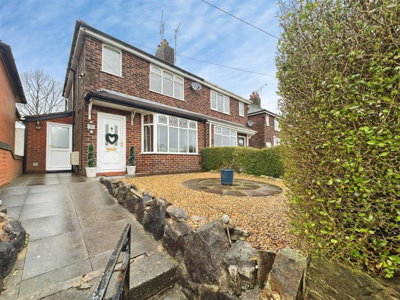
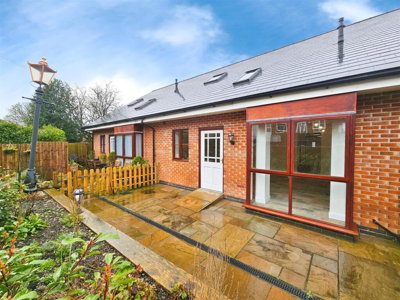
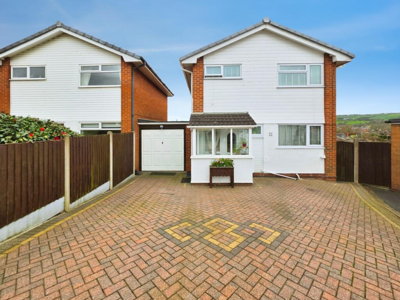
Analysis of current listings reveals that three-bedroom properties dominate the Biddulph market, with 97 listings representing nearly half of all available stock. Two-bedroom properties follow with 57 listings, providing options for first-time buyers and smaller families seeking to enter the market. Four-bedroom homes account for 35 listings, catering to growing families and those seeking more spacious accommodation, while higher-end properties with five or more bedrooms comprise a smaller but significant segment of 9 listings.
New build activity continues to shape the local market, with Bailey's Bank Biddulph by Envidia Homes bringing 19 detached executive homes to Congleton Road. This development, situated on the former Forge Works site, represents one of the few new build opportunities specifically within the ST8 postcode area. Taylor Wimpey also lists properties in the Biddulph area, though buyers should verify exact locations as some developments may fall in neighbouring areas. The limited new build supply means that the majority of properties for sale consist of existing housing stock, including the pre-1919 terraces, post-1970 housing estates, and rural farmsteads that define Biddulph's built environment.
The price distribution across the market shows strong activity in the £200,000 to £300,000 bracket, which contains 75 listings, representing the most competitive segment. Properties priced between £300,000 and £500,000 account for 51 listings, while the sub-£200,000 segment contains 57 listings, predominantly terraced and two-bedroom properties. Premium properties over £500,000 comprise 16 listings, primarily detached homes in desirable locations. This distribution indicates a healthy market with options across all price points, though the sweet spot for quick sales appears to be the £200,000-£300,000 range where buyer demand concentrates.
Construction methods in Biddulph vary significantly by age and location, from the stone-built cottages of Biddulph Moor to the modern brick constructions of 1970s estates. The pre-1919 terraces typically feature solid walls with traditional lime-based mortar, while post-war properties often incorporate cavity wall construction. These construction differences affect how properties perform in surveys and can influence buyer decisions, making it valuable to work with an agent who understands local building traditions.











 Carters Estate Agents LTD
0d ago
Carters Estate Agents LTD
0d ago