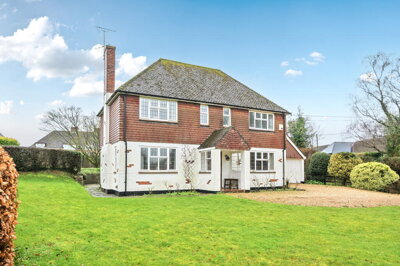
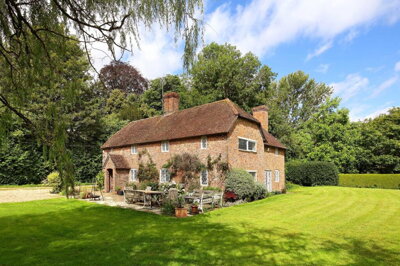
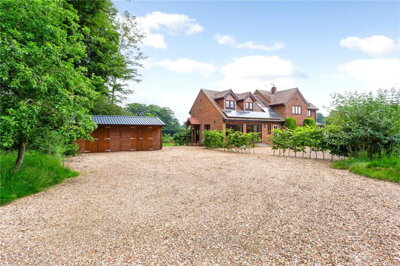
Bentworth is a quintessential English village nestled in the rolling countryside of East Hampshire, approximately 4 miles from the market town of Alton. The village has a population of 513 according to the 2021 Census and boasts an exceptionally high home ownership rate of 77.48%, significantly above the national average. This reflects the affluence and stability of the community, with residents drawn to the village's tranquil setting, excellent local pubs, and strong sense of community. The village is renowned for its distinctive architecture, with many buildings constructed using traditional methods including timber frame with brick and flint infilling.
Flint walls are a particular feature of Bentworth's built environment, most notably at St Mary's Church, a Grade II* listed building dating from the late 11th/12th century. The village's Conservation Area, established in June 1982, encompasses many heritage buildings including Hall Place (Grade II*), one of the oldest medieval hall houses in Hampshire, and Holt Cottage, a thatched cottage dating from 1503. The Conservation Area extends along the main lane and around St Mary's Church, with its character defined by historic buildings, open spaces, hedges, trees, and boundary walls of flint and brick.
The local geology presents important considerations for property owners. The area sits on a clay cap over chalk, creating potential for shrink-swell subsidence, particularly during periods of drought or heavy rainfall. This geological characteristic is significant across East Hampshire and contributes to the subsidence claims seen throughout the South East region. Properties in Bentworth therefore require careful structural monitoring, and prospective buyers are advised to commission thorough surveys to identify any movement or potential issues related to the clay soil conditions.











 Homes Estate Agents
-26d ago
Homes Estate Agents
-26d ago