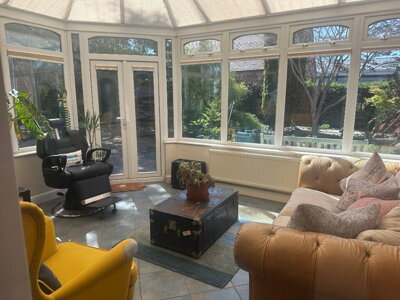
Baginton is a historic Warwickshire village situated between Coventry and Warwick, offering residents a peaceful rural environment while maintaining excellent connectivity to larger employment centres. The village is home to approximately 800 residents across roughly 350 households, creating an intimate community atmosphere where neighbours often know one another by name. The presence of Coventry Airport adds a distinctive character to the area and serves as a significant local employer, with aircraft movements creating a unique soundscape that residents typically grow accustomed to. The proximity to both Coventry and Warwick means most residents commute to these cities for work, benefiting from the M40 and A46 road connections.
The housing stock in Baginton reflects its varied history, with approximately 45% detached properties, 30% semi-detached, 15% terraced, and 10% flats. Around 20% of properties predate 1919, contributing to the village's character with features such as original timber framing, thatched roofs on some cottages, and traditional brickwork. A further 35% of properties were constructed between 1945 and 1980, typically featuring more modern cavity wall construction with three-bedroom layouts suited to post-war family growth. This mix of period and post-war housing creates a diverse property landscape catering to various buyer preferences and budgets.
The village centre features a Conservation Area centred around St John the Baptist Church, with several listed buildings including Baginton Hall and various farmhouses and cottages. Properties within the Conservation Area benefit from protection against unsympathetic alterations but may face restrictions on extensions or modifications. The historic core features narrow lanes, traditional hedgerows, and buildings constructed from local red brick and clay tiles, creating an attractive environment that contributes to premium valuations for period properties. Buyers acquiring listed buildings should budget for potentially higher maintenance costs and specialist repair requirements.
Geologically, Baginton sits on Mercia Mudstone with superficial deposits of glacial till, creating moderate shrink-swell risks for properties with shallow foundations, particularly those with mature trees nearby. The clay-rich soils can expand significantly during wet periods and contract during droughts, potentially causing subsidence or structural movement in properties with inadequate foundations. Parts of the village, especially areas adjacent to the River Sowe and its tributaries, face moderate to high flood risk, and surface water flooding can affect low-lying areas. These environmental factors are important considerations for buyers and should be addressed during property surveys, particularly for properties in the lower-lying parts of the village near the river.











 John Payne Estate Agents
-24d ago
John Payne Estate Agents
-24d ago