Alwalton is a village with deep historical roots, appearing in the Domesday Book of 1086 with recorded households numbering 20. The village sits on the southern bank of the River Nene, with the main settlement on higher ground above the river valley. Its proximity to Peterborough, just 5 miles to the east, makes it an attractive location for commuters seeking a quieter village lifestyle while maintaining easy access to city amenities and the railway station. The 2021 Census recorded a population of 276 residents, with estimates suggesting this has grown to approximately 312 by 2024.
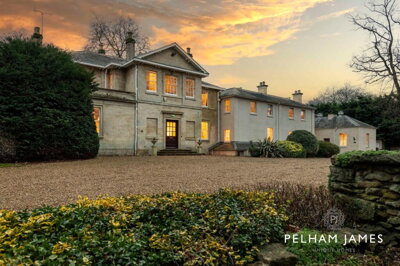
The village holds significant architectural heritage, designated as a Conservation Area in February 1976. This status protects the character of the historic core, which includes numerous Listed Buildings spanning several centuries. The Parish Church of St Andrew, dating from the late 12th century with earliest parts from 1170, holds Grade I listing and represents the village's Norman heritage. The Elizabethan Manor House, constructed around 1600, and Alwalton Hall, a Victorian building, represent later periods of development. Properties along Church Street, Mill Lane, and Water End feature buildings from the 17th, 18th, and 19th centuries, creating a streetscape of considerable historical interest.
The local geology has shaped both the village's history and its building traditions. Alwalton gave its name to "Alwalton marble," a hard blue shelly limestone quarried from deposits along the River Nene. This distinctive material was used in significant buildings including Peterborough and Lincoln Cathedrals. Roofing materials in the village include Collyweston stone slate, particularly on properties along the eastern side of Church Street, along with Welsh slate and thatch on several historic buildings. Four thatched properties add to the village's traditional character, while Victorian properties feature slate roofs reflecting building practices of that era.
Local amenities in Alwalton include a public house, village hall, post office, and tea room, serving the day-to-day needs of residents. The village has historical connections to industry through quarrying, which continued as late as the 1920s, and notable former residents including Sir Frederick Henry Royce, co-founder of Rolls-Royce Limited, who was born in Alwalton where his family operated a flour mill. Frank Perkins, founder of Perkins Engines, also lived at Alwalton Hall. The East of England Showground, located south of the village, continues to provide local economic activity through events and exhibitions.
Prospective buyers should be aware of environmental considerations specific to the area. Alwalton lies within the River Nene valley, indicating potential for fluvial flooding in lower-lying areas near the river. The broader Cambridgeshire region features clay-rich soils susceptible to shrink-swell behaviour, which can cause ground movement affecting foundations, particularly during periods of drought or heavy rainfall. Properties in the conservation area or those that are Listed Buildings may face additional restrictions on alterations and require specialist surveys to assess their condition and conservation requirements.










 Pelham James
-74d ago
Pelham James
-74d ago